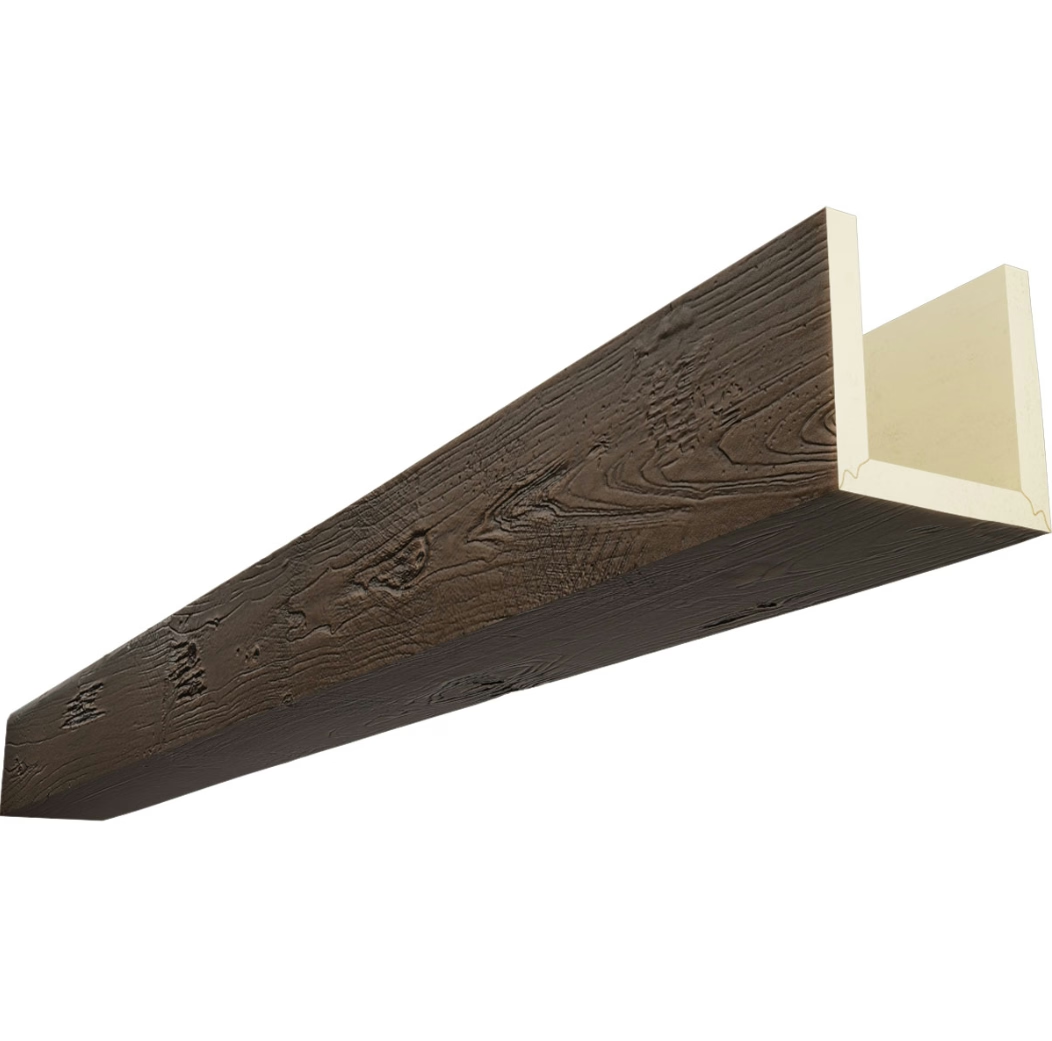
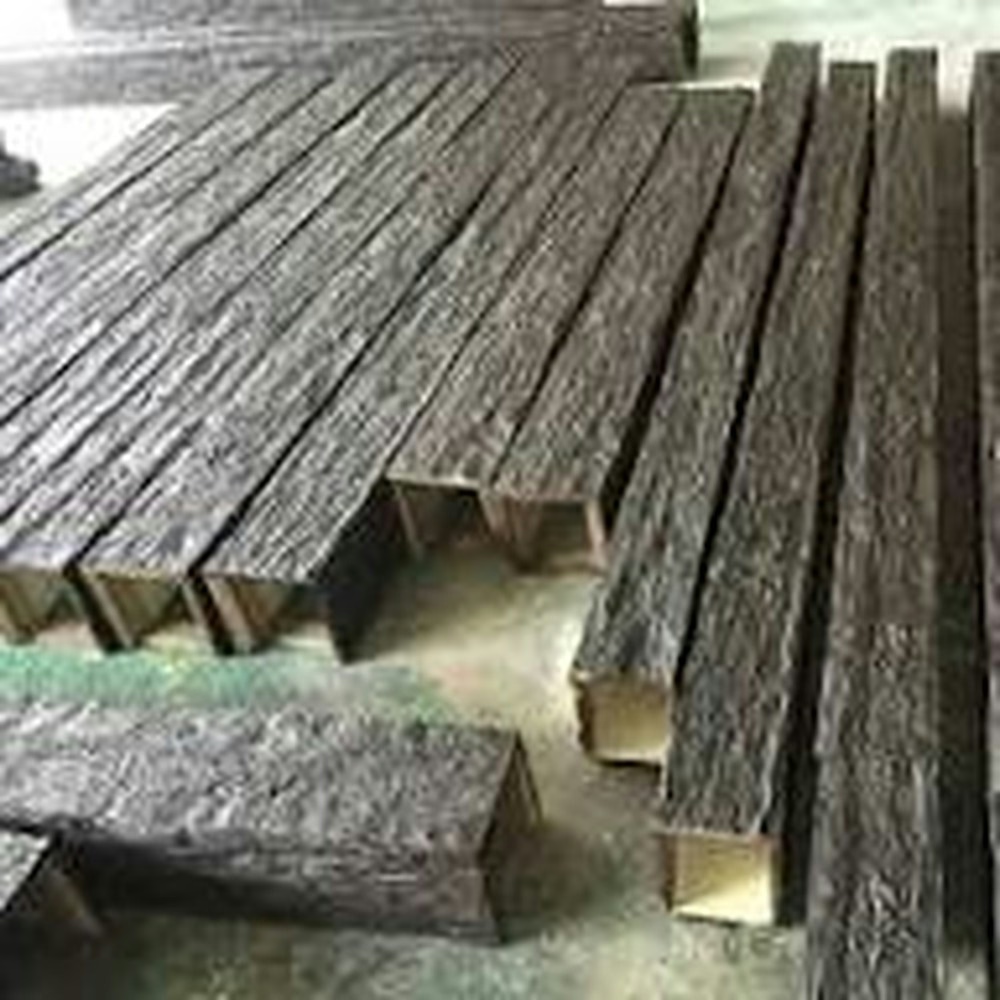
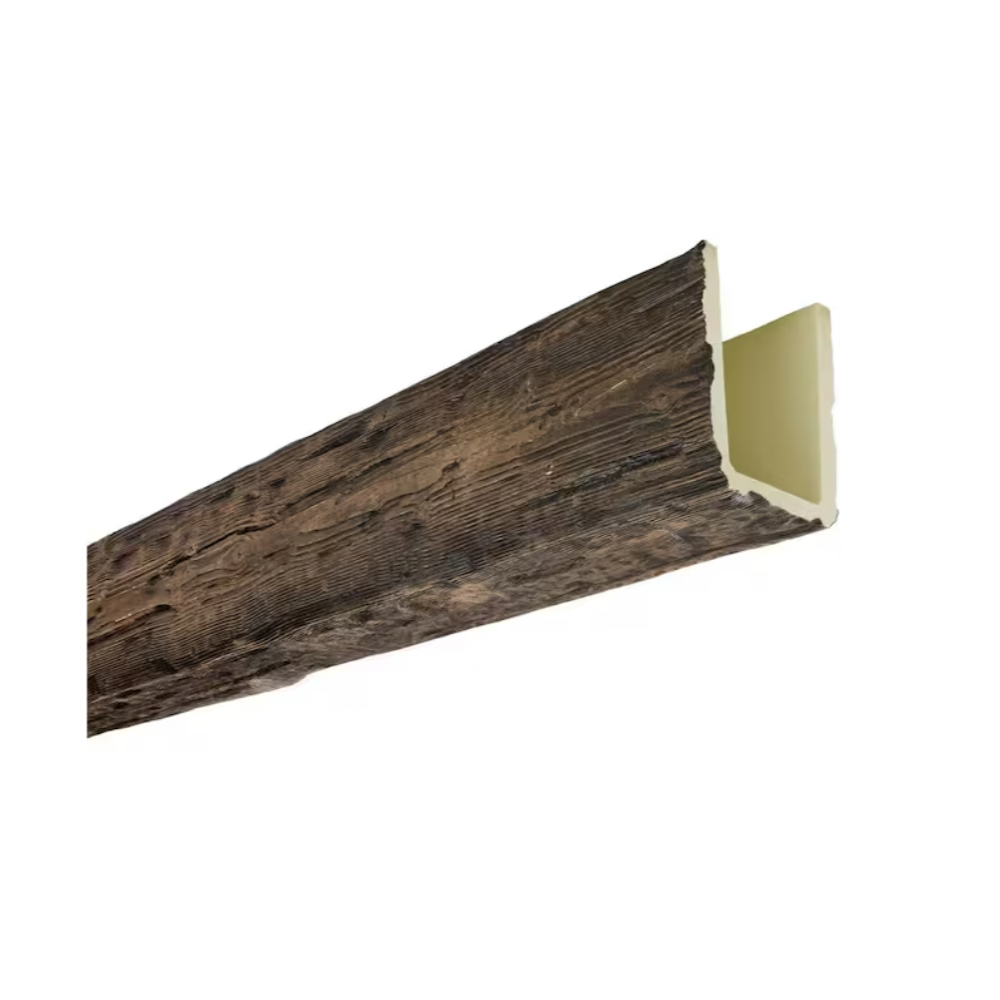
When you specify timber beams for a ceiling project, cracking ranks among the top concerns. Real wood responds to every temperature swing, every humidity shift. The surface that looked perfect during installation develops hairline fractures within the first seasonal change. This is precisely why manufacturers developed flexible faux timber formulations — to eliminate cracking as a failure mode entirely.
Modern polyurethane chemistry produces beams that flex slightly with structural movement without developing cracks. The material absorbs stress rather than resisting it, which means your ceiling maintains its seamless appearance year after year.
Why cracking happens with real timber
Understanding the failure mode helps appreciate the solution:
Moisture movement — wood cells absorb and release moisture constantly, causing dimensional changes that stress the grain
Thermal cycling — expansion and contraction with temperature swings creates micro-stress fractures
Grain weakness — natural wood has planes of weakness along annual growth rings
Knot areas — concentrated stress points where branches once grew
Traditional solid timber beams combat these forces through mass and tradition. When they crack, homeowners accept it as character. But in a faux beam, cracking represents product failure, not charm.
The flexible formulation advantage
Polyurethane beams eliminate cracking through material science:
Elastic memory — the polymer structure returns to original dimensions after stress release
Uniform density — no grain planes means no natural weakness zones
Low thermal expansion — PU expands far less than wood when heated
Moisture indifference — the material absorbs no water, so no dimensional change occurs
Impact absorption — slight flexibility absorbs accidental impacts without damage
These properties combine to produce what manufacturers call "crack-proof" performance. The designation holds up under real-world scrutiny because the failure mechanism simply does not exist in properly formulated polyurethane.
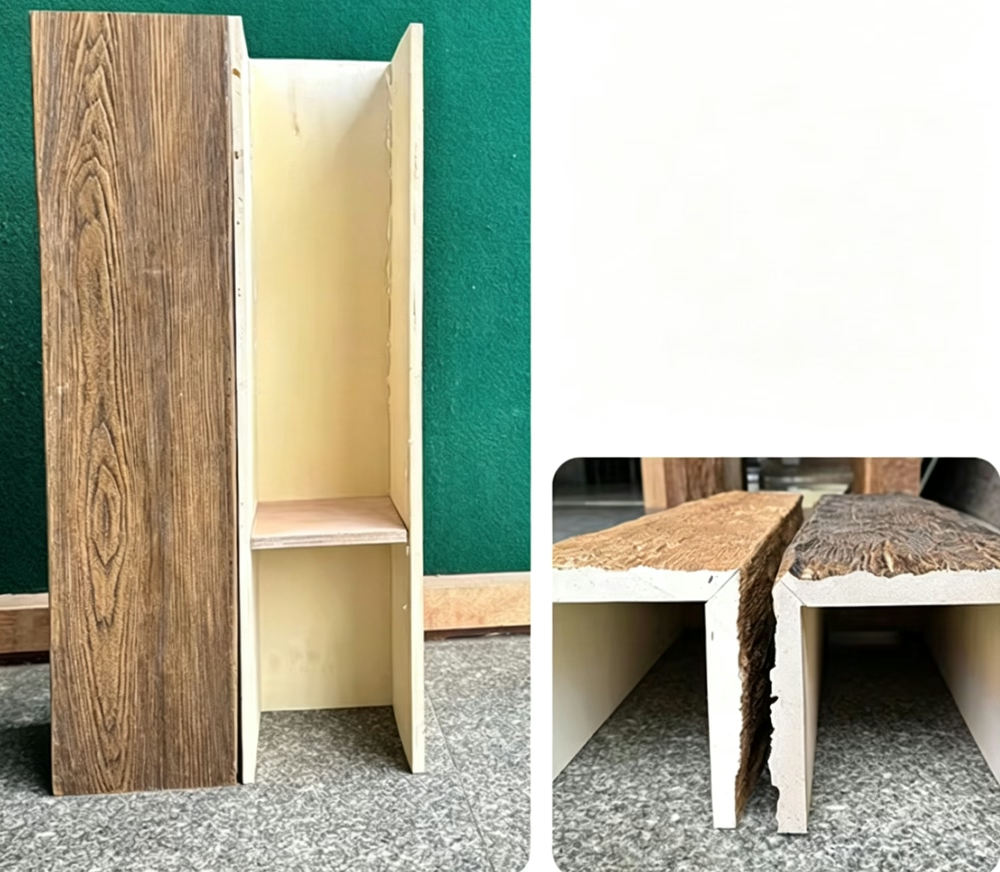
Climate zone performance
The crack-proof advantage matters differently depending on where you install:
Extreme temperature regions
Locations with wide seasonal ranges see the most benefit:
- Northern climates with -20°C winters and 30°C summers
- Desert regions with dramatic day-night temperature swings
- Mountain elevations with intense solar heating
Real wood beams in these locations require constant monitoring. PU beams installed once perform indefinitely.
Humid subtropical zones
Coastal and tropical climates present moisture challenges:
- Florida, Gulf Coast, Southeast Asia, Caribbean
- Monsoon regions with 80%+ humidity
- Swimming pool enclosures and spa facilities
Organic materials struggle here. Polyurethane thrives without adaptation.
Heated and cooled interiors
Modern HVAC creates artificial climate stability:
- But temperature differentials still cause stress at ceiling level
- Supply vents directed at beams accelerate local drying
- Central heating reduces ambient humidity in winter
These conditions would slowly damage real timber. PU ignores them completely.
Testing and certification
Manufacturers verify crack-proof performance through accelerated aging:
Thermal shock cycles — rapid temperature transitions between -30°C and +60°C for 100+ cycles
Humidity cabinet exposure — 95% relative humidity for 500 hours continuous
UV weathering — intense artificial sunlight simulating 5 years of exposure
Impact resistance — repeated impacts at standardized force levels
Beams passing these protocols earn crack-proof classification. Ask suppliers for test documentation before specifying for challenging environments.
Applications where crack-proof matters most
Certain projects demand absolute surface integrity:
Commercial ceilings — visible cracks in retail or hospitality settings suggest neglect
Direct lighting exposure — beams near skylights show every surface imperfection
High-traffic maintenance areas — beams in accessible locations get inspected constantly
Rental properties — landlord clients cannot accept ongoing maintenance requirements
Historic restoration — matching original timber appearance means no new cracking
Flexible faux beams serve all these situations reliably.
A fundamental upgrade
100% crack-proof flexible faux timber ceiling beams represent a fundamental advancement over traditional timber. By eliminating the primary failure mode of organic materials, polyurethane beams deliver lasting beauty without the anxiety of seasonal monitoring. For projects where surface perfection matters, this specification removes a whole category of risk.
Choose crack-proof flexible formulations when the ceiling design must remain flawless through years of climate stress.
Technical References
ASTM standards cited in every specification
Test Data
Lab results from internal testing program
Updated 2026
Reviewed against current product specs