The Acoustic Promise
Manufacturers sometimes claim that faux beams improve room acoustics. The claim has merit, but limits.
Understanding what beams actually do helps set realistic expectations.
What Beams Actually Do
Surface Area Addition
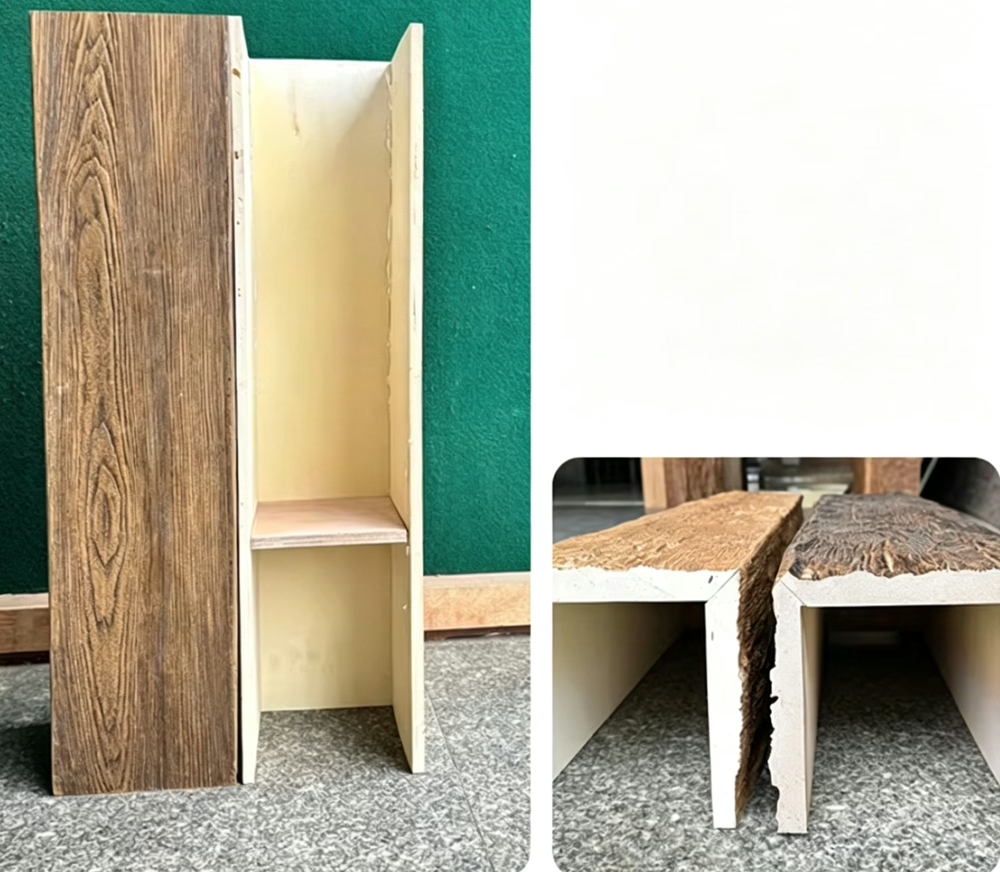
Beams add surface area to ceilings:
- The beam faces present additional surface
- This surface can absorb sound
- The effect depends on surface area added
A few beams in a large room make minimal difference.
High-Frequency Absorption
Beams primarily affect high frequencies:
- Sound waves bounce off hard surfaces
- Beams interrupt and scatter these reflections
- High-frequency echo reduces slightly
Bass frequencies remain largely unaffected.
Realistic Expectations
What Beams Help With
Beams improve:
- High-frequency echo in large rooms
- Perception of room liveliness
- Speech clarity in some configurations
What Beams Don't Help
Beams don't solve:
- Bass rumble or standing waves
- Significant echo problems
- Poor speaker placement
- Background noise issues
For serious acoustic problems, dedicated treatment is needed.
When Beams Help Most
Large Rooms with Hard Surfaces
Beams provide benefit in:
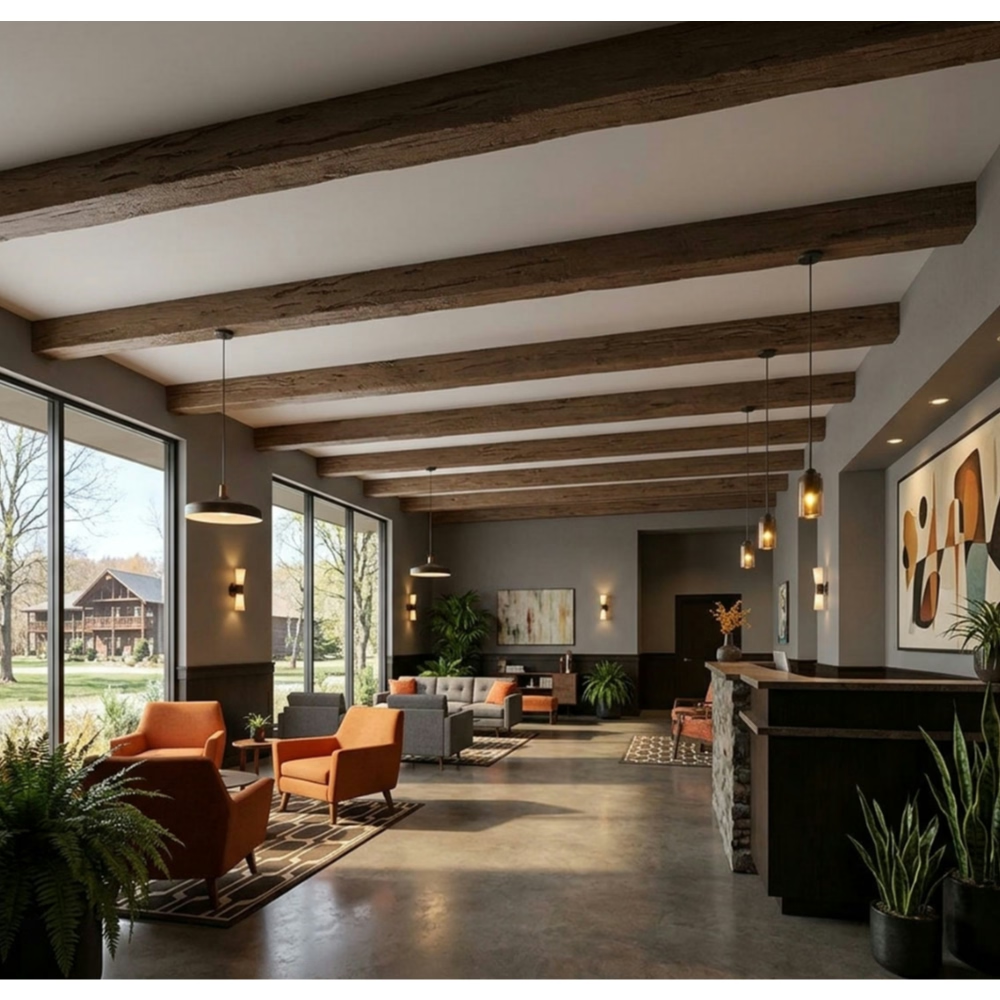
- Great rooms with concrete or tile floors
- Spaces with extensive glass
- Echo-prone environments
The more hard surface area, the more beams help.
Open Plans
Open-plan spaces benefit from beam treatment:
- Reduced echo across large volumes
- Better speech clarity
- More comfortable acoustic environment
Dining Spaces
Restaurant and dining acoustic challenges:
- Hard floors and tables
- High ceilings
- Multiple conversations
Beams reduce some of this chaos.
Limitations to Understand
Scale Matters
A few beams in a small room:
- Minimal audible effect
- May be imperceptible
- Don't justify beams for acoustics alone
Beams help in proportion to their coverage.
False Expectations
Don't buy beams primarily for acoustics:
- The benefit is modest
- Other treatments are more effective
- Aesthetic value should be the primary reason
Effective Acoustic Strategy
Combine Treatments
For meaningful acoustic improvement:
- Acoustic panels alongside beams
- Area rugs on hard floors
- Window treatments
- Furniture softens acoustics too
Beams work as part of a complete approach.
Room Purpose
Match treatment to room use:
- Home theater: dedicated acoustic treatment
- Living room: beams plus soft furnishings
- Recording space: professional acoustic design
Different rooms need different approaches.
Faux beams provide modest acoustic benefits—primarily reducing high-frequency echo in large, hard-surfaced rooms. This benefit should be considered a bonus, not a reason to buy beams. Real acoustic improvement requires comprehensive treatment; beams alone won't solve significant acoustic problems.
Technical References
ASTM standards cited in every specification
Test Data
Lab results from internal testing program
Updated 2026
Reviewed against current product specs