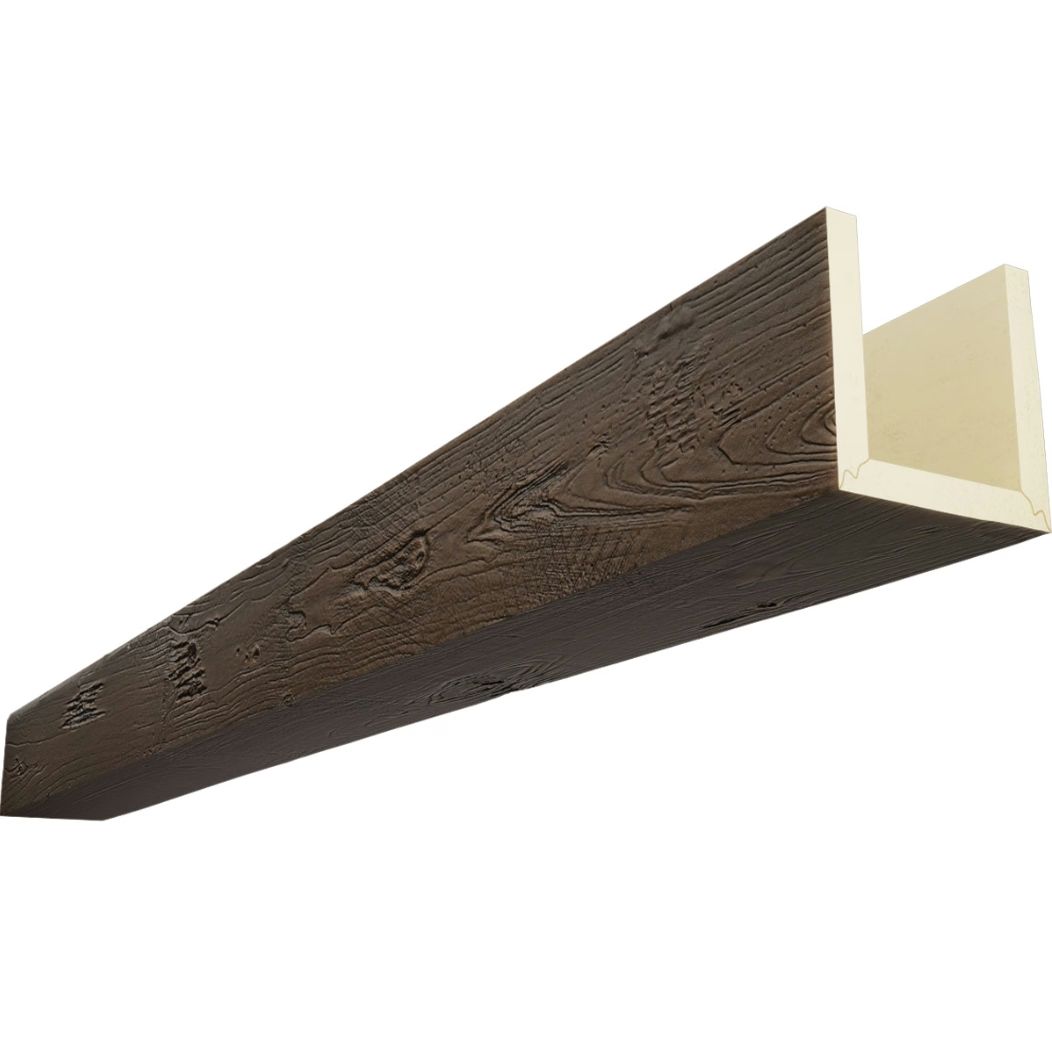
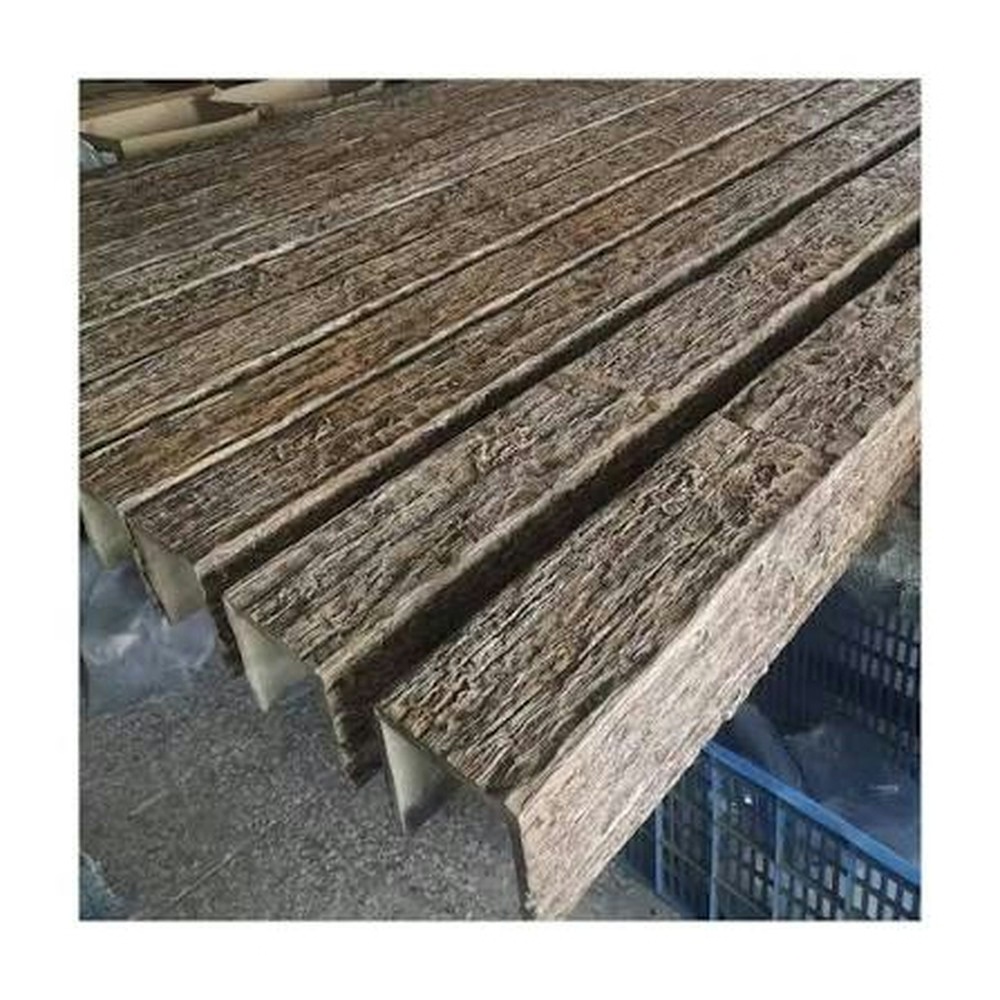
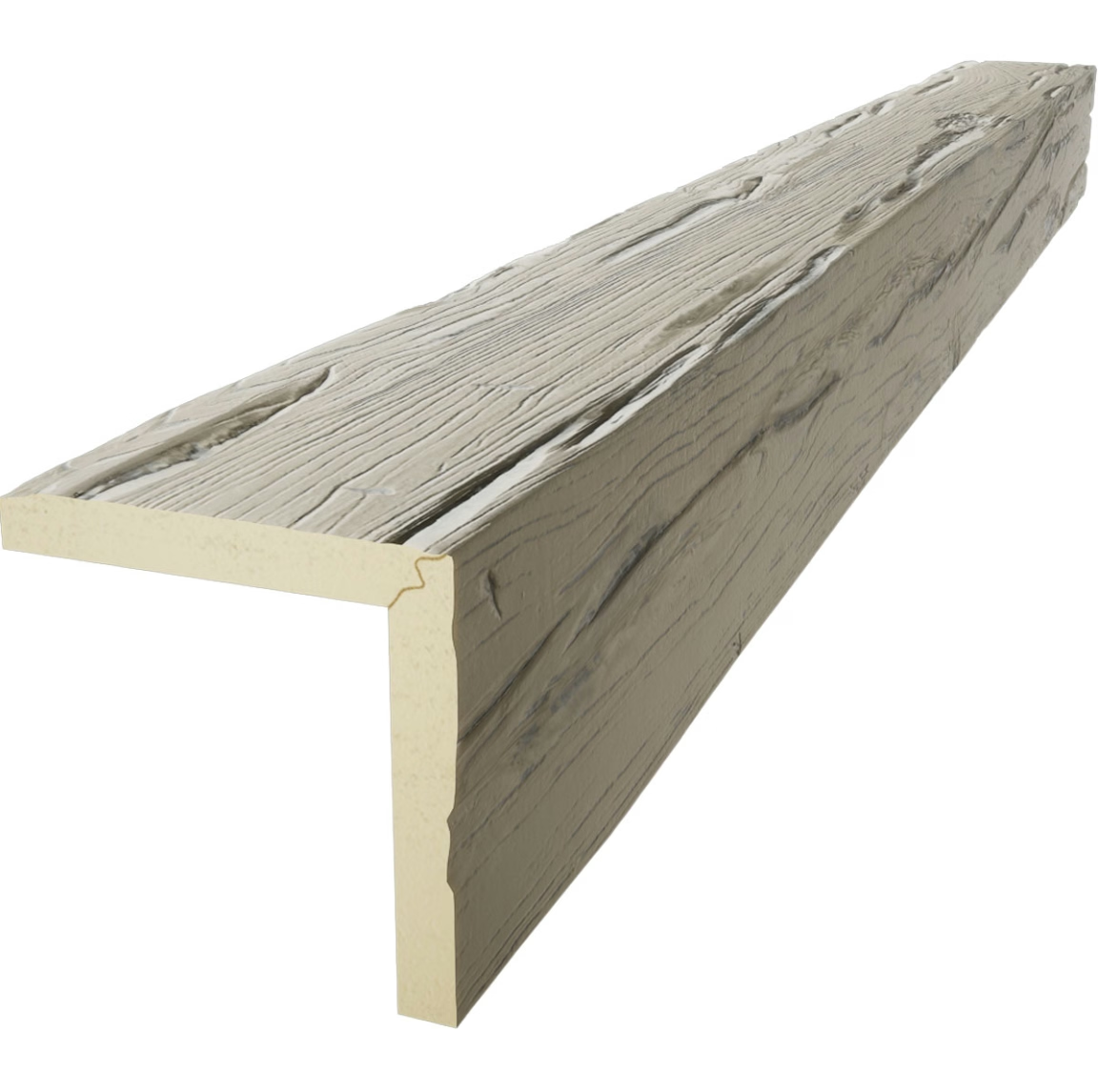
Warpage destroys timber beam installations. Cupping, bowing, twisting, and crowning all represent dimensional instabilities that compromise appearance and function. The phenomenon occurs because wood is an anisotropic material — it responds differently along versus across the grain. As moisture content changes, the differential movement creates internal stresses that manifest as distortion. Polyurethane beams eliminate this failure mode entirely because the material is isotropic. Movement occurs uniformly in all directions, so no internal stresses develop.
Warp-proof designation means your ceiling installation stays exactly as installed, regardless of what happens to ambient conditions. HVAC system operation, seasonal humidity swings, and accidental moisture exposure all become non-events for properly specified PU beams.
Understanding wood warpage mechanics
The physics explains why the problem is inherent to timber:
Differential shrinkage — wood shrinks more across the grain than along it during drying
Grain angle variation — natural variation in fiber orientation creates irregular movement
Knot influence — dense knot areas move differently than clear wood
Reaction wood — abnormal wood formed in leaning trees exhibits different behavior
Rapid moisture change — faster drying creates surface-to-core moisture differentials
These factors combine unpredictably. Even expert-selected timber with careful kiln drying develops some warp over time. The question is never whether warp will occur but how much.
Why PU beams resist warping
The material science provides clear advantages:
Isotropic behavior — uniform properties in all directions eliminate directional stress
No grain structure — the absence of wood fibers means no planes of weakness
Closed-cell composition — minimal moisture absorption prevents the wet-dry cycling that drives warp
Elastic flexibility — slight movement absorbs stress rather than creating distortion
Thermally stable — low coefficient of thermal expansion prevents temperature-driven movement
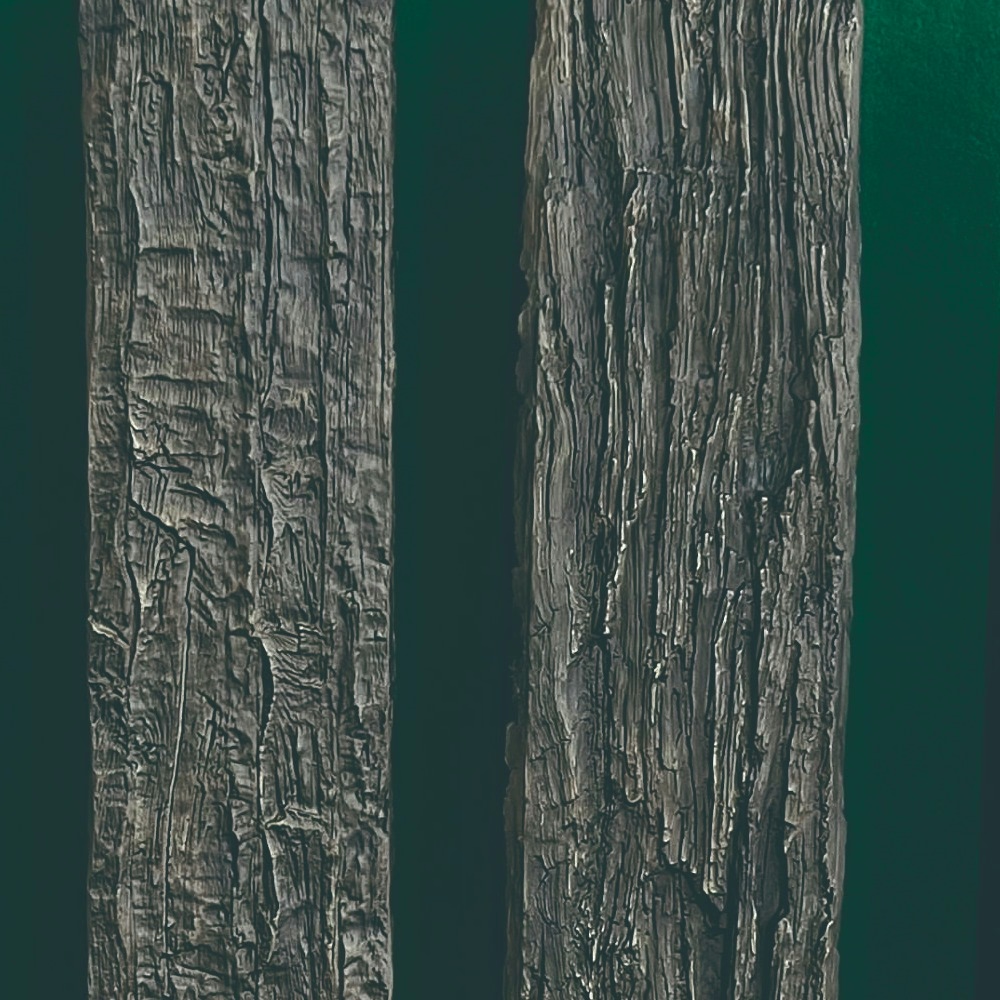
Combined, these characteristics produce genuine warp-proof performance. The beams you install remain the beams you see years later.
Installation stability benefits
Dimensional stability creates practical advantages during and after installation:
During installation
Contractors appreciate predictable handling characteristics:
- Straight beams align perfectly with layout marks
- No seasonal adjustment period before fastening
- Consistent cross-section simplifies joining and splicing
- Storage without warping risk between delivery and installation
After installation
Long-term performance benefits property owners:
- Ceiling lines stay perfectly straight
- Joints remain tight without reopening
- Appearance does not deteriorate with seasonal changes
- No corrective maintenance ever required
The stability advantage compounds over time. A beam that starts straight stays straight. One that starts slightly bowed gradually becomes more bowed as seasonal cycling accumulates.
Environmental stress testing
Manufacturers verify warp resistance through controlled conditioning:
Humidity cycling — 95% RH to 30% RH transitions simulating seasonal extremes
Temperature exposure — -20°C to +50°C range covering extreme conditions
Long-term monitoring — dimensional measurements over extended periods confirm stability
Accelerated aging — combined cycling protocols compress years of exposure into weeks
Beams surviving these protocols without dimensional change earn warp-proof classification. The testing demonstrates what the material physics predicts: polyurethane does not warp.
Comparing beam materials for stability
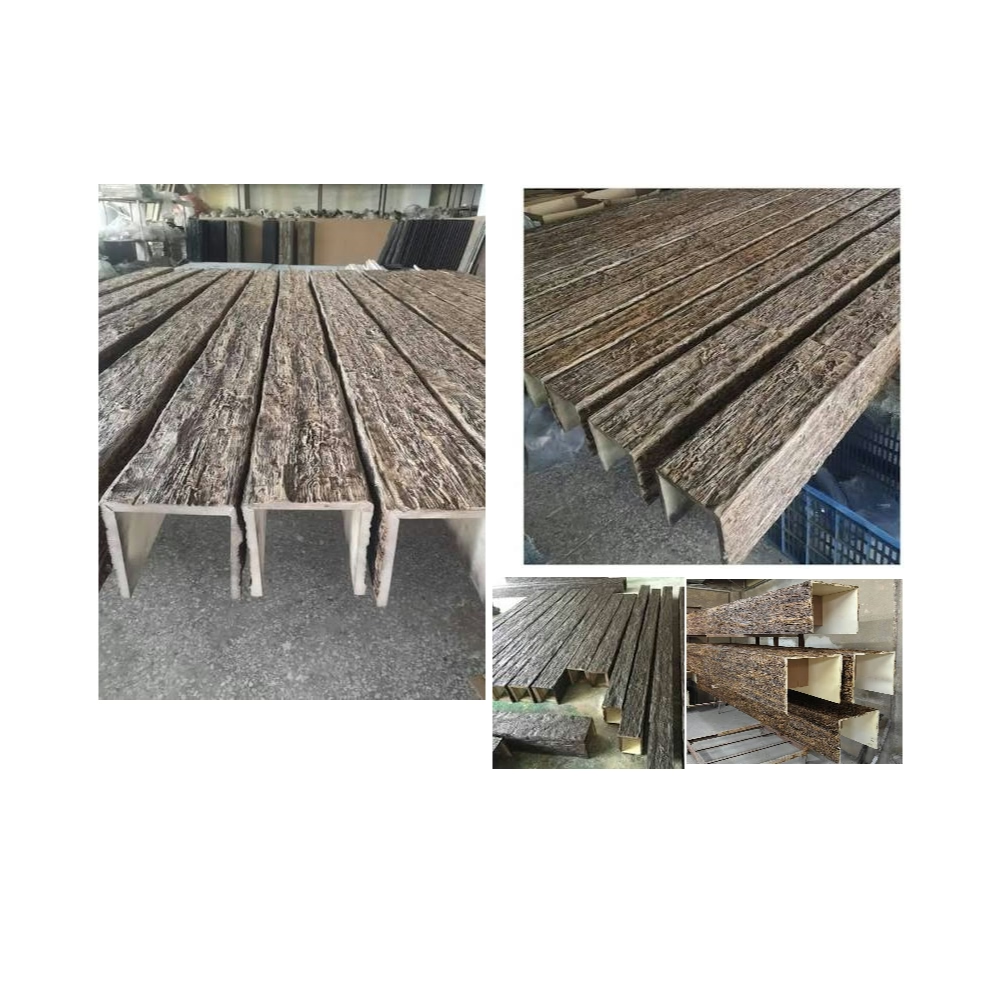
Different materials exhibit different warping tendencies:
| Material | Warp Risk | Dimensional Stability | Seasonal Movement |
|---|---|---|---|
| Solid Timber | High | Poor | 2-5% across grain |
| Glued Laminated | Medium | Good | Reduced but present |
| LVL (Laminated Veneer) | Low | Very Good | Minimal |
| PU Faux Beams | None | Excellent | Negligible |
For ceiling applications where straight, stable lines are essential, polyurethane offers clear advantages over all timber-based alternatives.
When warp-proof matters most
Certain applications demand absolute dimensional stability:
Long spans — longer beams have more opportunity for cumulative distortion
Visible joints — exposed connections show any movement as gaps develop
Precision alignments — architectural features requiring exact positioning
Minimalist designs — clean modern aesthetics tolerate no irregularity
Commercial installations — professional appearance standards require consistent performance
Warp-proof PU beams serve these demanding applications reliably.
A permanent straight solution
100% warp-proof faux wood ceiling beams deliver the dimensional stability that timber inherently cannot provide. The investment in quality polyurethane pays dividends through years of maintenance-free performance. Ceilings stay straight. Joints stay tight. Appearances stay perfect.
For projects where alignment and stability matter — which is to say, all projects — specify warp-proof beams and accept only documented dimensional stability from suppliers.
Technical References
ASTM standards cited in every specification
Test Data
Lab results from internal testing program
Updated 2026
Reviewed against current product specs