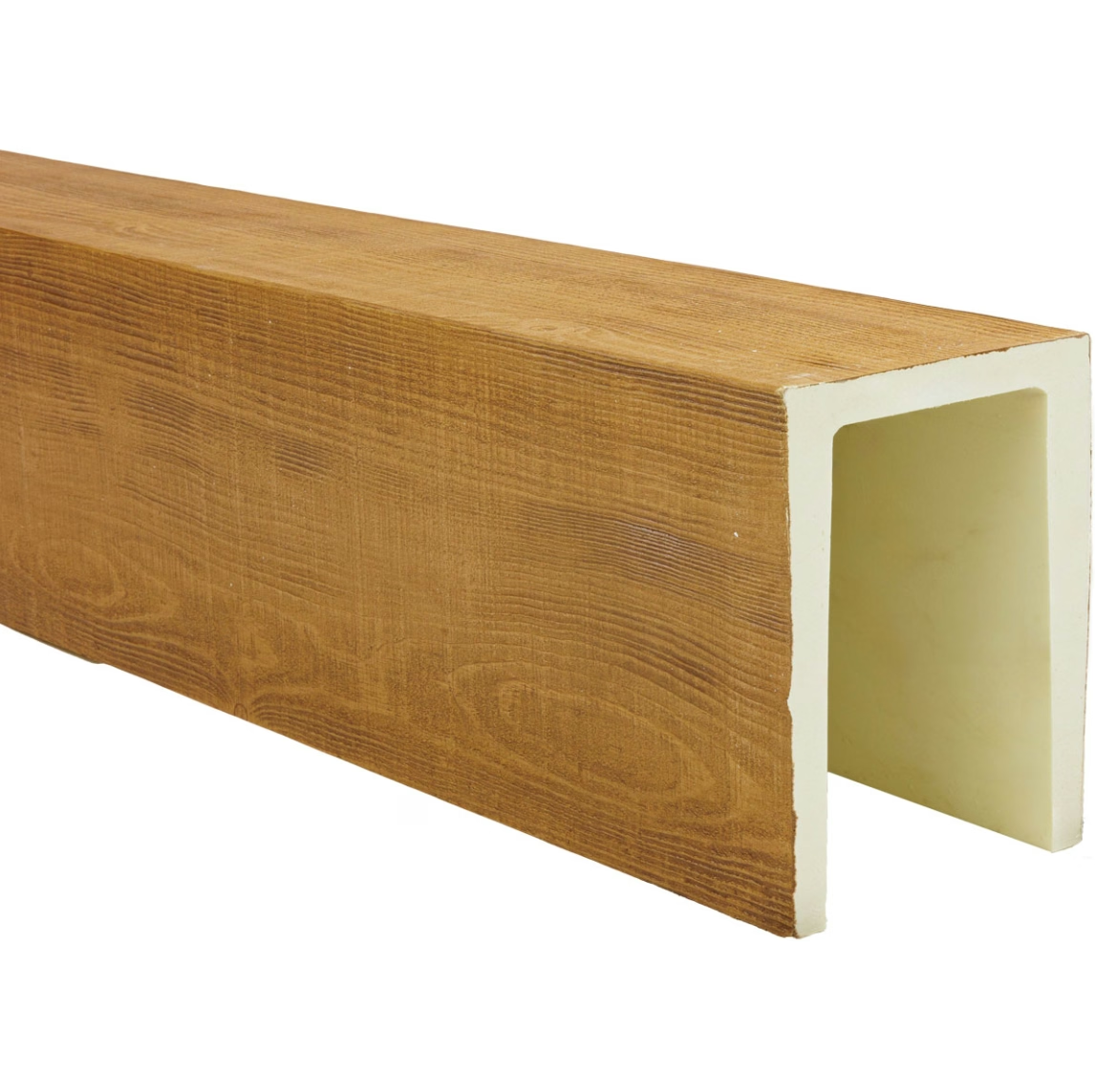
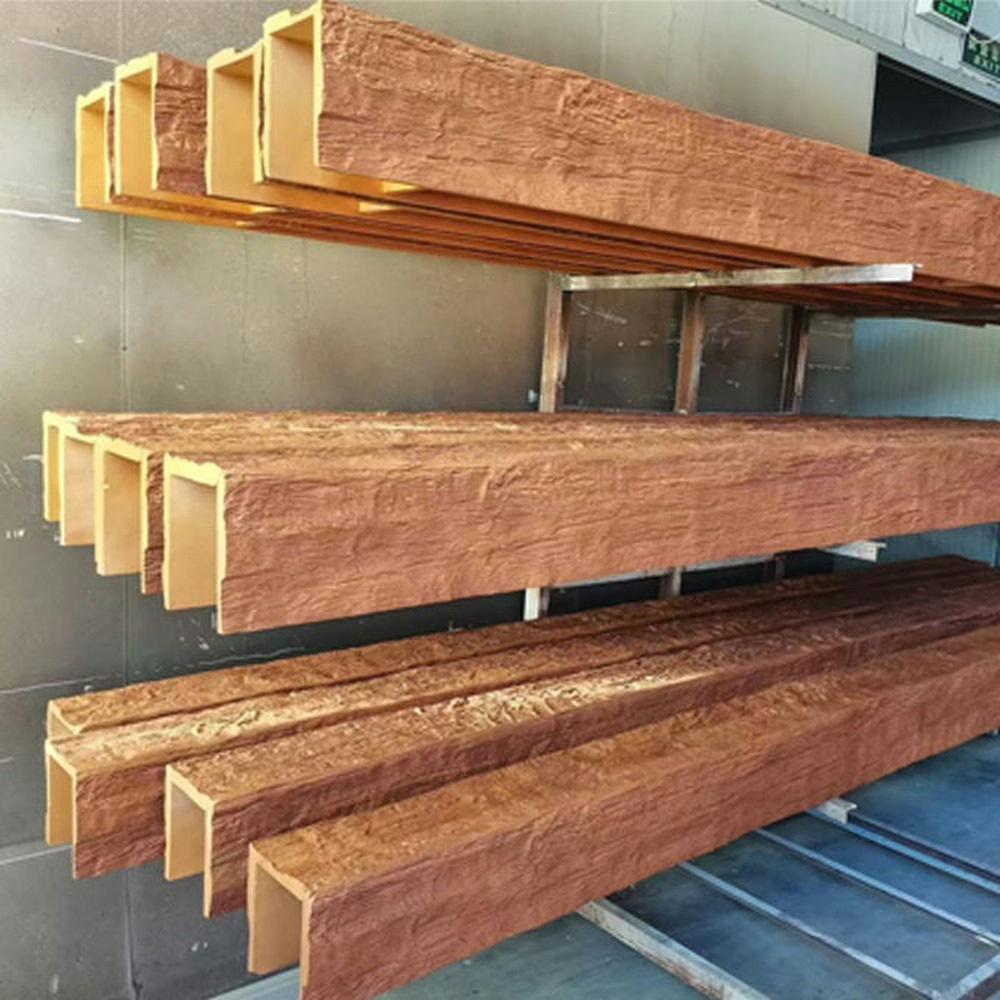
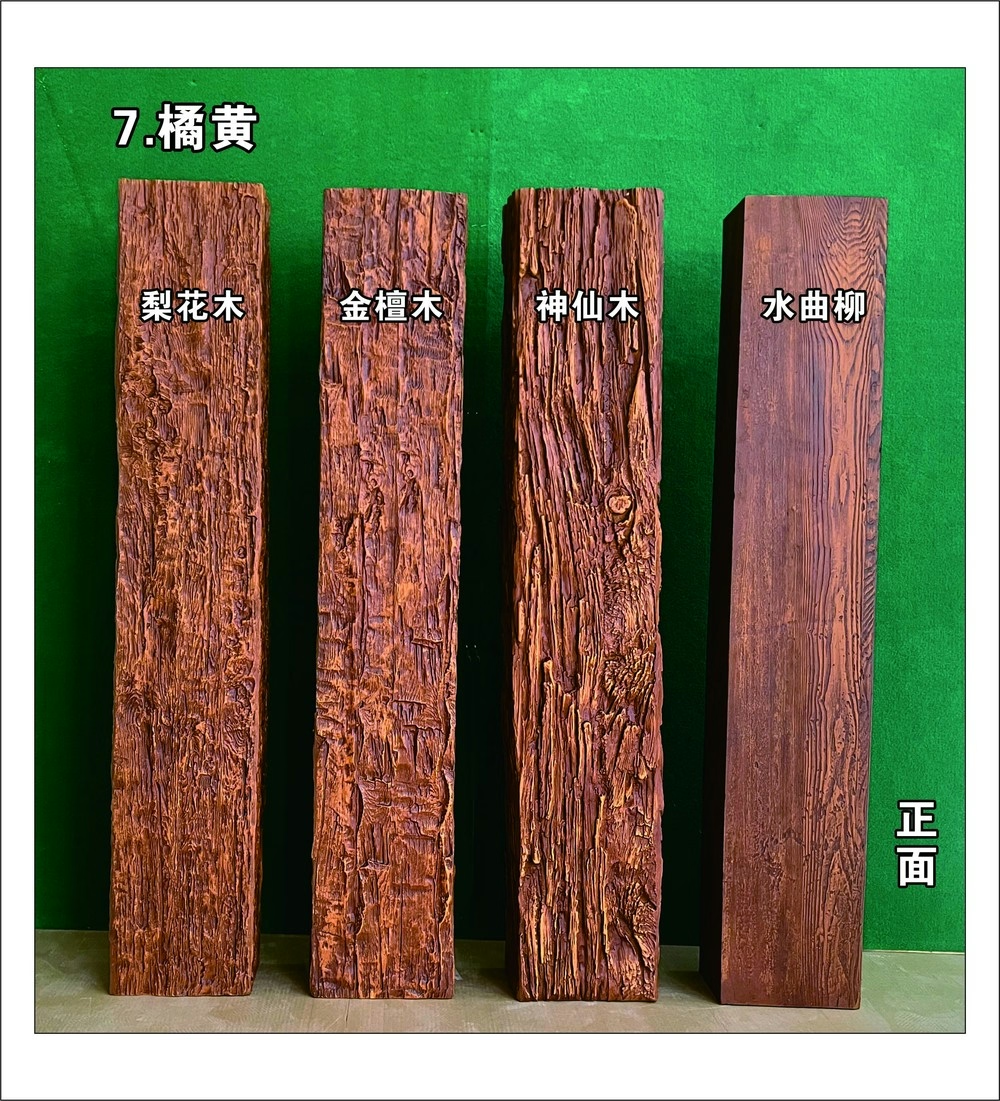
Every homeowner who installed timber beams in a bathroom has learned the same lesson: organic materials and high humidity make uncomfortable partners. Within months, dark spots appear in corners and crevices. Within years, full colonies establish themselves along the grain. Professional cleaning helps temporarily, but the problem returns because the underlying conditions remain unchanged. Polyurethane solves this fundamental incompatibility. Because PU absorbs no moisture, biological agents find no purchase on the surface.
Mildew-proof indoor faux wood beams open design possibilities that timber simply cannot support. Vaulted spa ceilings, exposed bathroom structures, indoor pool areas, and steam room features all become viable applications when moisture cannot compromise the appearance.
Why mildew attacks timber
The biological process explains why wood fails in humid environments:
Mildew requirements — fungal spores need organic material, warmth, and moisture to grow
Timber provides all three — wood cells supply food, ambient temperature provides warmth, humidity provides moisture
Grain channels hold water — rough wood surfaces retain moisture droplets long enough for colonies to establish
Hidden colonization — spores grow in microscopic grain crevices before becoming visible
Once established, mildew colonies produce dark pigments that penetrate the wood surface. Surface cleaning removes the visible growth but cannot extract stains from within the cells.
Polyurethane's biological immunity
The material composition creates inherent mildew resistance:
No organic content — mildew spores find no food source on polyurethane
Moisture impermeable surface — water beads and evaporates rather than soaking in
Smooth surface texture — fewer crevices for spore colonization
Inert chemistry — the polymer does not support biological growth
Anti-microbial additives — many formulations include EPA-registered inhibitors for added protection
These properties combine to produce genuine mildew-proof performance. The designation means colonies cannot establish themselves under any conditions, regardless of ambient humidity.

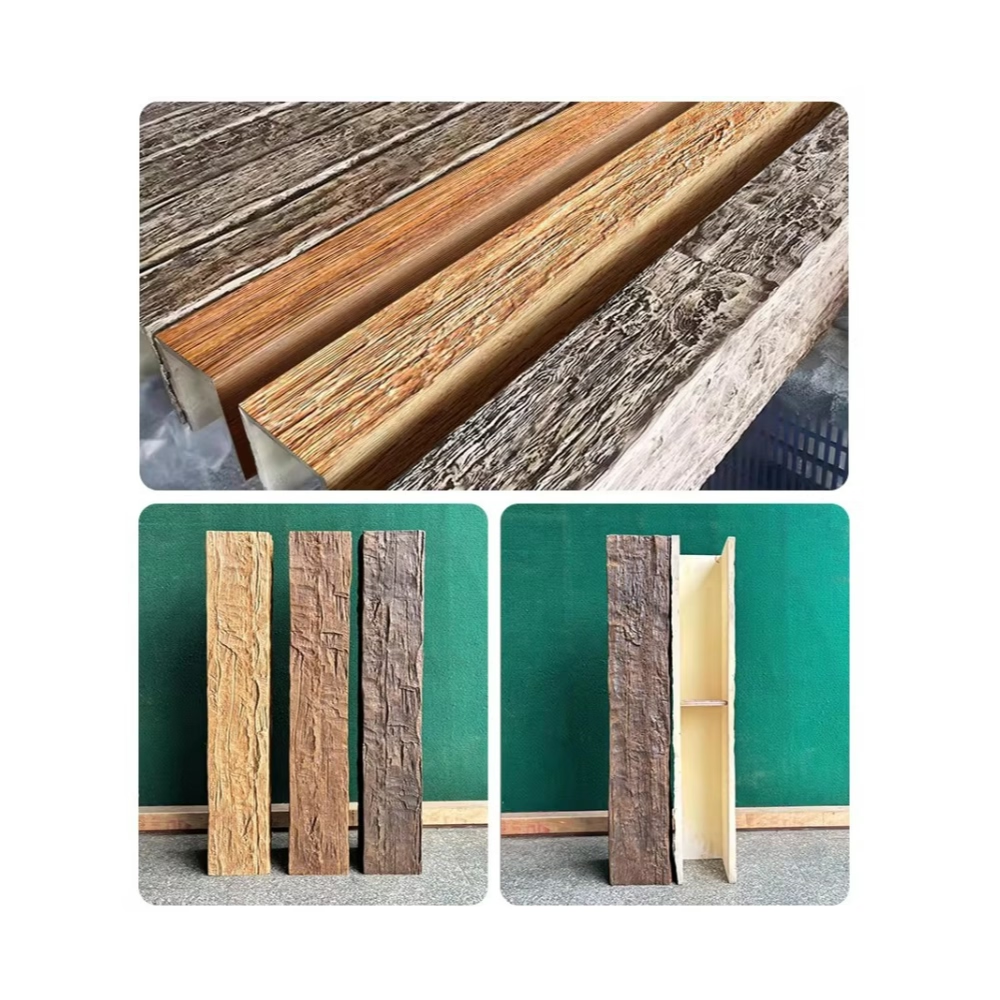
High-humidity indoor applications
The mildew-proof advantage enables installations that would fail with real timber:
Spa and wellness centers
Steam and water vapor create constant humidity challenge:
- Treatment room ceilings
- Poolside changing areas
- Sauna and steam room surrounds
- Relaxation lounge overhead
Guests and members notice when maintenance falls behind. Mildew-proof beams maintain presentation standards automatically.
Residential bathrooms
Master bathroom upgrades increasingly feature exposed structural elements:
- Vaulted ceiling beams
- Shower enclosure surrounds
- Above-bathtub statement pieces
- Steam shower installations
Homeowners appreciate the spa aesthetic without the anxiety of ongoing biological warfare.
Indoor pool areas
Dehumidification systems manage humidity but cannot eliminate it:
- Pool enclosure ceilings
- Lounge area overhead beams
- Changing room structures
- Spectator gallery treatments
These commercial environments demand reliable performance that timber cannot provide.
Commercial kitchens
Foodservice facilities face constant steam and cleaning cycles:
- Prep area overhead
- Service counter surrounds
- Customer-facing decorative elements
- Ventilation hood treatments
Health inspectors look for mold in these environments. PU beams eliminate this concern entirely.
Humidity tolerance specifications
Indoor mildew-proof beams perform across a range of conditions:
Standard indoor humidity — 30% to 50% relative humidity, no special requirements
High humidity interiors — 50% to 70% RH, exterior grade formulation recommended
Extreme humidity spaces — 70%+ RH (pools, spas, steam rooms), premium formulation with enhanced protection
For bathrooms and kitchens in residential settings, standard interior grade with smooth finish provides adequate mildew resistance. Commercial and institutional applications warrant exterior grade or premium formulations with documented anti-microbial performance.
Maintenance advantages
Even though mildew-proof beams resist biological growth, routine cleaning remains good practice:
Dust removal — periodic dusting maintains appearance in all environments
Surface cleaning — mild soap and water removes any accumulated residues
Spot treatment — no special products needed; standard household cleaners work safely
No protective coatings — unlike timber, PU does not require periodic sealing or treatment
The maintenance requirement drops to essentially zero compared to timber, which demands annual anti-fungal treatment in humid environments.
Enabling design ambitions
100% mildew-proof indoor faux wood beams remove a fundamental constraint from interior design. Spaces that previously required moisture-resistant but aesthetically limited materials can now feature authentic timber character. The combination of practical performance and visual warmth serves both functional and emotional needs.
For humid climate projects, specify beams explicitly marketed as mildew-proof, and verify the formulation includes documented anti-microbial additives. The investment protects the design vision through years of humid conditions.
Technical References
ASTM standards cited in every specification
Test Data
Lab results from internal testing program
Updated 2026
Reviewed against current product specs