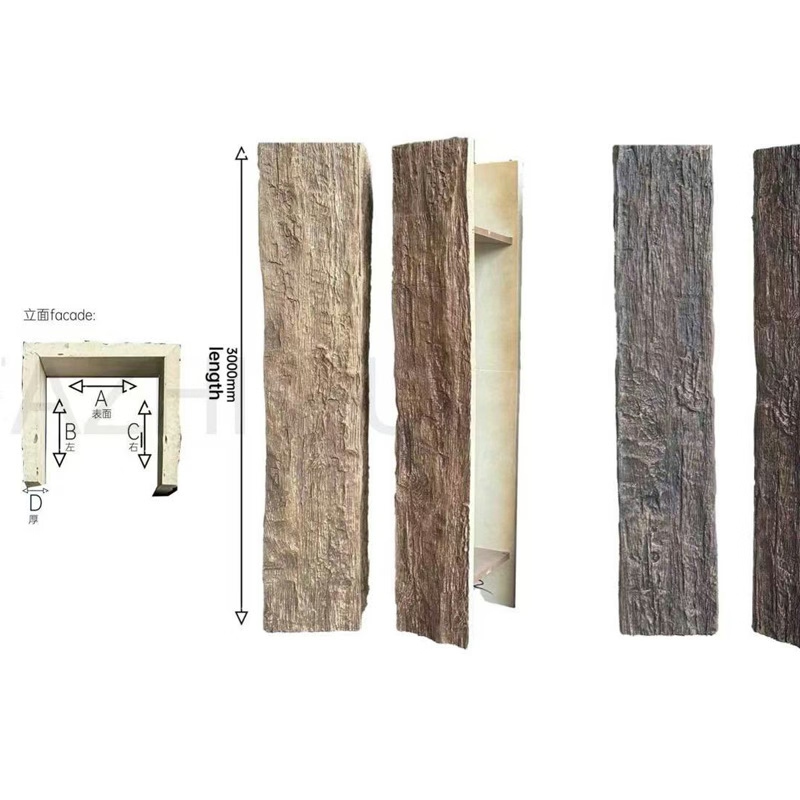
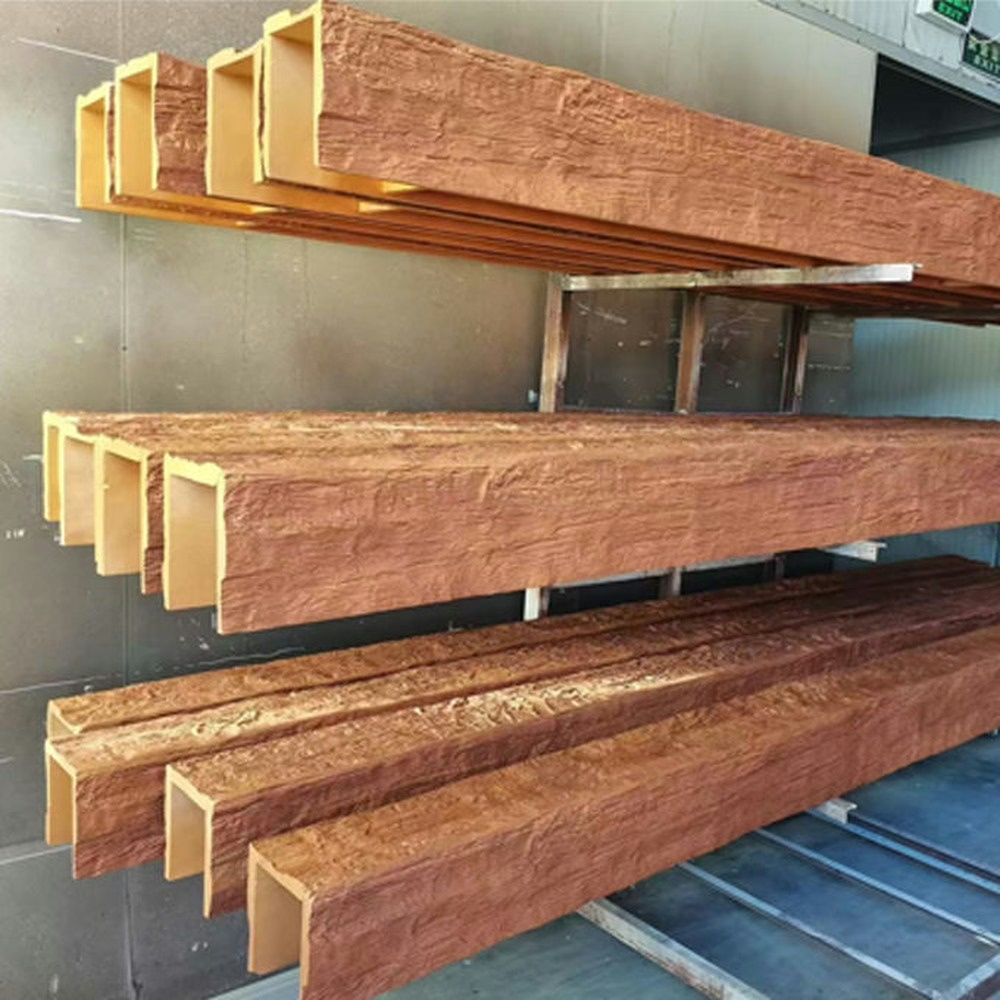
Why "Mildew-Proof" Is a Real Engineering Claim (Not Marketing)
Polyurethane foam is an inorganic polymer — it does not contain cellulose, the plant fiber that mold and mildew eat. In theory, PU foam cannot support mold growth on its own. In practice, dust, skin cells and soap film accumulate on the beam surface and mold grows on that biofilm, not on the foam itself.
A mildew-proof PU faux beam addresses this in three ways:
- Factory-applied mildewcide additive in the topcoat (typically a quaternary ammonium compound or isothiazolinone derivative)
- Smooth, non-porous skin surface that resists biofilm adhesion
- Documented ASTM G21 mold-resistance rating of 0 or 1 (no growth or trace growth only)
An interior PU beam without these features will still grow mildew on its surface in sustained humidity above 70%, just like any painted drywall ceiling. The mildew-proof formulation prevents the surface growth entirely.

Where Mildew-Proof Indoor Beams Matter Most
Six applications push indoor humidity above the 60-70% threshold where mildew becomes a concern:
| Room type | Typical humidity range | Risk without mildewcide |
|---|---|---|
| Standard bathroom (with shower) | 60-80% during shower | Moderate |
| Bathroom with jetted tub | 70-90% during use | High |
| Indoor swimming pool room | 60-80% continuous | Very high |
| Sunroom (unvented) | 50-70% continuous | Moderate-high |
| Coastal home (no dehumidification) | 60-75% continuous | Moderate-high |
| Basement rec room (unfinished HVAC) | 55-70% continuous | Moderate |
In any of these rooms, a mildew-proof PU beam is the right call even if the rest of the ceiling is standard painted drywall. The beam is a focal point — visible mildew on a faux beam looks worse than the same mildew on a flat ceiling.
ASTM G21 Mildew Resistance Testing
The standard test for mildew resistance of polymeric materials is ASTM G21 ("Standard Practice for Determining Resistance of Synthetic Polymeric Materials to Fungi"). The test exposes samples to a mix of five fungal spores (Aspergillus brasiliensis, Aspergillus fumigatus, Chaetomium globosum, Penicillium funiculosum and Trichoderma virens) for 28 days at 86°F and >85% relative humidity.
Results are rated 0-4:
| Rating | Observation | Verdict |
|---|---|---|
| 0 | No growth | Excellent — true mildew-proof |
| 1 | Trace growth (<10% surface) | Very good — mildew-resistant |
| 2 | Light growth (10-30%) | Marginal — mildew-susceptible |
| 3 | Moderate growth (30-60%) | Poor — mildew-prone |
| 4 | Heavy growth (>60%) | Failure |
A mildew-proof PU beam should carry a G21 rating of 0 with the mildewcide additive and 1 without. Test reports should be available from the manufacturer — if not, the "mildew-proof" claim is not documented.
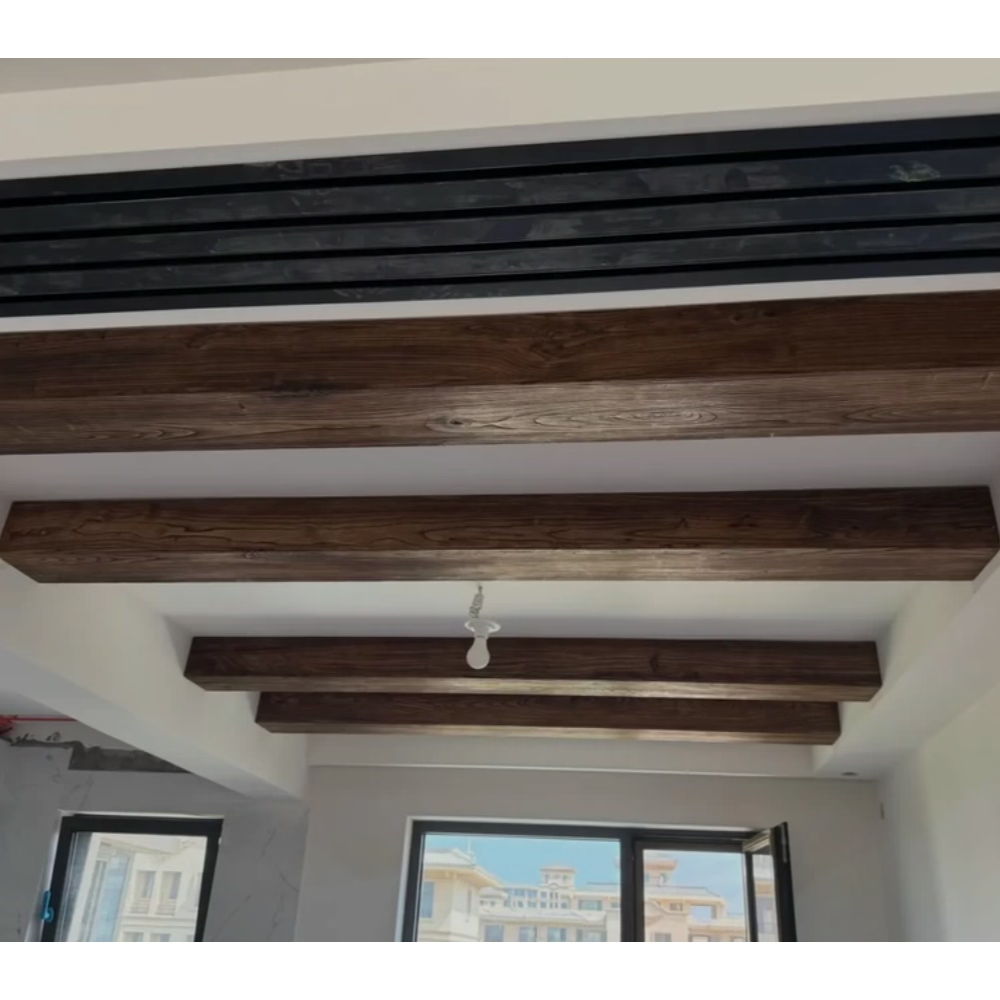
Bathroom Beam Installation: The Most Common High-Humidity Application
Bathroom beams are usually decorative wraps over a structural header above a shower or tub. They see direct steam during showers but are otherwise dry.
Spec essentials
| Item | Specification |
|---|---|
| Beam profile | 6 in × 8 in or 8 in × 8 in most common |
| Foam density | 0.55 g/cm³ minimum |
| Topcoat | Factory-applied mildew-resistant acrylic latex (semi-gloss for wipe-clean) |
| Mildewcide | Quaternary ammonium or isothiazolinone additive in topcoat |
| End caps | Sealed at both ends to prevent moisture wicking |
| Blocking | Standard wood blocking with vapor retarder behind |
| Fasteners | Stainless steel (not zinc-plated) to prevent rust streaks |
| Caulk | 100% silicone caulk at ceiling joint (paintable silicone also OK) |
Ventilation gap and exhaust fan sizing
The beam should never sit flush against the ceiling in a bathroom. A 1/8 in to 1/4 in gap at the top of the beam allows the ceiling cavity to vent. Pair this with a properly sized exhaust fan:
- Standard bathroom: 50 CFM minimum, ducted outside
- Large bathroom with shower: 80-110 CFM
- Bathroom with jetted tub or steam shower: 110-150 CFM
A beam in a bathroom with an undersized exhaust fan will accumulate mildew on the surface regardless of how mildew-proof the topcoat is — the mildewcide is a backup, not the primary defense.
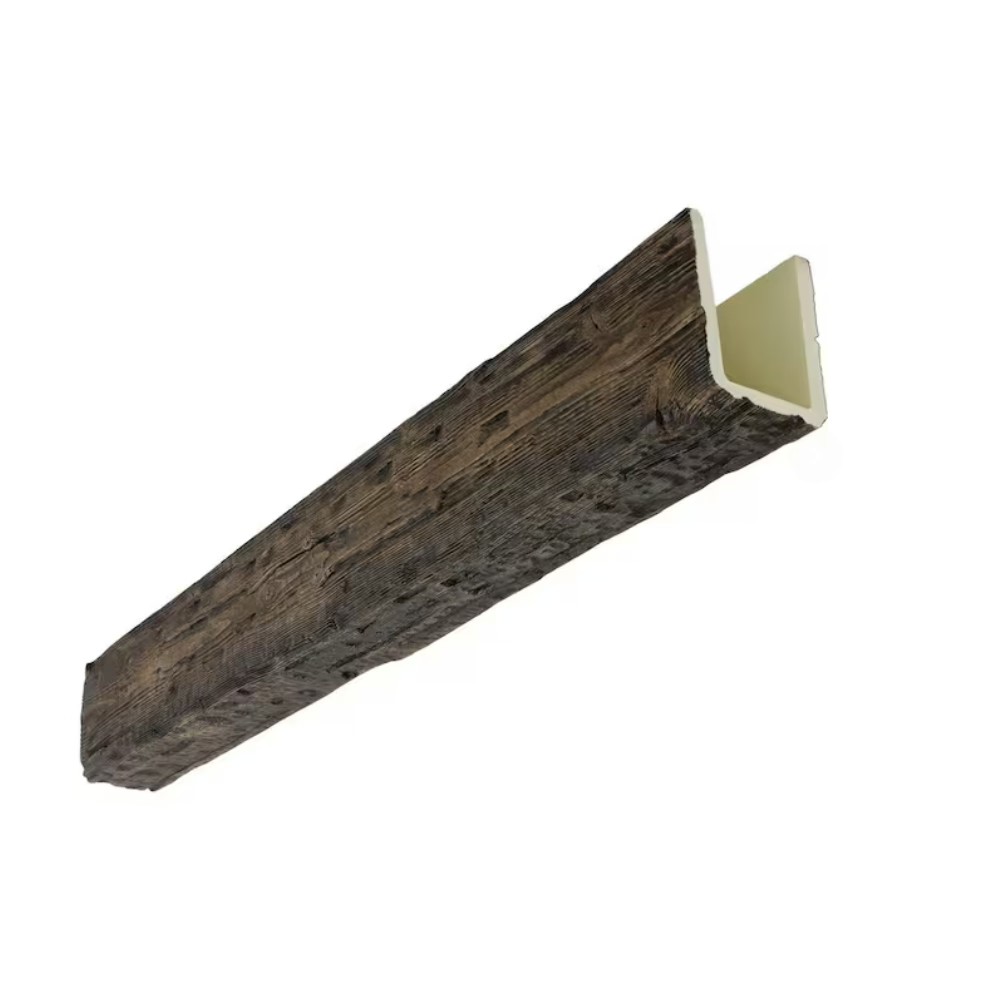
Indoor Pool and Spa Room Beams
Indoor pool rooms are the most demanding interior environment for any finish material. Sustained humidity of 60-80% with chloramine vapor from pool chemistry creates a uniquely aggressive environment.
Spec essentials for indoor pool rooms
| Item | Specification |
|---|---|
| Beam profile | Boxed pair or oversized profile for visual proportion |
| Foam density | 0.62 g/cm³ minimum |
| Topcoat | Two-part marine-grade polyurethane with mildewcide |
| Surface finish | High-gloss for wipe-clean |
| Vapor retarder | Class I vapor retarder behind all beam runs (0.1 perm or less) |
| HVAC | Dedicated dehumidification system (typical: AprilAire, DesertAire) |
| Maintenance | Monthly wipe-down with mild detergent |
Indoor pool rooms without a dedicated dehumidification system will accumulate mildew on every surface, including mildew-proof beams. The HVAC is the primary defense — the beam finish is a backup.

Sunroom Beams: UV + Humidity Combo
Sunrooms combine direct UV exposure with elevated humidity from plants and people. The mildew-proof spec must also include a UV-inhibited topcoat.
| Item | Specification |
|---|---|
| Topcoat | Two-coat acrylic with both mildewcide AND UV inhibitor |
| Recoat schedule | Every 3-4 years (more frequent than standard interior) |
| Surface | Satin finish (hides minor dust accumulation) |
Coastal and Tropical Climate Considerations
Coastal homes in Florida, Gulf Coast, Hawaii and tropical Asia face sustained humidity above 70% year-round, plus salt air that accelerates finish degradation.
For these installations:
- Specify the premium topcoat (marine-grade two-part polyurethane with mildewcide)
- Recoat every 2-3 years rather than the standard 4-5
- Run a whole-home dehumidifier sized to the conditioned square footage
- Use 316 stainless fasteners even for interior beams — salt air corrodes standard zinc-plated screws within 18-24 months
What About Unvented Bathrooms in Old Homes?
If the bathroom has no exhaust fan and no operable window, the mildewcide in the topcoat is the only thing standing between the beam and visible mildew. In this situation:
- Add a humidity-sensing exhaust fan before installing the beam
- If a fan is not feasible, plan to recoat the beam every 12-18 months with a mildewcide-containing paint
- Wipe the beam down with a mild detergent solution monthly
A mildew-proof beam in an unvented bathroom is a maintenance-intensive choice, not a permanent solution. Fix the ventilation first.
Frequently Asked Questions
Can a PU faux beam really be mildew-proof?
Yes — but only with a factory-applied mildewcide additive in the topcoat and a documented ASTM G21 rating of 0 or 1. The PU foam itself is inorganic and does not feed mildew, but dust and biofilm on the surface will grow mildew on any painted surface in high humidity without a mildewcide.
Where should I use a mildew-proof beam?
Any room with sustained humidity above 60%: bathrooms, indoor pool rooms, sunrooms, coastal homes, basement rec rooms, spa rooms and unvented laundry rooms. Standard interior beams in these rooms will show mildew on the surface within 6-18 months without mildewcide protection.
How do I clean a mildew-proof beam?
Wipe with a soft cloth and a mild detergent solution (1 tsp dish soap per quart of warm water). For stubborn spots, a 1:10 bleach-to-water solution is safe on a mildewcide-treated topcoat. Never use abrasive cleaners — they scratch the topcoat and create micro-sites for biofilm adhesion.
Can I add mildewcide to the paint myself if the beam doesn't have it?
Yes — mildewcide additives (like X-180 or Mildex) are available at any paint store and can be mixed into topcoat paint at the recommended ratio. This is a workable substitute for factory treatment but the protection wears off faster (typically 2-3 years vs 5-7 years for factory-applied).
Will a mildew-proof beam prevent mold behind the beam?
No. The mildew-proof topcoat protects the visible surface of the beam. If the back of the beam or the surrounding ceiling cavity has a moisture problem (leak, condensation, missing vapor retarder), mold will grow there regardless of the beam finish. Address the moisture source, not just the finish.
How long does the mildew-proof topcoat last?
Factory-applied mildewcide topcoats last 5-7 years in standard humidity and 3-5 years in sustained high-humidity environments. Recoating with a mildewcide-containing paint is straightforward — light scuff sand, clean and re-roll or spray.
Is a mildew-proof beam more expensive?
The mildewcide additive adds about 5-8% to the beam cost. For the protection it provides in a bathroom or coastal home, it's one of the highest-value upgrades in the catalog.
Technical References
ASTM standards cited in every specification
Test Data
Lab results from internal testing program
Updated 2026
Reviewed against current product specs