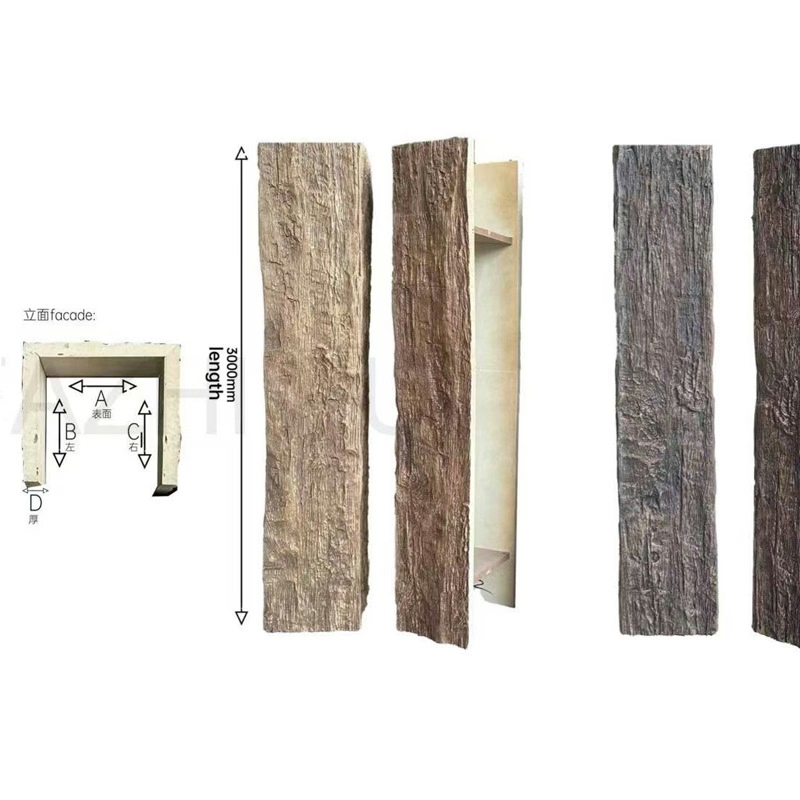
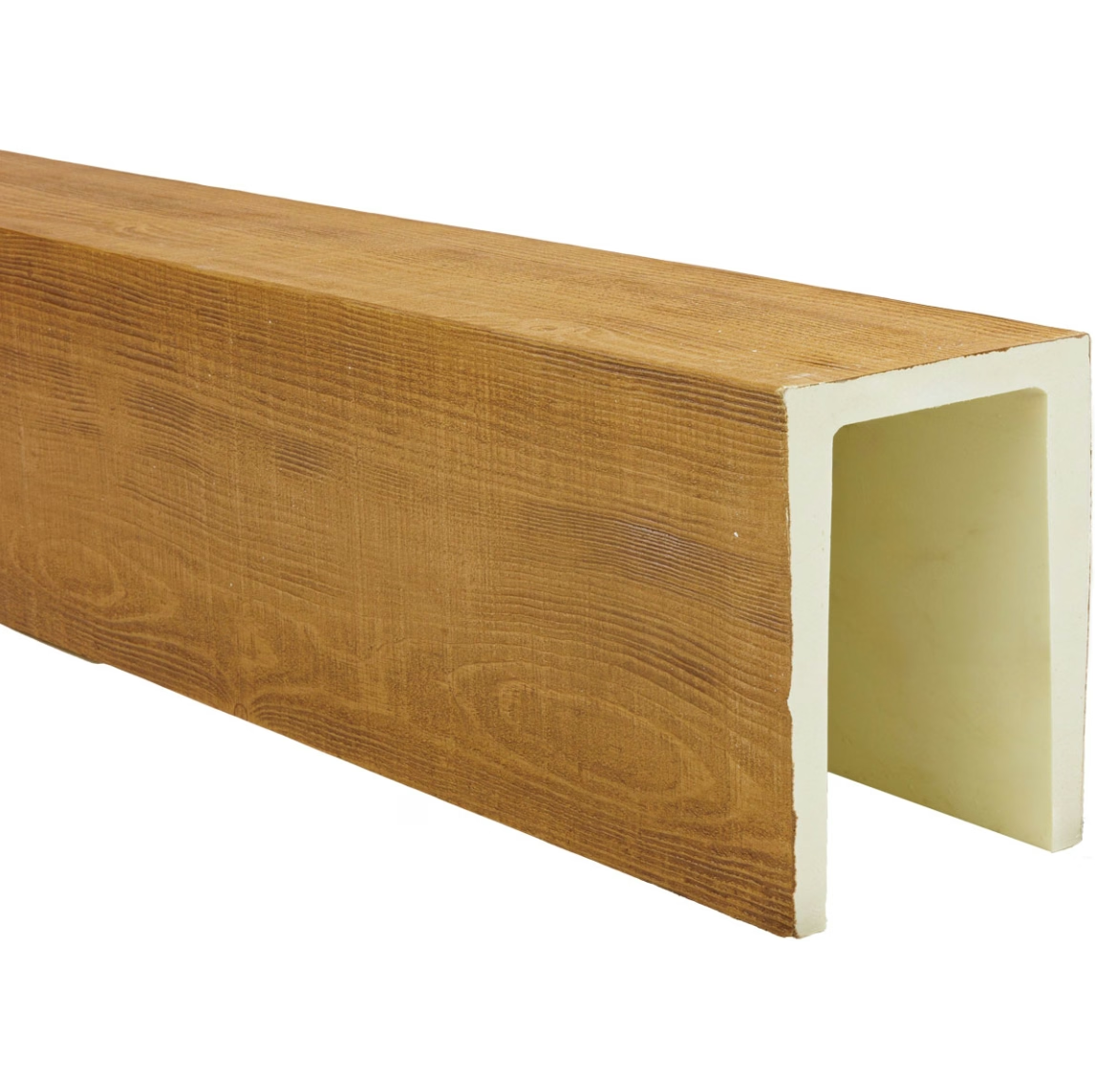
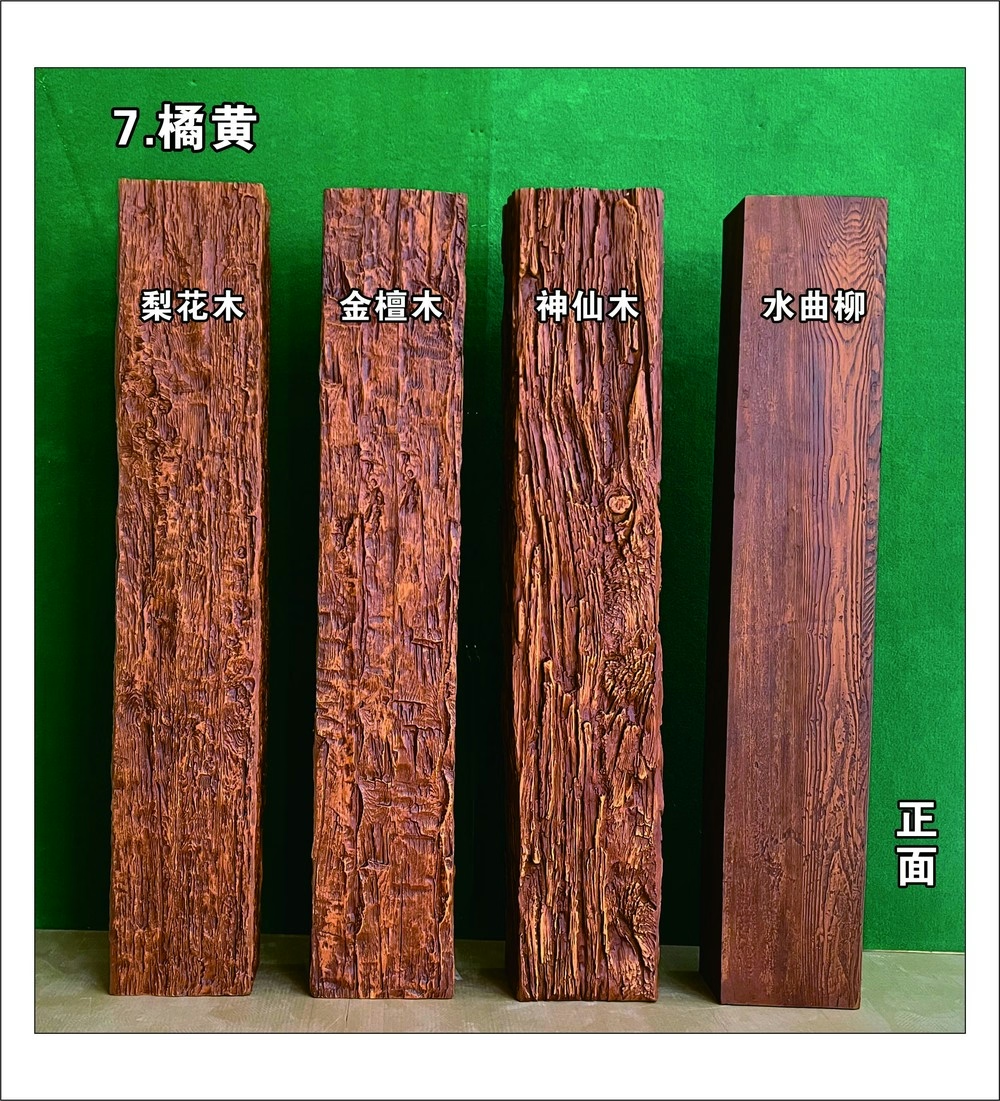
Exterior-Grade PU Beams Are a Different Product
The PU faux beam you install in a living room is not the same product as an exterior-grade PU faux beam. Interior SKUs are optimized for paint adhesion and indoor UV tolerance. Exterior-grade SKUs are formulated to handle moisture ingress, freeze-thaw cycling, salt spray and direct UV.
Why this matters: a standard interior PU beam left outdoors will:
- Absorb water through any micro-perforation in the skin
- Freeze and expand that water in cold climates, cracking the foam
- Delaminate the polymer skin from the foam core within 12-24 months
- Craze (micro-crack) from direct UV within 18-24 months
Exterior-grade PU beams are built to handle all four failure modes. The right product, properly installed, lasts 15-25 years in residential exterior applications.
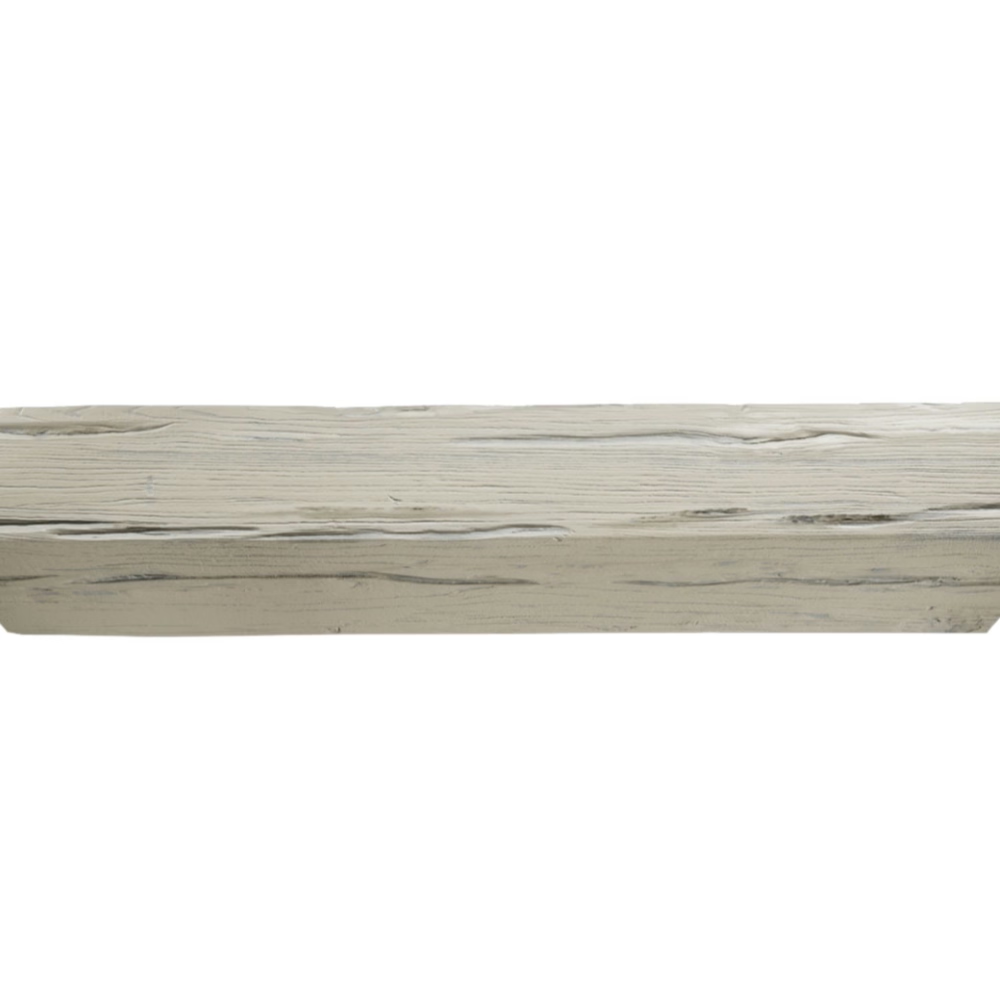
What Makes a PU Beam "Exterior Grade"
Six characteristics distinguish an exterior-grade PU faux beam from an interior SKU:
1. Closed-cell foam core with documented water absorption rate
ASTM D2842 immersion testing on closed-cell PU foam reports water absorption of 0.5-1.5% by volume for quality formulations. Anything above 3% is interior-only.
2. Higher-density skin layer
The polymer skin on an exterior beam is typically 0.5-1.0 mm thicker than on an interior beam, providing better moisture barrier and UV resistance.
3. UV-inhibited factory topcoat
A two-part polyurethane or marine-grade acrylic topcoat with documented 2000+ hour QUV rating. Interior SKUs use a single-coat latex.
4. Stainless or hot-dip galvanized fasteners
Standard zinc-plated fasteners corrode within 12-24 months in exterior applications, leaving rust streaks down the beam face. Use 304 or 316 stainless steel fasteners or hot-dip galvanized structural screws.
5. Sealed end-grain caps
Open cell structure at the beam ends is the #1 water entry point. Exterior-grade beams have factory-sealed end caps (epoxy plug or molded polymer cap) that prevent moisture wicking up the foam core.
6. Documented freeze-thaw cycle rating
ASTM C666 freeze-thaw testing on closed-cell PU foam shows zero structural loss after 300 cycles for quality exterior formulations. Interior SKUs typically fail at 50-100 cycles.
Residential Exterior Applications
Exterior-grade PU faux beams are appropriate for:
- Covered patio ceilings (under roof, but humidity-exposed)
- Pergola cross-beams (open-air, fully weather-exposed)
- Outdoor kitchen range hoods and mantels (heat + humidity + grease)
- Arbor and gate headers (direct sun and rain)
- Porch beam wraps (decorative over structural post)
- Exterior fireplace mantels (heat + weather + UV)
They are not appropriate for fully submerged applications (fountain edges, dock structures) or for in-ground burial (post bases in concrete).
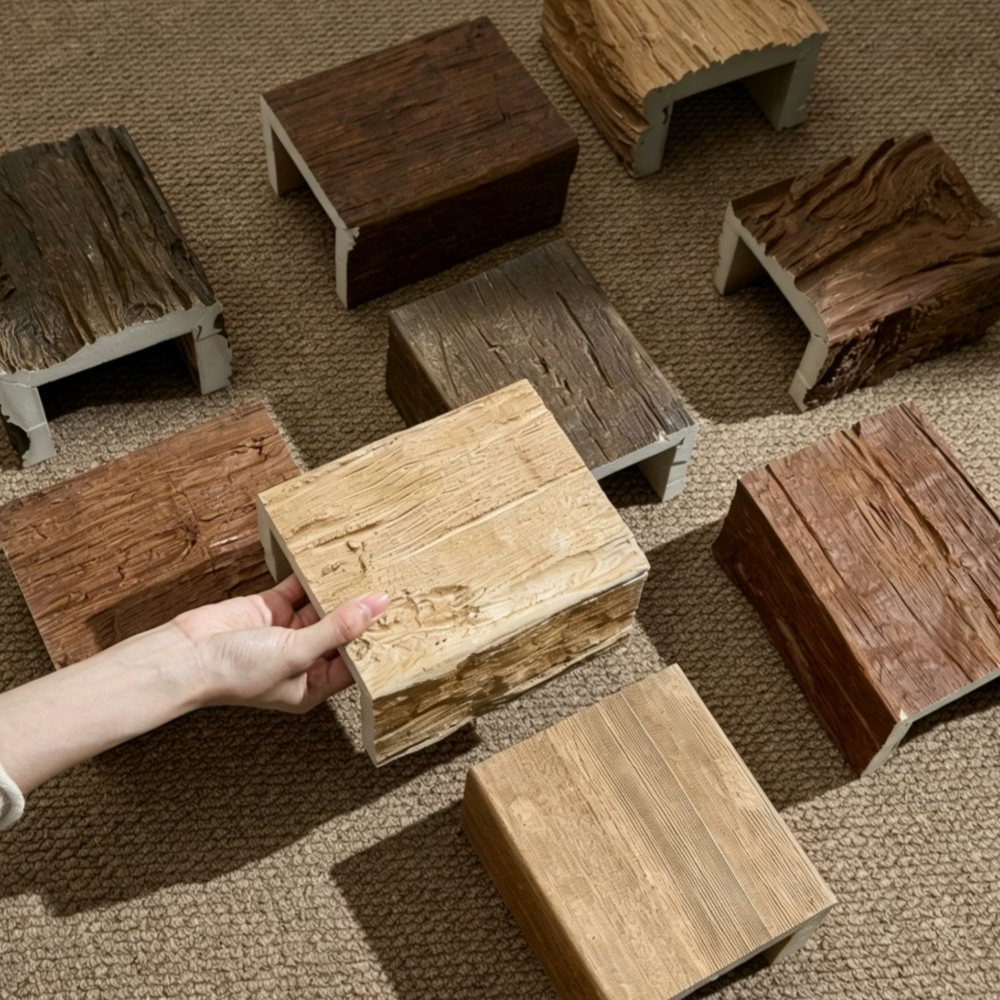
Patio Ceiling Beams: The Most Common Exterior Application
A covered patio ceiling is the most common exterior application for PU faux beams, and it's the easiest to specify correctly because the beam is under roof and protected from direct rain.
Spec essentials
| Item | Specification |
|---|---|
| Beam profile | Match interior specs — usually 6 in × 8 in or 8 in × 10 in |
| Foam density | 0.55 g/cm³ minimum (0.62 g/cm³ preferred) |
| Topcoat | Two-coat acrylic latex with UV inhibitor (factory-applied) |
| End caps | Sealed at both ends |
| Blocking | Pressure-treated 2×6 ledger, PT-rated screws |
| Fasteners | Hot-dip galvanized or ceramic-coated deck screws |
Ventilation gap
A covered patio ceiling still gets humidity from below (cooking, rain splash, people breathing). Leave a 1/4 in gap between the top of the beam and the ceiling plane (or the deck above) to allow moisture to escape.
Pergola Beams: The Hardest Exterior Application
Pergola beams are fully exposed to rain, sun and freeze-thaw cycling. They also carry some structural load (the pergola rafters land on them). Specification is critical.
Spec essentials
| Item | Specification |
|---|---|
| Beam profile | 8 in × 10 in minimum, 10 in × 12 in preferred for spans over 12 ft |
| Foam density | 0.62 g/cm³ minimum |
| Topcoat | Marine-grade two-part polyurethane (factory-applied, 4-week lead time) |
| End caps | Sealed and wrapped in self-adhering flashing tape |
| Structural | Real structural beam behind (pressure-treated 4× or LVL) — faux beam is decorative only |
| Fasteners | 316 stainless steel structural screws |
| Maintenance | Recoat topcoat every 3-5 years |
Critical rule: a PU faux beam on a pergola is decorative only. The structural load of the rafters and the snow/wind load must be carried by a real beam behind it — pressure-treated 4×, LVL, or steel. The faux beam wraps the structural beam for aesthetics.
Why this matters
If a structural beam is omitted and the faux beam is asked to carry load, the foam cell structure will eventually compress under the sustained load, especially in summer heat. Visible result: a sagging beam with the rafters pulling away from the posts. This is the #1 pergola installation failure we see.
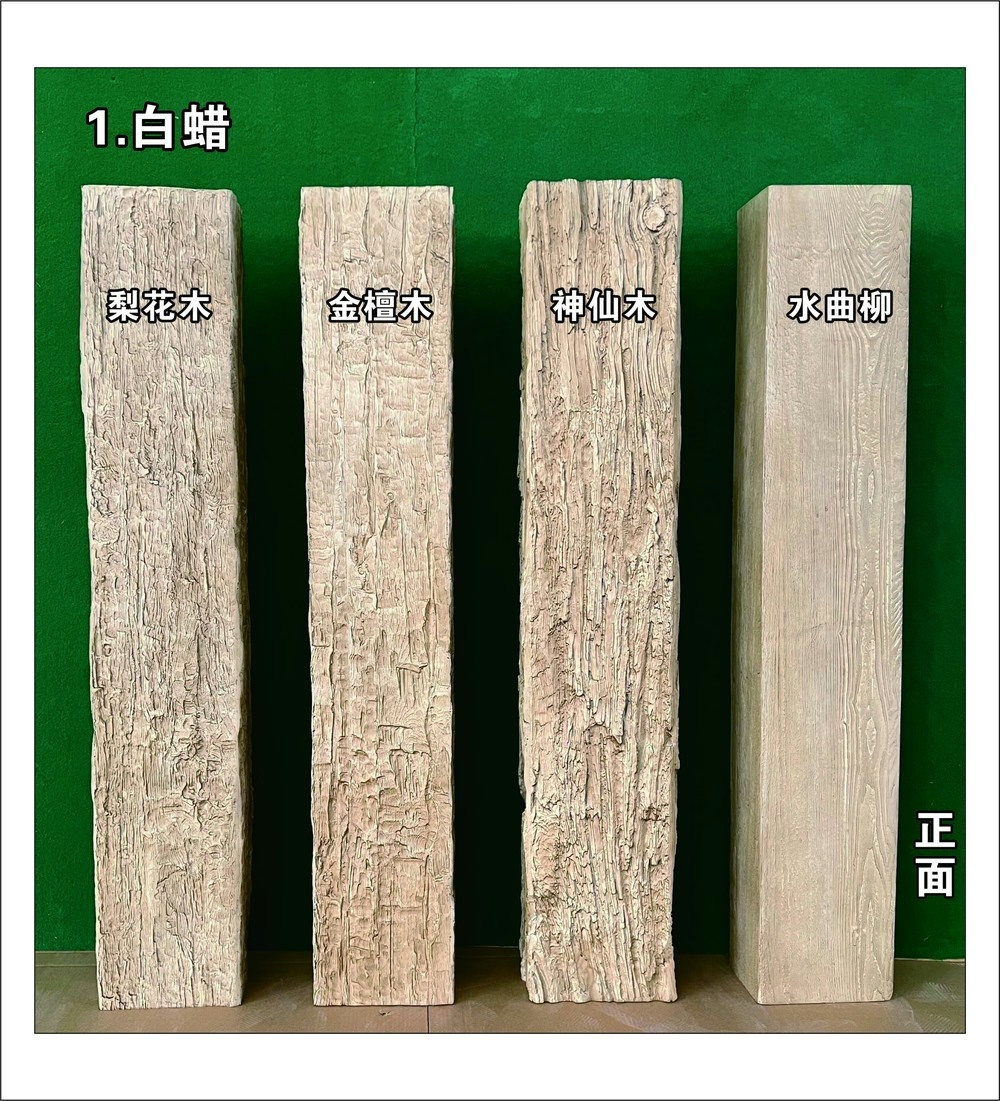
Outdoor Kitchen Beams
Outdoor kitchens combine heat, humidity, grease and weather exposure — the most demanding exterior environment for a faux beam.
Heat-source clearance
| Heat source | Minimum clearance to beam face |
|---|---|
| Gas grill burner | 30 in |
| Charcoal grill | 36 in |
| Wood-fired pizza oven | 48 in |
| Gas patio heater (overhead) | 24 in |
| Recessed light (IC-rated) | 1/2 in |
A range hood insert above the grill is the standard detail. The faux beam wraps the structural header above the hood. The hood itself is metal, the beam is purely decorative.
Grease and cleaning
Outdoor kitchen beams get grease aerosolized from the grill. Specify a semi-gloss topcoat (easier to wipe clean) rather than a flat finish. Recoat every 2-3 years with a marine-grade polyurethane.

Climate Zone Recommendations
| Climate zone | Spec recommendation |
|---|---|
| Zone 2-3 (cold, dry) | Standard exterior-grade PU, recoat every 5-7 years |
| Zone 4-5 (mixed) | Standard exterior-grade PU with enhanced topcoat, recoat every 4-6 years |
| Zone 6-7 (cold, wet) | Premium exterior-grade PU (0.62+ g/cm³), recoat every 3-5 years |
| Zone 8 (hot, humid) | Premium exterior-grade PU with mildew-inhibitor additive, recoat every 2-4 years |
| Coastal zone (any) | Marine-grade PU only, recoat every 2-3 years, 316 stainless fasteners |
Maintenance Schedule for Exterior Beams
A realistic maintenance schedule for an exterior-grade PU faux beam:
- Year 1: Visual inspection, caulk any small gaps
- Year 2-3: Wash with mild detergent, inspect for crazing
- Year 3-5: Recoat topcoat (acrylic latex is user-paintable)
- Year 5-7: Full inspection, sand any surface defects, recoat
- Year 10-12: Possible skin replacement (factory service) if heavily weathered
Skipping the maintenance schedule voids the warranty on most exterior-grade PU beams. The beam itself is durable; the topcoat is the consumable layer.
Frequently Asked Questions
Can a PU faux beam really be used outdoors?
Yes — but only exterior-grade SKUs. Interior-grade PU beams will fail outdoors within 12-24 months from water absorption, freeze-thaw damage, UV degradation or skin delamination. Exterior-grade SKUs with documented freeze-thaw, UV and water-absorption test data are designed for outdoor service.
How long do exterior-grade PU beams last?
In residential exterior applications with proper maintenance, 15-25 years. The foam core and skin are essentially immortal if water is kept out; the topcoat is the consumable layer and needs recoating every 3-5 years.
Can I install an exterior-grade PU beam in a salt-spray zone (coastal)?
Yes, with the marine-grade topcoat option and 316 stainless steel fasteners. Recoat every 2-3 years in coastal installations because the salt accelerates topcoat degradation. Inland exterior beams can go 4-6 years between recoats.
Do exterior faux beams need painting like interior ones?
Yes, but with exterior-grade acrylic latex or marine-grade polyurethane. Never use interior latex on an exterior beam — the binder breaks down under UV exposure within 1-2 years.
Will an exterior faux beam fade in direct sun?
All exterior materials fade. PU beams fade slower than solid wood (which grays from UV within 12-18 months without sealer) but faster than fiber-cement or composite lumber. Expect noticeable fading in 5-7 years with a quality topcoat, 3-5 years without.
Can I use an exterior-grade PU beam as a structural header?
No. Polyurethane faux beams are decorative, even in exterior-grade formulations. Always install a real structural beam (pressure-treated lumber, LVL or steel) behind the faux beam for any load-bearing application. This is a building code requirement in every US jurisdiction.
What's the lead time on a custom exterior-grade beam?
Standard sizes ship in 3-5 business days. Custom profiles, factory-applied marine-grade topcoats and specialty end caps add 2-3 weeks. For very large orders (20+ beams), allow 4-6 weeks.
Technical References
ASTM standards cited in every specification
Test Data
Lab results from internal testing program
Updated 2026
Reviewed against current product specs