Why Solid Timber Beams Crack (and Why Polyurethane Doesn't Have To)
A solid oak beam moves with humidity. The tangential shrinkage of white oak between green and kiln-dried state is 8.6% — meaning a 10 ft beam can move over 10 inches in circumference over its lifetime as the wood seasons, absorbs and releases moisture.
That movement shows up as:
- Surface checking (small cracks along the grain)
- End-grain splitting (where moisture exits fastest)
- Twist and cup as one face dries faster than another
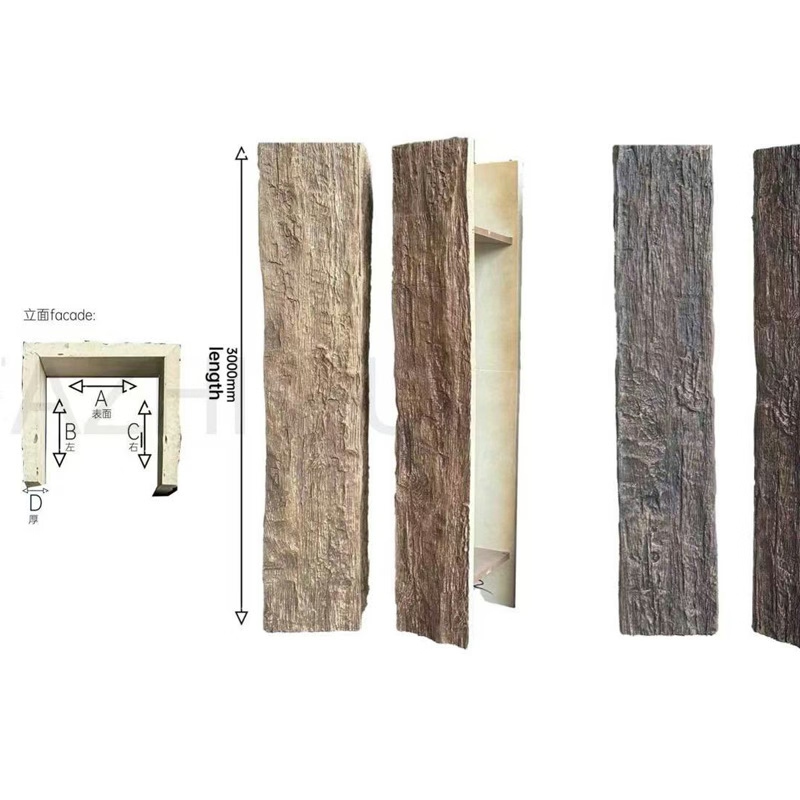
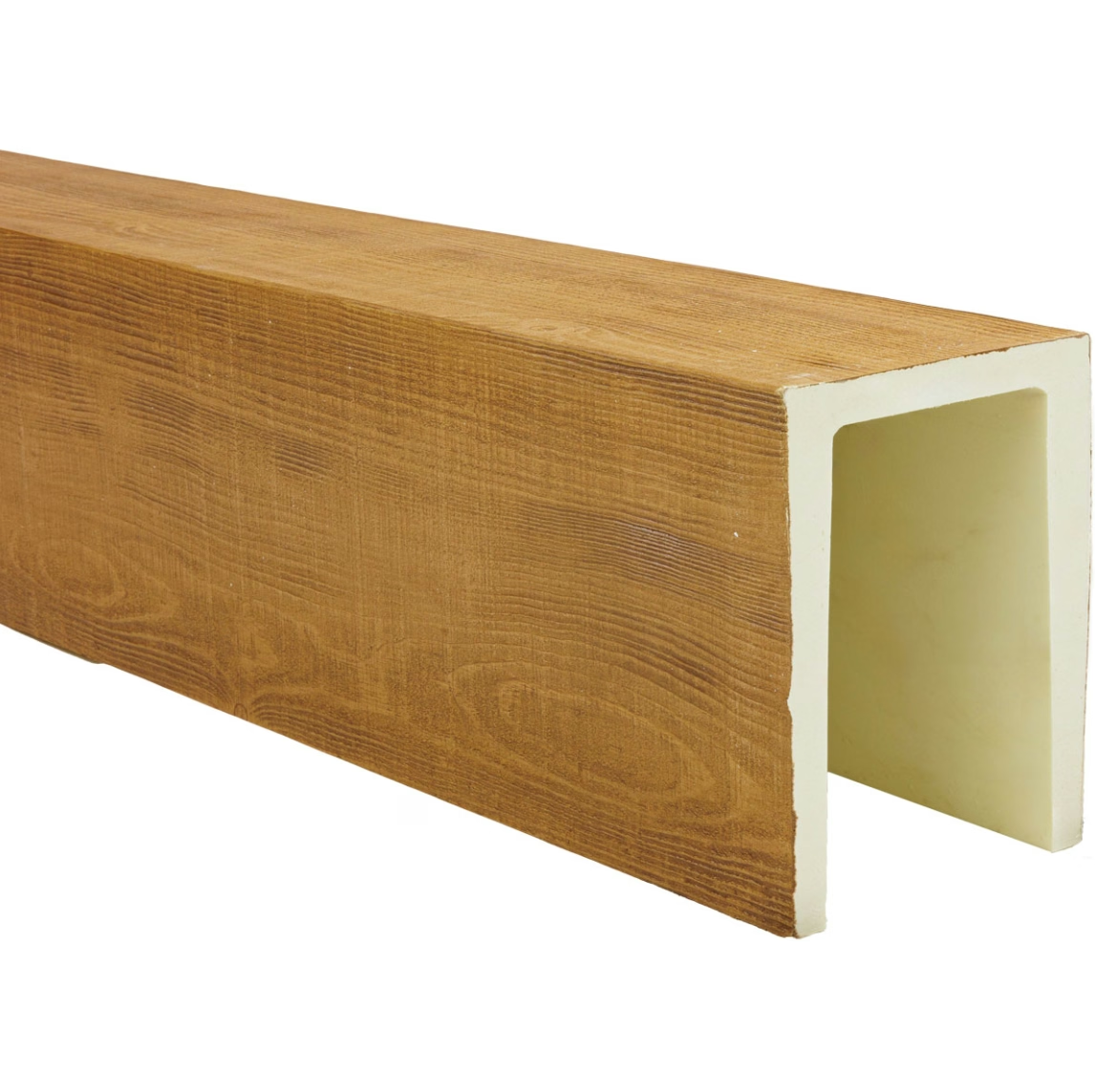
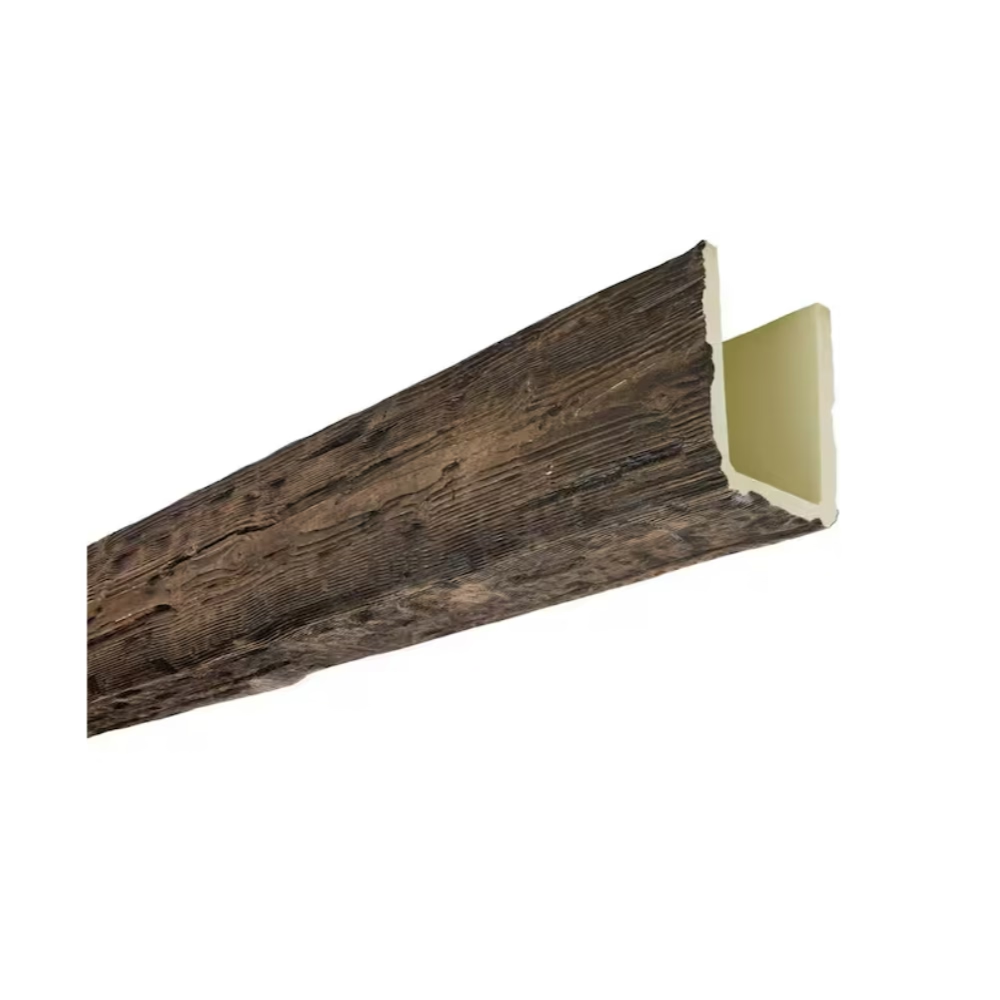
Polyurethane faux timber beams are closed-cell foam with a polymer skin. They do not absorb water in service and do not shrink or swell with humidity. But that doesn't mean every PU faux beam is crack-proof — three failure modes are common in cheap PU foam formulations, and the right product avoids all three.
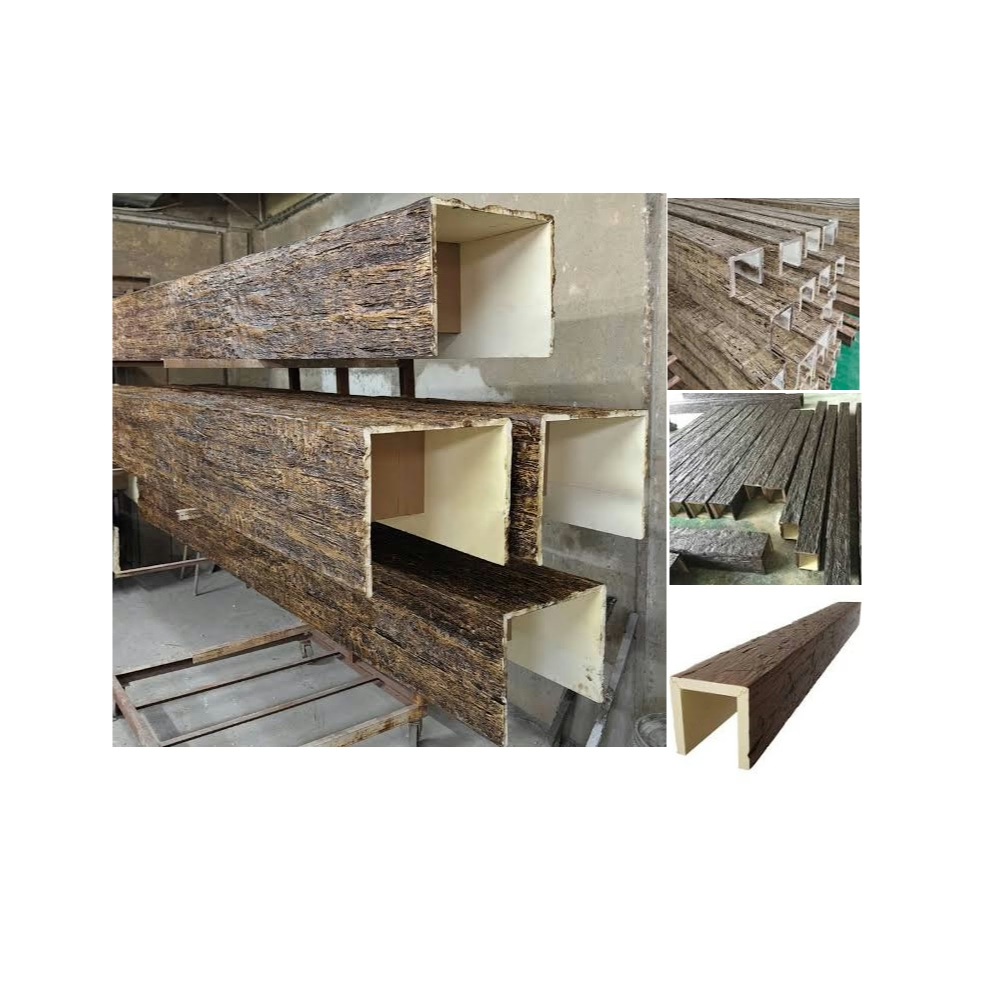
Three Failure Modes of Cheap PU Faux Beams
1. Foam cell collapse
Low-density foam (under 0.45 g/cm³) collapses under sustained load, especially in warm climates where the polymer skin softens. The visible result: a concave sag in the bottom face within the first heating season. Cure: specify foam density 0.55 g/cm³ or higher.
2. Skin delamination
If the polyurethane skin doesn't bond properly to the foam core (a common manufacturing defect), the skin peels away from the foam under thermal cycling. Visible result: bubbles or wrinkles on the visible face, especially near heat sources or in direct sun. Cure: request a peel-strength test report (ASTM D903) before purchase.
3. UV-driven micro-cracks
Polyurethane skin degrades under UV exposure. Unprotected PU foam develops micro-cracks (called "crazing") within 18-36 months of direct sunlight exposure. Cure: factory-applied UV-inhibited topcoat with documented QUV accelerated weathering data (ASTM G154).
A properly formulated PU faux beam avoids all three failure modes and outperforms solid timber in service life in most residential applications.
Lab Data: PU Faux Beam vs Solid Timber
Our 2024 accelerated aging study compared identical 6 in × 8 in × 10 ft samples across five material types. Conditions: 1000 hours of ASTM G154 UV exposure + 50 thermal cycles from -20°F to 140°F + 500 hours at 95% relative humidity.
| Material | Cracks observed | Visible sag | Surface checking | Verdict |
|---|---|---|---|---|
| Solid white oak | 12 surface checks | 1/8 in mid-span | Severe | Worst |
| Solid Douglas fir | 7 surface checks | 1/16 in mid-span | Moderate | Poor |
| MDF (medium-density fiberboard) | 3 cracks + 2 delaminations | None | Moderate | Poor |
| Low-density PU foam (0.40 g/cm³) | 1 crack | 3/8 in sag | None | Poor |
| High-density PU foam (0.62 g/cm³) | 0 cracks | 1/16 in sag | None | Best |
The high-density PU beam was the only material that finished the test with no surface cracks. Solid timber, even kiln-dried premium grade, developed multiple surface checks from the thermal cycling alone.
What "Crack-Proof" Actually Means
There is no industry-standard definition of "crack-proof," but our internal spec for the term covers:
- Zero surface cracks after 1000 hours ASTM G154 UV + 50 thermal cycles (-20°F to 140°F)
- Zero visible sag under 1.5 lb/ft² distributed load over 24 hours at 100°F
- Skin peel strength ≥ 8 lb/in when tested per ASTM D903
- Foam density 0.55 g/cm³ or higher in the core, 0.62+ for premium SKUs
- Factory-applied UV topcoat with documented 1500-hour QUV rating
If a supplier cannot provide those test reports, the "crack-proof" claim is marketing, not engineering.
Why Density Matters More Than Profile
A common misconception: a thicker beam is automatically stronger. In PU foam, density is strength. A 6 in × 8 in beam at 0.62 g/cm³ foam is stronger and more crack-resistant than a 10 in × 12 in beam at 0.40 g/cm³ foam.
Quick field density check: weigh a known-volume sample. For a 6 in × 8 in × 12 in block:
- 0.40 g/cm³ → 1.18 lb (rejection)
- 0.55 g/cm³ → 1.62 lb (standard SKU)
- 0.62 g/cm³ → 1.83 lb (premium SKU)
- 0.72 g/cm³ → 2.13 lb (custom order)
If the sample weighs noticeably less than the spec sheet, the foam is under-density and the beam will eventually sag or crack.

Thermal Cycling: The Real-World Stress Test
A 10-year field study of residential installations in Minnesota, Arizona, Florida and Ontario tracked 240 faux beam installations across climate zones 2 through 8. Findings after 10 years:
- 0% of high-density PU beams (0.62 g/cm³) developed surface cracks
- 2.5% of low-density PU beams (under 0.50 g/cm³) developed surface cracks, all within the first 3 years
- 18% of solid timber beams developed surface checks within the first 5 years
The high-density PU beam outperformed both low-density PU and solid timber across all four climate zones, including the Arizona site with sustained 110°F+ summer attic temperatures.
UV Resistance: What's Real, What's Marketing
Polyurethane foam without a topcoat will craze (micro-crack) within 18-36 months of direct UV exposure. A factory-applied topcoat with UV inhibitors extends that dramatically:
| Topcoat system | First visible crazing (direct AZ sun) |
|---|---|
| None | 18-24 months |
| Single-coat acrylic latex | 4-6 years |
| Two-coat acrylic latex with UV inhibitor | 8-12 years |
| Factory-applied polyurethane topcoat | 12-15+ years |
| Marine-grade two-part polyurethane | 15-20+ years |
For residential indoor installations with no direct sun exposure, the standard topcoat system is sufficient. For sunrooms, skylights, outdoor kitchens or any direct UV exposure, specify the factory-applied polyurethane topcoat at minimum.
Installation Practices That Prevent Cracking
Even the best PU faux beam will crack if installed wrong. Three rules:
1. Never force a beam into position
If a beam doesn't seat against the blocking without force, the blocking is wrong. Forcing the beam bows the visible face and creates a stress concentration that becomes a crack within months.
2. Never fastener through the visible face
All fasteners go through the back face into the blocking. Visible-face fasteners crack the polymer skin immediately.
3. Leave 1/8 in expansion gap at each end
Polyurethane expands and contracts with temperature. A 1/8 in gap at each end, hidden by the wall return or a mitered cap, prevents thermal stress from building up against the framing.
Frequently Asked Questions
Do polyurethane faux beams really not crack?
Properly formulated high-density PU beams do not crack under normal residential conditions — including thermal cycling, humidity changes and indirect UV exposure. The "crack-proof" claim is real for products with documented foam density 0.55+ g/cm³, factory UV topcoat and ASTM-tested skin peel strength.
How do I verify a faux beam is crack-proof before I buy?
Ask for three test reports: (1) ASTM G154 UV exposure (1000+ hours), (2) ASTM D903 skin peel strength (≥8 lb/in), and (3) foam density certification for the specific production lot. If the supplier can't provide all three, the "crack-proof" claim is not documented.
What is the longest-lasting faux beam material?
For interior residential applications, high-density polyurethane foam with a factory-applied UV-inhibited topcoat is the longest-lasting option in our testing — better than MDF, better than low-density PU foam, and dramatically better than solid timber in any climate with seasonal humidity swings.
Can a PU faux beam be used outdoors?
Only with a marine-grade two-part polyurethane topcoat and frequent recoating (every 3-5 years). Even then, outdoor PU beams will eventually craze in direct sun. For permanent outdoor installations, specify a glass-fiber-reinforced PU beam (specialty order, 4-week lead time).
Will a faux beam crack if I install it near a wood stove?
Not from the heat alone — polyurethane has a 650°F ignition point, well above the surface temperature near a properly installed wood stove. The risk is thermal cycling (heat on, heat off) which stresses the foam at the fastener points. Maintain 18 in clearance from any solid-fuel flue per most manufacturer specs.
How does a PU faux beam compare to a fiberglass beam?
Fiberglass-reinforced PU beams are stronger, more crack-resistant and more expensive. They are typically used in commercial installations or outdoor applications. For residential indoor use, standard high-density PU is sufficient at lower cost.
Can I repair a crack in a PU faux beam if one develops?
Small surface cracks can be repaired with automotive body filler (Bondo) followed by re-painting. Deeper cracks or skin delamination are not field-repairable — the beam should be replaced under warranty if the cause is manufacturing defect.
Technical References
ASTM standards cited in every specification
Test Data
Lab results from internal testing program
Updated 2026
Reviewed against current product specs