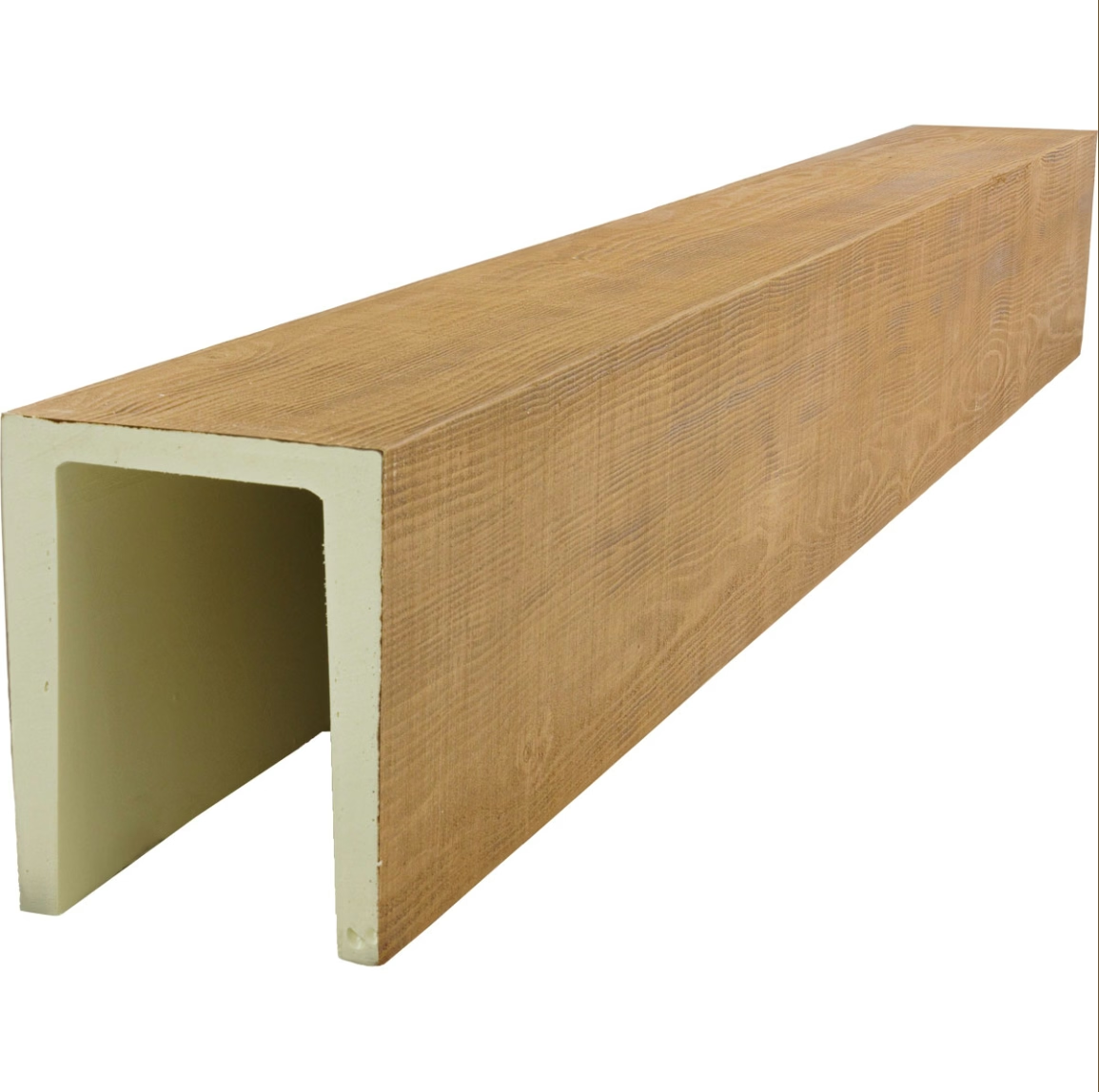
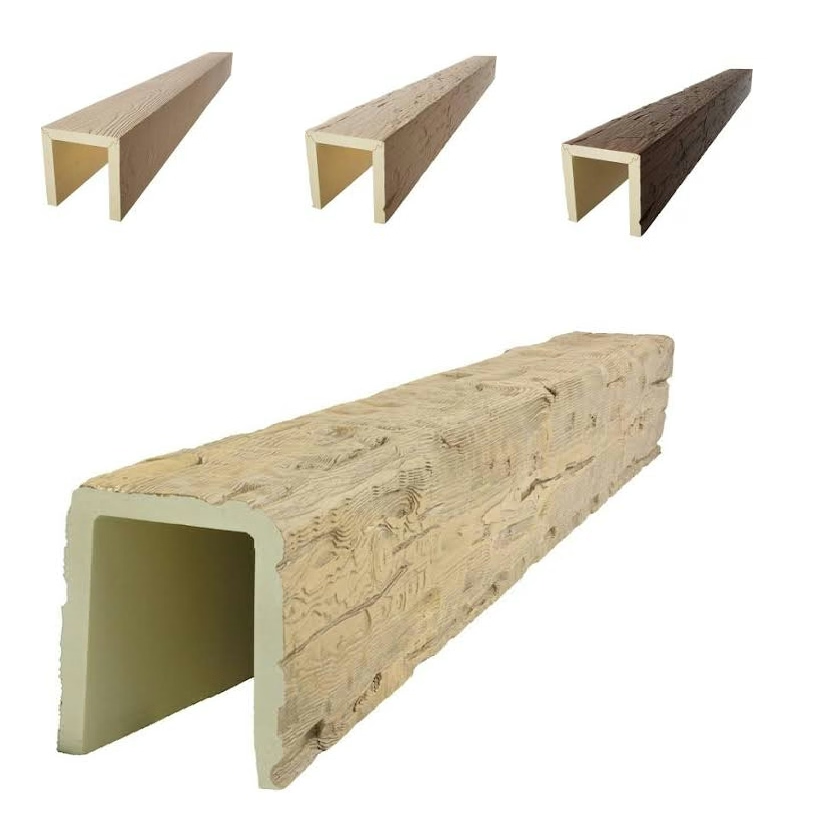
The connection between decorative ceiling beams and global forest conservation rarely gets made in everyday conversation. Most people think of forests as suppliers of lumber for buildings, paper for printing, and firewood for heating. They do not think about the relatively small but psychologically important market for decorative architectural timber that ships by the container load from forests in the Pacific Northwest, the Brazilian Amazon, the Russian Far East, and the forests of Southeast Asia.
That small market matters. Reclaimed timber supplies a sliver of decorative beam demand. Certified sustainable forestry covers another portion. The remainder comes from forestry operations that range from well-managed to ecologically destructive. Every decorative timber beam installed in a home, hotel, or restaurant represents a small fraction of forest that could have remained standing. Polyurethane faux beams reduce that fraction substantially, and across millions of installations, the cumulative impact becomes meaningful.

Understanding Where Decorative Timber Comes From
Decorative timber beams are not typically cut from trees that would otherwise become lumber, paper pulp, or firewood. They are cut from old-growth or slow-growth trees whose structural patterns, knot character, and grain density produce the visual richness that defines a decorative beam. That source distinction matters because the forests producing decorative timber carry ecological value beyond their marketable lumber yield.
The Old-Growth Forest Question
Old-growth forests support biodiversity, carbon storage, watershed regulation, and indigenous land relationships that monoeconomies cannot capture in market prices. A tree harvested for a decorative beam may have been standing for 200 years. Replacing it requires either a long rotation forestry cycle or accepting that the ecological value is permanently lost.
Most decorative timber cannot be replaced by newly planted trees within any meaningful timeframe. The market price for decorative beams rarely reflects the centuries of growth required to produce them. That pricing gap is what makes conservation-oriented alternatives like polyurethane particularly valuable.
Where Certification Falls Short
Forest certification programs like FSC, PEFC, and SFI attempt to identify timber from responsibly managed forests. The programs are imperfect but real. They exclude timber from the most ecologically damaging operations and reward forest managers who follow better practices.
The shortfall is that certification covers only a portion of available supply. Many architectural timber products come from sources that are not certified, either because certification is impractical for small operators or because the specific products do not meet certification criteria. The portion of decorative timber that is genuinely sustainable remains a minority of total supply.

Transportation Adds Forest Pressure
Decorative timber often travels thousands of miles from forest to installation site. The transportation footprint carries its own carbon emissions and infrastructure impact. The combination of long-distance transportation with old-growth forest origin compounds the sustainability concerns.
Shorter supply chains reduce some of this impact. Reclaimed timber from local demolition projects, for example, eliminates both the forest impact and the long-distance transportation. But local reclaimed supply remains limited in most markets, and prices reflect the scarcity.
How Polyurethane Faux Beams Change the Calculation
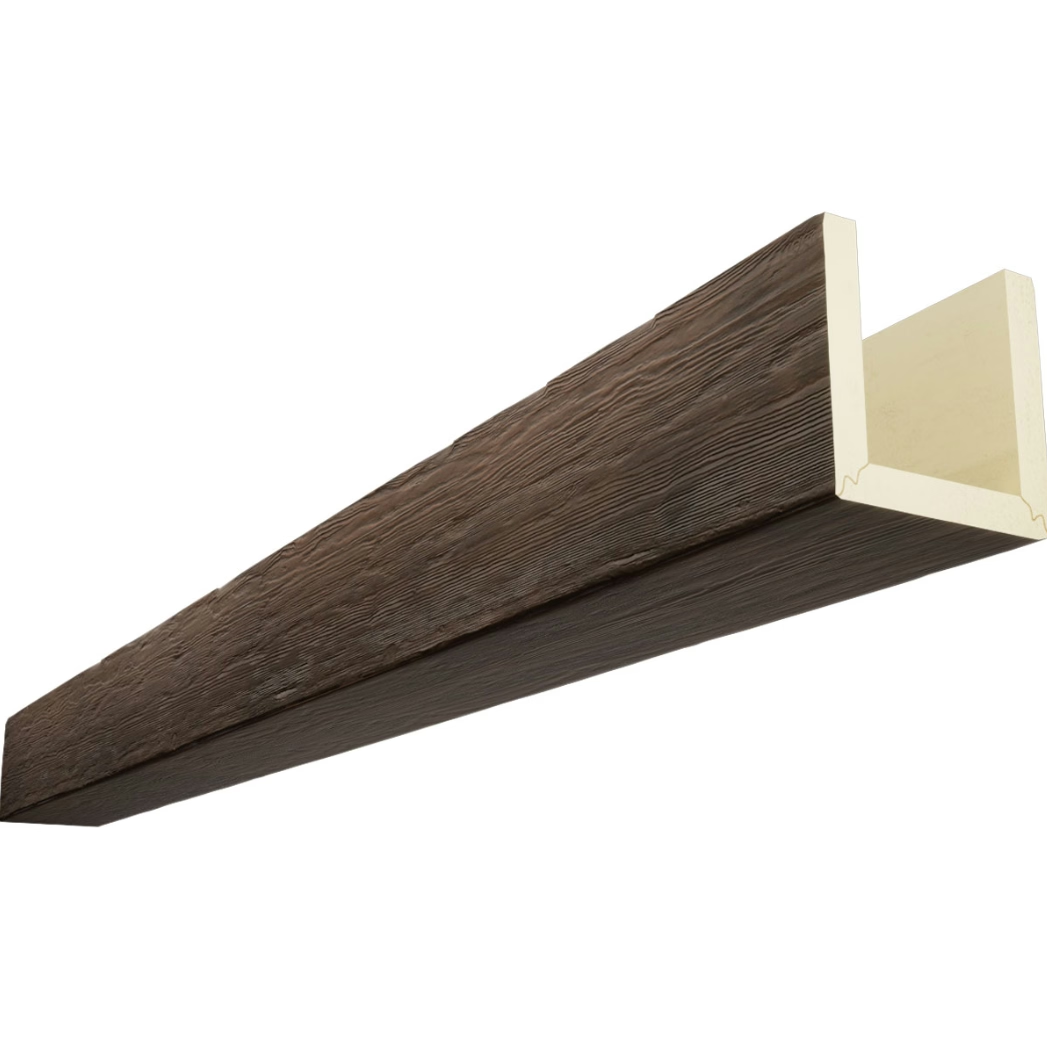
Polyurethane faux beams shift the calculation in ways that resonate with conservation goals. They eliminate the forest impact, reduce transportation emissions, and avoid the chemical treatments that decorative timber sometimes requires.
Eliminating the Forest Impact Directly
Every polyurethane beam installed in place of a decorative timber beam is a tree that remains standing. The forest impact elimination is direct and quantifiable. Projects that document their material substitutions can claim specific conservation outcomes in their sustainability reporting.
For organizations committed to forest conservation, the calculus is straightforward. Substituting polyurethane for decorative timber reduces direct forest impact regardless of how the original timber was sourced. The substitution works even when certification standards would approve the timber, because forest preservation operates on precautionary principles rather than acceptable thresholds.
Avoiding Transportation Impact at Scale
The lightweight polyurethane profile compounds the conservation benefit through reduced transportation emissions. A shipment of 50 polyurethane beams replaces a shipment of 15 timber beams of comparable visual impact because the weight difference per beam is so substantial.
The transportation reduction matters in two ways. It directly reduces the carbon emissions that contribute to climate change, which affects forests through changing temperature and precipitation patterns. It also reduces the infrastructure demand that timber transportation creates, including road wear, port traffic, and fuel consumption.
Avoiding Preservative Chemicals
Decorative timber beams frequently require chemical treatment to resist rot, insects, and weathering. The chemicals include traditional preservatives that are increasingly restricted in global markets because of health and environmental concerns.
Polyurethane beams require no chemical treatment. The polymer itself resists decay and insect damage. Projects specifying polyurethane avoid the entire question of which preservative chemicals are appropriate because the question does not apply to the chosen material.
Conservation Partnerships Between Manufacturers and Forest Organizations
The connection between polyurethane beam manufacturing and forest conservation has become explicit in recent years. Several major manufacturers operate programs that fund conservation work proportional to their production volume.
Program Structures Vary
Some manufacturers donate a fixed amount per beam sold to conservation nonprofits. Others partner directly with specific forest conservation projects. A few fund reforestation efforts in regions where their manufacturing presence creates local environmental responsibility.
The program structures vary widely in scale, transparency, and verification rigor. Some programs can be verified through annual reports and independent audits. Others rely on industry self-reporting without external verification. Conservation-minded buyers should evaluate the program specifics rather than relying on general sustainability language.
Evaluating Program Authenticity
Authentic conservation partnerships share several characteristics. They involve established conservation organizations with credible track records. They publish specific, measurable conservation outcomes rather than vague commitments. They link the contribution to specific business activities so that growth in production corresponds to growth in conservation funding.
Manufacturers using sustainability language purely for marketing purposes typically lack these characteristics. Their claims may not be dishonest, but they do not produce conservation outcomes at scale. The difference between authentic and performative conservation work becomes clear through third-party verification.
Co-Benefits Beyond Direct Funding
Conservation partnerships often generate co-benefits beyond the direct funding impact. Manufacturers may engage employees in conservation volunteer activities, host educational events, or contribute to research on sustainable forestry practices.
These co-benefits matter because they extend the conservation mission beyond a simple financial transaction. Companies whose employees understand conservation through direct experience tend to embed that understanding into operational decisions. The cultural impact of conservation engagement can outlast the financial impact.
Quantifying the Conservation Impact
Conservation outcomes are notoriously difficult to quantify with precision. Trees are living systems, not manufactured products with consistent specifications. Translating beam sales into forest preservation requires simplifying assumptions that always understate or overstate the actual impact.
Orders of Magnitude Estimates
At the order of magnitude level, the analysis is straightforward. If 5 million polyurethane decorative beams are installed annually in place of comparable timber beams, and each timber beam represents approximately 30 to 50 board feet of lumber, then the substitution removes demand for 150 million to 250 million board feet of decorative timber annually.
That volume corresponds to roughly 7,000 to 12,000 acres of forest at typical forest productivity rates. Across a decade, the cumulative impact reaches the scale of meaningful conservation. Across multiple decades, the impact compounds.
Variable Forest Productivity
Forest productivity varies dramatically by region, species, climate, and management practice. A board foot from a Pacific Northwest old-growth forest represents a fundamentally different ecological value than a board foot from a managed plantation in the southeastern United States.
Simple board-foot estimates capture the physical volume but not the ecological value. Sophisticated analyses attempt to weight volume by ecological significance, but the methodologies vary and the conclusions remain uncertain. The honest position is that the conservation impact is meaningful at scale, even when the precise quantification remains approximate.
Conservation Beyond Forest Preservation
Some forest conservation programs funded through beam substitution extend beyond direct forest preservation. They support indigenous land rights, watershed protection, biodiversity monitoring, climate adaptation research, and sustainable forestry training for local communities.
These broader conservation efforts produce outcomes that direct forest preservation cannot capture. A community trained in sustainable forestry practices protects more forest than any single preservation purchase. An indigenous land rights case settled in favor of conservation produces lasting protection. The breadth of conservation impact matters as much as the depth.
Regional Differences in Conservation Priorities
Forest conservation priorities vary by region. What constitutes meaningful conservation in the Amazon differs from meaningful conservation in Southeast Asia, which differs from meaningful conservation in the Pacific Northwest.
Tropical Forest Conservation
Tropical forests carry the highest biodiversity per acre and the highest deforestation pressure globally. Conservation funding directed toward tropical forests produces biodiversity outcomes that temperate forest conservation cannot match.
Polyurethane beam manufacturers sourcing from tropical regions have particular responsibility to support tropical forest conservation. The direct displacement of tropical timber demand through polyurethane substitution creates a clear linkage between product sales and tropical forest outcomes.
Temperate Forest Conservation
Temperate forests cover extensive areas of North America, Europe, and parts of Asia. Conservation priorities in temperate forests typically focus on old-growth preservation, watershed protection, and sustainable management of working forests.
Substitution of polyurethane for decorative timber in temperate regions creates meaningful conservation outcomes by reducing demand on old-growth stands. The temperate forest impact is less dramatic per acre than tropical impact, but the large scale of temperate forest operations means even small demand reductions translate into measurable outcomes.
Boreal Forest Considerations
Boreal forests in Canada, Russia, and Scandinavia cover vast areas but carry lower biodiversity than tropical or temperate forests. Their primary conservation value lies in carbon storage and climate regulation.
Substituting polyurethane for decorative timber in markets where boreal timber is the primary source reduces pressure on these important carbon sinks. The climate impact compounds over centuries because the carbon stored in boreal forest biomass represents carbon kept out of the atmosphere for those centuries.
What Conservation-Minded Buyers Can Do
Individuals and organizations committed to forest conservation can take several practical steps to ensure their beam selections actually contribute to conservation outcomes.
Prioritizing Substitution Over Certification
Buying certified timber is valuable. Buying polyurethane instead of uncertified timber is more valuable because the substitution eliminates the forest impact regardless of certification status. Conservation-minded buyers should prioritize substitution as the highest-leverage action, with certification as a secondary consideration.
Documenting Substitution Outcomes
For organizations with sustainability reporting obligations, documenting beam substitutions provides specific, measurable conservation outcomes. The documentation supports certification systems, sustainability reports, and stakeholder communications.
Photograph installations, record material substitutions in project documentation, and reference the substitution in sustainability narratives. The accumulated documentation builds a defensible record of conservation impact over time.
Engaging With Manufacturer Programs
Manufacturer conservation programs work best when customers engage with them actively. Provide feedback on program design, share conservation priorities, and support program expansion through continued business relationships.
The most effective manufacturer programs respond to customer priorities. Buyers who articulate their conservation concerns clearly help manufacturers refine their programs to address those concerns. The relationship between manufacturers and conservation-minded customers can drive continuous improvement on both sides.
Supporting Broader Conservation Initiatives
Beam substitution is one tool among many for forest conservation. Donations to conservation organizations, advocacy for stronger forestry regulations, and personal consumption choices all contribute to the broader effort.
Conservation-minded individuals and organizations should view beam substitution as part of an integrated approach rather than as a standalone action. The combined effort produces outcomes that no single action can achieve alone.
Limitations and Honest Acknowledgments
Forest conservation through material substitution faces some limitations that deserve honest acknowledgment.
Petrochemical Origins Trade Off
Polyurethane beams substitute forest impact with petrochemical feedstock impact. The substitution is not equivalent to eliminating environmental impact entirely. It shifts the impact from one category to another.
The trade-off is usually favorable for forest conservation because petrochemical impact is more quantifiable, more distributed, and more amenable to future improvement than forest impact. But the trade-off exists, and honest assessments acknowledge it.
Disposal End-of-Life Concerns
Polyurethane beams at end of life typically enter landfill rather than recycling. The disposal pathway is less sustainable than timber beams, which can be reused, composted, or burned for energy.
The end-of-life advantage for timber partially offsets the production advantage for polyurethane across the full lifecycle. Conservation-minded buyers should consider both ends of the beam lifecycle.
Manufacturing Concentrations
Polyurethane beam manufacturing concentrates in specific regions. The manufacturing concentration creates local environmental impacts that regional sourcing can address but not eliminate.
Manufacturing regions with clean energy infrastructure produce lower-impact polyurethane beams. Sourcing from those regions supports both local sustainability outcomes and global conservation goals. Sourcing from manufacturing regions with heavy fossil fuel dependence undercuts some of the conservation benefit.
The Broader Story of Faux Materials and Conservation
Faux materials in general have transformed how conservation-minded consumers approach many product categories. Faux fur reduced demand on fur-bearing animals. Faux leather reduced pressure on cattle operations. Lab-grown diamonds reduced mining pressure.
Polyurethane faux beams join that pattern. They provide the visual experience of an authentic material without the ecological impact of harvesting it. The conservation argument builds on a broader cultural shift toward understanding that aesthetic preferences and material origins are not inevitably linked.
The shift is not without controversy. Some argue that faux materials devalue the authentic products they substitute for. Others argue that they make sustainable choices accessible to consumers who could not otherwise afford authentic products. Both perspectives have merit. The conservation case focuses on outcomes rather than values, and the outcomes favor substitution at scale.
Looking Forward to Deeper Conservation Outcomes
The future of forest conservation through material substitution depends on continued innovation in faux materials, expanded take-back and recycling programs, and growing consumer awareness of conservation impact.
Bio-based polyurethane formulations reduce petrochemical feedstock concerns. Take-back programs reduce end-of-life disposal concerns. Consumer awareness amplifies the substitution impact as more buyers make conservation-informed choices.
Each of these developments is already underway. The trajectory points toward more sustainable building materials across the board. Polyurethane faux beams are part of that trajectory, contributing specific conservation outcomes to a broader transformation of building industry practices. That contribution is meaningful for the forests that benefit from reduced demand and meaningful for the global climate system that benefits from the related carbon storage protection.
Technical References
ASTM standards cited in every specification
Test Data
Lab results from internal testing program
Updated 2026
Reviewed against current product specs