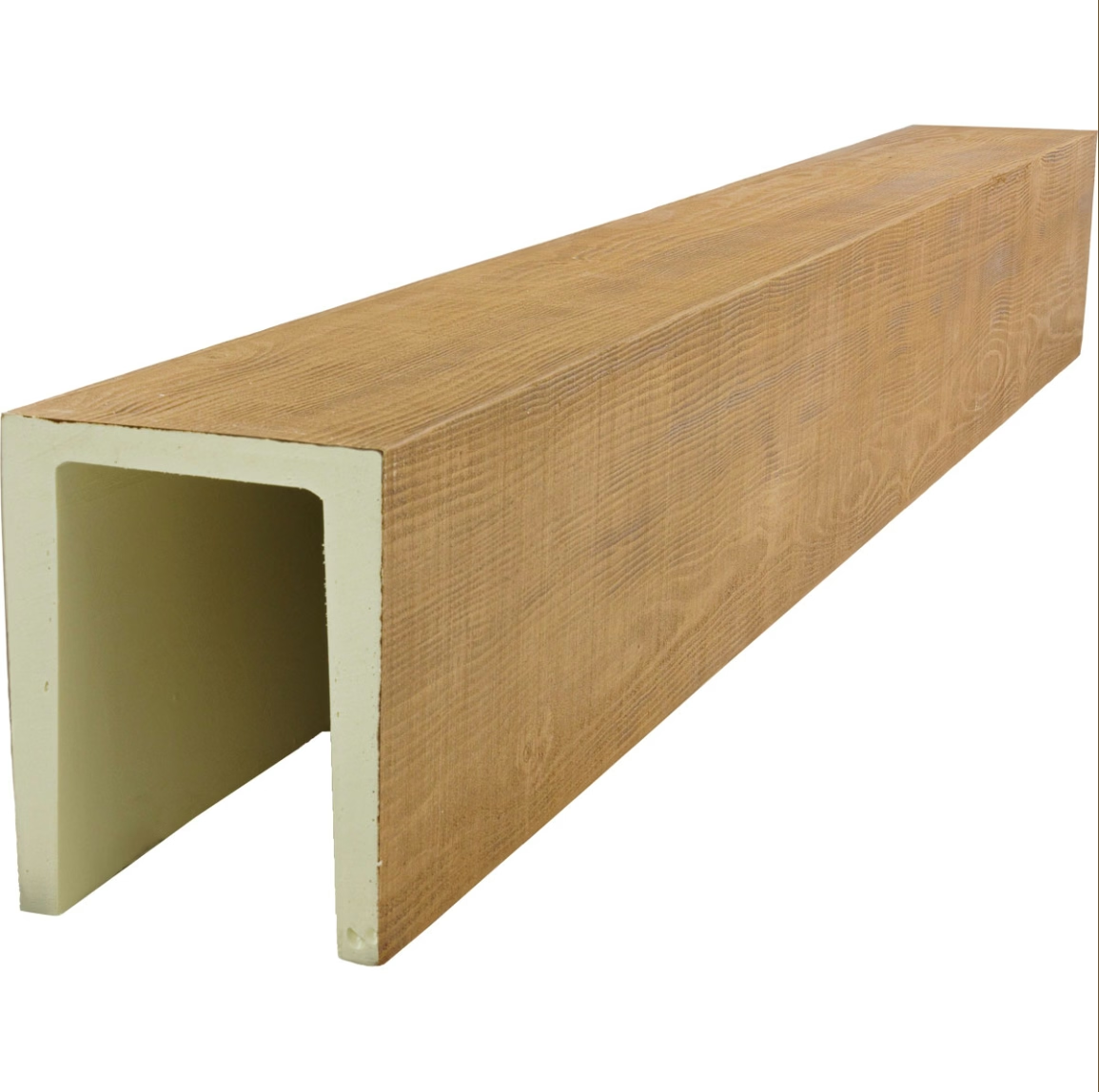
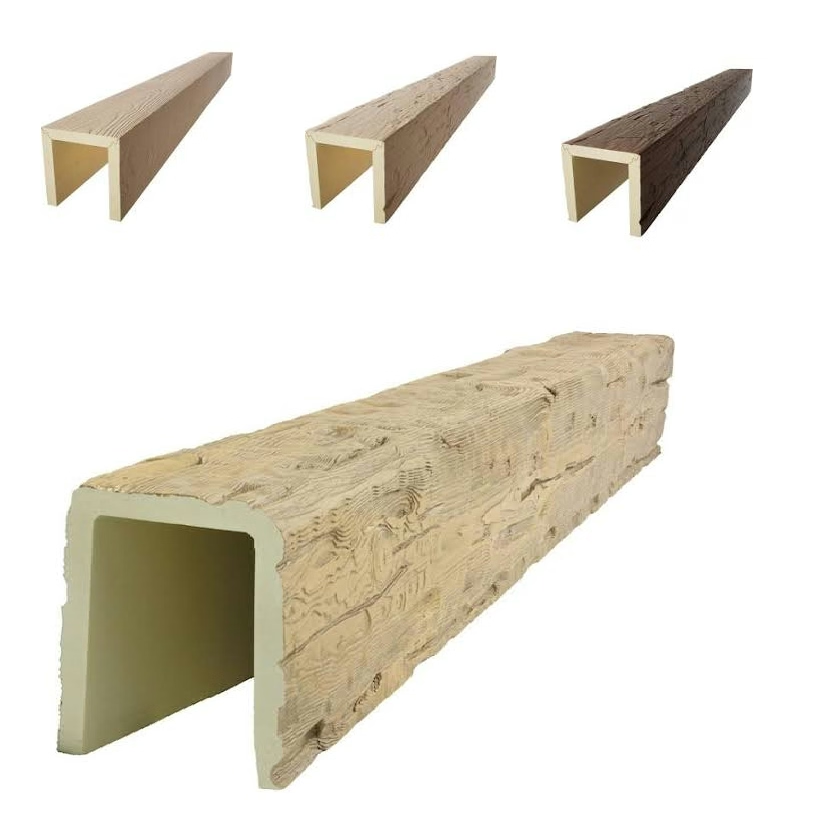
European importers and project specifiers cannot afford to overlook Volatile Organic Compound regulations when sourcing polyurethane decorative products. The EU has steadily tightened emission limits on construction and interior materials through directives like the Construction Products Regulation and country-specific indoor air quality schemes such as France's A+ labelling and Germany's AgBB. Polyurethane faux wood beams that look impressive on a price list but fail these thresholds can be rejected at customs, refused by the project architect, or held responsible for poor indoor air quality long after installation.
VOC compliance for polyurethane beams is fundamentally different from VOC compliance for paints and finishes. The compliance test focuses on what the installed beam releases into the room over a defined period, not what is in the can. That distinction matters because even a fully cured polyurethane surface can continue to emit low levels of organic compounds for weeks or months. Low-emission production techniques and careful raw material selection are what bring those emission rates below regulatory thresholds.
What VOC compliance actually means for polyurethane beams
VOC stands for Volatile Organic Compounds, a broad category that includes formaldehyde, benzene, toluene, and many other carbon-based molecules that evaporate at room temperature. In sufficient concentration, they irritate eyes and airways, contribute to long-term health concerns, and degrade perceived indoor air quality. Building codes in Europe have responded by setting maximum emission rates for construction products installed in occupied spaces.
For polyurethane faux wood beams, the relevant tests typically follow ISO 16000-9 chamber methodology. A sample of the finished beam is sealed in a controlled chamber, air is sampled at 3 days and 28 days, and the concentration of target VOCs is measured. To pass common European thresholds, total VOC (TVOC) should fall below specified limits, usually well under 1 mg per cubic meter after 28 days, and individual carcinogens must fall below stringent detection thresholds.
The trick is that not every polyurethane formulation behaves the same way. Catalysts, blowing agents, flame retardants, and even pigment carriers can all contribute to emissions. A factory that uses high-grade aromatic-free isocyanates and water-based release agents will produce fundamentally lower emissions than a factory cutting costs with cheaper raw inputs. The difference shows up clearly in lab results and is invisible to the eye.
How compliant faux beams are produced
Compliance starts with raw material selection. The polyurethane resin system, catalysts, and additives must all be chosen from low-emission grades. Many European specifiers require suppliers to confirm that all components appear on the REACH restricted substances list as compliant and that no SVHCs (Substances of Very High Concern) above 0.1 percent by weight are present. Documentation in the form of SDS sheets and compliance declarations accompanies each shipment.
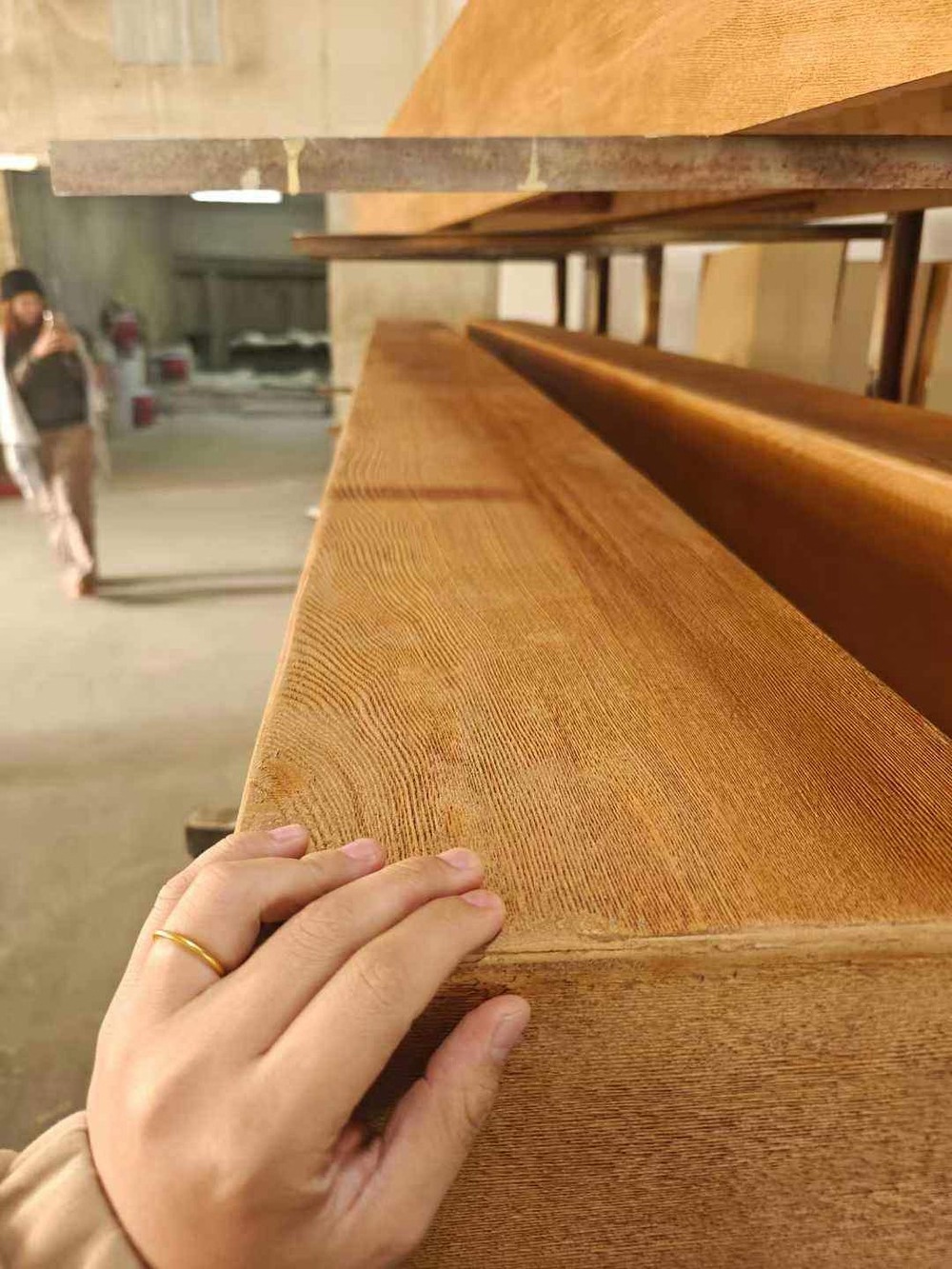
Production process also matters. Curing time and temperature determine how completely the chemical reaction proceeds. Beams that are demolded too quickly retain unreacted monomers that later outgas into the room. Premium factories run extended cure cycles in temperature-controlled rooms before the beams are packaged, allowing the chemistry to stabilize. This adds production time and warehouse cost, but it is what produces a beam that a European buyer can confidently install in a kindergarten or hospital.
Finishes are a separate concern. The faux wood texture is typically created with water-based stains and protective topcoats, both of which can be selected in low-VOC formulations. A complete beam system including its surface coating should be tested as a single assembly, because interactions between layers sometimes produce higher emissions than any individual component would suggest.

Documentation importers typically require
A serious European buyer asks for several documents before placing a bulk order. The first is a current VOC emission test report from an independent laboratory, ideally one accredited to ISO 17025. The test should reference ISO 16000-9 or an equivalent national standard and report results in the format that EU member state regulations require. Reports more than two years old may not be acceptable for projects that demand current evidence.
The second document is a Declaration of Performance (DoP) under the Construction Products Regulation. Even though decorative beams are not always considered structural products, importers who ship to the EU increasingly expect a DoP because it confirms CE marking readiness. The DoP declares the essential characteristics of the product, including reaction to fire, formaldehyde emission, and any dangerous substance content.
A third document is the Safety Data Sheet (SDS), translated into the language of the destination country. The SDS identifies hazardous components, exposure controls, and first aid measures. Even where a beam is non-hazardous, the SDS still serves as a compliance artifact that customs authorities may request. Together with the test report and DoP, the SDS rounds out the compliance package that smooths customs clearance.
Country-specific labelling schemes
France runs the A+ labelling system, which rates interior products on a four-tier scale from A+ (very low emissions) to C (higher emissions). Most polyurethane faux beam importers into France aim for A+, which provides consumer confidence and is often specified by architects. The label is calculated from the chamber test results and must appear on packaging or accompanying literature.
Germany operates the AgBB scheme, which has stricter thresholds for individual VOCs than many other jurisdictions. Some German projects also require the Blue Angel eco-label or DGNB building certification compatibility. Polyurethane beams that pass AgBB typically clear most other European thresholds, so German compliance is often a useful proxy for broad EU acceptance.
Italy, the Netherlands, and the Nordic countries have their own schemes, but most share underlying test methodology. A beam tested and certified under one scheme usually qualifies for the others with the same chamber data, though labelling requirements differ. Experienced EU importers maintain a matrix of which documents each country requires and bundle the appropriate set with each shipment.
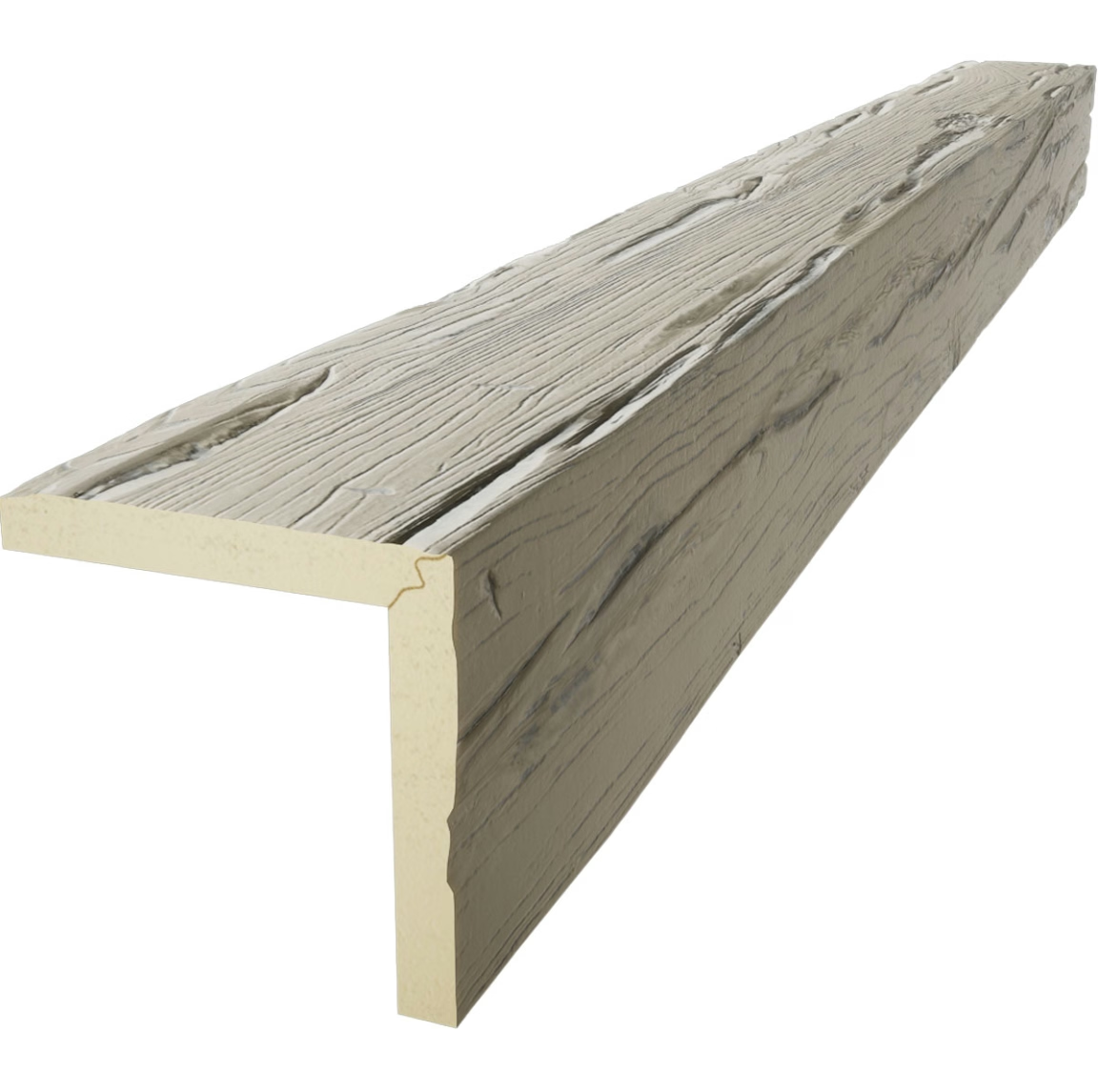
What to look for when sourcing compliant beams
Start by asking the factory directly: "Which VOC test reports can you provide for this exact product, and how recent are they?" A factory that supplies dated or generic reports should be a yellow flag. Production processes change, raw material sources shift, and reports older than 24 months may not represent current output.
Request that the test report reference the specific product code or SKU you intend to buy, not a generic polyurethane category report. Some suppliers provide test results from a different beam profile and then claim equivalence, but VOC emissions depend on surface area to volume ratios and the specific finish system applied. A report on a 6-inch by 8-inch beam does not automatically apply to a 12-inch beam with a different stain.
Consider requesting a sample for your own independent testing before committing to a bulk order. A small chamber test at a local lab costs a few hundred euros and gives you direct evidence of compliance rather than relying solely on the supplier's documents. For large projects, this additional step is essentially insurance against post-installation surprises.
The commercial advantages of compliance
Beyond regulatory necessity, VOC compliant beams command better positions in the supply chain. Architects writing specifications for schools, healthcare facilities, and high-end residential often require low-emission materials as a baseline. Wholesalers and contractors prefer suppliers who can produce the documentation on demand, because it speeds up their own project approvals.
Pricing for compliant beams runs moderately higher than non-certified equivalents. The increase comes from better raw materials, longer cure cycles, and the cost of third-party testing. In a competitive market, that price gap is often the difference between a supplier being shortlisted or passed over. For buyers operating at scale, it is usually cheaper to standardize on compliant product than to maintain two separate SKUs for different market segments.
In the long term, EU regulations are unlikely to loosen. If anything, the trend is toward stricter limits and broader product coverage. Buyers who invest now in supply chains built around compliant polyurethane faux beams are positioning themselves for a regulatory environment that will reward their foresight. Those who wait will eventually face expensive reformulations, rejected shipments, and frustrated end customers who wonder why their new ceiling smells off.
Technical References
ASTM standards cited in every specification
Test Data
Lab results from internal testing program
Updated 2026
Reviewed against current product specs