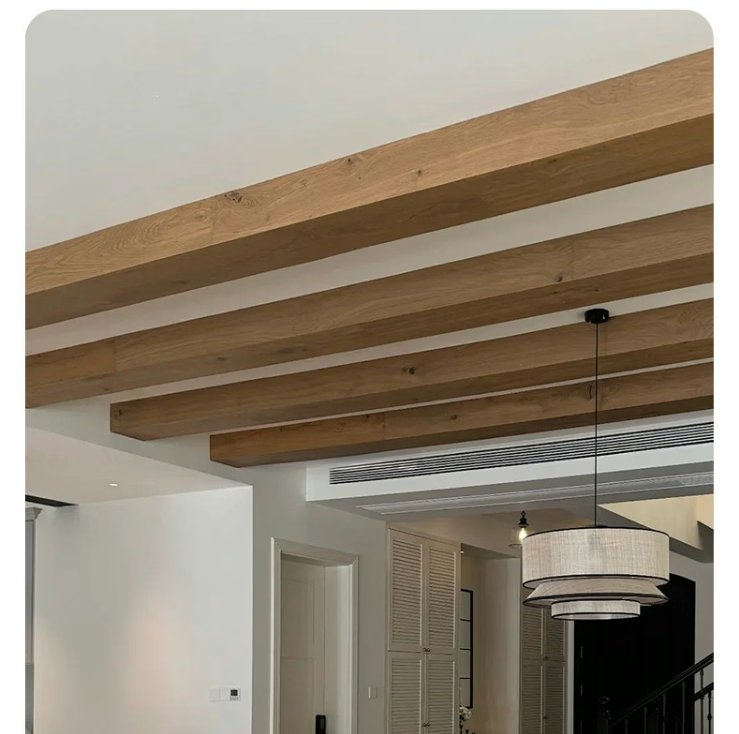
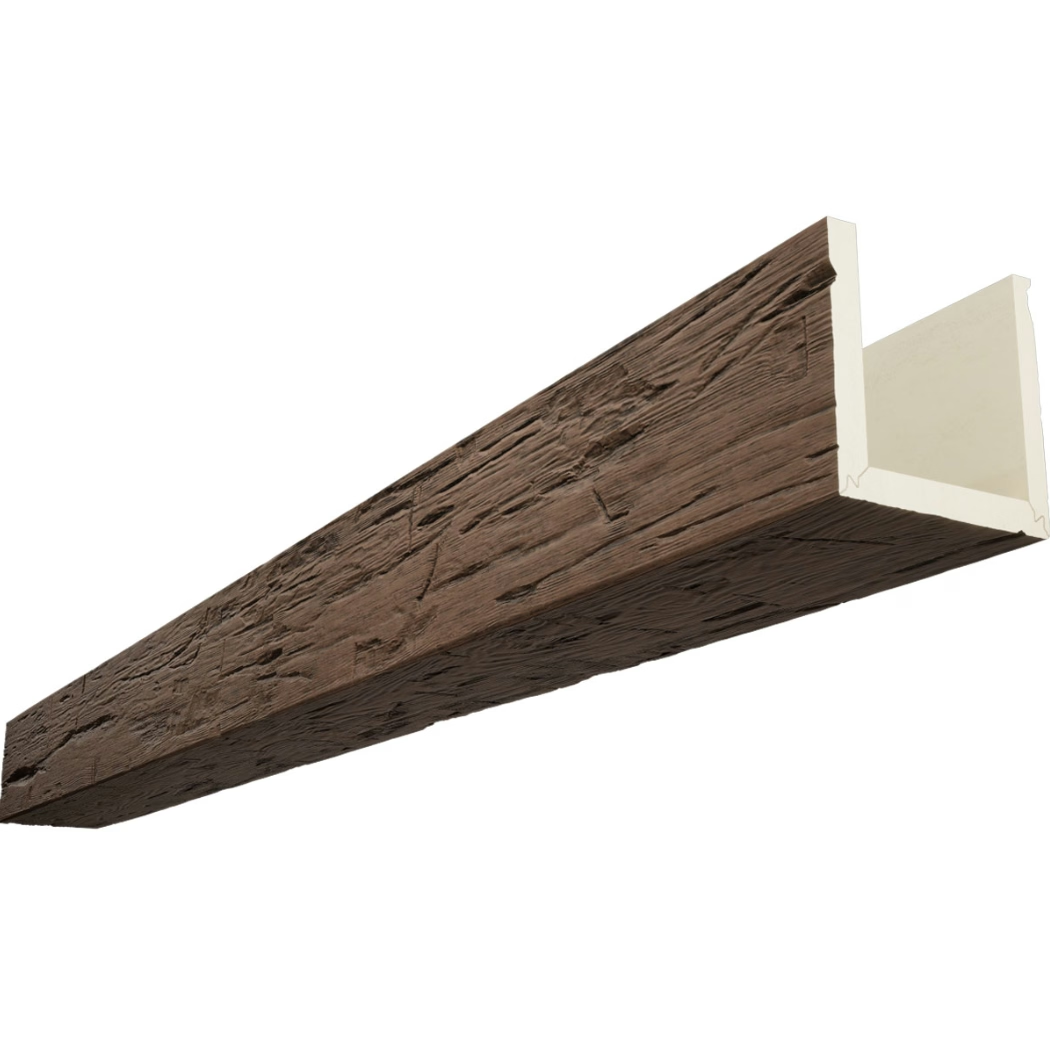
Premium faux wood beam manufacturers who want to grow beyond their home markets face a choice. They can sell directly to importers in each country, manage dozens of small relationships, and accept the chaos of uncoordinated distribution. Or they can identify strong regional partners and grant them exclusive distributorship rights in defined territories. The second approach, when executed well, builds brand presence faster and generates more predictable revenue than scattered direct sales.
For distributors, exclusive arrangements offer advantages that simple buying relationships cannot match. Territory protection means no competing distributor is undercutting prices in the same market. Brand association allows the distributor to invest in marketing and customer relationships without worrying that the manufacturer will sell around them. The manufacturer's commitment to the partner typically includes training, marketing support, and product development collaboration that pure buyers rarely receive.
The relationship only works when both sides bring real value to the partnership. Manufacturers need distributors who understand local markets, have established customer networks, and can provide the technical support that customers expect. Distributors need manufacturers who deliver consistent quality, protect their territories, support their marketing efforts, and maintain the kind of product innovation that keeps customers coming back.
How exclusive distributorship works
An exclusive distributorship agreement grants one company the right to import and sell a manufacturer's products within a defined territory. The territory might be a single country, a region like the Middle East or Southeast Asia, or a multi-country grouping like the Benelux or the Gulf Cooperation Council. Within that territory, the distributor is the only authorized seller of the manufacturer's products.
The manufacturer commits to not selling to other buyers within the protected territory. In return, the distributor typically commits to minimum purchase volumes, marketing investments, and service standards. The agreement usually runs for an initial term of two to three years with renewal options, providing both sides with a stable planning horizon.
Pricing structures vary. Some manufacturers sell to distributors at wholesale prices that allow the distributor to set their own retail and contractor pricing. Others set suggested retail prices that the distributor is expected to honor within a margin range. Most agreements specify payment terms, return policies, warranty handling, and intellectual property protections that apply to the distributor's use of the brand.
Marketing support is a common feature of exclusive arrangements. Manufacturers often provide branded marketing materials, product photography, technical documentation, and trade show support to their distributors. Some fund cooperative marketing programs where the manufacturer contributes a percentage of marketing costs incurred by the distributor. This support helps the distributor build brand awareness without bearing the full cost alone.
What manufacturers look for in distributors
Manufacturers granting exclusivity are selecting partners who will represent their brand well in the market. The selection criteria vary, but several factors consistently matter. First, the distributor must have genuine market access, meaning relationships with the contractors, designers, architects, and retailers who buy faux beams in volume. A distributor with a strong network can move product faster than one who is still building their customer base.
Financial stability is another key criterion. Exclusive arrangements typically involve minimum purchase commitments, inventory investments, and marketing expenses. A distributor who cannot fund these commitments creates risk for the manufacturer. Letters of credit, bank references, and audited financial statements are often part of the qualification process.
Technical capability matters too. Faux beam installation requires knowledge of mounting systems, finish compatibility, and project-specific problem solving. Distributors who can provide this support to their customers reduce the burden on the manufacturer and improve customer satisfaction. Some manufacturers require their distributors to maintain trained technical staff or to complete certification programs before granting exclusive rights.
Cultural and language fit is sometimes overlooked but important. A distributor who understands the local business culture, speaks the language, and can navigate regulatory requirements smoothly is more effective than one who struggles with these basics. Manufacturers increasingly value partners who can serve as cultural bridges between the factory and the end market.
What distributors gain from exclusivity
The most obvious benefit is territory protection. Without exclusivity, a distributor invests in building market awareness for a product only to see competitors enter the same market and undercut prices. With exclusivity, the distributor's market development investment is protected, and they can build a sustainable business around the product line.
Brand leverage is another significant benefit. Distributors of exclusive product lines can position themselves as specialists rather than generalists. Customers looking for that specific brand know they have to work with the authorized distributor. This positioning allows the distributor to command better margins and build deeper customer relationships than they could with commodity products.
Manufacturer support typically exceeds what non-exclusive buyers receive. Training programs, co-marketing funds, priority production scheduling, and early access to new products are common benefits of exclusive arrangements. For distributors who take advantage of these opportunities, the value can be substantial relative to the cost of maintaining the exclusivity.
Long-term business value is perhaps the most important benefit. A distributor holding exclusive rights to a premium brand has an asset that can be sold, transferred, or expanded. The customer relationships, territory rights, and brand association represent real equity that grows over time as the market develops.
Common structures and terms
Exclusivity typically extends to a defined product line within a defined territory. The manufacturer may produce multiple product lines and grant exclusive rights to different distributors for different lines in the same territory. Or the manufacturer may have one premium line with a single exclusive distributor per territory, and other lines available to multiple buyers.
Minimum purchase commitments are standard. A typical first-year commitment might be 500 to 2000 beams, depending on market size and product type. The commitment usually steps up in subsequent years as the distributor builds market presence. Failure to meet minimums can trigger loss of exclusivity, though manufacturers often work with struggling distributors before terminating arrangements.
Payment terms for exclusive distributors are often more favorable than for spot buyers. Net 60 or Net 90 terms are common, allowing distributors to manage cash flow against their customer payment cycles. Some manufacturers offer extended terms during the initial ramp-up period, recognizing that new market development takes time before generating consistent revenue.
Termination clauses protect both sides. Manufacturers typically can terminate for cause, including failure to meet minimums, misuse of the brand, or financial instability. Distributors usually can terminate if the manufacturer fails to supply agreed products, materially changes product specifications, or fails to honor exclusivity by selling to other buyers in the protected territory.

Challenges to anticipate
Exclusivity arrangements work best when both parties enter with realistic expectations. Common challenges include market development taking longer than anticipated. A distributor who projects reaching minimum commitments in 18 months may find that the actual timeline is 30 months as customer education and brand awareness build. Manufacturers who pressure distributors during slow ramps risk losing the partnership before it has a chance to mature.
Currency fluctuations affect international arrangements. A distributor buying in US dollars and selling in local currency absorbs exchange rate risk. Significant currency movements can compress margins or create losses. Hedging strategies, pricing adjustments, and natural hedges through diversified sourcing help manage this risk, but it remains a factor in any international distributorship.
Regulatory changes can disrupt established arrangements. New import duties, product safety requirements, or environmental regulations can affect the economics of importing faux beams. Distributors need to monitor regulatory developments in their markets and work with manufacturers to ensure ongoing compliance. Manufacturers who maintain current certifications and provide updated documentation make this easier.
Competitive pressure from other manufacturers is constant. Exclusive arrangements protect against intra-brand competition but not against competitors offering similar products. Distributors must invest continuously in promoting the manufacturer's brand advantages and maintaining customer loyalty. The exclusivity gives them time to build these relationships, but the work of maintaining them never stops.
Evaluating the opportunity
For prospective distributors, evaluating an exclusive opportunity requires careful analysis. The manufacturer's reputation, product quality, and financial stability should be verified independently. References from existing distributors in other territories provide insight into how the manufacturer operates and what working with them is actually like.
The product line should match the distributor's market opportunity. A premium faux beam brand with high price points and design-focused positioning works well in markets where architects and designers drive specifications. The same brand may struggle in markets where price sensitivity dominates and customers choose based on cost rather than design credentials.
The financial projections should be conservative. Building a distribution business on best-case projections leads to disappointment when reality falls short. Distributors should plan for the actual ramp-up time required to reach sustainable sales volumes and ensure they have the capital to fund that ramp before profitability arrives.
The relationship fit matters. Distributors will work closely with the manufacturer's team for years. Communication styles, business ethics, and shared vision should align. A partnership that looks good on paper but feels wrong in practice rarely succeeds. Spending time with the manufacturer's leadership before signing the agreement provides insight that no contract can replace.
Growing the partnership over time
Successful exclusive arrangements often expand over the years. A distributor who proves their value may receive rights to additional product lines, expanded territories, or first access to new market segments. The manufacturer's confidence in the distributor grows with each successful year, creating opportunities for both sides to benefit from the deepening relationship.
Some distributors eventually transition from importing finished products to local assembly or even local manufacturing under license. This evolution represents the deepest form of partnership and can dramatically improve margins for the distributor while expanding the manufacturer's global footprint without direct investment. The path requires significant capability development but offers substantial long-term value.
Whatever direction the partnership takes, the foundation is built on consistent execution. Fulfilling minimum commitments, maintaining quality standards, protecting the brand, and communicating openly with the manufacturer are the basics that make everything else possible. Distributors who treat the exclusivity as an asset to be developed rather than a right to be exploited build the kind of partnerships that create lasting value for both sides.
Technical References
ASTM standards cited in every specification
Test Data
Lab results from internal testing program
Updated 2026
Reviewed against current product specs