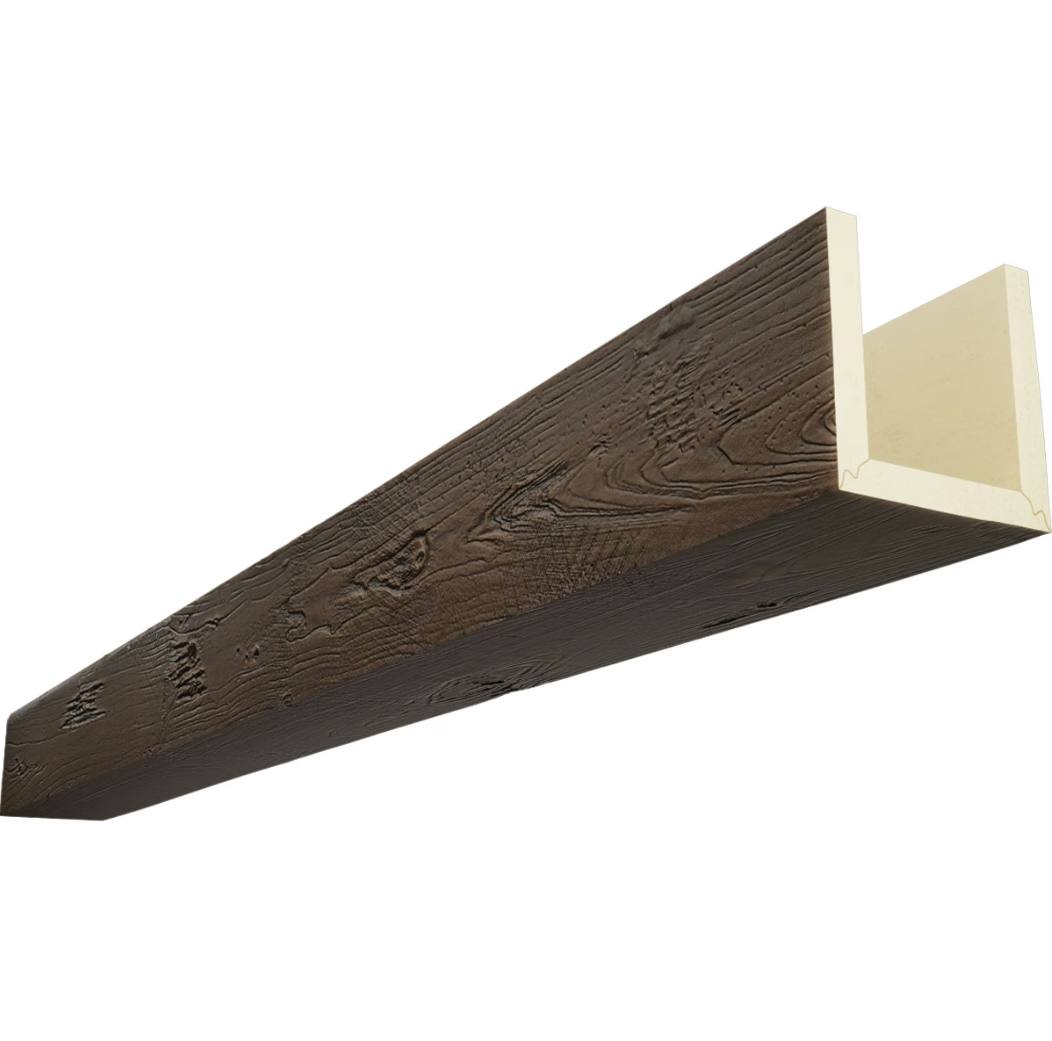
The claim appears regularly in faux beam marketing: beams improve room acoustics. Is this legitimate, or just creative copywriting? The honest answer requires understanding what acoustics actually means, what beams actually do, and when meaningful acoustic benefit occurs versus when it doesn't. Like most product claims, the truth lies somewhere between the marketing enthusiasm and the skeptics' dismissiveness.
Acoustic performance depends on the room, the beams, and the acoustic problem being addressed. Faux ceiling beams can improve certain acoustic conditions significantly. They cannot solve all acoustic problems. Understanding which category applies to your situation determines whether acoustic claims are relevant to your specification.
Understanding acoustic performance
Room acoustics involves several distinct phenomena:
Reverberation — sound persists after the source stops, caused by reflections from hard surfaces
Echo — distinct repetitions of sound, typically from large reflective surfaces
Standing waves — resonant frequencies created by room dimensions
Flutter echo — rapid sound repetitions between parallel surfaces
Background noise — unwanted ambient sound from external sources or HVAC
Different acoustic problems require different treatments. Beams address some effectively and others not at all.
How ceiling beams affect acoustics
Ceiling beams influence room acoustics through several mechanisms:
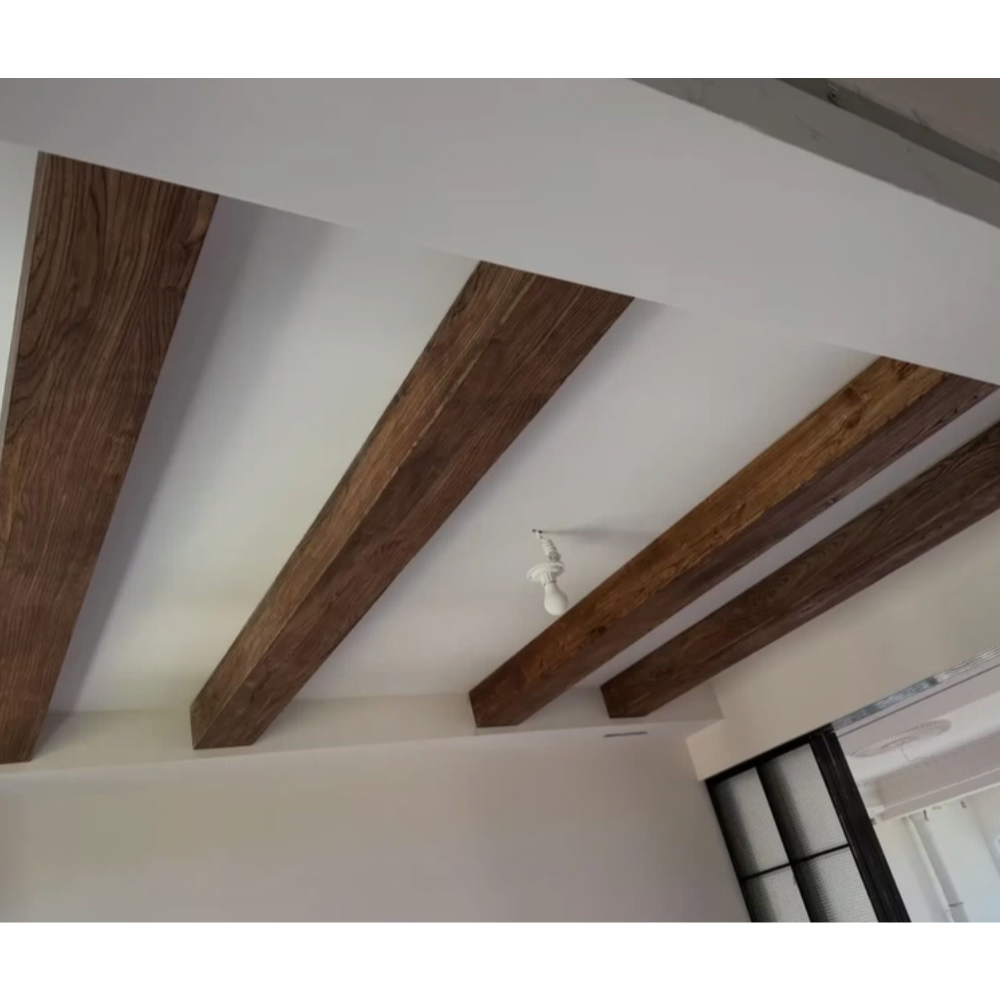
Surface breaking — beams interrupt large flat ceiling areas that create reflections
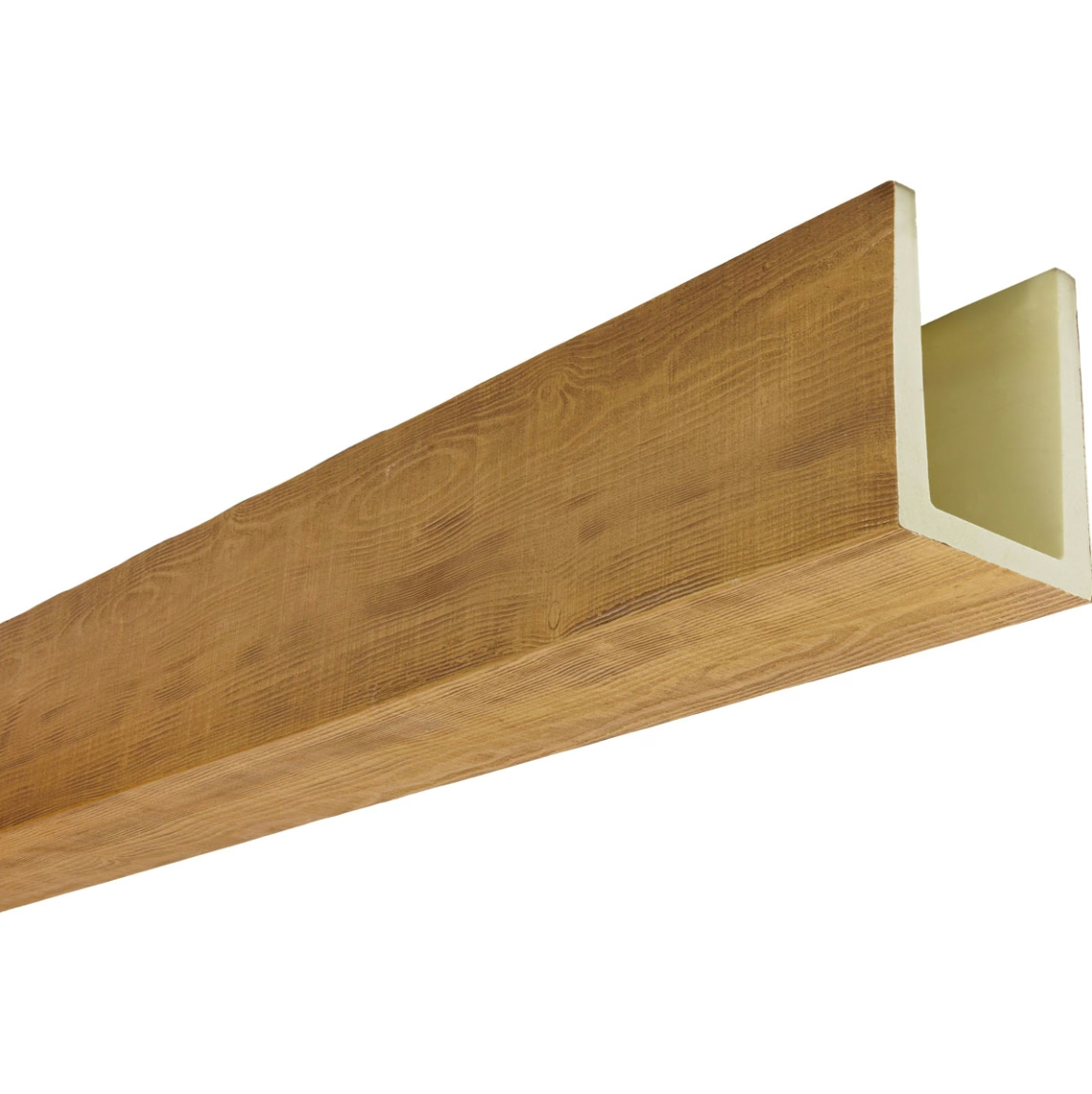
Diffusion — textured beam surfaces scatter sound waves in multiple directions
Mass addition — heavier beam installations add mass that absorbs low-frequency energy
Air space creation — beams mounted away from ceiling create acoustic cavities
Visual psychology — rooms with beams feel more finished and acoustically treated (real psychological benefit)
These effects combine differently depending on beam configuration, room dimensions, and frequency content.

When beams help acoustics
Beams provide genuine acoustic benefit in specific situations:
Large flat ceilings
Spaces with expansive featureless ceilings benefit most:
- Commercial lobbies with 20-foot ceilings
- Great rooms with cathedral ceilings
- Ballrooms and event spaces
Beams break up reflective surfaces that otherwise create echo and reverberation.
Recording studios and media rooms
Professional acoustic treatment includes strategic beam placement:
- Diffusers installed at calculated intervals
- Bass traps integrated into beam design
- Reflection points addressed with targeted beam positioning
Acoustic consultants specify beam placement for measurable improvement.
Restaurant and hospitality venues
These spaces benefit from moderate reverberation control:
- Dining rooms where conversation intelligibility matters
- Open-plan restaurants with hard finishes
- Bar areas where clear speech communication is essential
Beams contribute to comfortable acoustic environment without full treatment cost.
When beams don't help acoustics
Beams provide minimal acoustic benefit in other situations:
Small rooms with existing treatment
Rooms already carpeted, furnished, and treated see little additional benefit:
- Bedrooms with carpet and drapes
- Home offices with bookcases and furnishings
- Finished basements with acoustic tiles
The marginal addition of beams makes minimal acoustic difference.
Low ceilings
Rooms with ceilings under 9 feet have limited acoustic benefit from beams:
- Sound reflects multiple times in short distances
- Furniture and occupants absorb most energy
- Beam placement becomes awkward with limited height
Standard acoustic treatments work better than beams in these applications.
Specific frequency problems
Beams cannot address certain acoustic issues:
- Low-frequency resonance (standing waves) requires bass traps
- HVAC noise requires source treatment
- External noise requires insulation and sealing
Identify the actual acoustic problem before assuming beams will help.
Realistic acoustic expectations
Set appropriate expectations for beam acoustic performance:
What beams reliably do:
- Reduce echo in large rooms with hard finishes
- Add visual warmth that psychologically feels more acoustically comfortable
- Break up flutter echo between parallel surfaces
- Provide some mid-frequency diffusion
What beams cannot do:
- Eliminate low-frequency standing waves
- Provide meaningful noise reduction
- Replace dedicated acoustic treatment in professional applications
- Solve severe reverberation problems alone
For significant acoustic improvement, beams should be part of a comprehensive acoustic treatment plan.
Optimizing beams for acoustic benefit
When acoustic improvement is a goal:
Increase beam count — more beams provide more surface area for diffusion
Use textured surfaces — rough textures scatter sound better than smooth finishes
Consider spacing — regular spacing creates predictable diffusion patterns
Add backing material — acoustic insulation behind beams enhances absorption
Position strategically — consult acoustic guidelines for reflection point placement
Coordinate with acoustic consultants when projects require measurable acoustic performance.
A measured approach to acoustic claims
Acoustic improvement from faux ceiling beams is real but limited. The effect is genuine in appropriate applications — large, hard-finished spaces where beam installation provides meaningful surface treatment. In typical residential rooms with normal furnishings and finishes, the acoustic benefit is marginal at best.
Specify beams for the visual transformation they provide, and include dedicated acoustic treatment where actual acoustic performance is required. Do not expect beams to replace professional acoustic engineering.
Technical References
ASTM standards cited in every specification
Test Data
Lab results from internal testing program
Updated 2026
Reviewed against current product specs