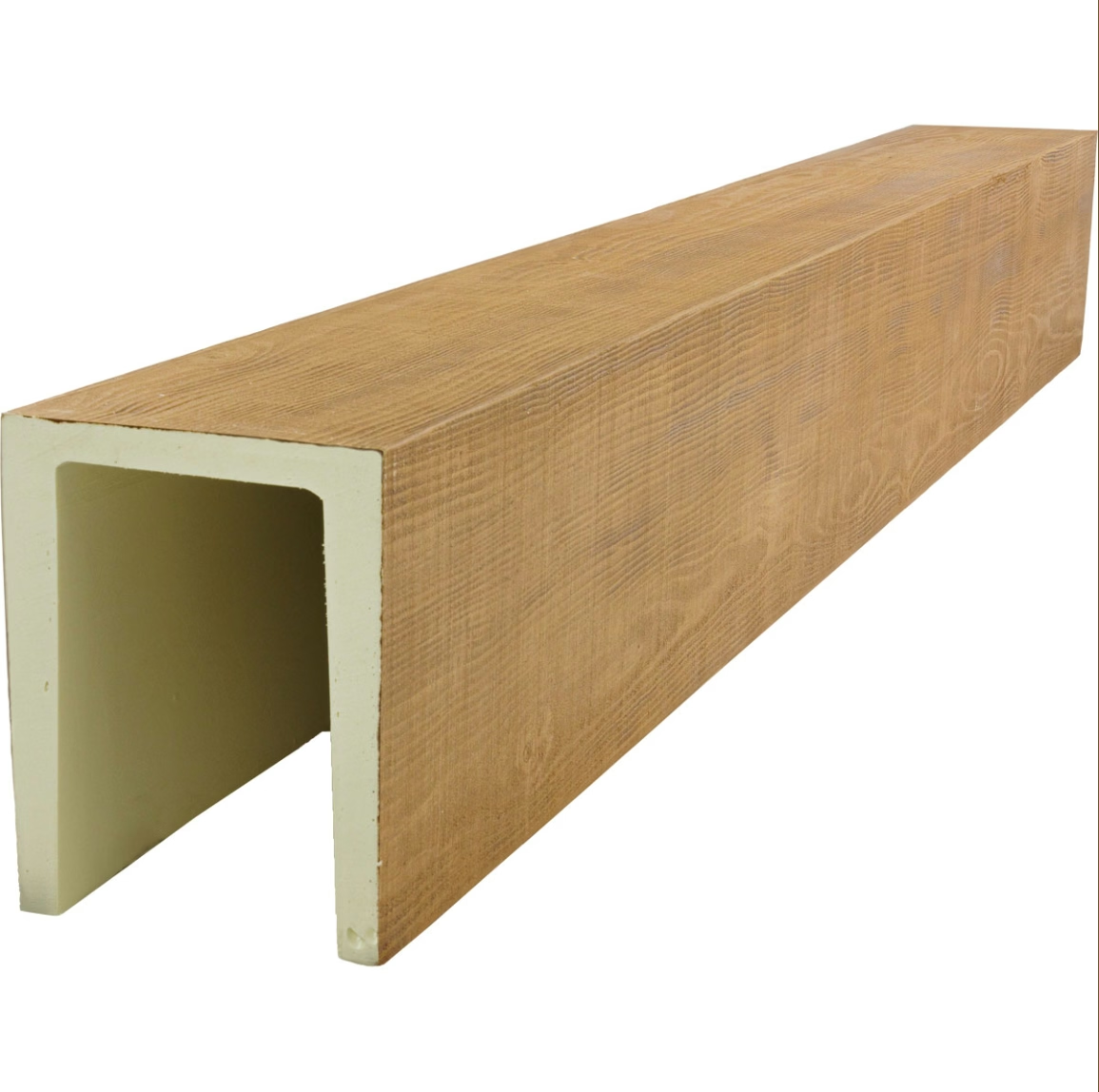
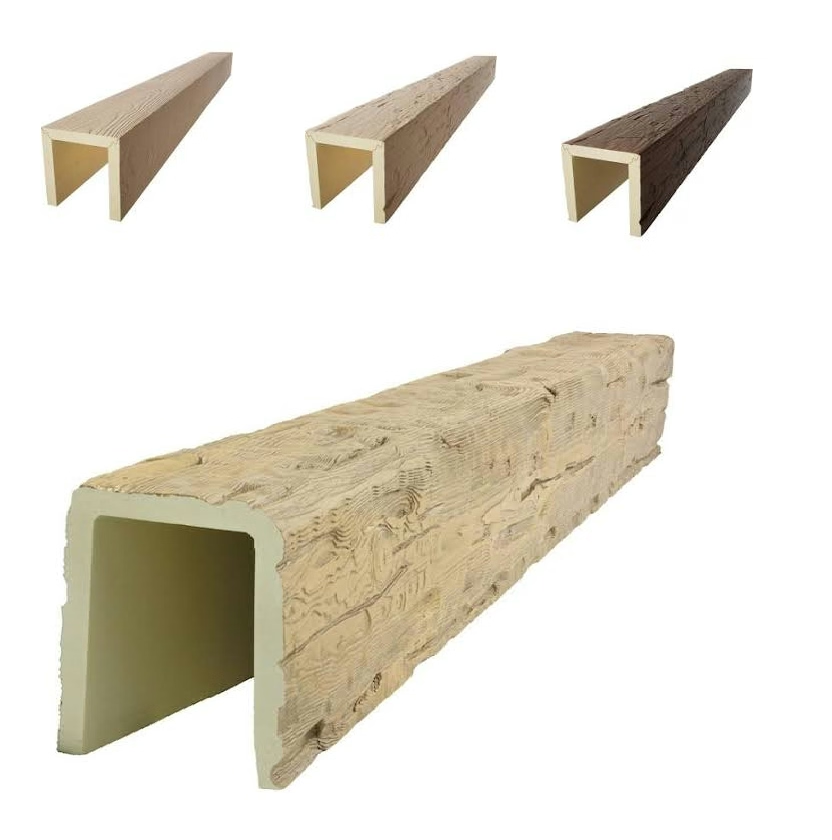
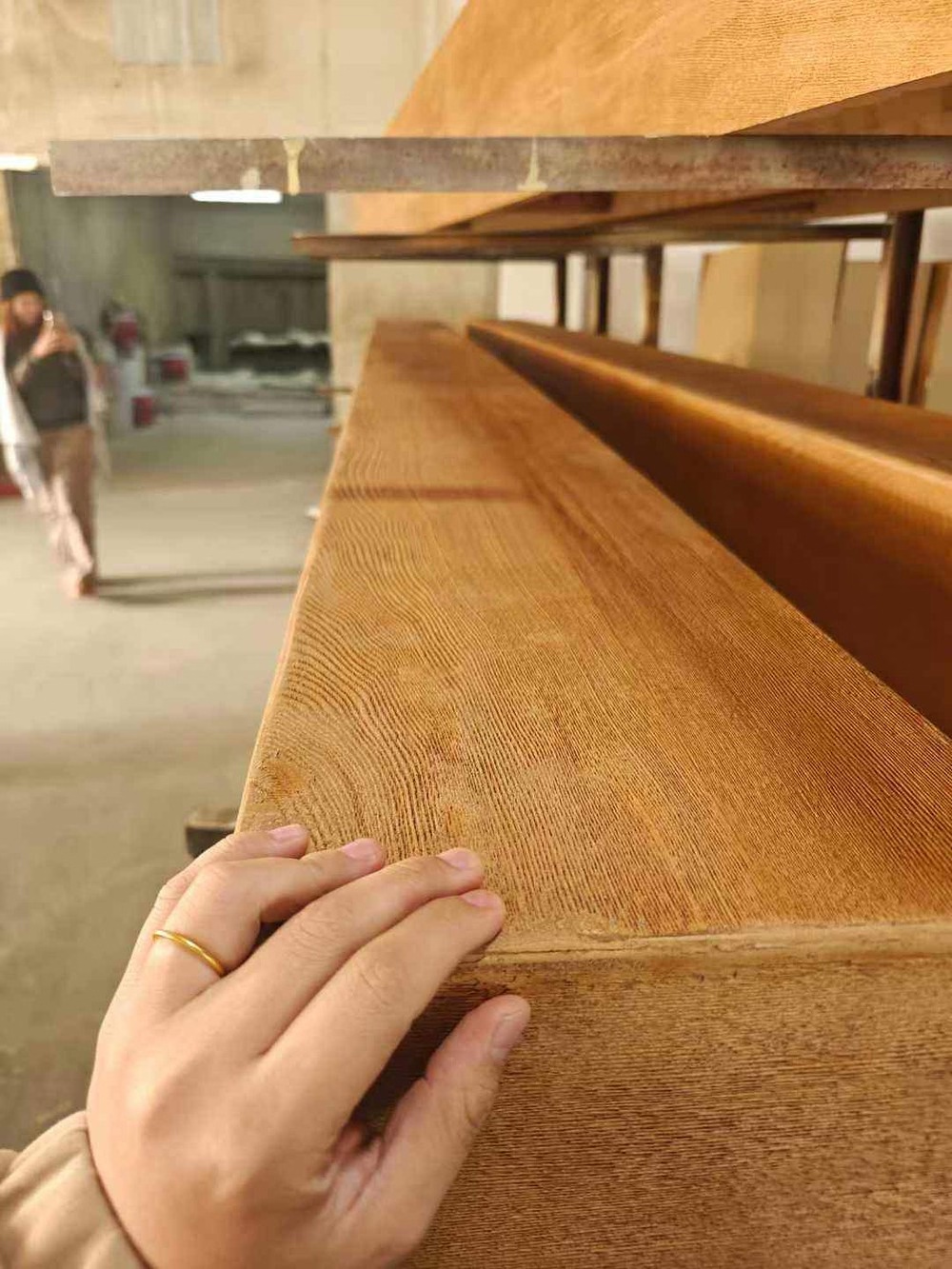
Touch is the sense that reveals the truth of a surface. We can be fooled by visual appearance at a glance; the brain fills in gaps based on expectation and context, constructing a coherent image from incomplete information. But when fingertips explore a surface, the brain receives direct sensory data that either confirms or contradicts what the eyes report. A glossy plastic surface that looked like wood from across the room declares its true nature the moment a finger traces across it. This is why the texture of faux wood beams matters so profoundly: surface quality is not merely a visual concern but a tactile one, and the most convincing faux wood surfaces feel as authentic as they look.
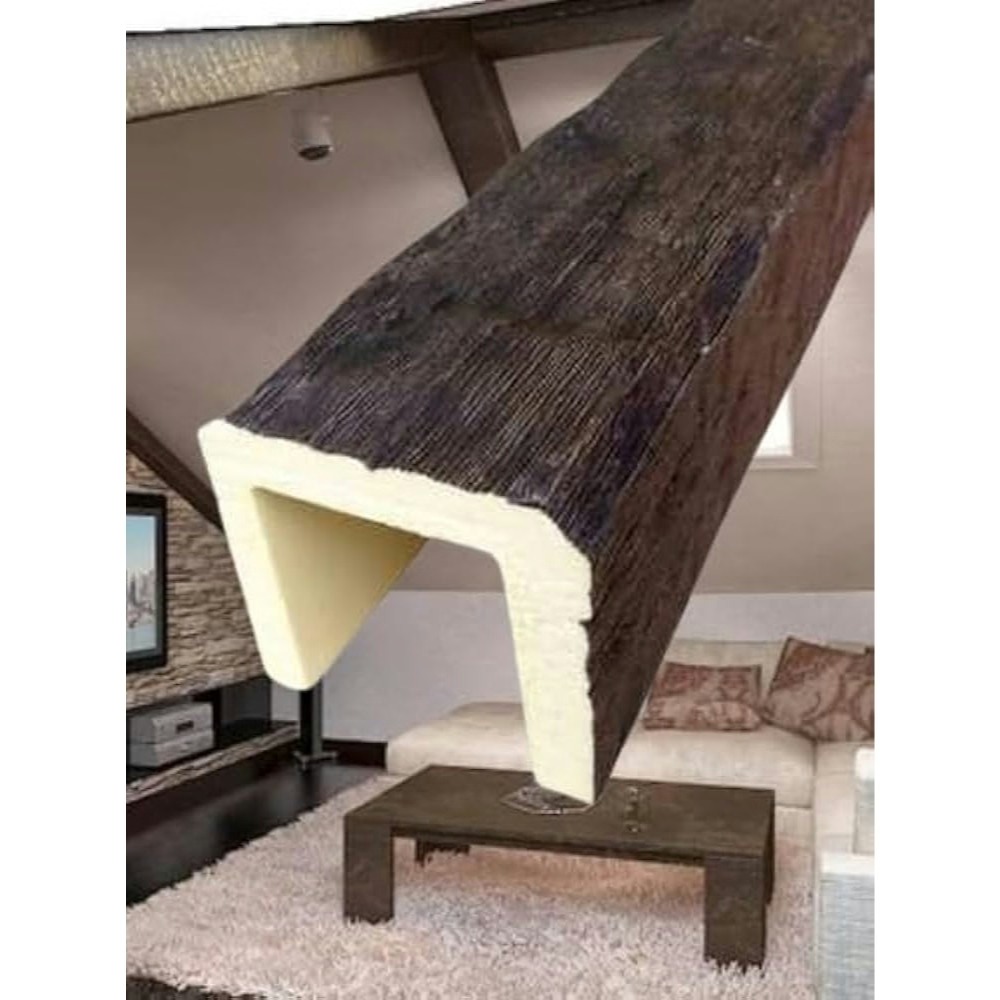
The embossed wood grain texture applied to premium polyurethane faux beams represents the current state of the art in manufactured wood replication. The depth, consistency, and authenticity of the texture distinguish premium products from economy alternatives in ways that are immediately apparent upon close inspection. Understanding the manufacturing processes that create these textures — and evaluating them critically as a buyer or specifier — is essential for anyone seeking the most convincing faux wood ceiling treatment available.
The Technology of Wood Grain Embossing
Wood grain embossing on polyurethane beams is achieved through a mold-based process where the surface texture of the beam is formed simultaneously with its shape. Unlike coating-based texturing methods where texture is applied as a separate step, mold-based embossing creates texture that is integral to the beam surface, with consistent depth and detail throughout. The quality of the embossing is determined entirely by the quality of the mold surface, which is why mold making has become a specialized craft within the faux beam manufacturing industry.
Premium mold surfaces are created through a process that begins with actual timber samples selected for their desirable grain characteristics. A skilled mold maker examines timber samples from multiple boards and selects those with the most representative, well-defined grain patterns for the target species. From these samples, either a direct negative impression is taken using precision silicone molding compounds, or a master tool is machined using CNC equipment guided by detailed scanning of the timber surface. Both approaches produce molds capable of reproducing grain detail at a resolution that captures the finest wood fiber textures.
The depth of embossing is a critical quality variable. Economy faux beams may use shallow embossing of 0.5 to 1 millimeter depth, which reads as texture from a distance but appears flat and unconvincing at close range. Premium beams use embossing depths of 2 to 4 millimeters or more, which creates sufficient surface relief to catch light and shadow in ways that genuinely mimic natural wood. This depth also affects how stain and finish interact with the surface, because stain pools naturally in the embossed depressions, building depth just as it does on natural wood.
Species-Specific Texture Reproduction
Different wood species present different textural challenges that affect the embossing approach. Oak, with its pronounced open grain and deep annual ring lines, requires a deep, coarse embossing pattern that captures the characteristic gap between fiber bundles. The texture must include not just the primary grain lines but also the finer tangential/radial variations that give each oak board its distinctive character. A mold that captures only the obvious grain lines without the smaller details produces a beam that looks like simplified oak rather than actual oak.
Pine and other softwoods present the opposite challenge: the grain lines are subtle and fine, and the surface texture is dominated by the fine cell structure visible as a gentle, uniform pattern. Over-embossing softwood species creates an appearance that is too pronounced, making the beam look like it was made from a coarser species than intended. The mold must capture the delicate quality of softwood texture with restraint, avoiding excessive relief that would misrepresent the species character.
Reclaimed and barn wood textures present yet another category of challenge. These timbers have accumulated weathering effects, saw marks, and patina that are integral to their character. Reproducing this complexity in embossed form requires molds created from samples that have developed these aged characteristics, or digital texturing processes that synthesize the layered aging effects. The result can be extraordinarily convincing, with saw blade marks, weathering gradients, and aged surface character reproduced with accuracy that rivals the original material.

The Interaction of Texture and Finish
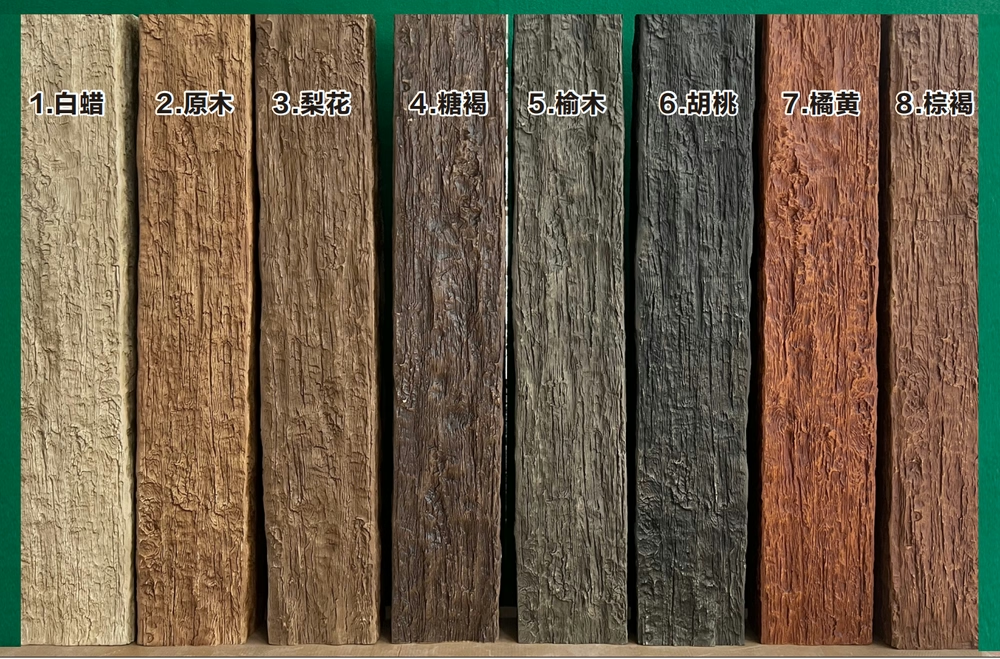
The authenticity of embossed faux beams depends critically on the interaction between the surface texture and the color finish. These two elements are not independent; the best results come from a coordinated finishing process where stain application techniques are specifically matched to the embossing depth and pattern. Premium finishers understand that stain behaves differently on textured surfaces than on flat surfaces, and they adjust application methods accordingly.
In the recessed areas of deep embossing, stain accumulates and appears darker, just as it does in the natural valleys of wood grain. On the raised surfaces, where the embossing creates peaks between the grain lines, less stain adheres and the color appears lighter. This differential creates the characteristic dimensional appearance of natural wood, where the grain lines are visually distinct from the fiber surface between them. Economy finishing processes that apply stain uniformly without accounting for texture produce flat, unconvincing coloration that lacks this essential dimensional quality.
The protective topcoat applied over the stain finish further interacts with the embossed texture. A high-gloss topcoat applied over deep embossing creates dramatic shadow contrast between highlighted peaks and shadowed valleys, producing a look that suits certain species and finishes better than others. A satin or matte topcoat produces subtler contrast that feels more natural for most interior applications. Premium manufacturers typically specify appropriate topcoat sheens for each beam finish, understanding that the interplay of texture, stain, and topcoat determines the final visual result.
Evaluating Texture Quality as a Buyer
For buyers evaluating faux beam quality, tactile examination is as important as visual inspection. Running a fingertip across the beam surface reveals texture depth immediately. A premium textured beam will have clearly perceptible relief under the finger, with grain lines that feel as authentic as they look. A poorly textured beam will feel smooth and artificial, regardless of how convincing the visual appearance may be from a distance.
The consistency of texture across the beam surface is another important quality indicator. Premium beams are molded in precision-controlled processes where the texture is consistent from one end of the beam to the other. Economy beams may show variations in texture depth, with some areas well-textured and others smoothed over by mold release agents or manufacturing inconsistencies. Running a hand along the full length of the beam exposes any such variations.
Viewing the beam at an angle under strong light reveals how effectively the embossing creates dimensional appearance. Deep embossing will produce visible shadow lines and highlighted ridges at the appropriate angles, creating the characteristic light-interaction pattern of natural wood. Shallow embossing will appear relatively flat regardless of viewing angle, lacking the dynamic quality that distinguishes authentic wood surfaces.
The investment in deeply embossed, premium-textured faux beams pays dividends in the finished installation. A beam that feels as authentic as it looks creates a complete sensory experience that satisfies even the most discriminating observers. In spaces where people will touch the beams, examine them closely, and compare them to their natural counterparts, texture quality is the ultimate determinant of whether the faux material successfully achieves the designer's intent. Premium embossing technology has made that achievement possible at a fraction of the cost and complexity of natural timber, democratizing access to authentic wood aesthetics in every space.
Technical References
ASTM standards cited in every specification
Test Data
Lab results from internal testing program
Updated 2026
Reviewed against current product specs