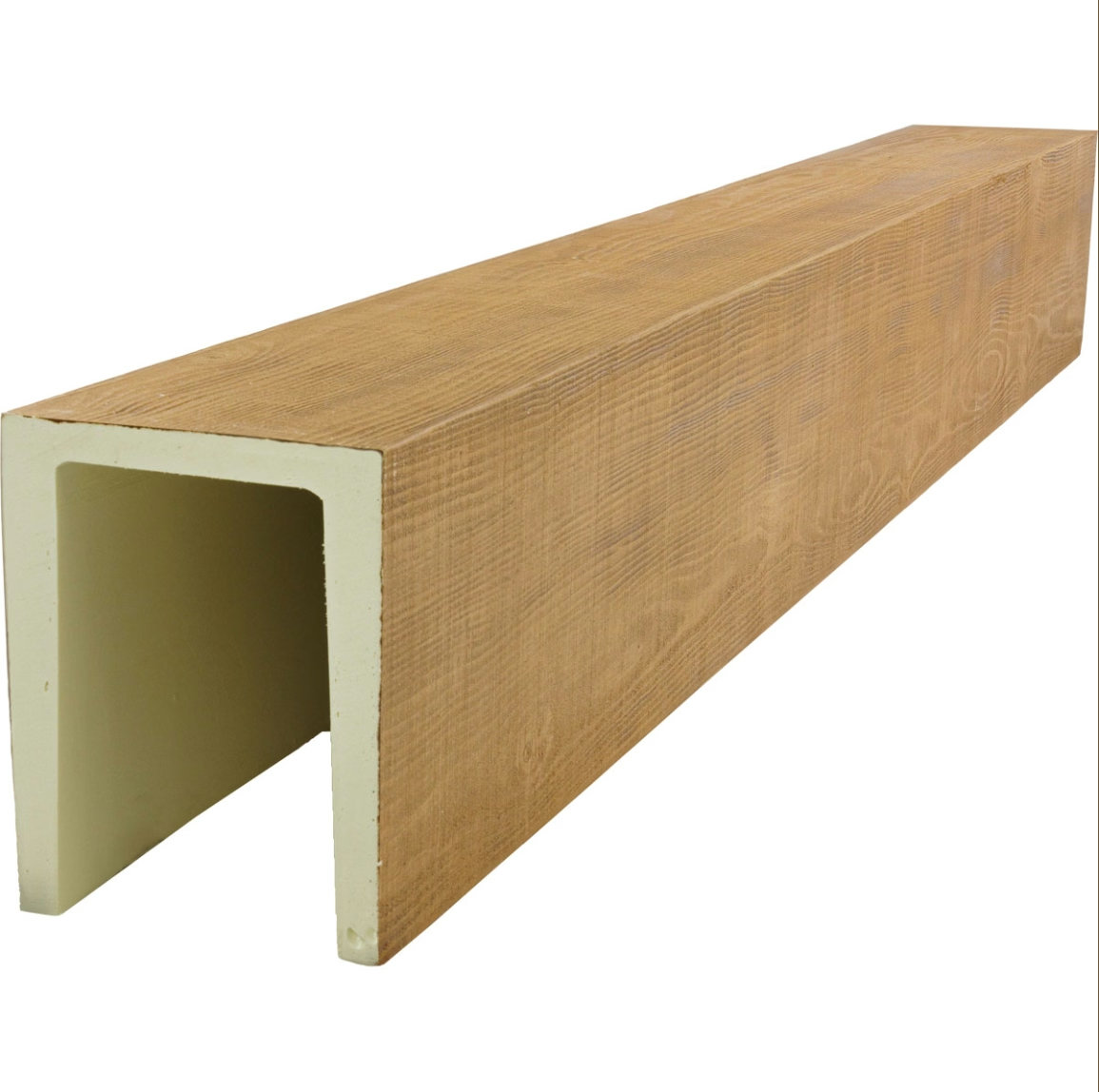
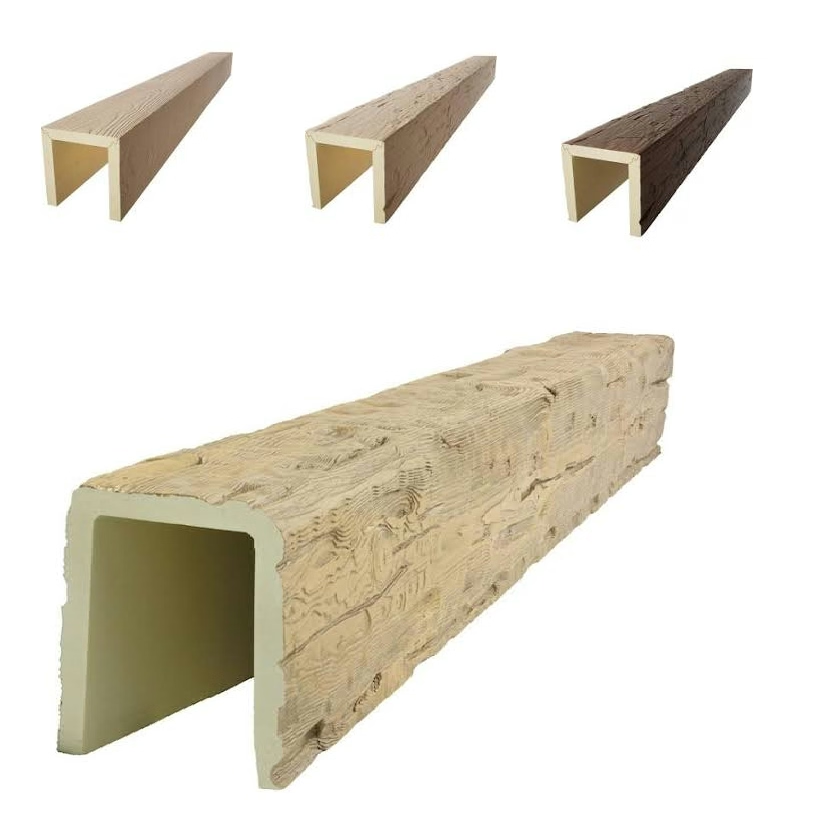
The moment of revelation happened quietly. An architect, known for her exacting standards and decades of experience with natural materials, was touring a recently completed residential project. The homeowners had specified timber-look ceiling beams throughout the main living area, and she had anticipated that the installation would feature natural timber — it was a high-budget project with discerning clients, after all. Instead, she found herself examining beams that looked, felt, and performed exactly as she would have expected from the finest solid timber available, yet weighed a fraction of what solid timber would have required.
Her subsequent inquiry confirmed what she could not quite believe: the beams were polyurethane faux beams, manufactured with such attention to surface reproduction, color depth, and textural authenticity that her experienced eye had been fooled. This anecdote, recounted by the installer who had completed the project, illustrates a threshold moment in the development of faux wood products. The question is no longer whether polyurethane beams can approximate the appearance of timber; they demonstrably can. The question has become: how do manufacturers achieve this level of realism, and how can buyers ensure they are specifying products that will deliver it?
The Convergence of Manufacturing Excellence
The realism of modern faux wood beams is the product of convergence across multiple manufacturing disciplines. Surface texture reproduction requires expertise in mold making. Color application requires mastery of wood finishing techniques. Material formulation requires polymer chemistry knowledge. Quality control requires rigorous inspection protocols at each stage of production. When all of these disciplines operate at a high level simultaneously, the result is a product that achieves visual and tactile authenticity at a scale and price point that natural timber cannot match.
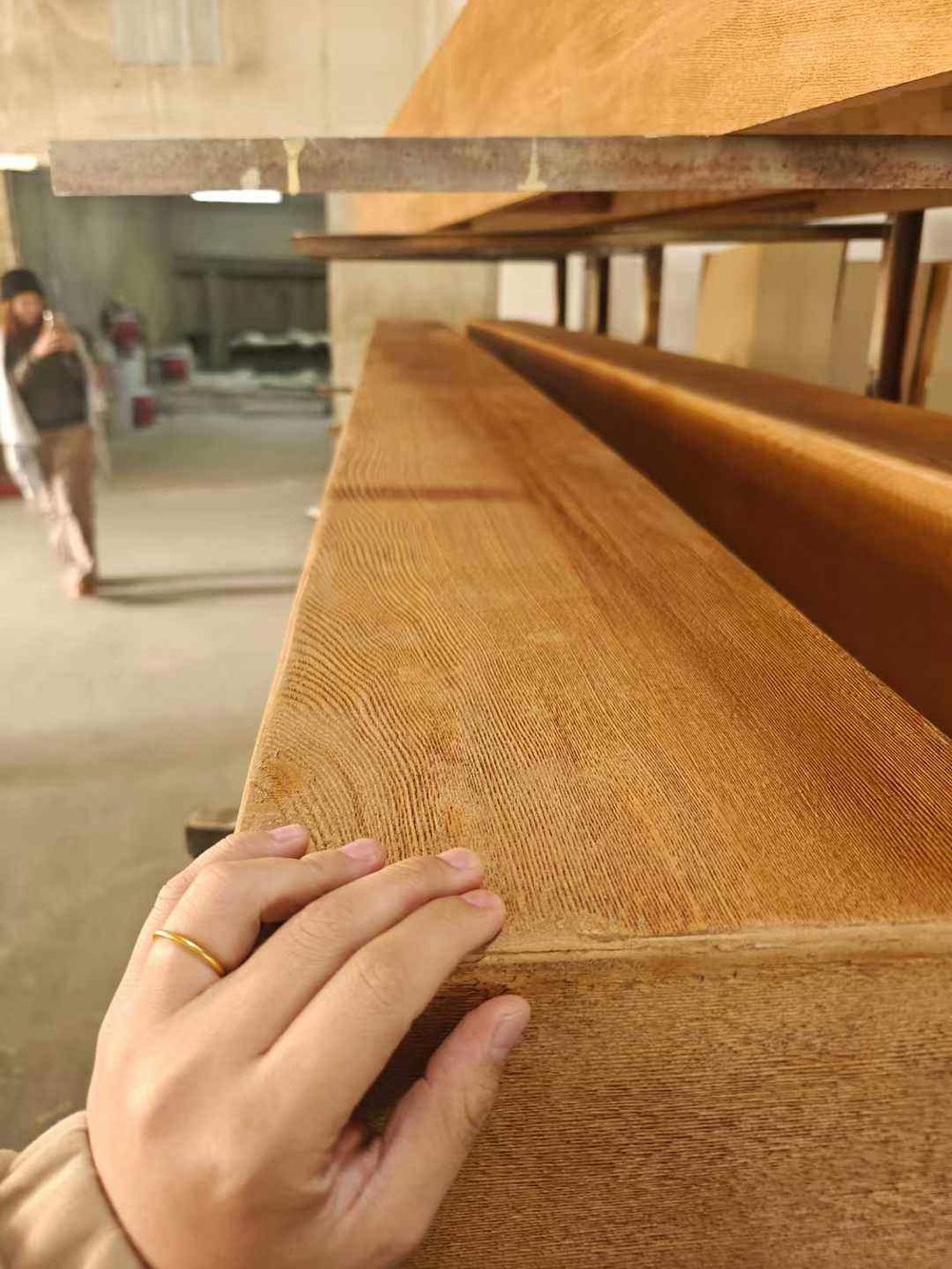
The mold-making process begins with timber samples of exceptional quality. Manufacturers maintain libraries of carefully selected timber boards, each chosen to represent the target species at its finest — boards with straight, consistent grain, well-defined annual rings, and minimal defects. From these master samples, molds are created using precision silicone compounds or machined metal tools. The mold surface captures not just the obvious macro features of the wood grain but the fine fiber textures, small irregularities, and natural variations that give each board its unique character.
The quality of the master timber selection is itself a meaningful differentiator between premium and economy manufacturers. Premium manufacturers invest significant time and expertise in sourcing and selecting master samples, understanding that the quality ceiling for the finished beam is set by the quality of the mold surface derived from the sample. Economy manufacturers may use lower-quality or less-representative samples, producing molds that inherently cannot capture the full character of the species they target.
Color Depth and Natural Variation
The color of natural wood is not uniform. Any piece of timber exhibits variation across its surface — lighter near the heartwood center, darker near the pith, with subtle tonal shifts that follow the growth ring pattern. End grain differs from face grain. Areas near knots show characteristic color intensification. This natural variation is one of the most distinctive qualities of timber, and replicating it convincingly is essential for authentic faux wood appearance.
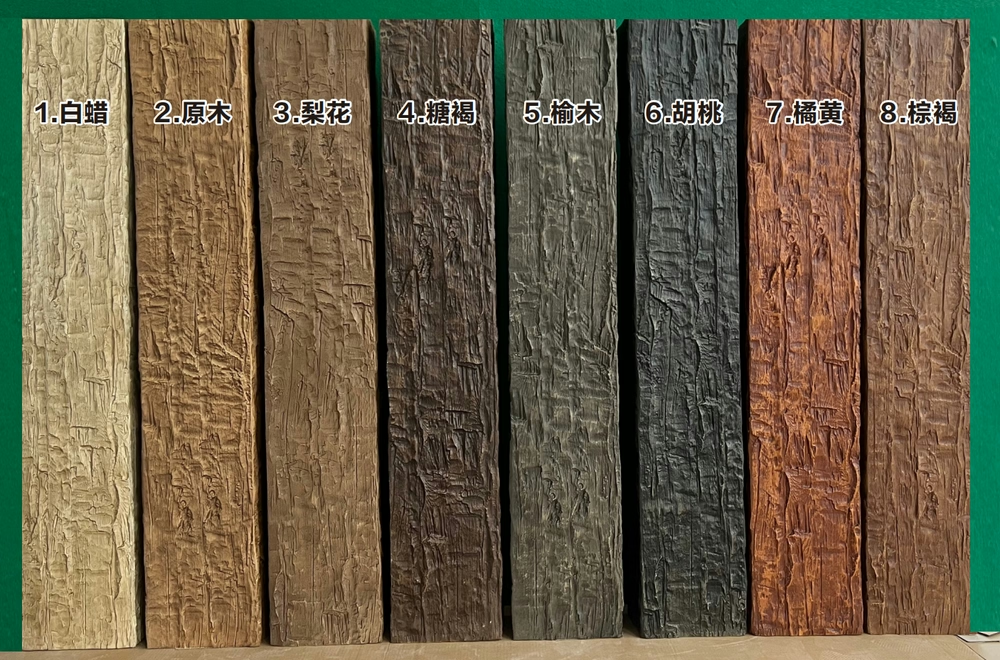
Premium faux beam manufacturers replicate this variation through multi-stage color application processes that are carefully controlled to produce consistent, natural-looking results. The process typically begins with a base coat that establishes the fundamental wood tone. Stain is then applied in a pattern that follows the embossed grain texture, with manual techniques used to create natural-looking variation in color intensity. Finally, a topcoat seals the color and provides the characteristic surface sheen of the target species.
The subtlety of this process distinguishes premium products. Economy finishing processes may apply stain uniformly or in simplified patterns that lack the natural complexity of real wood coloration. The result is a beam that looks painted rather than finished, flat rather than dimensional. Premium finishing produces a beam where the color variation feels organic and inevitable rather than applied and mechanical — the same distinction that separates a fine oil painting from a colored photograph.
The Role of Scale and Proportion
The perception of realism in faux wood beams is also influenced by the scale and proportion of the beam itself relative to the room and the specific wood species being replicated. A beam profile that accurately reproduces the grain of a 200-year-old oak timber will look unconvincing if the profile proportions are wrong or if the scale of the grain texture does not match the scale suggested by the beam's dimensions. Premium manufacturers offer multiple grain patterns within each species, with texture scale matched to beam profile size.
This attention to scale reflects a sophisticated understanding of how the human visual system processes architectural details. We have all experienced the uncanny valley effect in reproduced surfaces: a synthetic material that is almost but not quite right triggers a subtle discomfort that undermines the design intent. The goal of premium faux beam manufacturing is to stay firmly on the far side of that valley, producing beams whose authenticity is complete and whose materials science remains invisible to the observer.
For designers and homeowners, specifying premium-quality faux beams from established manufacturers with demonstrated surface reproduction expertise is the most reliable path to authentic results. Requesting physical samples, examining them critically from multiple distances and angles, and testing them tactilely are all standard practices that ensure the specified product will deliver the expected result. The investment of time in product selection is rewarded by a finished installation that satisfies even the most discerning observers, including those who have spent careers working with natural materials.
Technical References
ASTM standards cited in every specification
Test Data
Lab results from internal testing program
Updated 2026
Reviewed against current product specs