The vernacular of grand architecture has always been defined by scale. Massive columns, towering vaulted ceilings, beams the size of small trees — these elements communicate power, permanence, and the ambition of the builder. In contemporary construction, where efficiency and cost control govern decisions, the opportunity to create this sense of grandeur has been constrained by the practical realities of structural engineering and budget management. Solid timber beams of the dimensions needed to create a genuinely grand ceiling effect can cost tens of thousands of dollars and require structural reinforcement that adds further thousands to the project. The result is that most contemporary buildings settle for ceilings that feel proportionally modest compared to the architectural ambition of the space.
Polyurethane simulated solid wood ceiling beams change this equation entirely. By manufacturing beams in large cross-sectional profiles — 10 by 10 inches, 12 by 12 inches, even larger — with the surface appearance of aged, massive timber, these products enable grand ceiling effects in buildings that were never designed for the structural load of real timber. The simulated solid wood aesthetic captures every visual quality that makes massive timber impressive: the substantial visual presence, the rich color of aged wood, the pronounced grain of slow-growth timber, and the sense of permanence that only the largest structural elements convey.
Engineering Massive-Profile Hollow Beams
The engineering challenge of creating convincing simulated solid wood beams in large cross-sectional profiles is substantial. A 12-inch by 12-inch solid wood beam 20 feet long might weigh 400 to 500 pounds. Creating the visual impression of that beam with a hollow-shell construction while keeping the weight manageable requires careful internal architecture that distributes structural material efficiently and provides adequate mounting surface for the installation hardware.
Premium manufacturers address this challenge through ribbed internal construction that provides maximum stiffness with minimum material. The outer shell of the beam is as thick as necessary to support the embossed texture and resist impact damage. The internal ribs, typically running along the length of the beam at regular intervals, provide bending stiffness and prevent the hollow shell from collapsing or deforming under load. The result is a beam with exterior dimensions that match or exceed natural timber equivalents while weighing one-tenth as much or less.
The mounting system for large-profile simulated beams must be scaled appropriately. Standard wood screws and light-duty brackets are inadequate; the installation requires mounting hardware with sufficient load capacity to secure beams that, while much lighter than solid timber, still represent significant mass when fully assembled. Premium manufacturers specify appropriate mounting systems for each beam profile, typically including heavy-gauge steel brackets, lag screws rated for the anticipated loads, and where necessary, supplementary support from structural members in the building frame.
Achieving the Aesthetic of Aged Timber
The visual impression of genuine massive timber is not created by fresh-milled lumber but by timber that has aged, dried, and developed character over years or decades. The color deepens as extractive compounds oxidize. The surface develops subtle checking as the wood loses moisture. The grain becomes more pronounced as the contrast between earlywood and latewood increases with drying. Reclaimed beams from old barns, factories, and mills are particularly prized for their intense character, accumulated through decades or centuries of service.
Simulated solid wood beams achieve this aged character through multi-layered surface treatment processes that replicate the aging effects of natural timber. The embossing captures the coarse grain texture of aged timber, which is typically more pronounced than fresh-milled wood due to the differential contraction of earlywood and latewood during drying. The finishing process applies color in a manner that mimics the oxidation and extractive deposition that darkens timber over time, building depth through multiple thin layers rather than a single uniform application.
Secondary surface treatments add the fine details of aged timber: subtle surface checking, minor imperfections from old fasteners or hardware, and the patina that accumulates on any wood surface that has been exposed to light and air over extended periods. These details are subtle individually but collectively create the impression of a beam with history — a beam that has been part of a building rather than one freshly manufactured for installation. Premium simulated beams incorporate these aging effects as integral design elements rather than afterthought decorations.
Design Applications in Grand Interiors
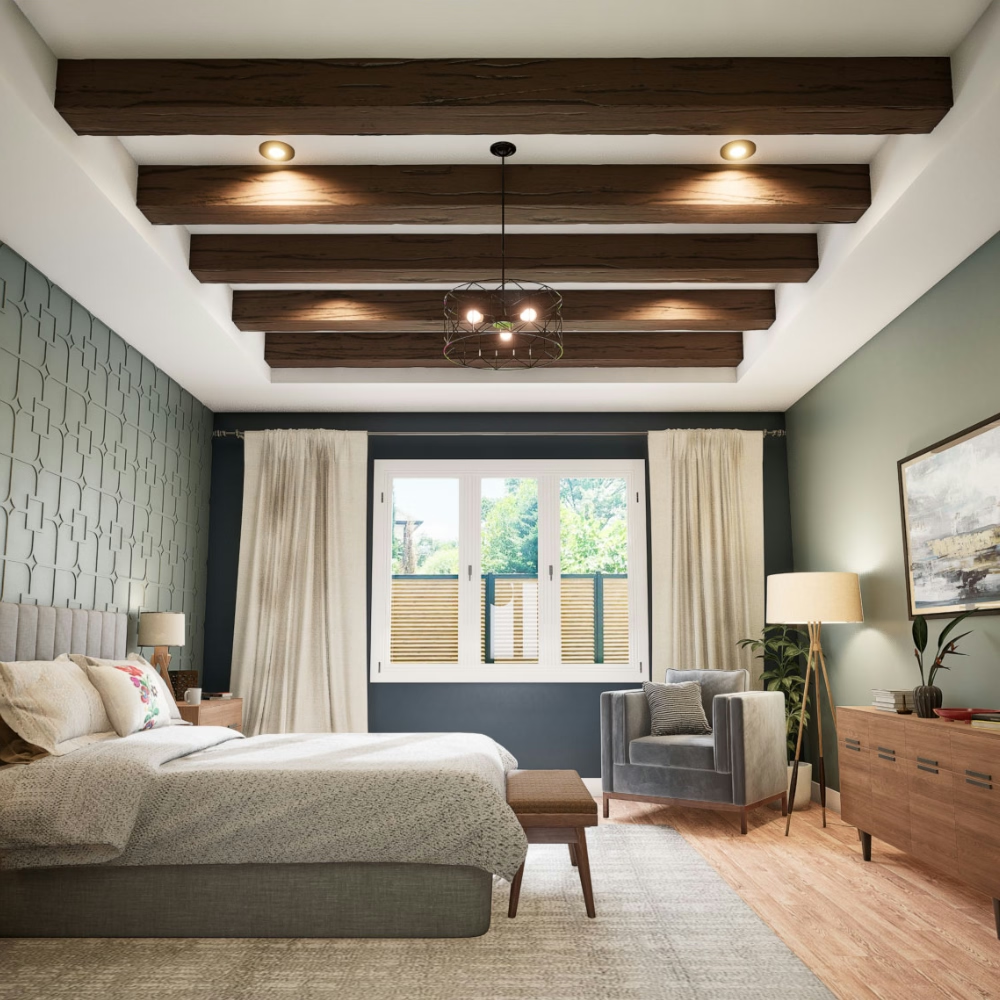
Large-scale simulated solid wood beams are most dramatically effective in spaces designed to impress: hotel lobbies and ballrooms, grand residential entryways and great rooms, restaurant dining rooms and event spaces, and institutional buildings where the ceiling treatment contributes to the architectural statement. In these applications, the beams serve as the primary design element, establishing the visual scale and material character of the entire space.
The proportioning of beams in grand interiors requires particular attention. Beams that are underscaled for the space feel trivial and fail to create the intended grandeur. Beams that are appropriately scaled create a sense of occasion, establishing the ceiling as a destination rather than simply a covering. The most dramatic results typically come from beams that appear slightly oversized relative to what structural necessity would demand, creating the impression of deliberate architectural excess that signals ambition and craft.
Pairing simulated massive timber beams with complementary materials reinforces the sense of crafted grandeur. Stone or brick walls provide textural contrast and share the sense of permanence and weight that the beams convey. Iron or black metal hardware, lighting fixtures, and architectural details ground the warm wood tones in a cool, industrial contrast. Large-scale windows and clerestories introduce natural light that animates the beam surfaces throughout the day, creating a dynamic interplay between the static beams and the changing light that makes the space feel alive.
For foreign trade buyers and commercial specifiers, simulated solid wood beams represent a specification category that addresses a genuine market need: the desire for grand, impressive ceiling treatments in buildings where solid timber is structurally or economically impractical. The combination of massive visual presence, lightweight handling, and affordable pricing creates an access point to premium interior aesthetics that was previously unavailable at scale. By specifying quality-manufactured simulated solid wood beams, designers and developers can deliver impressive spaces consistently across diverse building types, geographic markets, and budget levels — a capability that transforms the possibilities of ceiling design in contemporary construction.
Technical References
ASTM standards cited in every specification
Test Data
Lab results from internal testing program
Updated 2026
Reviewed against current product specs


