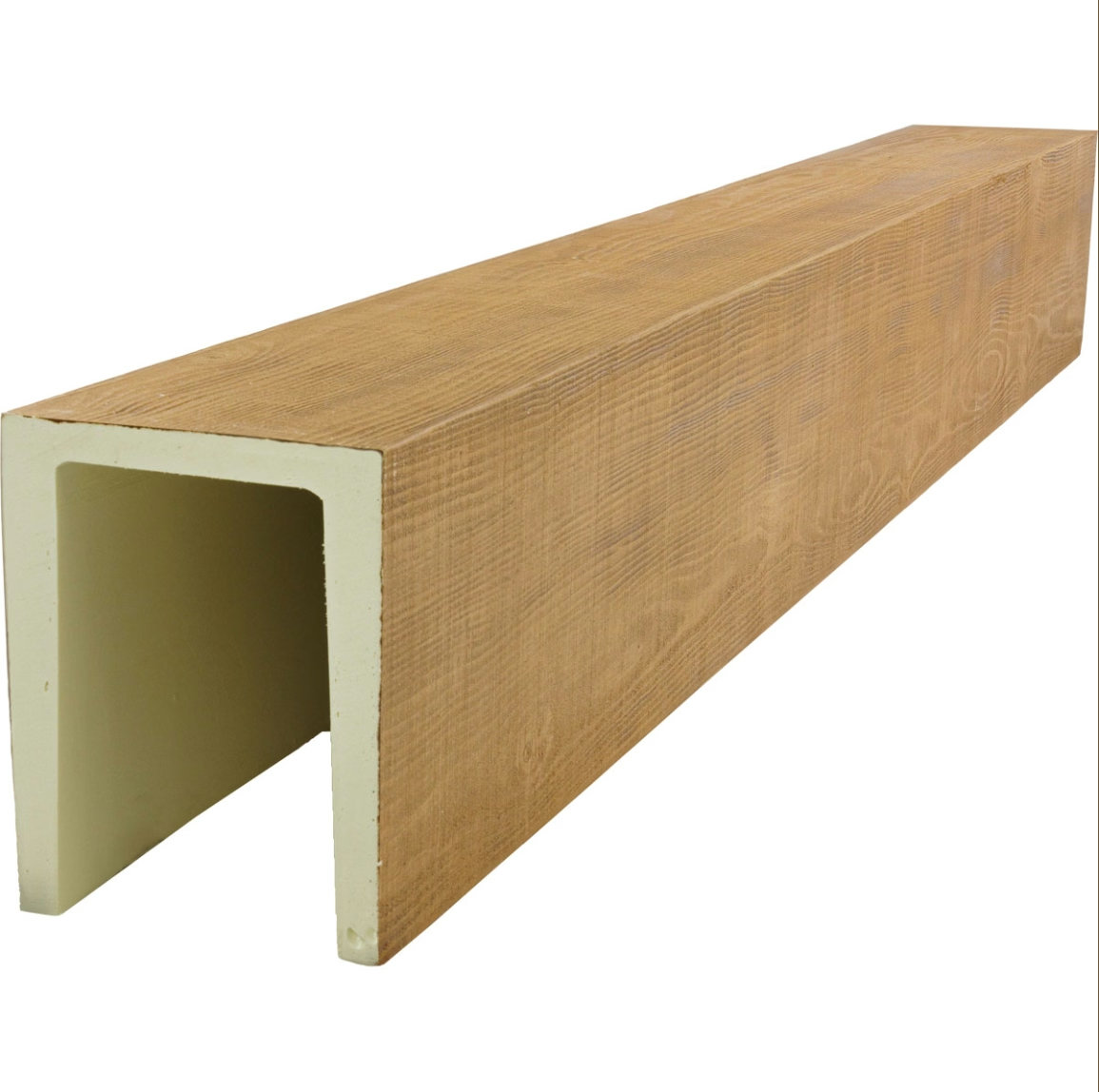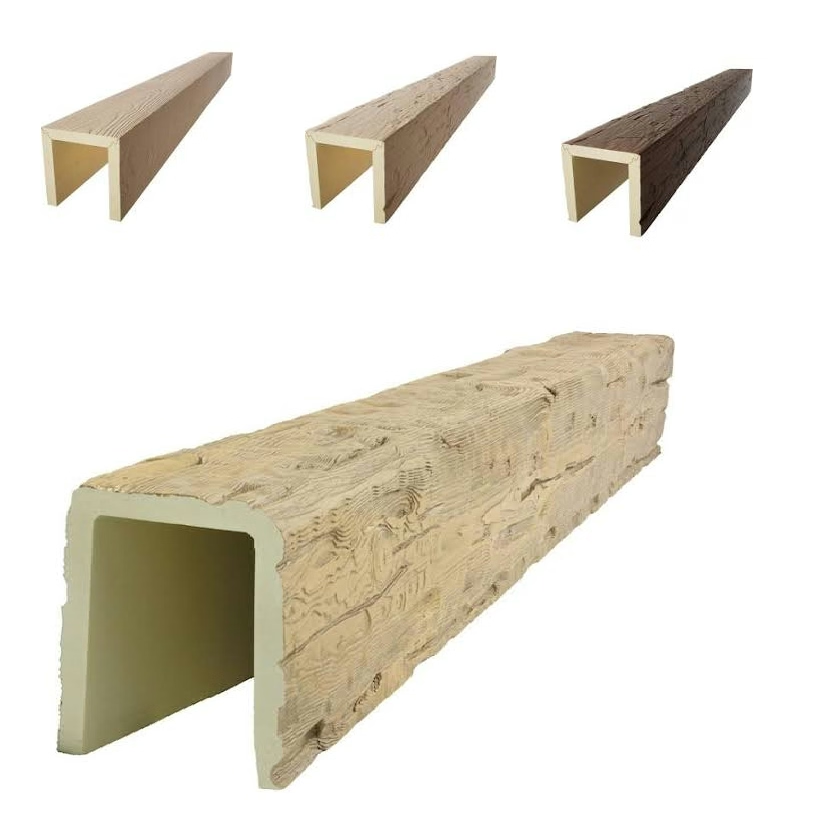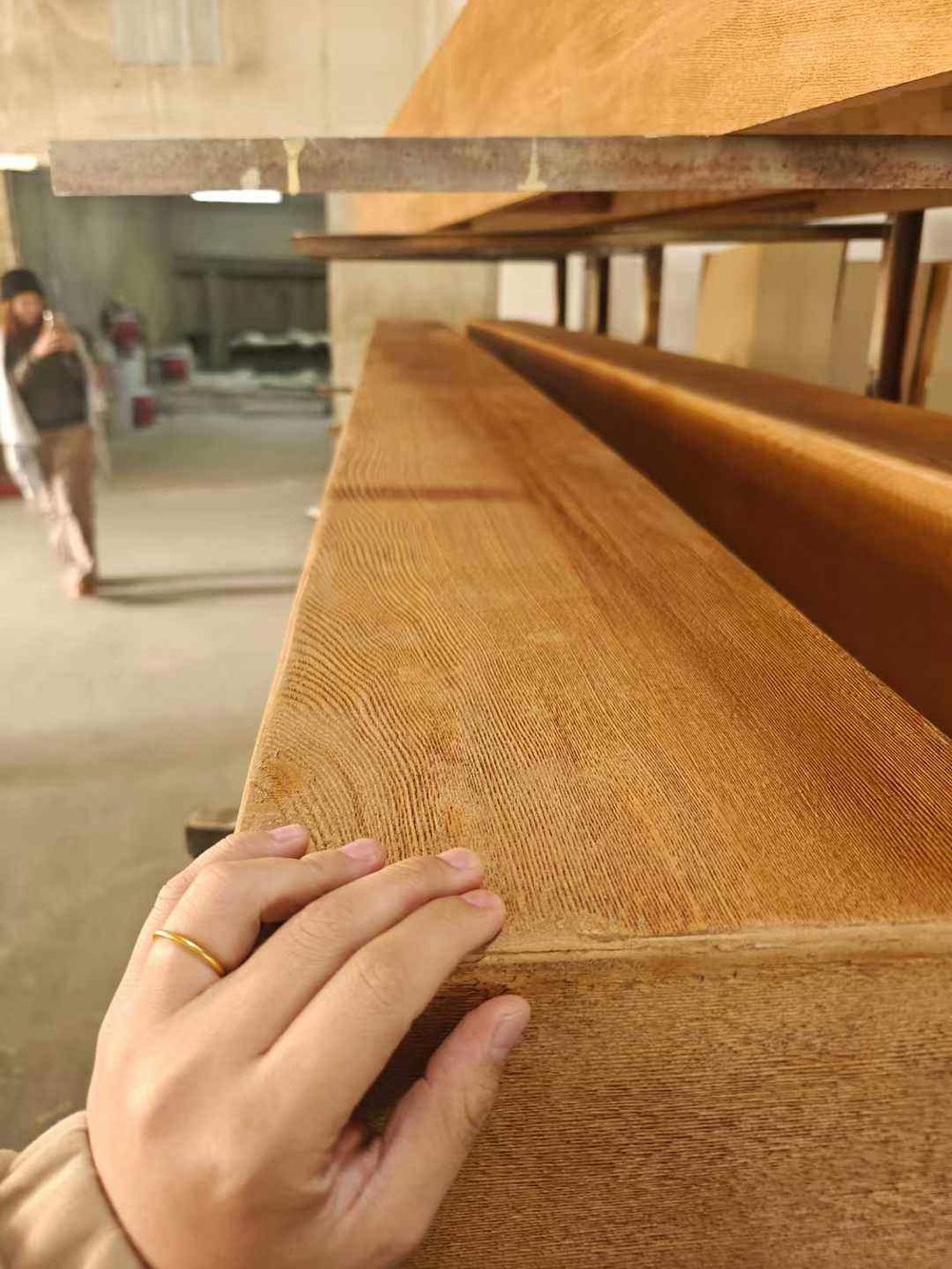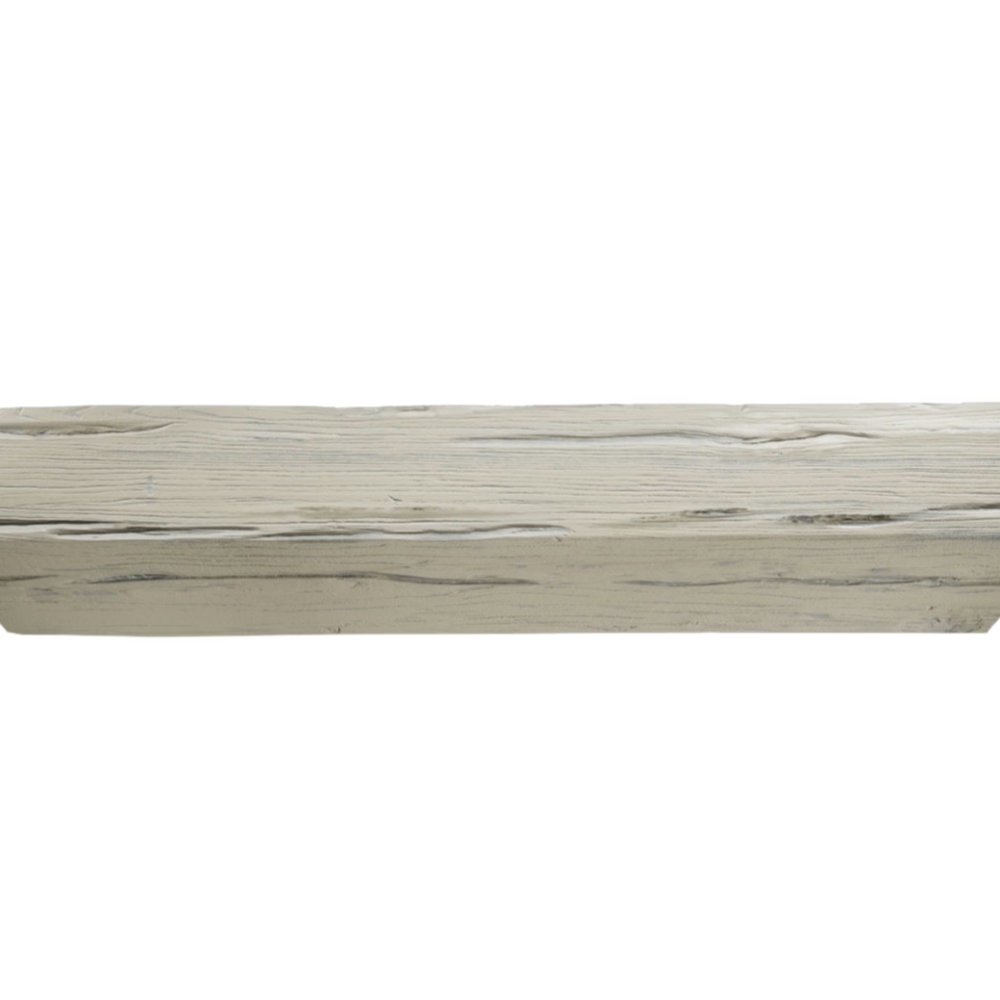
Picture a resort built five years ago with beautiful exposed timber beams in its main restaurant. On opening day, every beam matched the designer's specification exactly—warm honey oak tones that complemented the stone walls and ambient lighting. Return to that same restaurant today, and you will probably see something different. Beams near the clerestory windows have shifted toward gray-silver. Those in shadowed corners remain relatively unchanged. The result is a mottled appearance that no one planned or wanted. This is what happens when color stability is not engineered into the material specification from the beginning.
Color-stable faux wood beams prevent this degradation through integrated UV protection that maintains original appearance for decades rather than years. Understanding how these systems work helps architects, designers, and contractors make informed decisions that protect their design intent and their clients' investments.
Defining Color Stability in Architectural Products
Color stability is not simply resistance to noticeable fading. The technical definition involves maintaining original color coordinates within specified tolerances across extended exposure periods. Industry standards measure color change using the CIE Lab* color space, calculating the magnitude of shift as Delta E (dE). A dE value of 1 represents a barely perceptible difference under controlled viewing conditions. Professional specifications typically require maintaining dE values below 4.0 after standardized exposure testing.
For architectural applications, color stability must be evaluated across multiple exposure scenarios. Interior applications near windows experience diurnal light cycles with significant UV content. Exterior applications face even more challenging conditions: direct solar radiation, reflected UV from surrounding surfaces, and temperature extremes that accelerate degradation mechanisms. Quality faux wood beams perform in both environments.
The distinction between interior and exterior grade products lies in the severity of UV stabilization required. Interior beams experience lower cumulative UV exposure and may use reduced stabilizer packages. Exterior or high-exposure interior applications require maximum stabilization for equivalent appearance retention.
How UV Radiation Degrades Polymer Materials
Understanding the enemy helps specify appropriate defenses. Ultraviolet radiation operates at wavelengths between 100 and 400 nanometers, with the 290-400nm range causing most polymer degradation. These photons carry enough energy to break chemical bonds in polymer chains, initiating oxidation cascades that produce chromophoric (color-producing) byproducts.
The degradation process follows a predictable pattern in unprotected materials. Initial changes are subtle—a slight warming of tone, perhaps a minimal loss of saturation. As degradation progresses, the original color becomes increasingly difficult to recognize. Surface chalking occurs as the degraded polymer layer loses mechanical integrity and washes away, exposing fresh material beneath to continued attack.
Color-stable PU formulations interrupt this degradation at multiple points. UV absorbers in the formulation absorb harmful wavelengths and convert them to harmless heat energy. Hindered amine light stabilizers scavenge free radicals before they can propagate chain reactions. Antioxidants neutralize oxidative species that would otherwise accelerate degradation. Together, these additives provide comprehensive protection that outperforms any single approach.

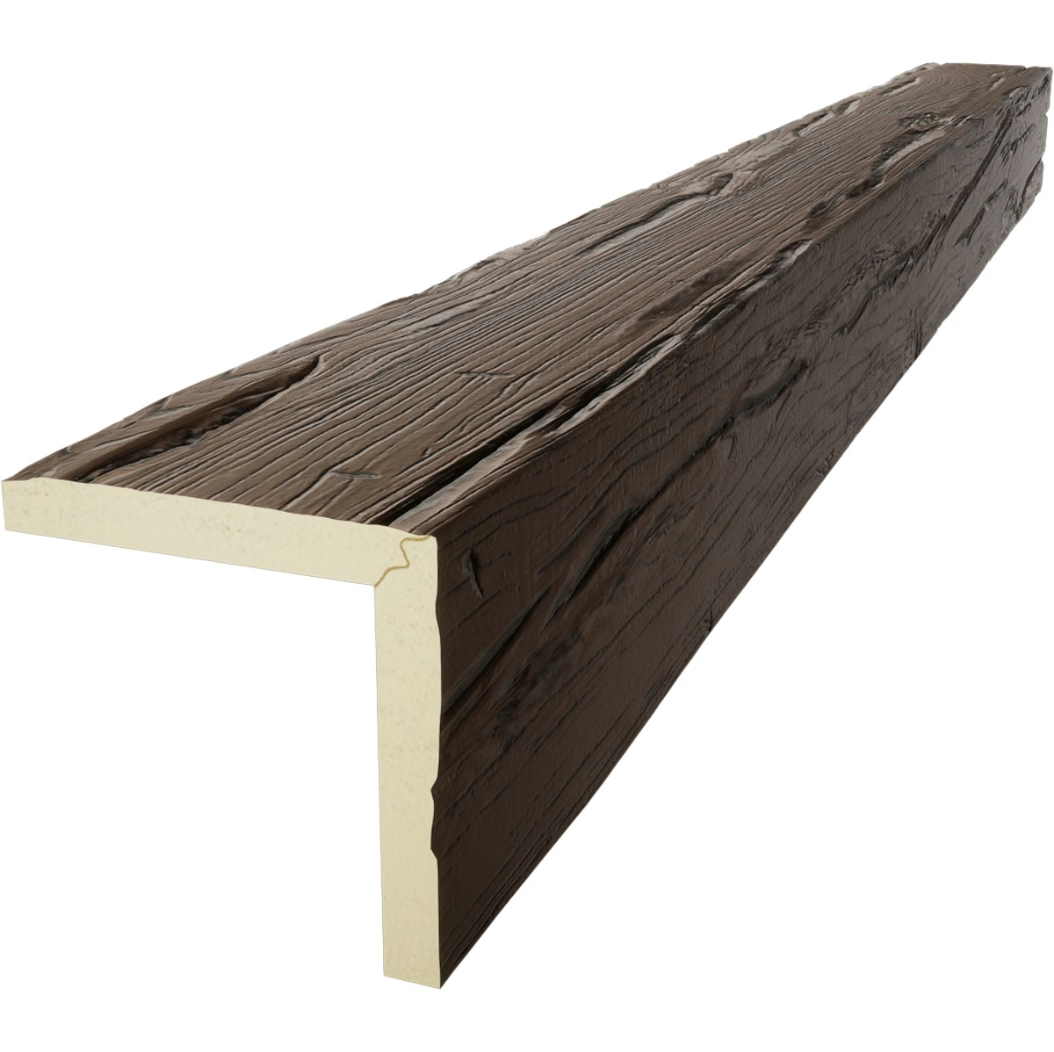
Real-World Performance Expectations
Accelerated weathering tests provide useful comparison data, but real-world performance often differs from laboratory predictions. Correlating test results with actual installations helps establish reliable expectations for different applications.
For interior applications with moderate natural light exposure, color-stable faux wood beams typically maintain appearance within specification for 15-25 years. High-exposure interior locations (directly beneath skylights, adjacent to floor-to-ceiling windows) may see slightly accelerated degradation but should still perform acceptably for 10-15 years before noticeable change becomes likely.
Exterior applications in moderate climates (temperate zones with seasonal temperature variation) typically achieve 10-15 years before marginal color shift becomes visible. Harsh environments—high-altitude locations with intense UV, desert climates with temperature extremes, coastal areas with salt spray—challenge even stabilized materials, but color-stable products still outperform alternatives significantly.
These estimates assume proper installation and absence of unusual stressors. Chemical exposure, physical damage, and improper cleaning can compromise surface integrity and accelerate appearance degradation. Following manufacturer maintenance recommendations preserves appearance retention for maximum service life.
Comparing Faux Wood to Natural Material Alternatives
Natural wood has been the traditional choice for exposed beam applications throughout architectural history. Its warmth, variety, and perceived authenticity have made it a default material for projects seeking rustic or traditional aesthetics. However, natural wood is an organic material that ages visibly—and not always gracefully.
Oak, walnut, and mahogany all darken or shift color when exposed to UV radiation. Cedar and redwood silver naturally as surface layers oxidize. Pressure-treated lumber greens and eventually grays. Each of these materials requires regular maintenance—staining, sealing, or refinishing—to maintain original appearance. Without intervention, all weather toward gray within a few years of exposure.
Color-stable faux wood beams eliminate this maintenance burden while providing consistent appearance retention. The polymer construction resists the cellular degradation that creates weathering patterns in natural wood. Color pigments are distributed uniformly throughout the material rather than concentrated in surface layers that can erode. The result is a product that looks as good in year ten as it did on installation day, without any intervention beyond occasional cleaning.
For commercial applications where maintenance budgets are scrutinized annually, the maintenance-free nature of color-stable faux wood represents genuine operational advantage. Properties can allocate maintenance resources to systems that genuinely require attention rather than routine refinishing of decorative elements.
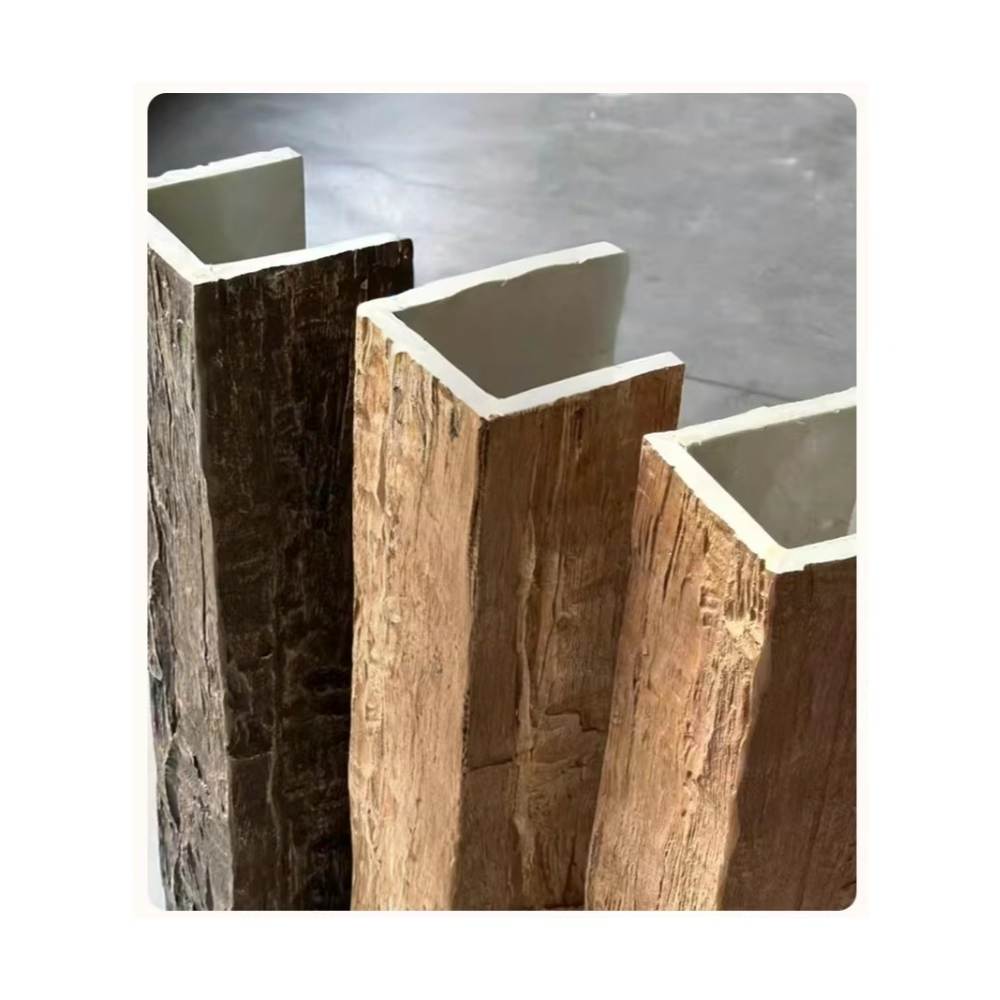
Applications Driving Adoption
Hospitality design has embraced color-stable faux wood beams extensively. Hotel lobbies, restaurants, bars, and public spaces all benefit from the combination of aesthetic appeal and appearance retention. These environments demand consistent photography-quality aesthetics for marketing materials and social media presence—the variable appearance of natural wood alternatives creates liability for brands seeking uniform visual identity across properties.
Healthcare facilities increasingly specify color-stable materials for durability and infection control reasons. Faux wood beams provide the warmth associated with natural materials without the crevices and porous surfaces that can harbor pathogens. Appearance retention ensures these therapeutic environments remain visually appropriate as facilities age.
Education and civic buildings benefit similarly. Libraries, community centers, and government buildings often have fixed maintenance budgets that cannot accommodate the unpredictable refinishing cycles natural wood requires. Color-stable faux wood beams provide permanent aesthetics without variable maintenance expenses.
Retail environments face intense pressure to maintain brand standards across locations and over time. Franchise operations, in particular, need materials that will not deviate from specifications as installations age. Color-stable faux wood beams support these requirements by maintaining consistent appearance across all installations and throughout the service life of each one.
Technical Specifications Worth Understanding
Beyond color retention metrics, several technical specifications affect long-term performance of color-stable faux wood beams. Impact resistance determines how well beams withstand accidental contact without denting or cracking—important for any installation where people or objects may contact beams. Standard interior-grade products typically offer adequate impact resistance for typical applications; higher-traffic or higher-risk environments may require upgraded specifications.
Dimensional stability ensures that beams maintain their shape through temperature and humidity cycling without warping, twisting, or checking. Quality PU formulations achieve thermal expansion coefficients below 3×10⁻⁵ in/in/°F, minimizing differential movement between beams and adjacent materials that could create stress concentrations or visible gaps.
Fire rating matters for commercial applications. Many jurisdictions require Class A fire ratings for interior finishes in public buildings. PU faux wood beam manufacturers offer fire-rated formulations that meet these requirements while maintaining color stability characteristics. Verify local code requirements early in the specification process to ensure appropriate product selection.
Economic Analysis for Project Teams
Project managers evaluating material costs should look beyond initial price to lifecycle economics. Color-stable faux wood beams typically cost 20-40 percent more than basic alternatives, but the absence of refinishing requirements eliminates ongoing maintenance expenses. For a commercial installation with 200 linear feet of beam work, annual maintenance costs of $3,000-5,000 per cleaning/refinishing cycle add up to $75,000-125,000 over a 25-year service life.
These figures do not include indirect costs associated with maintenance activities: coordinating access to occupied spaces, temporary closures or barriers for safety during work, and management time supervising contractors. Color-stable materials eliminate these friction costs entirely, streamlining facility operations.
For design teams, specifying color-stable materials demonstrates understanding of total cost of ownership that clients increasingly expect. Presenting lifecycle cost analysis alongside initial pricing positions the design team as a trusted advisor whose recommendations account for long-term client interests rather than simply first-cost minimization.
Maintaining Color-Stable Beams
While color-stable faux wood beams require far less maintenance than alternatives, they are not maintenance-free in the strictest sense. Periodic cleaning preserves appearance by removing accumulated dust, airborne contaminants, and handling marks. A soft brush attachment on a vacuum cleaner removes loose debris; damp wiping with mild soap solution addresses bonded contamination.
Avoid abrasive cleaners, which can scratch the surface coating and create areas that appear different from surrounding surfaces under certain lighting conditions. Solvent-based cleaners may damage the UV-stable surface coating—verify compatibility before using any cleaning product not specifically recommended by the manufacturer.
For beams that suffer visible damage despite care, touch-up compounds matched to the original color restore appearance. Grain filler compounds fill voids and cracks; color-matched topcoat products address surface scratches. Professional repair techniques can achieve results indistinguishable from original appearance when performed correctly.
The long-term appearance of color-stable faux wood beams reflects the quality of initial specification and ongoing care. Choosing appropriate products for specific applications, following recommended installation practices, and maintaining surfaces according to manufacturer guidelines ensures decades of attractive service that justifies the investment in quality materials.
Technical References
ASTM standards cited in every specification
Test Data
Lab results from internal testing program
Updated 2026
Reviewed against current product specs