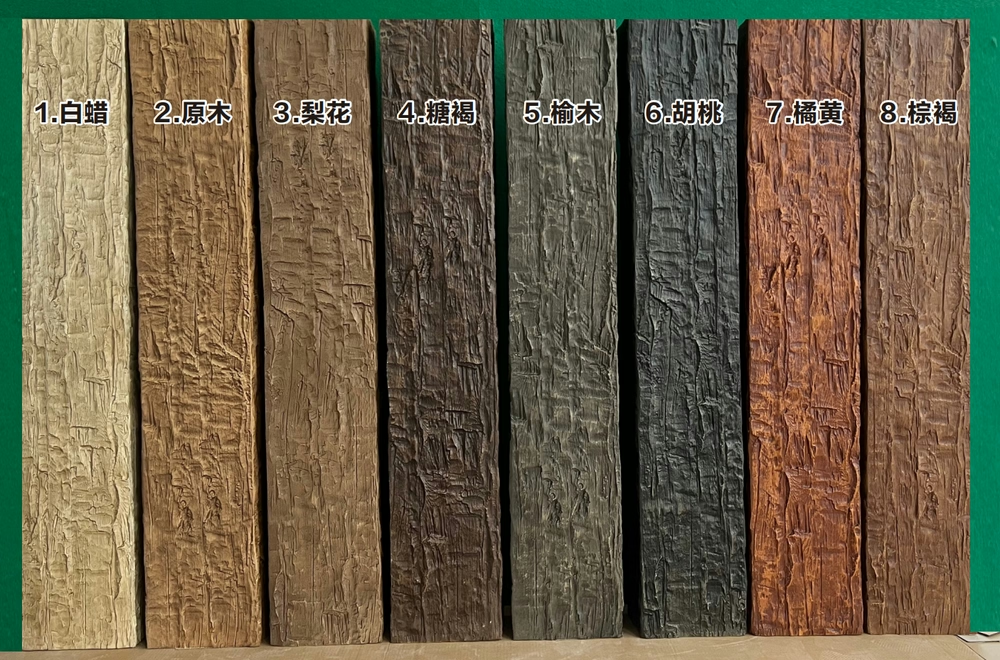
Ask any contractor who has had to replace weathered cedar beams after just three seasons and they will tell you: real wood looks beautiful on day one, but the maintenance costs add up faster than most project managers expect. UV radiation breaks down lignin, the structural polymer that holds wood fibers together. Within 18 months of installation, untreated exterior timber begins silvering. Within five years, you are looking at replacement or extensive refinishing. This is precisely why commercial developers and landscape architects increasingly specify colorfast fade-proof exterior PU faux timber beams for projects where longevity matters.
Polyurethane faux timber beams solve the fade problem at the molecular level. During manufacturing, UV inhibitors are compounded directly into the polyurethane resin before molding. This is not a surface coating that can scratch off or degrade over time—it is distributed uniformly throughout the entire beam cross-section. When your clients ask what happens after a decade of Texas summers or Pacific coast fog, you can honestly tell them the color will remain within three Delta E units of the original specification after 2,000 hours of accelerated UV exposure testing.
Engineering Behind Fade-Resistant PU Technology
The polyurethane chemistry used in quality faux timber production relies on a combination of hindered amine light stabilizers (HALS) and ultraviolet absorbers (UVA). HALS work by trapping free radicals that form when UV photons strike the polymer matrix—these radicals are the primary agents of color degradation. UVAs function as a screening layer, absorbing harmful wavelengths before they penetrate the material. Together, they provide synergistic protection that exceeds what either system could achieve alone.
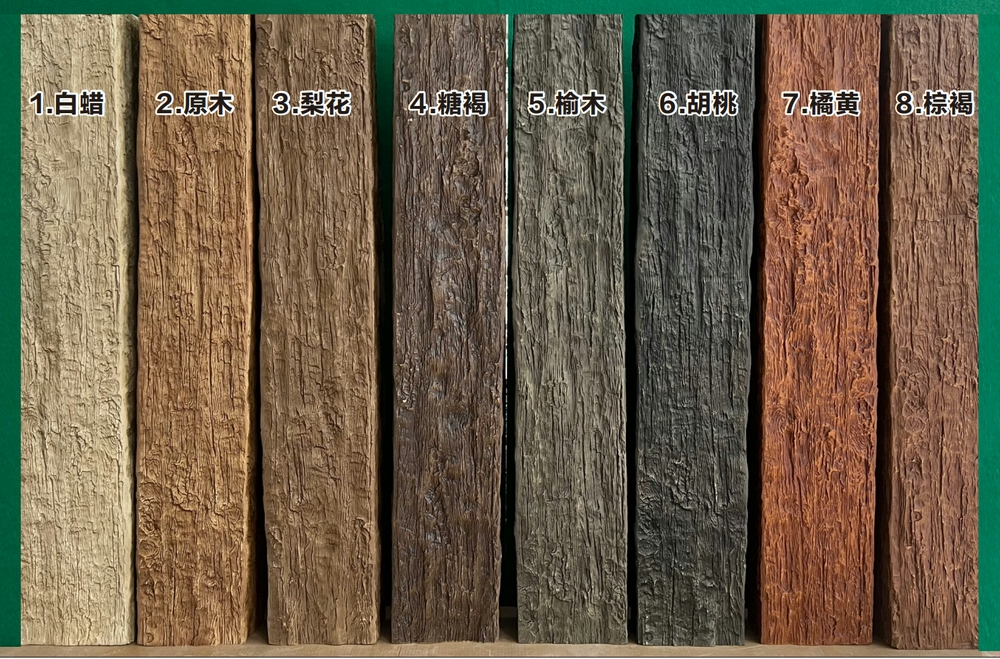
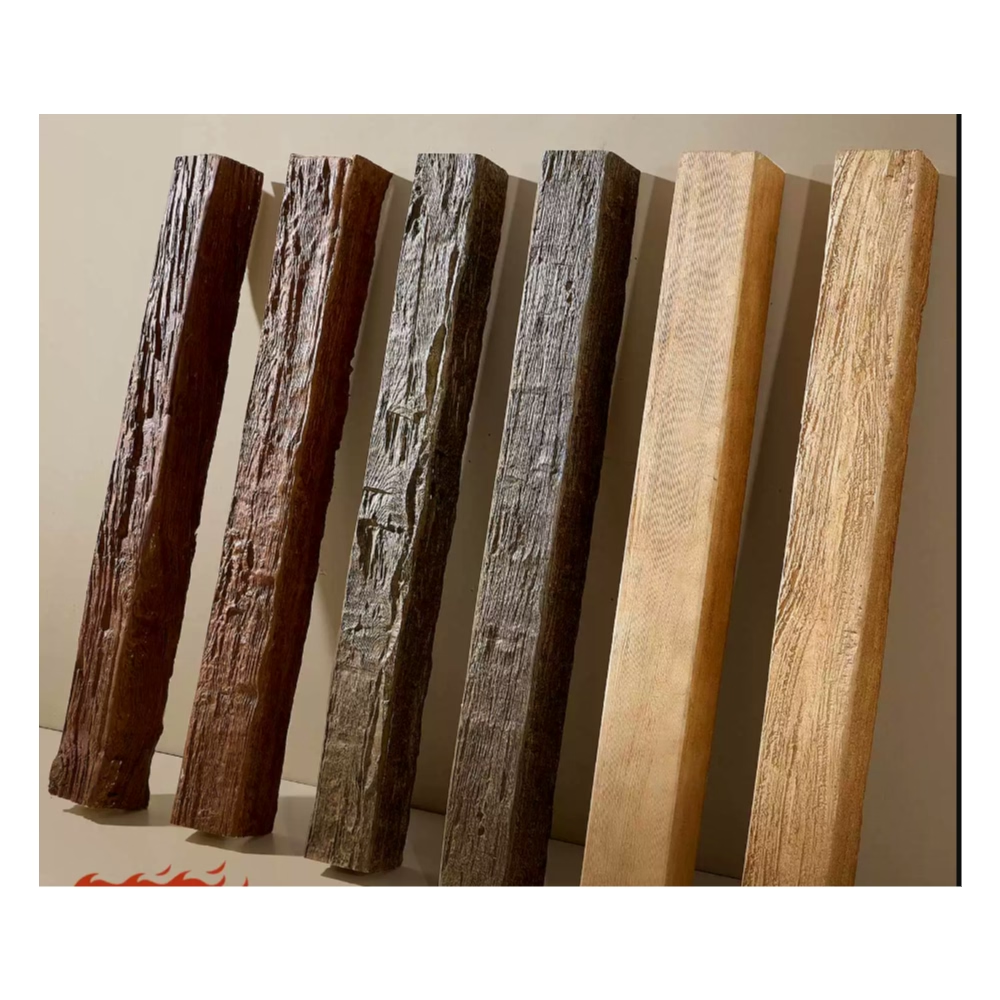
Premium manufacturers also incorporate titanium dioxide pigments at carefully controlled concentrations. TiO2 serves dual purposes: it provides excellent opacity for realistic wood tones, and its refractive properties scatter UV radiation away from the polymer backbone. The result is a beam that maintains its rich grain patterns and base color through conditions that would bleach natural oak or walnut into unrecognizable gray.
For exterior applications, the foam density matters significantly. Higher-density formulations (typically 6 to 10 pounds per cubic foot) offer better impact resistance and reduced thermal expansion, which minimizes the micro-cracking that can accelerate UV degradation in lower-quality products. When evaluating supplier specifications, look for density ratings alongside fade-resistance guarantees.
Performance in Extreme Climate Zones
Exterior PU faux timber beams must perform across a wider range of conditions than their interior counterparts. Consider the thermal cycling that occurs in continental climates: in Denver or Phoenix, beams might experience swings from -15°C to 45°C within a single 24-hour period. Each expansion and contraction cycle stresses the material. Colorfast formulations accommodate this movement without surface checking or delamination because the UV stabilizers also improve polymer flexibility retention at temperature extremes.
Humidity presents a different challenge. In coastal environments, salt-laden air accelerates corrosion of metal fasteners and can degrade surface finishes on traditional materials. Polyurethane beams are inherently resistant to moisture absorption—they do not swell, rot, or support mold growth. The fade-resistant coating system remains intact even after repeated exposure to fog, drizzle, and occasional storm flooding. Drainage design still matters for the overall structure, of course, but the beams themselves will not be the failure point.
For projects in hurricane-prone regions, structural engineers appreciate that PU faux timber beams weigh 80 to 90 percent less than sawn hardwood equivalents. This reduces load on support structures and simplifies installation logistics. The lighter weight does not compromise appearance; the latest manufacturing techniques produce textures and color gradients that rival premium reclaimed wood at a fraction of the installed cost.
Specifications for Long-Term Exterior Performance
When specifying exterior PU faux timber beams for commercial projects, clarity around test standards protects everyone involved. Request documentation of accelerated weathering testing per ASTM G154 (UVA-340 bulbs, 0.89 W/m² irradiance, 8-hour light / 4-hour condensation cycle). A passing result after 2,000 hours demonstrates meaningful UV resistance, though projects in high-UV climates may benefit from the more stringent 4,000-hour protocol.
Colorfastness should be reported using the CIE Lab* color space system, with Delta E (dE) values calculated between initial measurements and post-exposure readings. Industry-acceptable fade thresholds typically fall below dE 4.0 for perceptible change, but reputable manufacturers often guarantee dE values under 3.0 after full exposure cycles. Ask for actual test reports rather than marketing claims—legitimate suppliers will provide this documentation without hesitation.
Physical property requirements should include:
| Property | Interior Grade | Exterior Grade |
|---|---|---|
| Density | 4-6 lb/ft³ | 6-10 lb/ft³ |
| Flexural Strength | 800-1,200 PSI | 1,000-1,500 PSI |
| UV Exposure Rating | 1,000 hours | 2,000-4,000 hours |
| Water Absorption | <2% | <0.5% |
| Thermal Expansion | 3.5×10⁻⁵ in/in/°F | 2.5×10⁻⁵ in/in/°F |
The thermal expansion coefficient matters for exterior applications because differential movement between beams and mounting hardware can create stress concentrations. Exterior-grade formulations address this with modified polymer architectures that maintain dimensional stability through wider temperature ranges.
Installation Practices for Exterior Environments
Successful exterior installations begin with proper substrate preparation and hardware selection. Stainless steel mounting brackets prevent galvanic corrosion in coastal applications; hot-dip galvanized hardware serves well in inland environments. Allow a minimum 2-degree slope on horizontal beam surfaces to promote water runoff, and maintain 3/8-inch gaps between beam ends and any adjacent solid surfaces to accommodate thermal movement.
Many contractors apply a supplementary marine-grade sealer to beam surfaces in salt-air environments, though this is not required for the material to perform—the additional layer provides an extra margin of protection and simplifies cleaning of accumulated organic matter. If your project specifications call for sealer application, use a product compatible with polyurethane substrates and reapply per manufacturer recommendations (typically every 3-5 years for exterior marine conditions).
Edge sealing deserves attention during installation. While the beam faces receive UV protection throughout the manufacturing process, cut ends expose raw polyurethane foam. These surfaces should be sealed with a polyurethane-compatible edge coating before installation to prevent moisture wicking and maintain consistent appearance. Most suppliers offer touch-up kits specifically formulated for this purpose.
Total Cost of Ownership Analysis
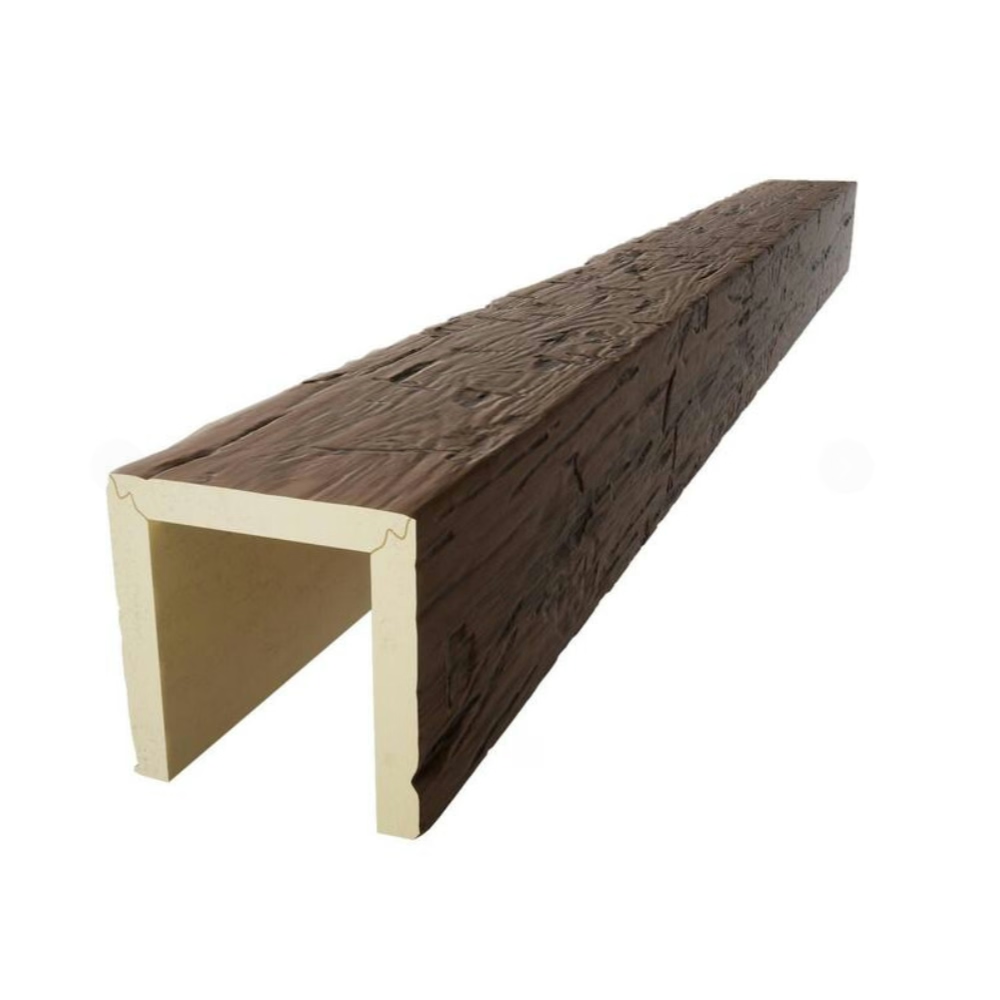
Project managers who have tracked real-world maintenance costs recognize the economic advantage of colorfast exterior PU faux timber beams. A typical wood-beam installation in a high-UV climate requires power washing, bleaching treatment, and sealer reapplication every 12 to 18 months. With an average service call costing $2,500 to $5,000 per cleaning cycle, maintenance expenses for a 50-beam installation approach $150,000 over a 20-year period. That figure does not account for eventual replacement costs or revenue lost to temporary closures for maintenance.
Fade-proof PU beams require no power washing, no bleaching, and no sealer reapplication. Annual inspection and occasional cleaning with mild soap solution represent the full maintenance regimen. For hospitality properties where appearance directly influences guest perception and brand positioning, the visual consistency advantage compounds over time—your client's property maintains its design integrity while competitors' wood installations gradually weather toward mediocrity.
Initial material costs for quality PU faux timber beams run 15 to 40 percent higher than dimensional lumber of comparable appearance. When factored against zero maintenance requirements and 30-plus year service life, the lifecycle cost advantage becomes substantial. Contractors presenting lifecycle cost analyses to their clients position themselves as trusted advisors rather than lowest-bid vendors.
Applications Where Fade Resistance Matters Most
Outdoor restaurant patios, hotel poolside cabanas, theme park structures, and resort walkways represent ideal applications for colorfast exterior PU beams. In each case, the combination of high visibility, challenging environmental exposure, and difficulty accessing structures for maintenance makes the fade-resistant properties valuable. A resort that installs these beams around its main pool complex can count on consistent photography-quality aesthetics through entire marketing campaigns and guest booking cycles.
Architectural features such as covered bridges, park pavilions, and golf clubhouse exteriors similarly benefit. These structures often serve as brand-defining landmarks where replacement or repainting would require scaffolding, permits, and significant disruption. The fade-proof nature of quality PU beams transforms these elements from maintenance concerns into permanent design statements.
For municipal projects, the durability advantage simplifies budget forecasting. City councils appreciate knowing that a capital expenditure will not generate recurring maintenance line items. Public works departments appreciate not having to schedule crews for annual inspections and treatments on decorative elements that could be addressed with a different material choice.
Selecting the Right Supplier
Not all PU faux timber products marketed as "fade-resistant" meet the same standards. Request production samples before committing to large orders—apply masking tape to surface areas and remove it after 24 hours to check for pigment transfer. Examine cross-sections of cut samples for consistent color through the material thickness. Ask about accelerated weathering test methodology and review actual test certificates rather than accepting general marketing claims.
Lead time expectations vary significantly based on supplier capacity and customization requirements. Standard profiles typically ship within 2-4 weeks from order confirmation, while custom colors or non-standard dimensions may require 6-8 weeks. For exterior projects with fixed completion deadlines, factor these timelines into project scheduling to avoid costly expediting fees or value-engineering decisions that compromise design intent.
Warranty coverage provides another differentiation point. Quality manufacturers back exterior-grade products with 10 to 25-year warranties against excessive fade, cracking, and structural failure. Ensure warranty terms clearly define failure criteria (Delta E thresholds, flexural strength minimums) rather than relying on subjective appearance standards. Document installation conditions and follow recommended maintenance schedules to preserve warranty coverage throughout its term.
Technical References
ASTM standards cited in every specification
Test Data
Lab results from internal testing program
Updated 2026
Reviewed against current product specs


