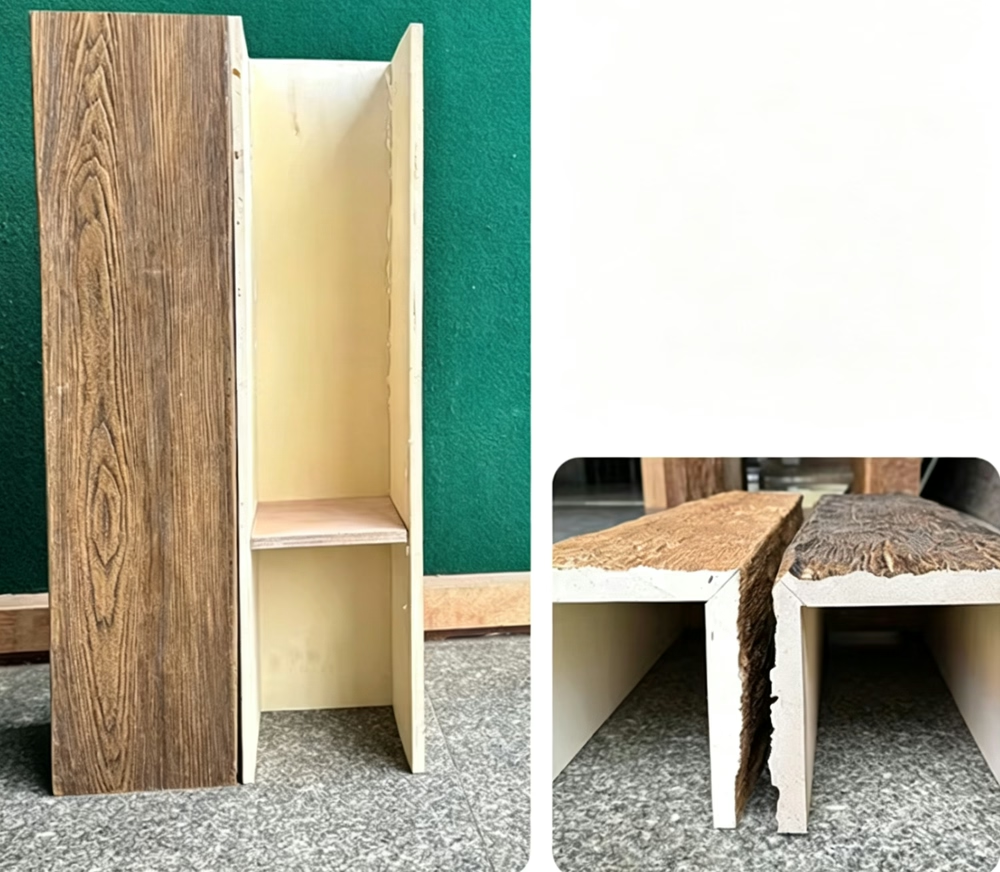
Skylights transform interior spaces. Natural light streaming through glass panels makes rooms feel larger, more welcoming, and healthier for occupants. Yet that same light—the part we cannot see, ultraviolet radiation—creates a quiet maintenance nightmare for interior designers who specify traditional materials. Walk into any hotel lobby built in the 1990s with exposed timber ceiling beams, and you will likely see the problem: the beams nearest the skylights have yellowed, silvered, or chalked while those in shadowed corners remain relatively unchanged. This uneven aging undermines the entire design. Colorfast fade-resistant PU faux ceiling beams solve this problem through material science, preserving the intended brightness of interior spaces through years of natural light exposure.
The Yellowing Problem Explained
Polyurethane materials, when improperly formulated, are susceptible to UV-induced degradation that manifests as yellowing. This occurs because the polymer chains break down under UV exposure, forming chromophoric groups that absorb visible light and reflect yellow wavelengths. The effect begins subtly—a slight warming of what should be a neutral white or pale wood tone—and progresses to obvious discoloration that makes pristine new installations look prematurely aged.
This yellowing mechanism affects not just the beam itself but also any adjacent surfaces. Reflected yellow light tints nearby paint, fabric, and finishes, creating a cohesive but unwanted warm cast throughout the space. For brands that have invested in carefully curated color palettes, this environmental yellowing forces expensive redecoration cycles every few years to restore intended aesthetics.
Quality PU faux ceiling beam manufacturers address yellowing through antioxidant stabilization during compounding. Hindered phenol antioxidants neutralize oxidation reactions before they can form color-producing degradation products. The result is a beam that maintains its intended color temperature indefinitely, even when mounted directly beneath UV-transmitting skylights or adjacent to large windows with minimal UV filtering.
How Colorfast Technology Works
The distinction between "fade-resistant" and "colorfast" matters for ceiling applications. Fade resistance typically refers to the ability to maintain original color values without noticeable shift—this is the baseline expectation. Colorfastness goes further, ensuring that the specific hue and brightness level remain constant without the yellowing, graying, or chalking that affects lesser materials.
Modern colorfast PU formulations achieve this through a multi-pronged approach. Primary antioxidants (such as hindered phenols) prevent oxidation chain reactions. Secondary antioxidants (phosphites or thioesters) regenerate the primary antioxidants as they become depleted. Light stabilizers (HALS compounds) protect against UV-initiated degradation. Together, these additive systems provide comprehensive protection that extends appearance retention far beyond what any single additive could achieve.
The colorants themselves also matter. Iron oxide pigments provide excellent UV stability and produce realistic wood tones without the photodegradation issues of some organic pigments. Titanium dioxide contributes opacity and further UV scattering. When combined at optimal ratios, these components create appearance retention characteristics that meet or exceed architectural specifications for 15 to 25-year service life.
Ideal Installation Scenarios
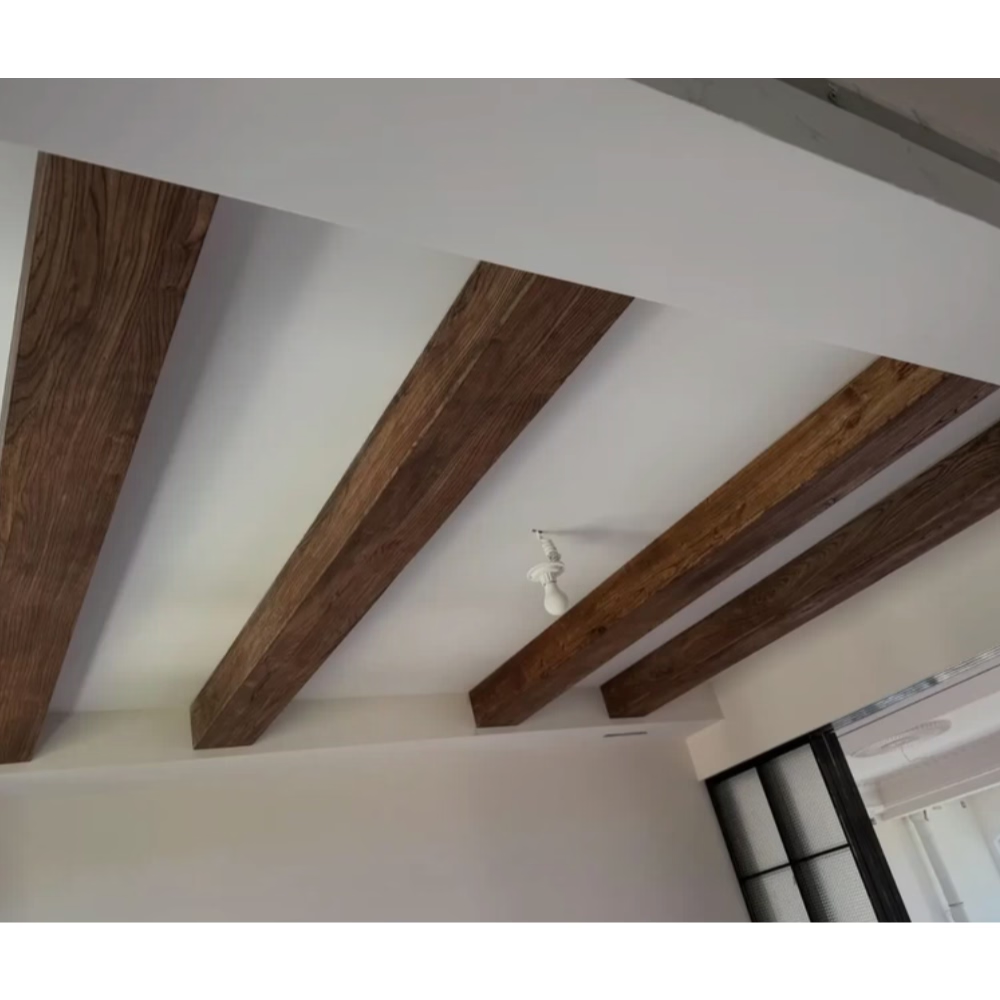
Ceiling beams in spaces with significant natural light exposure represent the clearest applications for colorfast PU products. Atriums, conservatories, solarium additions, and rooms with floor-to-ceiling windows all expose ceiling-mounted elements to UV levels that would challenge traditional materials. A wellness spa that has invested in natural daylight for therapeutic benefit should not have to sacrifice that design element because maintenance costs for wood beams become prohibitive.
Restaurant and hospitality spaces benefit substantially. Open kitchens with retractable roof panels, rooftop bars, and pool-adjacent dining areas all feature beam installations that experience variable but significant UV exposure. Colorfast faux ceiling beams maintain the designer's intended atmosphere without requiring regular refinishing or replacement schedules that disrupt operations.
Retail environments demand consistent product presentation. Clothing stores, furniture showrooms, and galleries where merchandise is displayed under natural light need ceiling elements that will not compete with or contaminate product colors. Colorfast PU beams eliminate this concern entirely—white or neutral-toned beams stay true, while wood-tone beams maintain the warmth that complements merchandise without introducing unwanted color casts.
Technical Specifications and Selection Criteria
When evaluating colorfast PU faux ceiling beams, look beyond marketing language to documented test performance. ASTM D4329 covers fluorescent UV exposure testing for plastics; requesting results per this standard provides meaningful comparison data. Look for performance ratings after minimum 1,000 hours exposure, with color change reported in Delta E units.
Physical properties important for ceiling applications include:
| Property | Requirement | Test Method |
|---|---|---|
| Density | 4-6 lb/ft³ | ASTM D1622 |
| Flexural Modulus | 2,000-4,000 PSI | ASTM D790 |
| Impact Resistance | > 1.0 ft-lb/in | ASTM D256 |
| Surface Hardness | 75-85 Shore D | ASTM D2240 |
| Thermal Conductivity | 0.08-0.12 BTU·in/hr·ft²·°F | ASTM C177 |
Ceiling installations typically involve exposed structural elements that may be subject to accidental impact. The impact resistance specification matters most for beams installed in spaces with public access, high ceiling heights where maintenance access is infrequent, or areas where overhead activity creates impact risk. Higher density formulations provide better impact resistance but add weight and cost—balance these factors against specific project requirements.
Integrating Colorfast Beams with Lighting Systems
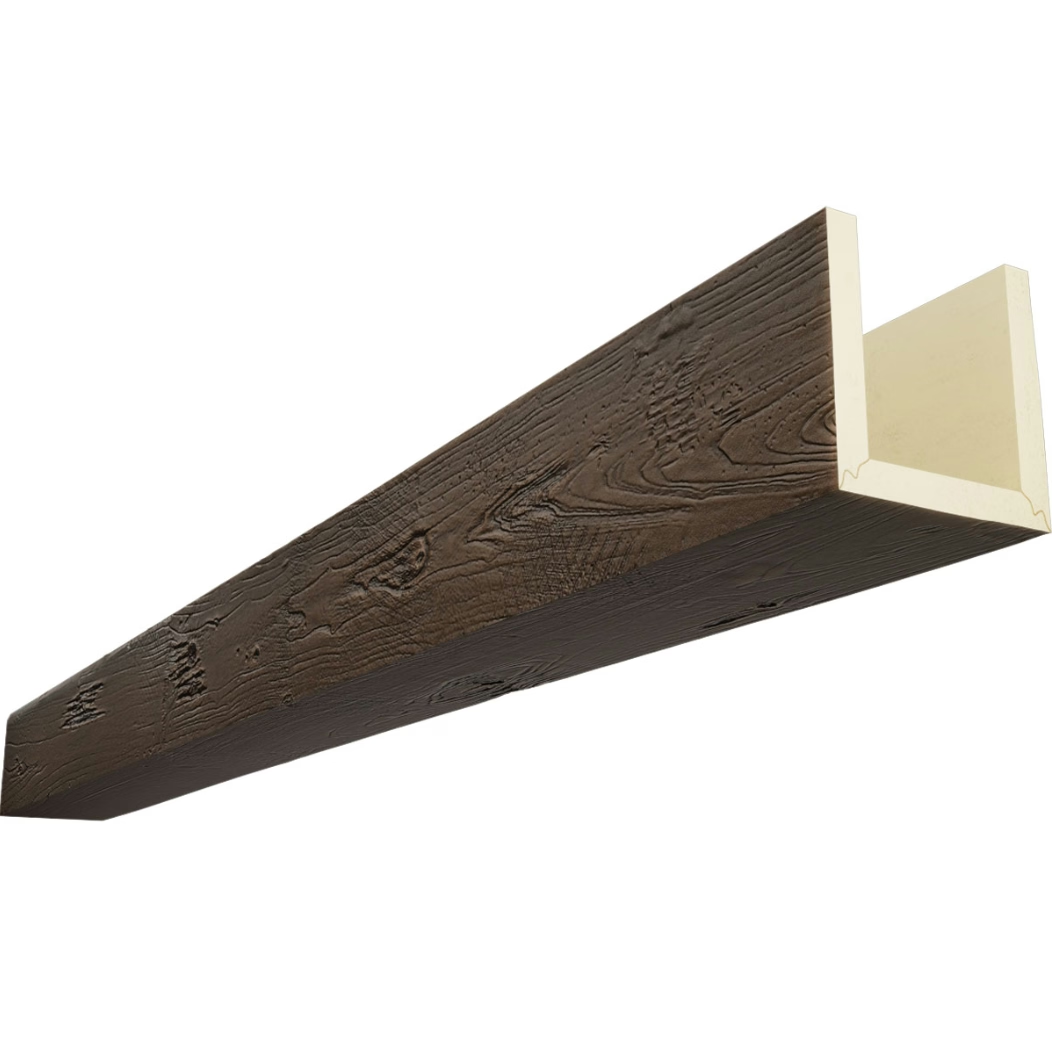
Modern ceiling designs frequently integrate lighting with structural or decorative beams. Recessed fixtures, LED strips, and pendant mounting points all require penetrations or attachments that must be carefully executed to maintain appearance and structural integrity. Colorfast PU beams accommodate these modifications without concern for finish degradation around cut edges or attachment points.
For cove lighting applications where LED strips are mounted within the beam profile, heat management becomes a consideration. Quality PU formulations tolerate continuous operating temperatures up to 180°F, providing adequate margin for most LED installations. When specifying integrated lighting, confirm that thermal calculations account for enclosed fixture temperatures and verify that adhesive products used for mounting are compatible with polyurethane substrates.
Maintenance Requirements for Colorfast Installations
One of the primary advantages of colorfast PU faux ceiling beams is minimal maintenance requirement. Unlike wood products that need periodic refinishing or metal products that require rust treatment, colorfast PU beams maintain their appearance through simple cleaning. Dust accumulation on ceiling beams is inevitable in any environment; the cleaning process is straightforward.
For most interior environments, monthly dusting with a soft microfiber attachment removes surface contamination without risk of scratching or damaging the UV-stable surface coating. Quarterly cleaning with mild soap solution addresses accumulated grime in higher-traffic spaces. Avoid abrasive cleaners, which can scratch the surface and create areas that catch dust differently, creating an uneven appearance over time.
The colorfast properties eliminate the need for any restoration painting or coating—products that would require scaffolding or lifts for ceiling installations. This represents significant ongoing cost avoidance for building operators. A commercial space with 50 linear feet of ceiling beams that previously required annual access equipment rental for refinishing now requires only the cost of periodic dusting.
Long-Term Appearance Retention Studies
Independent testing organizations have conducted extended studies on colorfast PU material performance. Data from accelerated weathering tests, when correlated with real-world installations, supports appearance retention claims of 15 to 25 years for quality products in typical interior environments. Some manufacturers have installations approaching 20 years in service that demonstrate remarkably consistent appearance when compared to original specification samples.
This long-term stability provides value beyond aesthetics. Building operators can plan maintenance budgets with confidence, knowing that ceiling beam appearance will not become a line item requiring attention. For franchises or managed properties, consistent appearance across locations becomes achievable when material performance is predictable over extended periods.
Cost Considerations for Project Specifications
Colorfast PU faux ceiling beams carry a price premium over basic PU alternatives or wood products. However, comparing lifecycle costs reveals the economic case clearly. A basic PU beam requiring repainting every 3-5 years accumulates finishing costs of $15-30 per linear foot over a 20-year period—excluding access equipment rental and production interruption. Colorfast products require no refinishing, eliminating this ongoing expense entirely.
For projects where ceiling height creates access challenges, the maintenance cost advantage multiplies. Spaces requiring boom lifts or suspended platforms for maintenance access can spend $500-2,000 per cleaning or refinishing event on access equipment alone. Eliminating these events through material choice represents direct operational savings that compound over the building lifecycle.
Interior designers specifying colorfast PU beams for their clients are providing genuine value—beautiful, consistent, maintenance-free ceiling elements that protect their design intent through years of occupancy. This positions the designer as an advocate for long-term client interests rather than simply selecting materials that look good at project turnover.
Technical References
ASTM standards cited in every specification
Test Data
Lab results from internal testing program
Updated 2026
Reviewed against current product specs


