
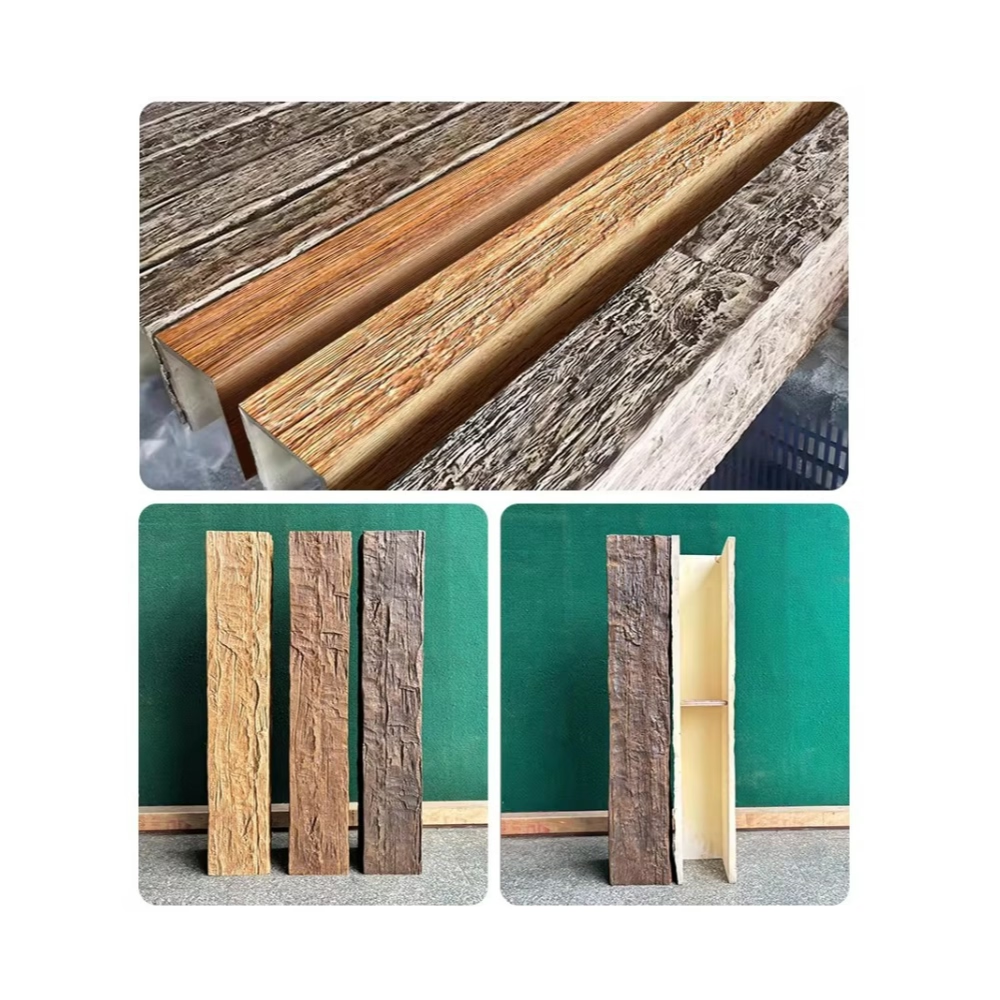
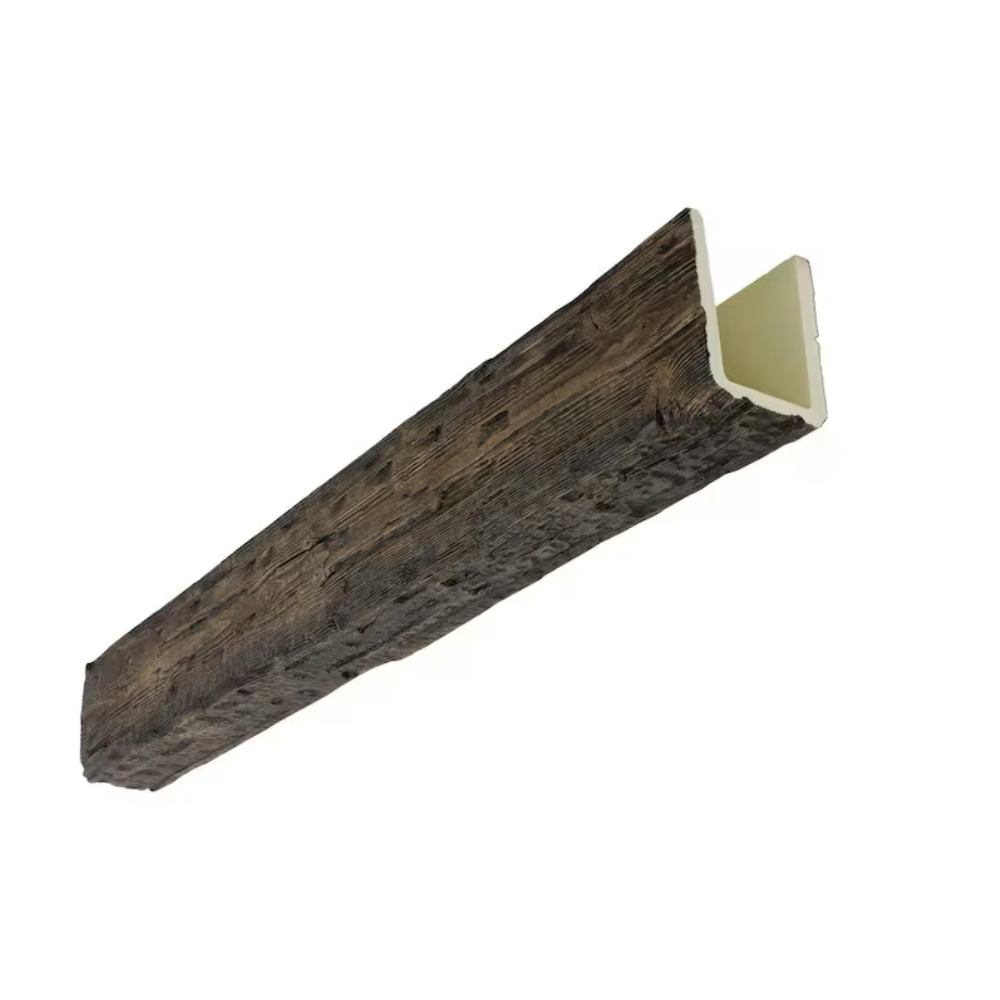
A regional hotel chain embarked on renovating 47 properties over three years. The renovation program standardized on a specific faux beam profile and color used throughout each property's lobby, dining areas, and corridors. The procurement challenge was substantial: ensuring consistent product quality across 47 separate projects, coordinating deliveries with construction schedules that span years, and maintaining brand visual standards while different contractors work on different properties simultaneously. Commercial grade faux beam suppliers experienced with large-scale programs transformed what could have been a procurement nightmare into a manageable systematic process.
Defining Large-Scale Renovation Projects
The threshold between typical renovation and large-scale renovation varies by industry segment and project type. Generally, projects that involve multiple properties, extended timelines, significant material volumes, or coordination across multiple design teams qualify as large-scale. These projects share challenges uncommon in smaller renovations.
Multi-property programs affect hospitality brands, healthcare systems, retail chains, and corporate real estate portfolios. The scale of these programs justifies investments in standardization and quality management that would not be cost-effective for individual projects. Standardized specifications across properties reduce design costs while supporting brand consistency.
Extended timelines spanning multiple years create unique challenges. Material specifications must remain available throughout program duration, quality standards must be maintained across production batches produced months or years apart, and pricing structures must accommodate multi-year procurement commitments.
Material volumes in large-scale programs often exceed what standard production capacity can support without coordination. Suppliers must dedicate production capacity, staging areas, and logistics resources to ensure that program demands do not disrupt other customer commitments. This commitment represents significant supplier relationship investment.
Standardization Benefits and Challenges
Standardizing faux beam specifications across large-scale programs offers substantial benefits but requires management of complexities that one-off projects do not face. Understanding these dynamics helps program managers optimize their standardization approach.
Brand Consistency Benefits
Standardized specifications ensure that every property in a renovation program presents consistent brand experience. Guests visiting multiple properties recognize the brand through visual consistency that standardized materials provide. This consistency supports brand positioning and guest loyalty.
Beyond guest recognition, standardization simplifies quality management. Quality teams can verify compliance using consistent criteria across all properties. Issues identified at one property can be addressed through standardized corrective actions throughout the entire portfolio. This systemic approach reduces quality management costs while improving outcomes.
Design Variation Challenges
While standardization benefits brand consistency, it can constrain design expression at individual properties. Designers seeking distinctive elements within brand guidelines may find standardized specifications limiting. Balancing brand consistency with design flexibility requires careful specification development that allows appropriate variation within standardized frameworks.
Accommodating regional or property-specific variations creates specification complexity. Climate differences, local building codes, and site-specific conditions may require variations from the standard specification. Programs must either accept this complexity or develop specifications robust enough to accommodate variations without losing brand consistency.
Specification Maintenance Challenges
Maintaining specifications across extended timelines requires ongoing management. Materials may evolve, manufacturers may change formulations, and new products may offer advantages over originally specified items. Program managers must decide whether to update specifications to capture improvements or maintain specifications to preserve consistency.
Material availability presents ongoing challenge throughout multi-year programs. Original specifications may face supply disruptions or price increases that affect program economics. Programs must develop contingency plans for material substitutions that preserve brand consistency while addressing supply realities.
Supplier Selection for Large-Scale Programs
Selecting suppliers for large-scale renovation programs requires evaluation criteria that differ from individual project supplier selection. Production capacity, financial stability, and relationship quality take on greater importance for programs that depend on sustained supplier performance.
Production Capacity Assessment
Suppliers serving large-scale programs must demonstrate adequate production capacity throughout program duration. Capacity assessments should examine current production volumes, expansion plans, and capacity allocation policies. Suppliers who might prioritize higher-margin products over committed program volumes create program risk that capacity assessments should identify.
Quality manufacturers with established large-scale program experience understand the planning required to maintain capacity for sustained commitments. They typically allocate dedicated production capacity for major programs and develop scheduling systems that support multi-year commitments. This planning maturity represents significant value for program managers.
Financial Stability Evaluation
Suppliers serving multi-year programs must demonstrate financial stability that supports program duration. Programs that experience supplier financial difficulties face supply disruptions that affect property renovations already underway. Financial evaluation should examine credit ratings, banking relationships, and historical financial performance.
Diversified suppliers with multiple product lines and customer segments typically demonstrate greater financial stability than suppliers dependent on single markets. The diversification provides resilience against market fluctuations that might otherwise affect supplier viability.
Relationship Quality Assessment
Large-scale programs depend on supplier relationships that extend beyond transactional product sales. Suppliers must invest in understanding program objectives, providing proactive communication about potential issues, and collaborating on solutions when challenges arise. These relationship qualities are difficult to assess through formal evaluation but become evident through reference checks and pilot projects.
Reference checks with other large-scale program customers provide insight into supplier relationship quality. Questions about communication responsiveness, problem-solving capability, and long-term commitment demonstrate the relationship characteristics that matter for program success.
Logistics Coordination Across Multiple Sites
Coordinating logistics across multiple renovation sites creates complexity beyond typical project delivery challenges. Programs must develop logistics strategies that address site-specific constraints while maintaining overall program efficiency.
Phased Delivery Planning
Multi-year programs typically phase deliveries to match construction progress at individual properties. Standardized logistics planning based on typical construction sequences supports predictable delivery scheduling. However, actual progress often deviates from plans, requiring flexibility in delivery scheduling.
Suppliers experienced with large-scale programs build flexibility into their logistics operations. They maintain staging capacity for products awaiting delivery, accommodate schedule changes with reasonable notice, and provide tracking systems that support program management visibility across all properties.
Storage Considerations
Material storage at individual properties varies based on site conditions, construction sequencing, and security requirements. Programs that minimize on-site storage reduce material handling damage and security exposure but require more frequent deliveries. Programs that maximize on-site storage reduce delivery frequency but increase storage requirements and damage risk.
The optimal balance depends on property-specific factors that program managers should evaluate for each renovation. Site surveys during planning help identify storage constraints and inform delivery scheduling that matches site capabilities.
Damage Prevention During Transport
Multi-site deliveries expose products to handling and transportation damage risk. Quality packaging that protects products through extended handling, secure loading that prevents shifting during transport, and careful unloading procedures all contribute to damage prevention. Program managers should evaluate supplier packaging and handling practices before committing to delivery schedules.
Damage during transport creates program disruption beyond the direct material cost. Delivery delays, replacement coordination, and inspection requirements all consume program resources. Prevention through proper handling is more efficient than remediation after damage occurs.

Quality Management Across Programs
Quality management in large-scale renovation contexts requires systematic approaches that address multiple properties, extended timelines, and diverse installation conditions. Programs that invest in quality management systems achieve better outcomes with less rework.
Standardized Quality Criteria
Programs should establish clear quality criteria that apply consistently across all properties. These criteria address appearance, dimensions, color matching, and structural performance. Standardized criteria simplify quality verification while ensuring consistent outcomes.
Documentation of quality criteria provides reference standards for installers, inspectors, and suppliers. Photography standards, measurement protocols, and sample comparison references all support consistent quality assessment across different evaluators. Programs that invest in these documentation resources achieve more consistent outcomes.
Installation Quality Verification
Installation quality varies based on contractor experience, supervision quality, and site-specific conditions. Programs should establish verification protocols that identify installation issues before they become visible problems. Pre-completion walk-throughs, systematic inspection procedures, and photographic documentation all support installation quality management.
Contractor training programs that address specific product requirements and installation best practices help maintain installation quality across diverse renovation sites. Standardized training that travels with the program ensures that installers at each property understand requirements regardless of their prior experience.
Cost Management Across Program Duration
Large-scale renovation programs face unique cost management challenges related to material pricing, volume discounts, and economic fluctuations over multi-year durations. Programs that proactively address these challenges achieve better cost outcomes than programs that react to changing conditions.
Volume Pricing Structures
Programs that commit to specific volumes over defined periods can negotiate pricing structures that benefit both suppliers and program managers. These structures typically combine base pricing with volume tier adjustments that recognize the value of committed business. Programs should negotiate pricing structures that account for material cost fluctuations and provide predictable economics.
Pricing structures should also address product variations that may emerge during program duration. Programs may need additional accessories, replacement products, or modified specifications over time. Pricing structures that address these contingencies prevent unexpected cost impacts when changes become necessary.
Economic Fluctuation Management
Multi-year programs span economic conditions that affect material costs. Raw material price fluctuations, labor cost changes, and currency variations all influence product pricing. Programs should develop approaches that address these fluctuations without disrupting program economics.
Long-term pricing agreements with suppliers can provide cost stability for program duration. These agreements may include adjustment mechanisms that account for major cost changes while preventing routine fluctuation from disrupting program planning. Quality suppliers understand program needs and can work with program managers to develop appropriate pricing structures.
Program Completion and Transition
As large-scale renovation programs approach completion, attention shifts from active renovation management to operational handover. Programs should plan for transition activities that ensure renovated properties meet operational requirements from day one.
Handover Materials and Documentation
Properties entering operation after renovation require documentation that supports ongoing maintenance and operation. Programs should prepare handover documentation that includes beam specifications, maintenance requirements, warranty information, and supplier contacts. This documentation supports long-term property management.
Training for property maintenance staff on beam care and repair procedures preserves installation quality over time. Programs that include this training in completion activities ensure that properties can maintain their renovated appearance throughout operational life.
Program Closeout Activities
Final program activities include performance assessment, lessons learned documentation, and relationship management with suppliers and contractors. These activities support future program planning and provide reference information for subsequent renovation programs.
Suppliers who successfully serve large-scale programs often become preferred partners for future work. The relationships developed through program execution provide foundation for ongoing collaboration. Program closeout activities should preserve these relationships through appropriate recognition and continued communication.
Technical References
ASTM standards cited in every specification
Test Data
Lab results from internal testing program
Updated 2026
Reviewed against current product specs


