Commercial builders, interior designers, and building material distributors increasingly recognize the value of consolidating their faux wood beam purchases into bulk orders that capture meaningful volume discounts. The economics are straightforward—manufacturers enjoy production efficiencies on larger runs, and they pass a portion of those savings to buyers who commit to substantial quantities. What separates successful bulk purchasers from those who miss opportunities is understanding how to structure orders, time purchases strategically, and negotiate terms that maximize value.
The Mathematics Behind Volume Pricing
Polyurethane beam manufacturing involves setup costs that spread across every unit produced. Mold preparation, color mixing, texture application, and finishing work each require labor and equipment time that doesn't vary significantly based on how many beams roll off the production line. When you order fifty beams instead of five, the manufacturer absorbs the same setup overhead but distributes it across ten times the units. This is why volume pricing drops so dramatically with increasing order size.
Understanding this dynamic helps buyers negotiate more effectively. You're not simply asking for a discount—you're explaining why your order justifies production efficiencies. A buyer who demonstrates understanding of manufacturing realities earns more credibility than one who simply demands lower prices. Manufacturers respond favorably to customers who respect their business model while seeking mutual benefit.
The discount curves typically steepen at certain thresholds that correspond to production batch sizes. An order of one hundred beams might capture a twenty percent discount, while three hundred beams—three times the quantity—might yield thirty-five percent off. The incremental discount for those additional two hundred units often exceeds the discount for the first hundred. Strategic buyers structure orders to hit these sweet spots rather than ordering quantities that fall between meaningful tiers.

Timing Your Bulk Purchases
Manufacturers experience seasonal demand fluctuations that create opportunities for buyers who plan ahead. Construction activity typically peaks in spring and summer in Northern Hemisphere markets, meaning manufacturers face capacity constraints from March through September. Orders placed during these months compete for limited production slots, and discounts compress as demand exceeds supply.
Conversely, the late fall and winter months often bring slower demand that manufacturers fill eagerly at improved pricing. A buyer who commits to a February delivery during September's busy season captures both better pricing and priority scheduling for the slower period. This forward-looking approach requires accurate forecasting and storage capacity, but the savings justify the planning effort for serious bulk purchasers.
China's manufacturing sector follows similar patterns, with extended factory closures during Chinese New Year creating production gaps that ripple through supply chains. Ordering before these shutdowns ensures delivery before demand typically spikes in the following months. Buyers who understand these rhythms position themselves advantageously in the market.
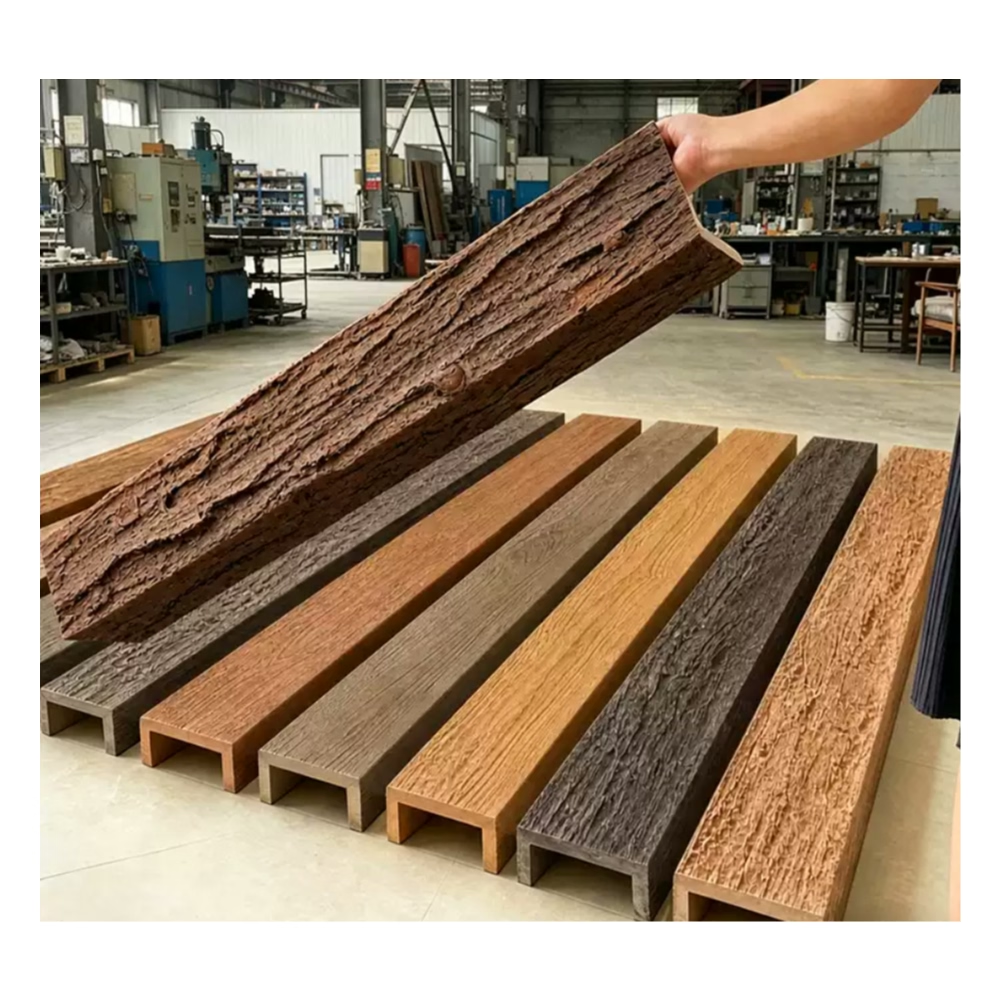
Negotiating Beyond Unit Pricing
Savvy bulk purchasers recognize that unit pricing represents only one dimension of negotiation. Several other factors can significantly affect total value and should be part of comprehensive discussions with suppliers.
Payment terms matter considerably for large orders. Net-30 or net-45 terms allow buyers to receive and sell inventory before payment due dates, improving cash flow efficiency. Some manufacturers offer additional discounts for advance payment or letter of credit arrangements that reduce their financial risk. Evaluating these options against your own cash position reveals opportunities for incremental savings.
Shipping arrangements present another negotiation dimension. Freight costs for full container loads versus less-than-container loads differ substantially on a per-unit basis. A buyer willing to wait for sufficient volume to fill a container captures significant shipping advantages. Alternatively, air freight becomes cost-effective when the value of early delivery outweighs the premium shipping expense.
Customization pricing also warrants discussion during bulk negotiations. Tooling costs for custom beam profiles, colors, or textures can be prohibitive for small orders but become economical when amortized across thousands of units. A distributor planning multiple product launches might negotiate tooling amortization schedules that reduce per-unit costs while providing manufacturers predictable recovery of their investment.
Strategic Order Consolidation
The most efficient bulk purchasers think beyond individual projects and consider enterprise-wide ordering strategies. Consolidating requirements across multiple projects, branches, or customer segments into unified purchase orders captures volume that no single project would justify. This approach requires coordination and forecasting accuracy, but the pricing benefits reward the organizational effort.
Some distributors establish standing order agreements with manufacturers that guarantee minimum annual volumes in exchange for preferential pricing and allocation guarantees. These arrangements benefit both parties—manufacturers gain predictable demand that justifies capacity investment, while buyers secure pricing and supply security that supports their business planning. The commitment goes both ways, so ensure your organization can realistically meet agreed volumes before entering such arrangements.
Lead time planning becomes critical when operating on consolidated bulk orders. Most manufacturers require four to eight weeks for production plus shipping time from China. Projects with shorter timelines may need separate expedited orders at higher pricing. Separating time-sensitive requirements from planned bulk purchases helps avoid paying premium rates unnecessarily.

Managing Quality Risk in Large Orders
Bulk orders amplify both the benefits and risks of any quality issues. A two percent defect rate on fifty beams means one problematic piece you can work around. That same rate on five hundred beams means ten pieces requiring replacement, potentially causing project delays and requiring additional shipping costs for replacements.
Addressing this risk requires several approaches working in combination. Detailed specifications shared with manufacturers before production minimize misunderstandings about acceptable quality levels. Inspection protocols should be established before orders are placed, with clear acceptance criteria and procedures for handling defective units. Some buyers build in contingency quantities—ordering a few extra beams beyond project requirements ensures replacement inventory is available if needed.
Establishing quality standards in writing protects both parties and provides objective criteria for evaluation. Color matching tolerances, surface finish requirements, dimensional tolerances, and packaging standards all warrant explicit documentation. Manufacturers who receive detailed specifications can focus their quality processes accordingly, reducing the likelihood of mismatched expectations.
Building Sustainable Bulk Purchasing Programs
Developing a mature bulk purchasing capability takes time but creates lasting competitive advantages. Organizations that treat their procurement function strategically outperform those that treat purchasing as purely administrative cost centers. The knowledge accumulated about supplier capabilities, market dynamics, and negotiation approaches compounds over time, making each successive negotiation more effective.
Invest in relationships with key supplier contacts who understand your business and can advocate for your interests within their organizations. Production managers, export coordinators, and sales directors each bring different perspectives and value to the relationship. Diversifying your contact network ensures you have appropriate channels for different types of discussions and concerns.
Documentation of lessons learned, pricing history, and supplier performance builds institutional knowledge that survives personnel changes. Track actual pricing against quoted prices, monitor delivery reliability, and note any quality trends over time. This data informs future negotiations and helps identify emerging issues before they become serious problems.
The contractors, distributors, and designers who master bulk purchasing strategies for faux wood beams create sustainable competitive advantages that translate directly to profitability. The effort invested in building these capabilities pays returns across every project you undertake with these versatile architectural elements.
Technical References
ASTM standards cited in every specification
Test Data
Lab results from internal testing program
Updated 2026
Reviewed against current product specs


