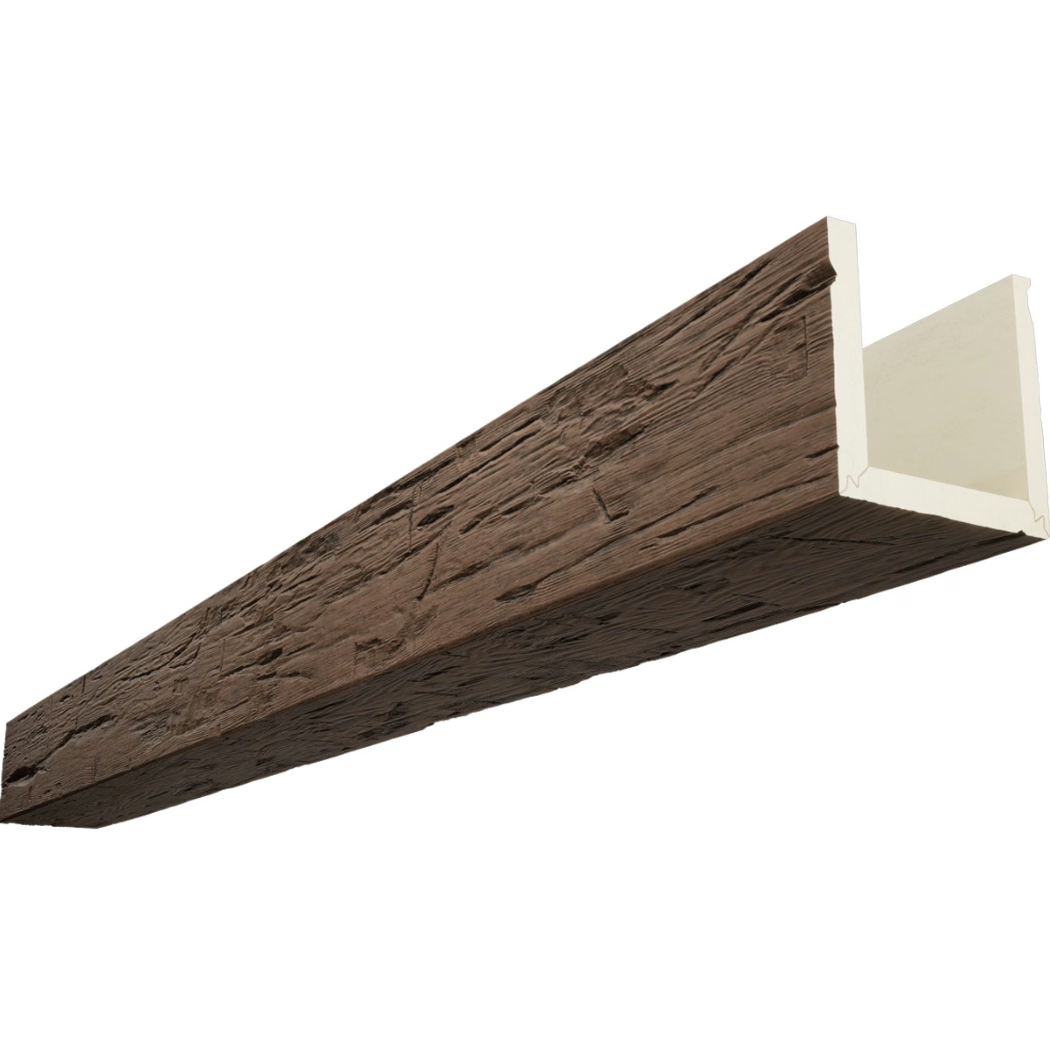
The lumberyard owner carries three SKUs of polyurethane faux beams and sells roughly $4,000 worth per month. The problem: the SKUs are slow movers, the warehouse is expensive, and every time a contractor needs a custom profile or length, the yard has to turn them away. The inventory model is broken for this product category.
Drop shipping changes the math.
Instead of stocking the beams, the yard takes the order, sends it to the factory or regional warehouse, and the factory ships directly to the job site. The yard never touches the product. The margin is lower — typically 15 to 25 percent versus 30 to 40 percent for stocked goods — but there is no warehouse cost, no inventory risk, and no slow-mover write-down.
This article is about how drop shipping works for polyurethane faux beams, what can go wrong, and how to set it up so it does not.
How the basic flow works
A simplified drop ship flow for faux beams:
- Contractor or designer orders from the lumberyard or dealer
- Dealer enters the order with the drop ship supplier
- Supplier confirms stock availability and lead time
- Supplier packs and ships to the job site address
- Dealer is invoiced at wholesale; contractor pays dealer at retail
- Dealer pays supplier within standard terms
The key distinction from a standard wholesale order: the contractor receives the goods, not the dealer. The dealer never physically handles the beams.
This works well for custom orders — the contractor gets the exact profile, length, and finish they need. It also works well for long-length beams that are difficult to handle in a retail warehouse.
What makes drop shipping hard for faux beams specifically
Drop shipping works cleanly for items that are small, uniform, and easy to pack — books, electronics, soft goods. Faux beams are none of these.
Three characteristics of faux beams that complicate drop shipping:
Length. Standard shipping carriers have length limits. UPS Ground caps at 108 inches. FedEx Ground caps at 119 inches. A 12-foot beam exceeds both. The supplier needs a freight carrier relationship or a dedicated delivery truck.
Weight. A pallet of 6-by-8 faux beams can weigh 800 to 1,200 pounds, even though the beams themselves are light. The packaging for freight has to be robust.
Fragility of finish. The factory finish on a faux beam is painted, not coated. It can be scratched by rough handling or by adjacent beams shifting in transit. Drop shippers need to pack with corner protection, foam inserts, and strapping that holds the load without crushing it.
A drop shipper who treats faux beams like lumber will deliver damaged goods. Verify the packing standard before signing up with a supplier.
Setting up a drop ship arrangement: what to verify
Before entering a drop ship agreement with a faux beam supplier, the dealer or contractor should confirm:
Packing and freight capability
Ask specifically: how do you ship 16-foot beams? The answer should include a freight partner (XPO, Estes, Saia) or a dedicated delivery fleet. It should not include UPS or FedEx for anything over 8 feet.
Damage and return policy
This is the most important question. A drop shipper who does not have a clear damage policy will leave the dealer holding a claim with an unhappy contractor and no recourse.
Standard practice: the supplier inspects the goods before loading. The freight carrier is responsible for transit damage. The dealer or contractor documents any damage at delivery — with photos — and notifies the supplier within 24 to 48 hours of receipt. The supplier then sends a replacement or issues a credit.
If the supplier's damage policy is vague or requires the dealer to file the freight claim, find a different supplier.
Lead time reliability
Drop shipping only works if the supplier can hit the lead time they quote. A contractor who schedules an install for Tuesday and finds out Thursday that the beams are still in production is not going to use that supplier again.
Ask for the supplier's on-time delivery rate. Ask for references. Ask what happens when a production issue delays a shipment.
Order minimums and per-order fees
Most drop shippers have a minimum order value — typically $500 to $1,000 — and some charge a drop ship fee per order on top of the product cost. These fees eat into margins quickly on small orders.
Branding and packaging
Can the supplier include the dealer's branding on the packing slip? Can they blind-ship — send the order without any reference to the supplier's name on the outside of the box? For dealers who want to present themselves as the source, this matters.
Margin math for the dealer
The drop ship margin is thinner, but the total cost of doing business is also lower.
| Cost element | Stocked model | Drop ship model |
|---|---|---|
| Product cost | 60-70% of retail | 75-85% of retail |
| Warehouse overhead | 8-12% of gross | 0% |
| Inventory risk | 2-5% annual write-down | 0% |
| Handling and delivery to contractor | 5-8% of gross | 0% (supplier delivers direct) |
| Net margin | 15-25% | 15-25% |
The gross margin is lower in the drop ship model, but the overhead is also lower. A dealer who moves $50,000 per month in faux beams through a drop ship arrangement at 20 percent margin earns $10,000 per month with essentially zero warehouse cost. The same dealer stocking the same volume earns more gross margin on paper but has warehouse, handling, and inventory risk costs that erode the advantage.
The scheduling problem
The biggest operational challenge with drop shipping is scheduling. In a stocked model, the dealer can pick up the beams and deliver them to the job site on their own schedule. In a drop ship model, the supplier delivers on their schedule.
For residential projects where the contractor is coordinating with a painter, an electrician, and a flooring crew, the delivery timing is a real constraint. A beam that arrives a day early is in the way. A beam that arrives a day late holds up the schedule.
Three ways to manage this:
- Confirm delivery timing before placing the order. Ask the supplier for a confirmed ship date and estimated arrival. Build a buffer day on each end.
- Use a staging request. Some drop shippers will hold the order at their warehouse for a day or two before shipping if the job site is not ready.
- Specify "deliver on [date]" at order entry. A professional drop shipper will accommodate a scheduled delivery window.
When drop shipping is not the right model
Drop shipping is not a universal solution. It works for:
- Dealers who do not want warehouse space dedicated to slow-moving items
- Contractors who need custom profiles that are not stocked locally
- Multi-location dealers who want to serve a wide geographic area without regional warehouses
It does not work for:
- Projects that need same-day or next-day delivery
- Contractors who need to inspect goods before accepting them
- Small orders below the minimum order threshold where per-order fees eat the margin
Setting up the relationship
A clean drop ship arrangement starts with a written agreement that covers:
- Order entry process and cut-off times
- Lead time commitment and penalty for miss
- Packing and freight standards
- Damage claim process and timeline
- Return policy
- Branding and packaging options
- Payment terms and credit limit
Verbal agreements with drop ship suppliers are where dealers get into trouble. Get it in writing.
For the lumberyard owner with the three slow-moving SKUs, the math is simple. Move the inventory, close out the warehouse allocation, and set up a drop ship relationship with the supplier who can ship the same profiles from their own facility. The contractor gets the same product. The yard keeps the margin. The warehouse cost disappears.
Technical References
ASTM standards cited in every specification
Test Data
Lab results from internal testing program
Updated 2026
Reviewed against current product specs