
Walk into a renovated farmhouse or a new-build craftsman home and the first thing most visitors notice overhead is the beam work. For decades, those ceiling timbers meant hiring a structural carpenter, sourcing reclaimed lumber, and accepting the cost of heavy lifting. Polyurethane faux beams have rewritten that script. They give contractors, designers, and importers a product that looks like aged oak or rough-sawn cedar, installs with a cordless drill, and ships in cartons rather than on flatbeds. This guide covers the core benefits that explain why PU beams have moved from a niche decorative item to a staple in residential and commercial specs.
What polyurethane faux beams actually are
A polyurethane faux beam is a high-density foam profile molded from real timber. Manufacturers cast actual wood pieces in silicone, then replicate every grain line, knot, and tool mark in a closed-cell PU formulation. The result is a hollow or semi-hollow section that weighs a fraction of the original timber while keeping the surface texture intact.
Most production runs use two-component polyurethane foam with a density between 160 and 320 kg/m³. Higher densities produce a heavier, more solid-feeling beam suited to commercial lobbies, while lighter profiles work well in apartments and single-family remodels. The outer shell carries a factory-applied stain or paint, sealed with a UV-stable topcoat that resists yellowing under interior lighting.
Composition and finish options
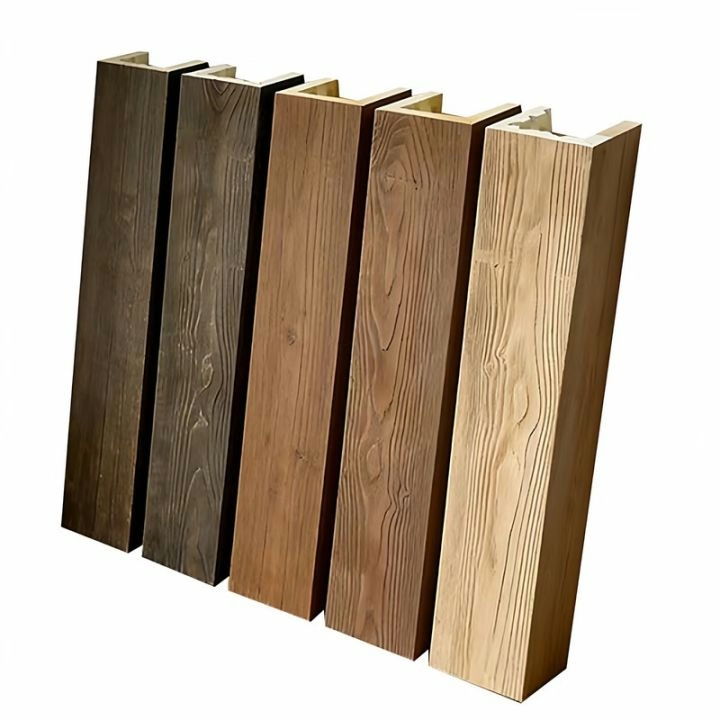
The base material is rigid PU foam, often with an internal fiberglass or PVC reinforcement spine on longer lengths. Surface finishes range from raw primed (ready for field painting) to multi-tone hand-finished looks that mimic weathered pine, driftwood gray, espresso walnut, or distressed barnwood. Because the texture is molded rather than printed, the grain reads the same from every angle, even when a viewer is standing directly beneath the beam.
For projects calling for a specific stain, primed variants accept standard wood stains, gel stains, and latex or oil paints without primer in most cases. Designers specifying custom colors can order factory color-matching on runs as small as a few dozen linear meters.
Functional advantages that matter on the jobsite
Aesthetics drive the initial interest, but the day-to-day benefits for contractors and project managers are what close the sale. PU faux beams solve several practical problems that real timber cannot.
Lightweight handling
A 6-meter solid oak beam can weigh 80 kg or more, requiring two installers and often a lift. The equivalent PU beam in the same visual profile typically weighs between 4 and 9 kg per meter, depending on wall thickness and reinforcement. One worker can carry and lift most residential lengths without mechanical help. On multi-unit apartment jobs or high-rise renovations where elevator capacity is restricted, this weight reduction translates into measurable labor savings and fewer workers per crew.
Fast, non-structural installation
Because faux beams are decorative rather than load-bearing, they mount to blocking, furring strips, or directly to the ceiling joists with long screws through pre-marked fastener zones. Most manufacturers supply U-shaped mounting brackets or internal L-brackets that hide inside the beam cavity. Installation time per linear meter is commonly under 10 minutes for a two-person crew, including layout.
For retrofits over existing drywall ceilings, installers often screw a cleat into the framing, slide the beam onto the cleat, and finish with a small color-matched fastener at the miter joints. No structural engineer sign-off is required in most jurisdictions since the beams carry no roof load.
Moisture and pest resistance
Closed-cell polyurethane does not absorb water the way solid timber does. In coastal homes, basements, pool enclosures, and bathroom ceilings, this resistance prevents the warping, cupping, and mildew that real wood can develop. Termites and carpenter ants have no interest in PU foam, eliminating a recurring concern in southern U.S. and Mediterranean markets. For hotels and restaurants in humid climates, this alone often tips the specification toward faux over real.
Fire performance
Quality PU beam lines carry Class C or Class B fire ratings, with some manufacturers offering Class A through intumescent coatings. Specification teams working on commercial projects should request the fire-test certificate (typically ASTM E84 or EN 13501) and confirm the rating applies to the finished product rather than the raw foam. Beams installed in egress corridors, lobbies, and assembly spaces often require a documented Class B rating as a baseline.

Acoustic and thermal side benefits
Ceiling beams, even hollow faux versions, can contribute meaningfully to room acoustics when paired with the right backing. Designers sometimes specify beams in front of acoustic panels to hide absorption material behind a decorative face. The air gap between the beam shell and the ceiling also acts as a thermal break, mildly reducing heat transfer at the ceiling plane.
In open-plan offices and restaurants, a grid of faux beams overhead helps break up the visual expanse of a high ceiling while subtly lowering the perceived ceiling height, which improves speech intimacy and reduces echo. Hotels use this trick in lobby bars and ballrooms where the ceiling volume would otherwise feel cavernous.
For residential projects, the same visual trick calms double-height great rooms without requiring any change to the actual structure. A row of beams at 9-foot elevation reads as a dropped soffit, creating a more human-scaled seating area below.
Aesthetic flexibility across design styles
PU beams are not limited to rustic farmhouse looks. The range of textures, colors, and profiles covers most major interior styles in active demand today.
Rustic and farmhouse
Hand-hewn, distressed, and rough-sawn textures dominate the farmhouse category. Warm walnut, driftwood, and weathered gray finishes pair with shiplap walls, apron-front sinks, and matte black hardware. Ceilings with coffered layouts and cross-beam patterns remain popular in this category, and PU beams make the heavy timber aesthetic affordable even on small budgets.
Modern and coastal
Sanded smooth or wire-brushed profiles in light oak, whitewash, or pale driftwood tones fit modern coastal interiors. Designers often specify long, single-span beams running parallel to the roof ridge, with no cross-bracing, to keep sightlines clean. The lightweight PU construction makes these long spans practical to install without warping concerns over time.
Mediterranean and Tuscan
Aged-beam finishes with darker walnut, antique pine, or burnt umber tones anchor Tuscan, Spanish, and broader Mediterranean revivals. Faux versions can include decorative corbels and end caps molded in matching texture, giving the full old-world composition without the cost of sourcing reclaimed European timbers.
Commercial and hospitality
Bars, restaurants, and hotel lobbies often specify darker espresso and charcoal faux beams to create contrast against light walls. Because PU beams can be ordered in continuous lengths and pre-finished to match brand palettes, design teams can carry a single beam treatment across multiple properties with consistent results.

Comparing lifecycle costs against real timber
Initial purchase price is only part of the cost story. Lifecycle costs include installation labor, finishing, ongoing maintenance, and eventual replacement. Across a 20-year horizon, PU beams typically cost 30-50% less than comparable real timber installations once those factors are included.
Real timber beams require periodic resealing, especially in homes with HVAC cycling that drives humidity swings. Faux beams need only an occasional wipe-down with a damp cloth. Scratches and dents on real timber often require professional repair; on PU beams, light scuffs can be touched up with a small artist brush using the manufacturer's touch-up kit, which most suppliers ship with every order.
For developers and property managers running large multi-unit portfolios, the maintenance delta alone justifies the specification. A 200-unit apartment community with beam accents in the clubhouse and leasing office can save thousands annually by avoiding the refinishing cycle that solid timber demands.
Sustainability and sourcing considerations
Sustainability claims around faux beams tend to focus on two areas: reduced timber harvest and lower shipping emissions. Because PU beams use a fraction of the wood fiber that solid beams require, the forest impact per linear meter is significantly reduced. Shipping weight is also lower, which cuts fuel use per delivered meter.
On the other hand, PU is a petroleum-derived product and is not biodegradable. Forward-thinking manufacturers are beginning to offer bio-based PU formulations using soy or castor oil polyols, and several major brands now publish EPDs (Environmental Product Declarations) covering cradle-to-gate impacts. Importers and specifiers seeking LEED or BREEAM credit should request the EPD and confirm the formulation percentage of bio-based content.
End-of-life recycling for PU foam remains limited. Most demolished beams end up in landfill, though some manufacturers have take-back programs that grind production scrap into filler for other molded products. Asking suppliers about their take-back policy is a practical step for any project targeting circular-economy credentials.
Common project types that benefit most
Several project categories see outsized value from PU beams compared to alternatives.
Hospitality projects, including hotels, restaurants, and bars, benefit from the consistent finish and the fast install turnaround that tight pre-opening schedules demand. Residential renovations, particularly in kitchens, great rooms, and primary bedrooms, use faux beams to add architectural weight without changing the structure. Commercial tenant improvements in offices and retail stores use beams to define zones without permanent walls. And multifamily developers use beams in model homes and amenity spaces to create a high-end impression within standard construction budgets.
Across all these categories, the thread is the same: PU faux beams deliver the look of substantial timber without the structural, financial, and maintenance costs that real wood demands. For teams that need predictable results, fast timelines, and a finish that holds up over years of occupancy, they have become a default specification rather than a budget alternative.
Sizing, customization, and ordering basics
Standard PU beam sizes cover most residential and light commercial needs, with widths from 4 to 12 inches and depths from 4 to 14 inches. Lengths ship up to 6 meters in a single piece, with longer runs achieved through internal splice plates that hide the joint. Custom cross-sections are available from most manufacturers at modest setup cost, which matters for designers working on signature projects where stock profiles will not do.
Lead times vary by region and supplier. Stock finishes in common sizes often ship within 1-2 weeks from domestic warehouses in North America, Europe, and Australia. Custom colors, profiles, or longer lengths may require 4-6 weeks. Importers handling full-container orders should plan samples and color approvals early in the project timeline to avoid holding up installation crews.
For design teams specifying PU beams for the first time, requesting a sample chain (multiple finishes on full-size short lengths) before final selection is the single most useful step. Photos and digital renders cannot fully capture how light plays across a deeply textured beam surface, and the right finish choice depends as much on the room's natural light as on the color palette.
Technical References
ASTM standards cited in every specification
Test Data
Lab results from internal testing program
Updated 2026
Reviewed against current product specs

