
The phrase "high quality" can mean different things depending on who is using it. In the context of PU faux wood beams, quality encompasses surface finish, structural integrity, dimensional accuracy, and consistency across an order. Getting all four of those things without paying a premium is a matter of knowing what to look for and where to source. This guide breaks down what quality actually means in a PU beam context and how buyers can access it without overspending.
What quality actually means in PU beams
Quality in a polyurethane faux beam is not just about how it looks in a catalog photo. It is about how the beam performs from the moment it arrives at the jobsite through years of installation and use.
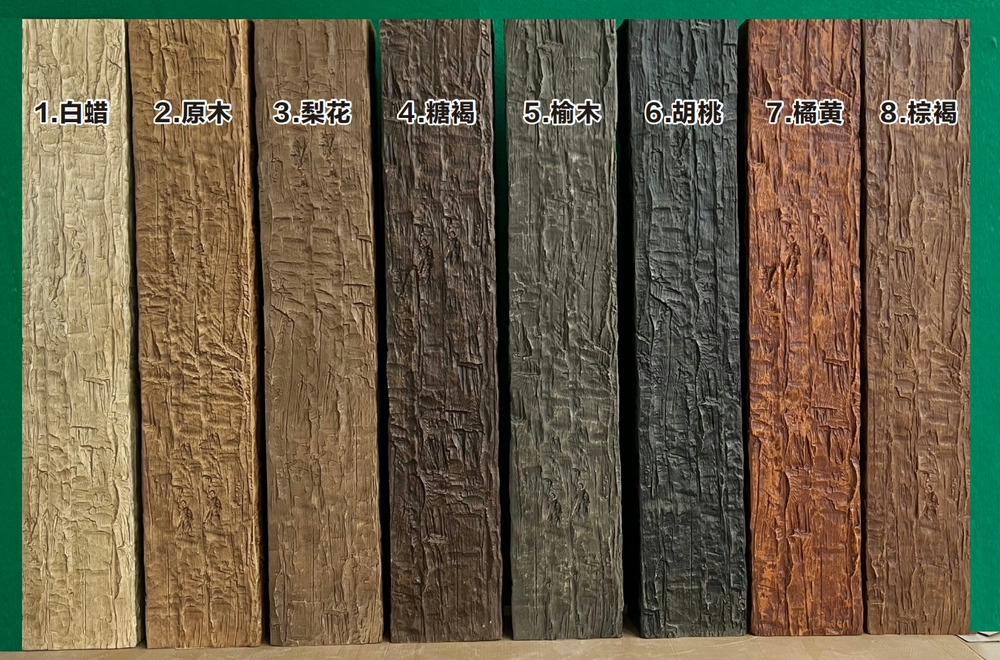
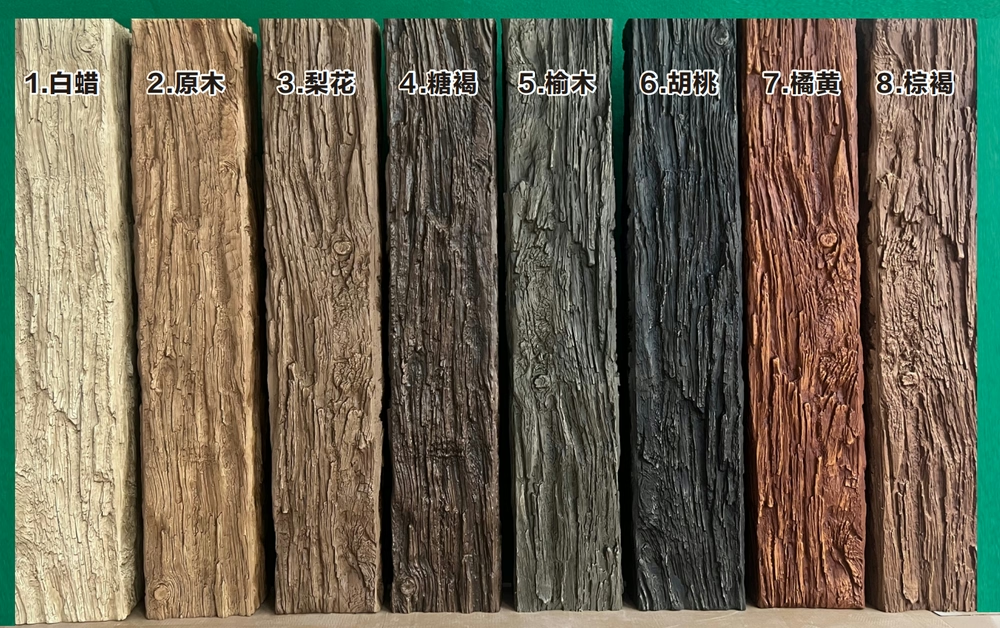
Surface quality covers the texture fidelity of the mold, the uniformity of the factory finish, and the absence of visible defects like flow lines, sink marks, or bubbling. A high-quality beam carries its texture consistently from end to end, with no flat spots or areas where the grain reads differently than the surrounding surface.
Structural integrity in a PU beam means consistent density throughout the foam core, proper curing before finishing, and adequate reinforcement in longer spans. A beam that feels hollow in places or shows soft spots is a density issue that will affect how it holds fasteners and resists impact over time.
Dimensional accuracy ensures that beams arriving on site are the exact cross-section ordered, with consistent wall thickness and straightness. Beams that arrive bowed or twisted create installation problems that compound into visual defects at the joints.
Finish consistency means every beam in an order matches the same color standard, with no batch-to-batch variation that would make some beams look lighter or darker than others. In large installations, finish consistency across dozens of beams is what separates a professional result from a patchy one.
Identifying quality through inspection and testing
Buyers who can receive a sample before placing a full order have the best opportunity to verify quality. Several simple tests separate high-quality beams from marginal ones.
Weight gives a first approximation of density. Two beams of identical dimensions from different suppliers will often weigh different amounts, with the heavier beam typically indicating higher foam density. For a 6x8 profile, a typical high-quality beam weighs 6-9 kg per linear meter. Anything significantly lighter may indicate a lower-density formulation that will dent more easily or fail to hold fasteners securely.
The fastener test involves driving a screw into the beam face at a test point and checking whether the material holds the grip without crumbling or splitting. High-quality closed-cell PU foam grips screws reliably and can be unscrewed and reinserted without damage. Lower-quality foam often strips or crumbles under fastener loading.
The flex test involves supporting a beam at two points and applying downward pressure at the center. A high-quality reinforced beam deflects minimally and returns to shape. A low-quality or unreinforced beam may deflect significantly or show permanent deformation.
The finish adhesion test uses a piece of adhesive tape pressed firmly against the beam surface and pulled off quickly. If paint or stain comes off with the tape, the finish adhesion is inadequate for field conditions. High-quality beams maintain finish adhesion even when exposed to humidity and temperature cycling.
Common quality issues and what causes them
Understanding the root causes of common quality problems helps buyers ask better questions of suppliers.
Mold line visibility is one of the most common complaints about lower-quality PU beams. It occurs when the mold seam is not trimmed cleanly or when the mold itself has wear that allows foam to flash at the joint. High-quality manufacturers address this by using machined aluminum or hardened steel molds with precise seam tolerances, and by trimming excess material at the mold line before curing.
Color variation between beams in the same order typically stems from inconsistent spray application of the finish or from finishing batches that were not calibrated against a master standard. Manufacturers with strong quality systems maintain written color standards and use spectrophotometers to verify batch-to-batch consistency.
Surface bubbling or pitting is caused by moisture in the foam formulation or by improper mixing of the two-component system during production. It is most common in lower-cost production runs where quality control is less rigorous. A beam with significant pitting on visible surfaces will require heavy filler application in the field, which is a sign of a problem that should have been caught before shipping.
Sagging in longer spans is a density or reinforcement problem. Hollow beams with thin walls may deform under their own weight or under the heat of recessed lighting mounted nearby. Reinforced beams use internal spines of PVC, fiberglass, or wood to carry load across spans, which prevents sagging even in high-temperature conditions.
Sourcing high-quality beams cost-effectively
Getting high quality does not require paying premium prices. Several sourcing strategies help buyers access better products at competitive rates.
Factory-direct purchasing eliminates the distributor margin, which typically runs 15-25% on building products. Many PU beam manufacturers sell directly to contractors, designers, and importers through website storefronts or sales teams. Factory-direct pricing often matches or beats wholesale distributor pricing without requiring the volume commitment of a traditional wholesale account.
Trade show sourcing lets buyers compare products from multiple manufacturers side by side in a single visit. Major trade shows in the building materials space include the International Builders' Show (IBS), the National Association of Home Builders (NAHB) annual event, and regional home and design shows. Buyers can handle product, evaluate finish quality, and meet sales teams in person, which builds relationships that serve future orders.
B2B marketplace sourcing through platforms like Alibaba, Made-in-China, and Global Sources puts multiple manufacturers in front of buyers, but requires more diligence. Look for manufacturers with trade assurance programs, verified factory inspections, and response times that indicate active production rather than trading company intermediaries. Requesting a video call or virtual factory tour is increasingly common and helps verify that the supplier exists and is actively producing.
Regional distribution works well for buyers who need faster delivery and are willing to pay a modest premium for it. Domestic U.S. and European distributors hold inventory of standard profiles and finishes, ship within days rather than weeks, and provide easier returns processing for damaged goods. The trade-off is higher per-unit pricing than direct factory orders.
The role of certifications and documentation
Quality certifications provide third-party verification that a manufacturer's processes meet defined standards. The most relevant certifications for PU beam buyers are ISO 9001 for quality management and ISO 14001 for environmental management.
Fire test reports are essential documentation for any commercial specification. The relevant standards are ASTM E84 in North America and EN 13501 in Europe. Buyers should request the actual test report, not just a marketing claim of "fire rated," and verify that the rated product matches what they are ordering. Some manufacturers rate only the raw foam, while others rate the finished beam with its specific coating system.
Environmental product declarations (EPDs) are increasingly requested on commercial projects targeting sustainability certifications like LEED, BREEAM, or Green Globes. An EPD provides a standardized declaration of a product's environmental impact across its lifecycle. Manufacturers offering EPDs are typically more advanced in their environmental reporting and tend to have more consistent quality systems as well.
Warranty documentation matters for commercial buyers and property developers who need to document product performance for liability purposes. A manufacturer's written warranty covering manufacturing defects, finish durability, and structural integrity for a defined period provides the documentation that property managers and developers need.
Building a quality verification checklist
Before placing an order, buyers should confirm the following:
- Sample evaluation completed and quality verified against personal inspection standards
- Density and weight per linear meter confirmed as appropriate for the application
- Finish sample reviewed in the actual lighting conditions of the project space
- Fire rating documentation provided and verified against project code requirements
- Warranty terms reviewed and confirmed as covering manufacturing defects
- Lead time and delivery scheduling confirmed with the supplier
- Damage and return process documented and confirmed before the order ships
- Packaging adequate for the shipping method and destination climate
Running through this checklist before committing to an order catches most quality and service issues before they become problems on the jobsite.
Long-term cost of quality decisions
The upfront cost of high-quality PU beams is rarely the dominant factor in total project cost. Labor to install, touch-up, and maintain the beams over time dwarfs the material cost difference between high and low-quality options. A beam that requires field filler and repainting because its surface quality was inadequate adds hours of labor that could have been avoided with a better-quality product from the start.
For commercial buyers and developers, the long-term reputation cost is also real. A leasing office or common area with visible beam defects reflects poorly on the property and undermines the design intent that justified the specification in the first place. The modest premium for higher-quality beams pays for itself in reduced touch-up costs, faster installation, and better long-term appearance.
Technical References
ASTM standards cited in every specification
Test Data
Lab results from internal testing program
Updated 2026
Reviewed against current product specs


