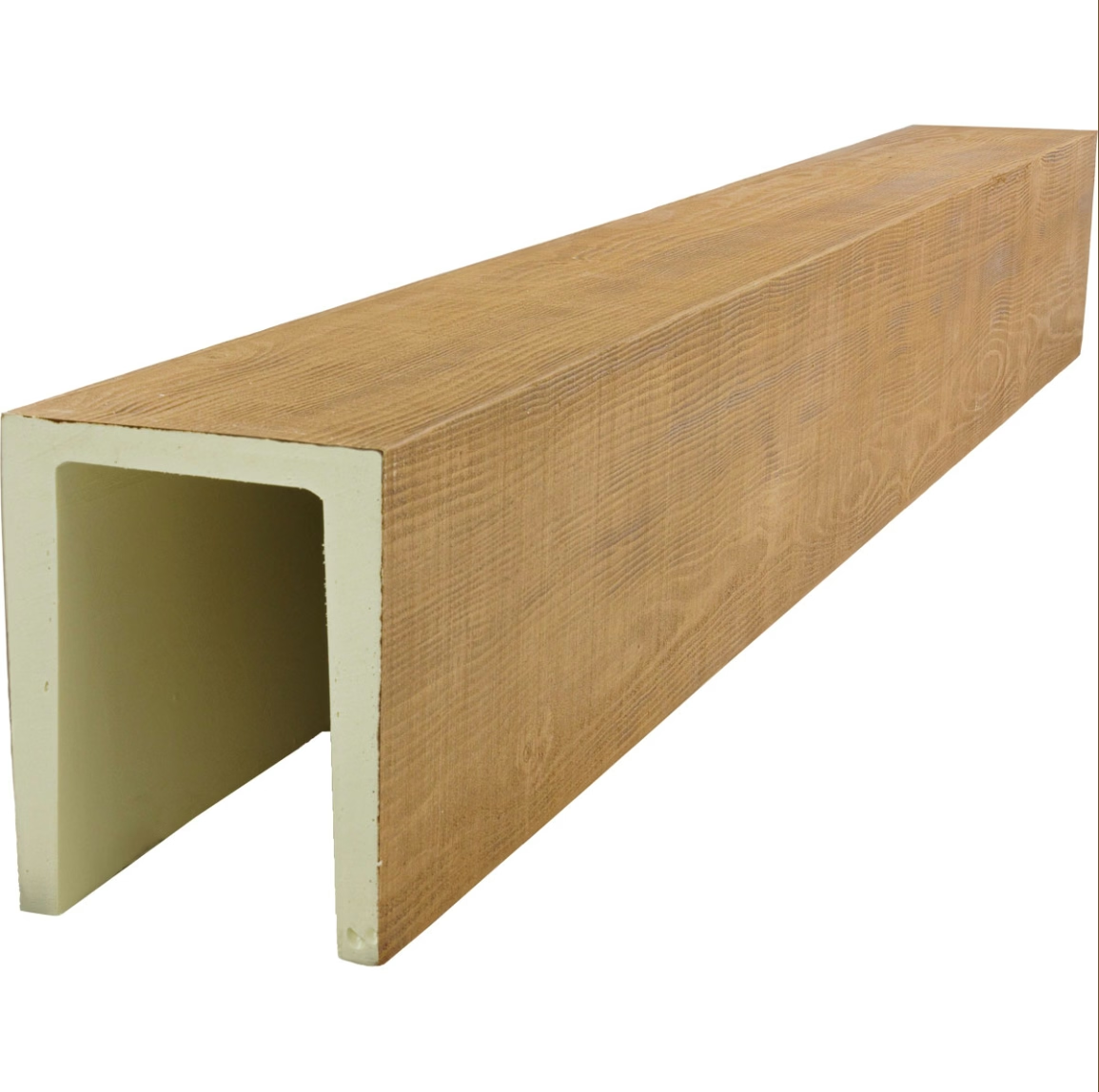
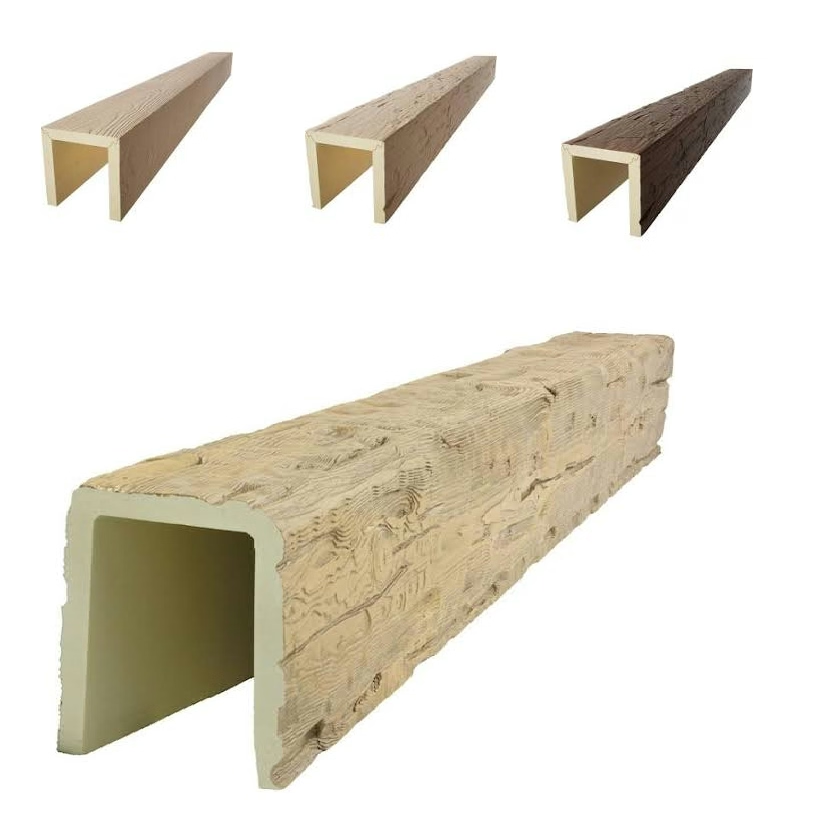
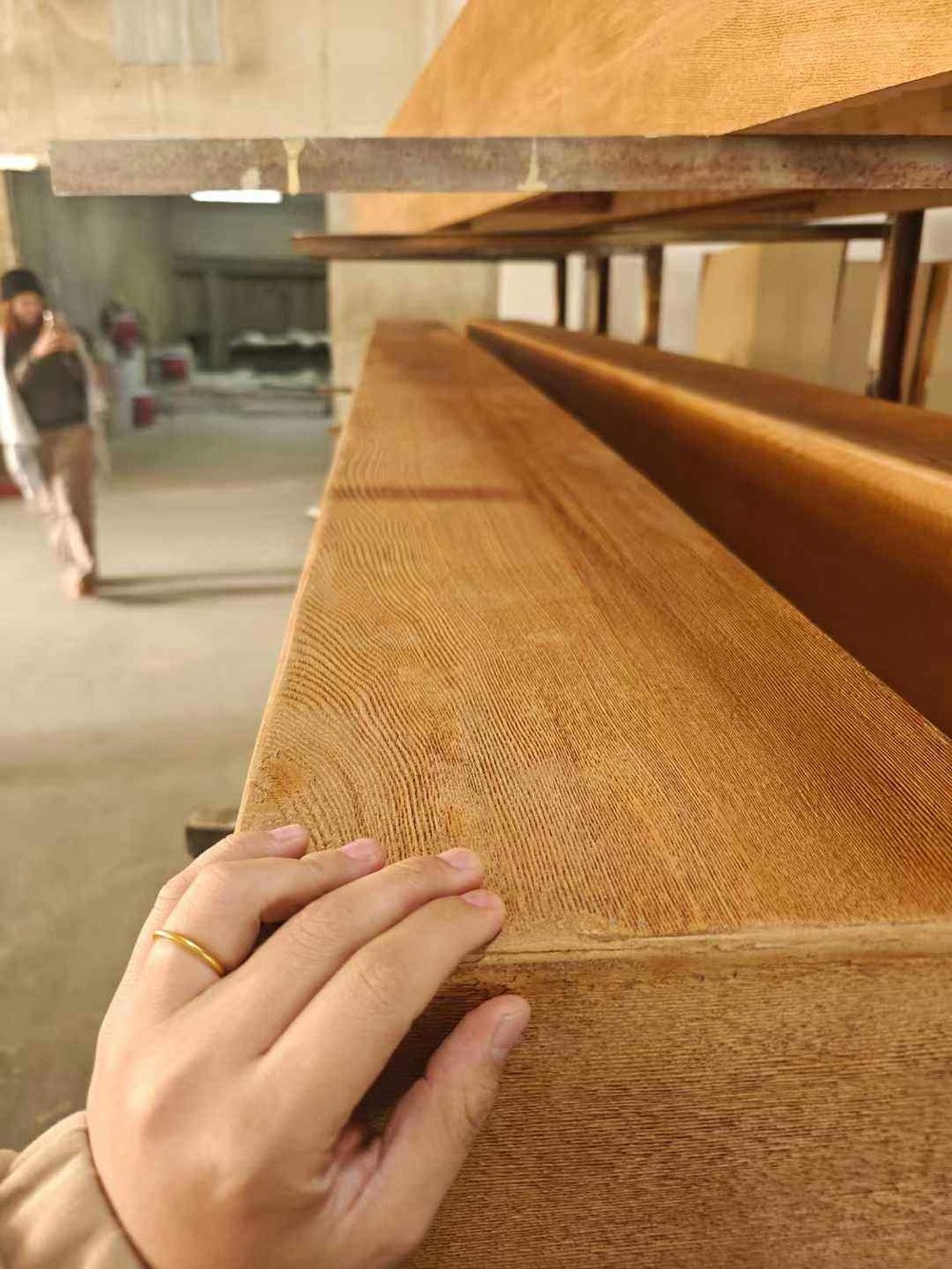
Stability and Durability Are Different Properties
In beam materials, stability and durability are often used interchangeably, but they describe different material characteristics. Stability is the ability to maintain dimensions and shape over time, regardless of environmental conditions. Durability is the ability to resist degradation — surface wear, impact damage, UV damage — over time. A beam can be stable without being durable, and durable without being stable. PU faux beams are both.
Real timber has moderate durability — it resists surface wear well but degrades over time with moisture cycling — and poor stability — it expands, contracts, twists, and cracks with humidity changes. Engineered wood has good stability but moderate durability, and the veneer surface can delaminate over time. Solid steel has excellent durability but can corrode. PU faux beams offer a combination that no natural or engineered material matches consistently: near-perfect dimensional stability and high surface durability, maintained over decades without specialized maintenance.
Understanding the distinction matters when specifying beams for a project. A project manager specifying for a mountain vacation home needs to prioritize stability because the humidity swings are extreme. A project manager specifying for a high-traffic commercial space needs to prioritize durability because the surface will be touched and bumped. A project manager specifying for a coastal B&B needs both, because the environment attacks both properties simultaneously.
Dimensional Stability in Detail
Dimensional stability describes how much a material changes in response to environmental conditions. The metric that matters most for ceiling beams is the coefficient of hygroscopic expansion — how much the material expands or contracts per unit change in humidity.
Wood's coefficient is relatively high. A timber beam in a 3-meter room can expand or contract by 3 to 6 millimeters over the course of a year as humidity cycles through its seasonal range. The movement is slow but cumulative, and over years it manifests as gaps at joints, checks in the surface, and in extreme cases, beams that have twisted enough to be visually noticeable.
PU foam's coefficient is negligible. The closed-cell structure means the material does not absorb moisture, and the molecular structure of the foam does not expand or contract with humidity changes. A 3-meter PU beam maintains its 3-meter length within fractions of a millimeter regardless of the indoor humidity. The joints stay tight, the surface stays smooth, and the beam maintains its as-installed appearance indefinitely.
The practical implications of this difference are significant. Timber beams in humidity-cycling environments develop gaps at the joints within a few years. The gaps are usually filled with caulk or covered with trim, but they recur because the underlying movement continues. PU beams do not develop these gaps. The joints stay tight, the caulk stays intact, and the ceiling looks as good on year ten as it did on day one.
Temperature stability is the other dimension. PU foam maintains its dimensions across a temperature range of roughly -30°C to +80°C, which covers every residential and most commercial interior condition. The material does not soften at high temperatures or become brittle at low temperatures. Timber behaves differently — it is stiffer and more brittle in cold conditions and more flexible in warm conditions — and the cycling accelerates degradation.
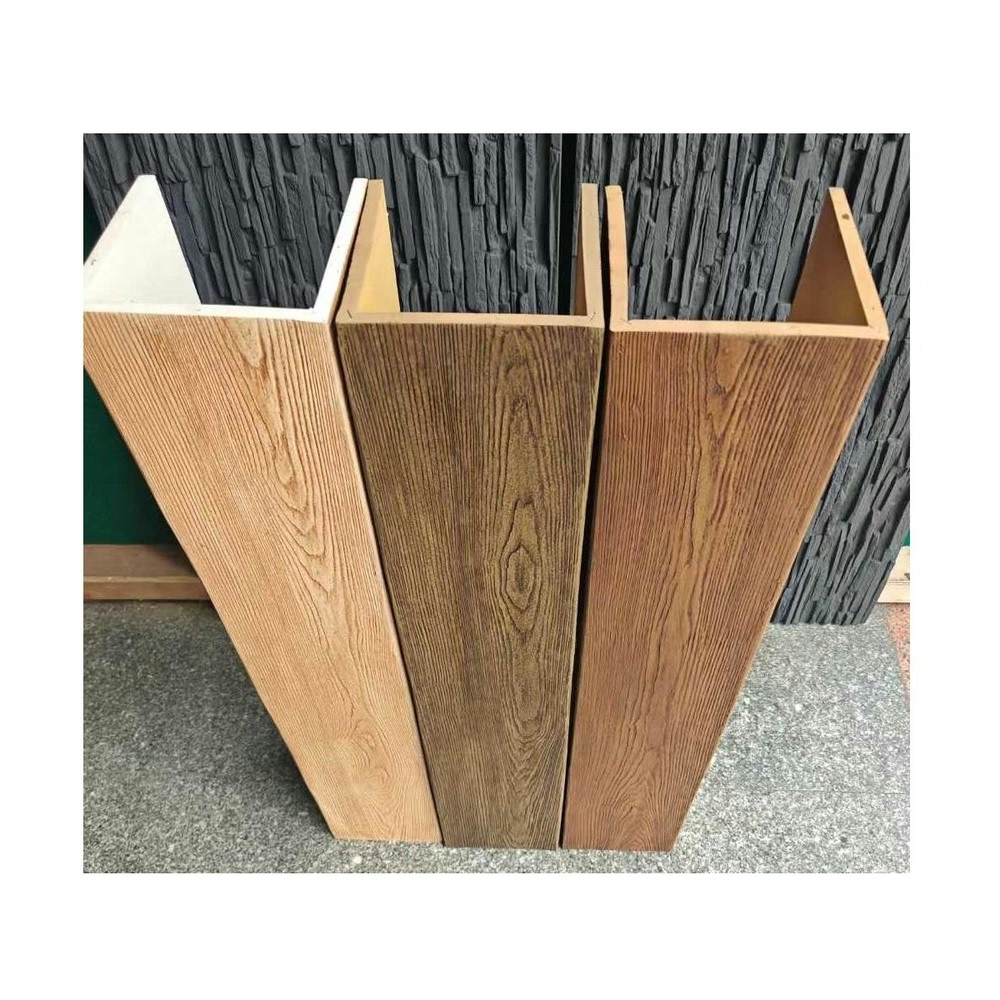
Surface Durability in Detail
Surface durability describes how well the material resists wear, impact, and environmental degradation over time. The metrics that matter most for ceiling beams are:
- Surface hardness. Measured on the Shore D scale. Higher numbers indicate harder surfaces. PU foam for architectural beams typically ranges from 40 to 70 Shore D, which is comparable to medium-density wood.
- Impact resistance. Measured by dropping a standardized weight onto the surface from a standardized height. PU foam absorbs impact without denting the way wood does, because the foam compresses and recovers elastically.
- UV resistance. The rate at which the surface finish degrades under UV exposure. High-quality PU beam finishes with UV-stabilized topcoats maintain their color for 10 to 15 years in typical residential conditions.
- Abrasion resistance. The ability of the surface to resist wear from contact. PU foam surfaces are moderately abrasion-resistant, suitable for ceiling installations where contact is minimal.
- Moisture resistance. The ability of the surface to resist water penetration. Closed-cell PU foam with a sealed topcoat is highly moisture-resistant.
The combination of these properties means that PU beams maintain their surface appearance through years of use without the maintenance that real timber requires. The finish does not need to be refreshed, the surface does not need to be cleaned with specialized products, and the beam does not need to be monitored for signs of degradation.
Comparing Materials Side by Side
The comparison table below summarizes the key material properties across beam options:
| Property | Solid Timber | Engineered Wood | PU Faux Beam |
|---|---|---|---|
| Dimensional stability | Low | High | Very High |
| Surface durability | Moderate | Moderate | High |
| Moisture resistance | Low | Moderate | High |
| UV resistance | Moderate | Moderate | High (with topcoat) |
| Maintenance requirement | High | Moderate | Low |
| Expected service life | 15-30 years | 20-30 years | 50+ years |
| Impact resistance | Moderate | Low | High |
| Weight per linear meter | High | Moderate | Low |
The table makes the comparison clear for most project managers: PU beams outperform the alternatives on the properties that matter most for long-term stable use.
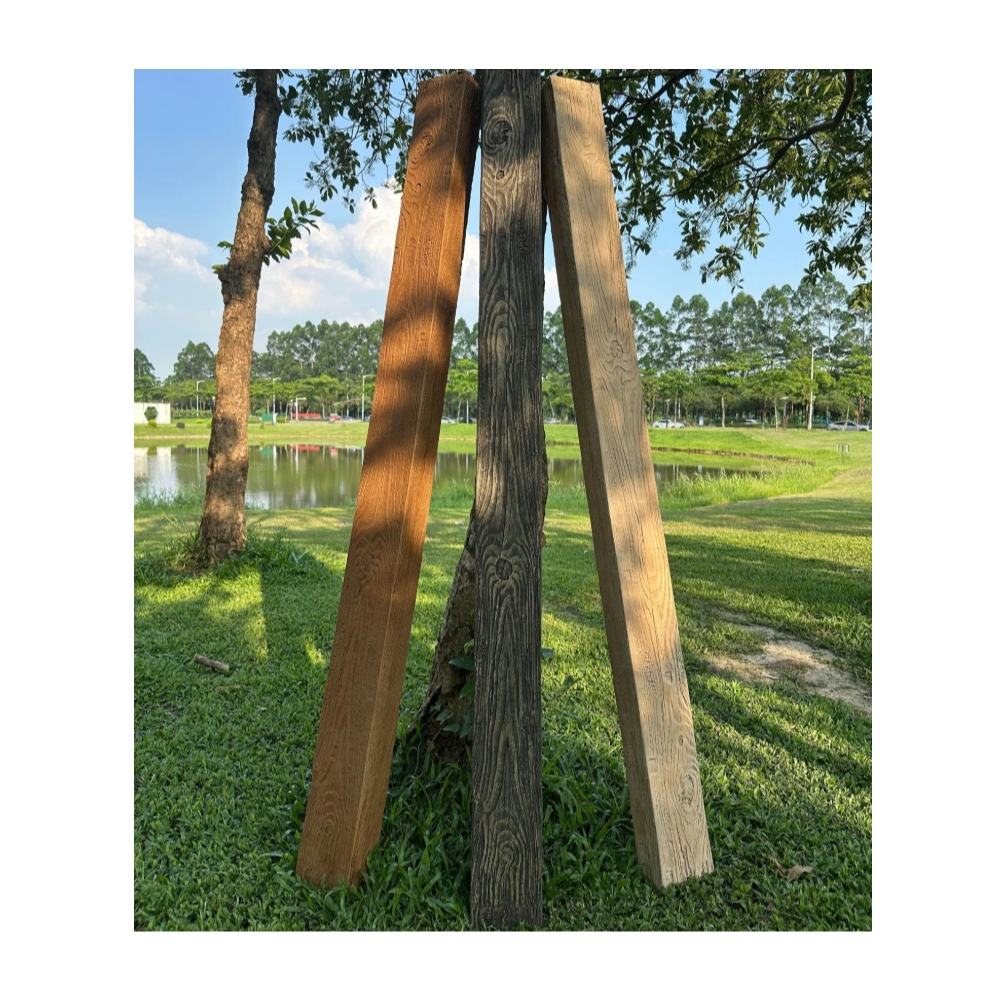
Environments Where Both Properties Matter Most
The combination of stability and durability is not equally important in all environments. The environments where both properties matter most are:
Mountain and Vacation Homes
These properties experience the most extreme humidity swings of any residential application. The heating season drives humidity down, the summer drives it up, and the seasonal closure accelerates degradation in real timber. PU beams handle the swings without moving, and the durable surface finish handles the UV exposure through windows without degrading.
Coastal Properties
Salt air attacks both the surface and the structural integrity of real timber. The chloride ions penetrate the grain, break down the cellular structure, and accelerate surface degradation. PU beams are immune to salt air, and the factory-applied finish resists the UV exposure that coastal properties experience.
Commercial Spaces
Commercial interiors experience higher traffic, more maintenance cleaning, and more exposure to environmental stresses than residential interiors. PU beams handle the commercial environment without the maintenance requirements of real timber, and the stable dimensions mean the ceiling stays aligned and tight through years of use.
High-Humidity Interiors
Indoor pools, spas, saunas, and steam rooms present the most extreme humidity challenge. Real timber is generally unsuitable for these environments, and engineered wood requires careful specification and maintenance. PU beams with marine-grade topcoats are suitable for most high-humidity interiors, though direct exposure to standing water or steam should be avoided.
Specification Practices for Long-Term Performance
Specifying for long-term performance is straightforward when the material properties are understood:
- Specify the density. Higher density foam (60-80 kg/m³) offers better impact resistance and surface durability. Lower density foam (32-48 kg/m³) is lighter and less expensive but more susceptible to impact damage.
- Specify the topcoat. UV-stabilized topcoats extend the finish life in sun-exposed locations. Marine-grade topcoats extend the finish life in humid and coastal environments.
- Specify the finish system. Factory-applied finishes are more durable than field-applied finishes. The factory application ensures consistent coverage and proper bonding.
- Require technical data sheets. Reputable manufacturers provide technical data sheets that document the material properties. Review the data sheets and compare across manufacturers before selecting a product.
- Specify the manufacturer warranty. Warranties of 10 to 25 years on the finish are standard for quality PU beam products. Shorter warranties may indicate lower-quality materials.
These specification practices take a few minutes at the front end of a project and prevent callbacks and complaints at the back end.
Installation Practices for Stable Beams
Even the most stable and durable material can be installed poorly. The installation practices that support long-term performance are:
- Verify the substrate. The ceiling substrate should be flat, dry, and free of debris before the beams are installed. Any irregularity in the substrate will transfer to the beam.
- Install blocking at fixture locations. Any location where a fixture will be hung from the ceiling — a fan, a pendant, a heavy chandelier — needs blocking between the joists to carry the load.
- Use the specified fasteners. The manufacturer specifies the fastener type and spacing. Deviating from the specification risks the beam's long-term performance.
- Seal cut surfaces. Any surface that is cut on site — the ends of beams, notches for fixtures — should be sealed with a compatible primer and topcoat.
- Caulk and touch up. The seams between beams and between beams and the ceiling should be caulked with a color-matched caulk and touched up with the manufacturer touch-up kit.
These practices are specified in the manufacturer's installation instructions, and following them is the most reliable way to ensure the installation performs as expected.
What This Means for Project Managers
For project managers running multi-unit residential developments, the combination of stability and durability translates directly to lower operating costs. The beams do not crack, warp, or require refinishing. The maintenance crew does not need to add beam maintenance to their schedule. The callback rate for beam-related issues drops to near zero.
For project managers running commercial properties, the same logic applies with greater force. Commercial interiors have higher traffic, more cleaning, and more environmental stress. The durability of PU beams reduces the maintenance burden, and the stability means the ceiling stays aligned and tight through years of use.
For designers, specifying PU beams is a decision that removes a category of risk from the project. The material performs as specified, the finish lasts as expected, and the client does not encounter the callbacks and complaints that come with real timber in challenging environments.
For importers and wholesalers, the long-term durability of PU beams is a product story that sells itself. The warranty, the technical data sheets, and the material comparison all support the value proposition. Clients who understand the material properties choose PU beams, and they stay satisfied.
The Bottom Line
Stable, durable PU faux beams are a material investment that pays returns over decades. The dimensional stability eliminates the movement that causes gaps, checks, and callbacks in real timber. The surface durability eliminates the maintenance that real timber requires. The combination of both properties, maintained over the beam's service life, makes PU beams the most practical choice for any project where long-term performance matters.
For contractors, the install is straightforward and the result is reliable. For designers, the specification is clear and the performance is predictable. For project managers, the operating costs are lower and the client satisfaction is higher. For importers and wholesalers, the product is one of the most consistent sellers in the architectural materials category, because the material delivers what it promises.
Technical References
ASTM standards cited in every specification
Test Data
Lab results from internal testing program
Updated 2026
Reviewed against current product specs