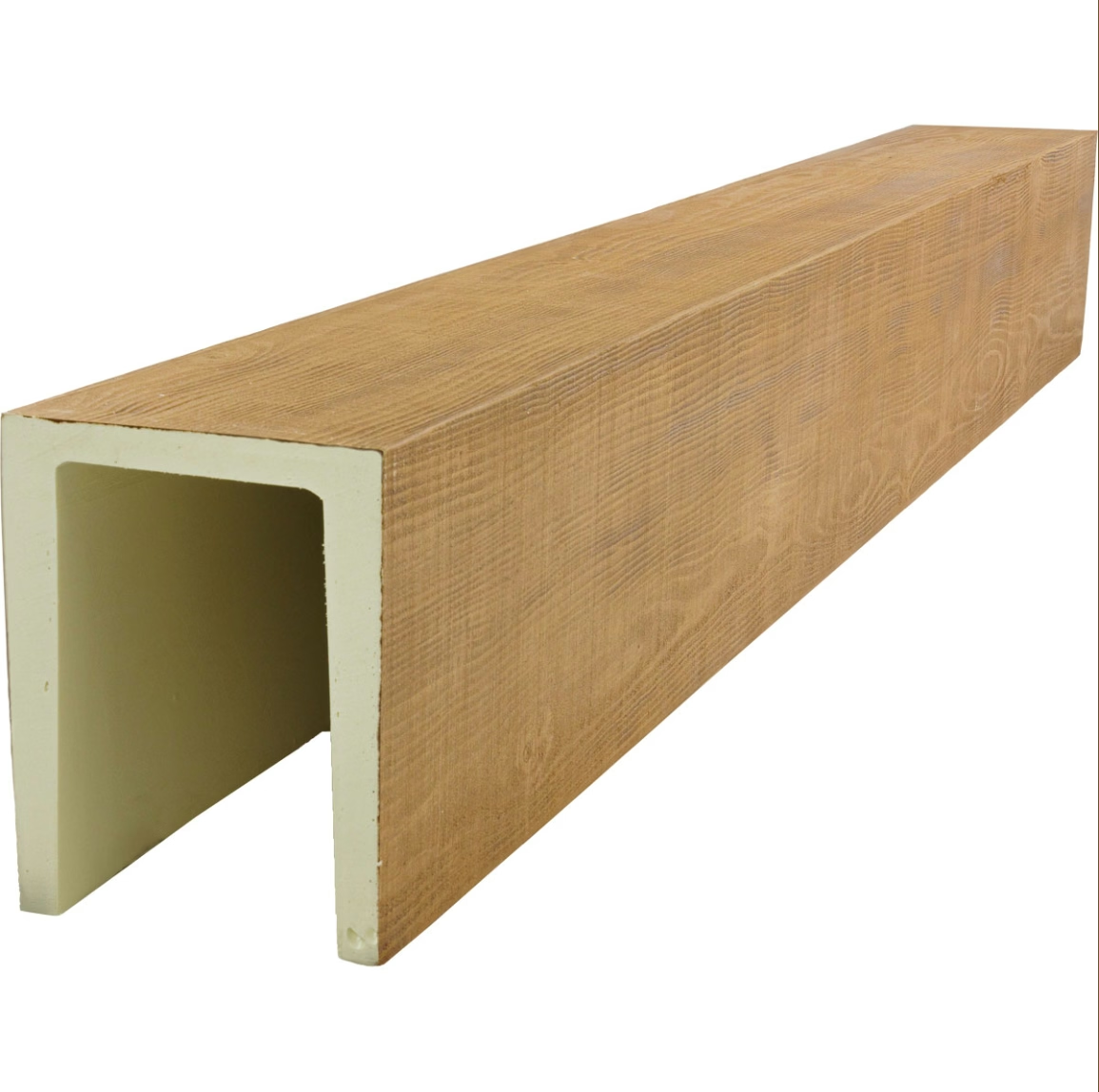
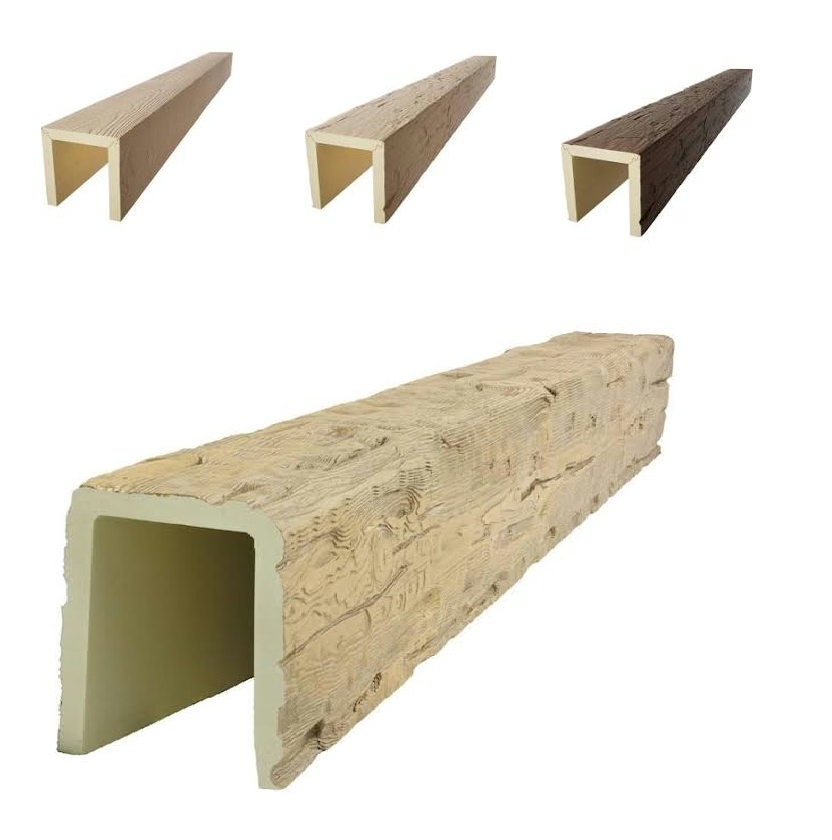
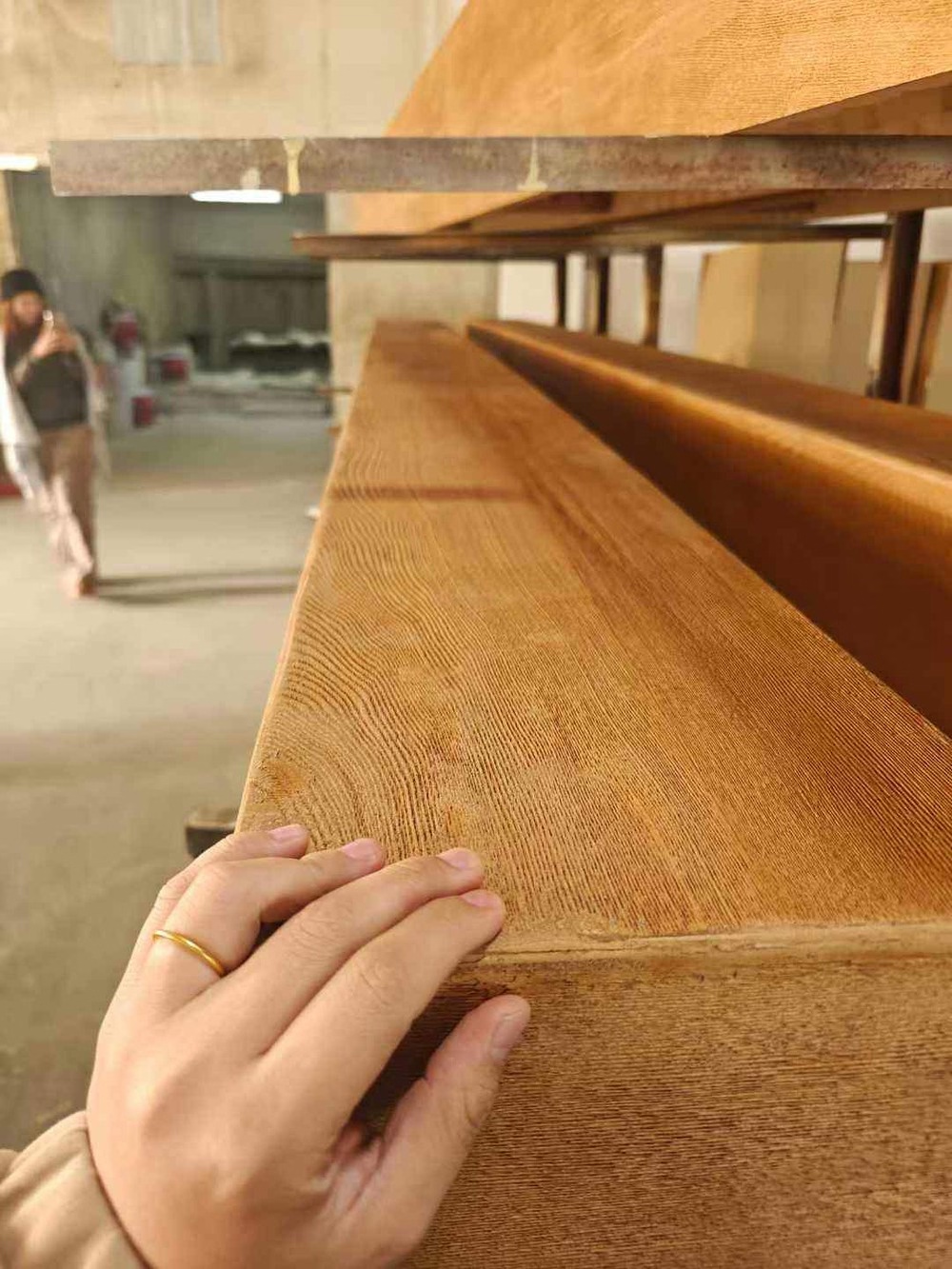
When clients ask about the long-term performance of decorative ceiling beams, contractors and designers need reliable answers. Natural timber, despite its traditional appeal, carries inherent vulnerabilities that can compromise installations within just a few years of placement. Polyurethane faux beams represent a fundamentally different approach to achieving the warmth and character of wood without accepting the structural uncertainties that come with organic materials.
Understanding Why Natural Timber Fails
Wood fibers respond dynamically to environmental changes throughout their service life. As humidity levels fluctuate seasonally, individual fibers expand and contract at different rates depending on their orientation within the growth ring structure. This differential movement creates internal stresses that eventually manifest as visible cracks, commonly called "checks" or "splits," running along the grain.
The problem becomes particularly acute in regions with extreme temperature swings or inconsistent climate control. A solid oak beam installed in a northern climate might survive admirably through decades of use, but the same profile placed in a poorly ventilated bathroom or above a frequently-used fireplace can develop significant checking within a single year. Once cracks form, they tend to propagate progressively, accelerating moisture intrusion and biological degradation.
Traditional woodworkers have developed various techniques to minimize checking—drilling weep holes, applying end seals during storage, and selecting quartersawn stock with more uniform grain orientation. These measures add cost and complexity without providing guaranteed protection against splitting. For commercial projects where appearance maintenance is critical and access for repairs is limited, the unpredictability of natural timber creates ongoing liability concerns.
Engineering Crack Resistance into Polyurethane
The polyurethane casting process enables precise control over material properties at the molecular level. Unlike wood, which grows according to biological imperatives beyond human direction, PU formulations can be tuned specifically to resist crack initiation and propagation. The material achieves this through several complementary mechanisms.
First, polyurethane exhibits excellent flexibility across a broad temperature range. Where wood becomes rigid and brittle when cold, quality PU formulations retain enough resilience to accommodate minor substrate movements without fracturing. This flexibility is not weakness—properly formulated beams maintain their shape and dimensional stability under normal loading conditions while simply being more tolerant of environmental stress.
Second, the cellular structure of molded polyurethane distributes stress concentrations more evenly than the anisotropic grain structure of natural wood. When a point load or environmental stress acts on a PU beam, internal forces dissipate through the material rather than channeling along planes of weakness. This stress distribution dramatically raises the threshold load required to initiate visible cracking.
Third, modern PU formulations incorporate impact modifiers and UV stabilizers that protect the surface from degradation that could eventually lead to crack formation. Sunlight exposure, for example, breaks down lignin in natural wood, causing surface erosion that accelerates checking. UV-inhibited PU maintains its surface integrity indefinitely under normal interior lighting conditions.
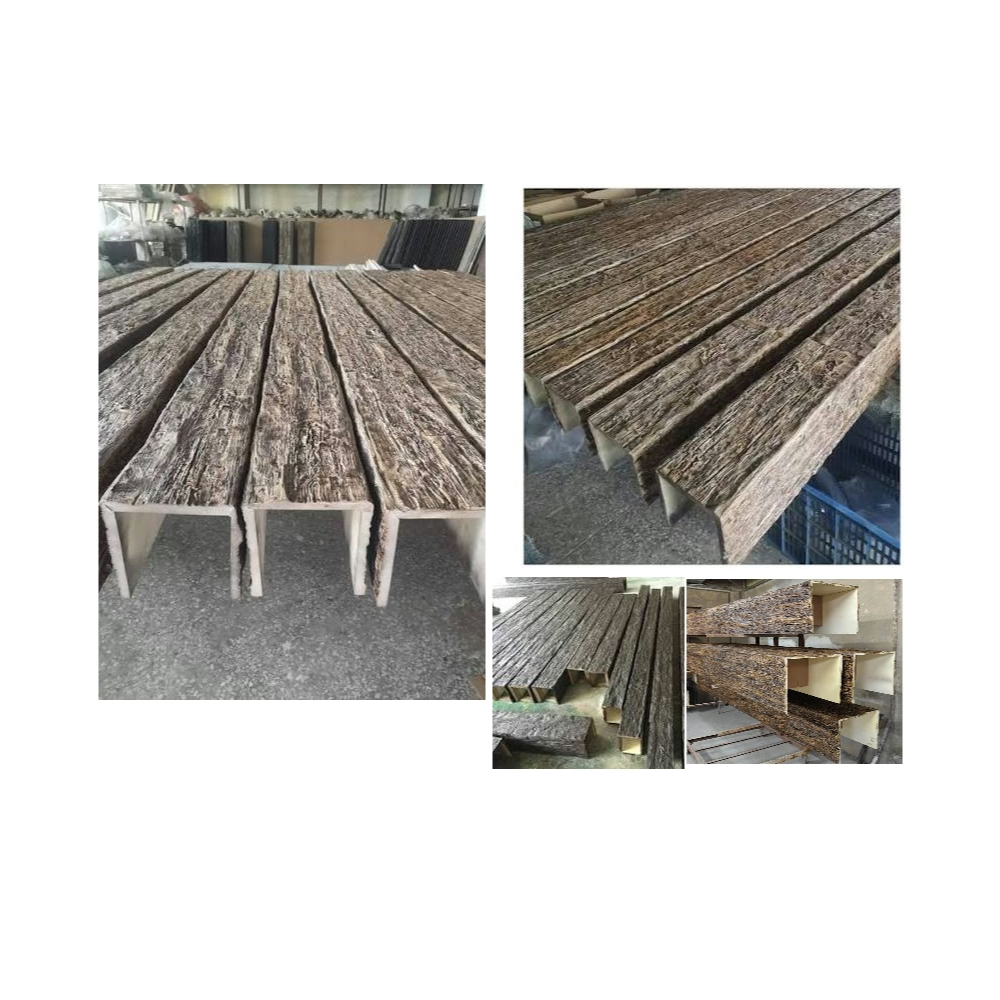
Performance Under Real-World Conditions
Field performance data from installations spanning more than a decade demonstrates the practical advantages of crack-resistant PU faux beams. In residential applications, beams installed in kitchens, living rooms, and covered outdoor spaces show no measurable deterioration despite exposure to cooking humidity, heating system cycling, and seasonal temperature variations.
Commercial environments present more demanding conditions. Restaurant installations with commercial kitchen heat and humidity, hotel lobbies with heavy foot traffic and luggage impacts, and retail spaces with concentrated ceiling loads all challenge decorative beam performance. In these settings, PU beams consistently outperform natural timber alternatives that frequently require replacement or refinishing after five to seven years of service.
The maintenance implications are significant for property managers and owners. Natural wood beams in high-humidity environments may require annual inspection, periodic refinishing, and eventual replacement. PU faux beams of comparable appearance require only routine dusting and occasional cleaning with mild detergents. There are no cracks to fill, no finish to renew, and no structural concerns requiring professional assessment.

Installation Practices That Support Long-Term Performance
Even the most crack-resistant beam material can underperform if installation practices introduce unnecessary stress concentrations. Professional installers follow established protocols that protect the investment represented by quality decorative beams.
Proper handling during transport and storage prevents pre-installation damage that could compromise performance. Beams should remain in their protective packaging until immediately before installation, stored flat on padded supports in a climate-controlled environment. Allowing beams to equilibrate to local conditions for at least 48 hours before installation reduces thermal shock during the fastening process.
Attachment methods significantly influence long-term stability. Mechanical fasteners should be sized and spaced to distribute loads appropriately, with clearance holes allowing for minor thermal expansion without inducing bending stresses. Adhesive bonding to structural substrates works particularly well with PU beams, as the lightweight material creates less pull-out force on fasteners than natural timber of equivalent appearance.
Substrate preparation deserves careful attention. Structural surfaces receiving beam attachments must be sound, level, and free from moisture intrusion that could affect adhesion. In renovation projects where existing ceiling conditions are variable, installers often add blocking or backing to create reliable attachment points that will maintain their integrity for decades.
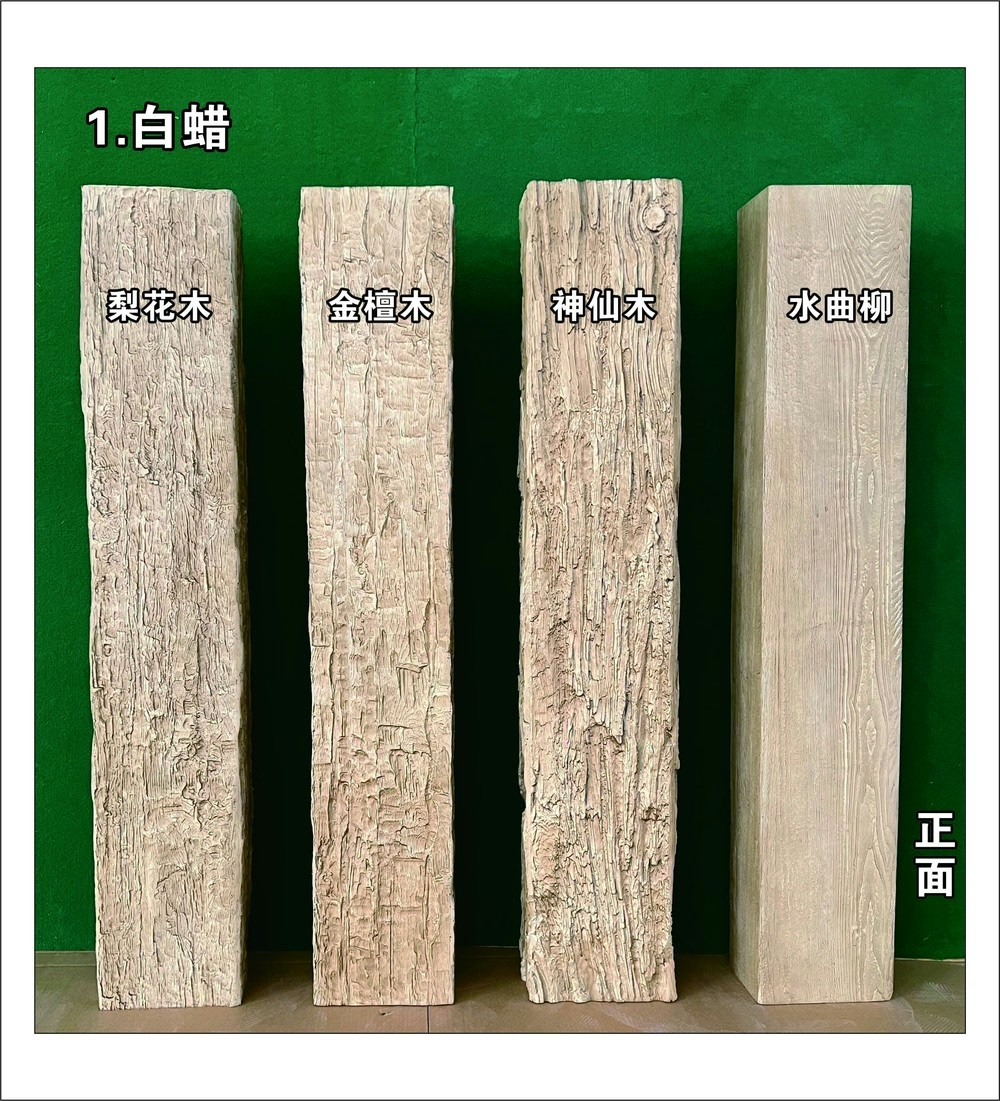
Selecting Quality Crack-Resistant Beams
Not all polyurethane faux beams offer equivalent crack resistance, and buyers should verify performance characteristics before specifying products for demanding applications. Reputable manufacturers provide test data documenting impact resistance, flexural strength, and thermal cycling performance.
Material density correlates with durability in most formulations. Beams with densities below approximately 25 kilograms per cubic meter may lack sufficient mass to feel authentic, while densities above 50 kilograms per cubic meter add unnecessary weight without proportional performance improvements. The optimal range for most decorative applications falls between 30 and 40 kilograms per cubic meter.
Surface finish quality provides indirect evidence of manufacturing precision. Beams with uniform, void-free surfaces and crisp details indicate controlled production conditions and consistent material properties. Visible bubbles, fiber protrusion, or surface irregularities suggest formulation or processing issues that may compromise long-term crack resistance.
Cost Comparison Over Project Lifespan
Initial material costs for quality PU faux beams typically exceed natural wood alternatives by 30 to 50 percent, depending on profile complexity and finish level. When lifecycle costs enter the analysis, however, the economic advantage shifts decisively toward polyurethane.
Natural timber beams in commercial applications often require replacement every 8 to 12 years, with each replacement involving not only material and labor costs but also business disruption during installation. Over a 30-year period, a single set of natural wood beams might require three complete replacement cycles, while properly installed PU beams continue performing from initial installation.
Maintenance expenses further favor polyurethane. The cost of annual inspections, periodic refinishing, and crack repair on natural timber beams accumulates substantially over time. For properties managed by professional property management companies, these recurring costs are often significant budget items. PU beams eliminate these line items entirely, freeing resources for other property improvements.

Applications Where Crack Resistance Matters Most
Certain environments create conditions that accelerate timber degradation and make crack-resistant alternatives particularly valuable. Spaces with variable humidity, including laundry rooms, bathrooms, and pool house ceilings, expose organic materials to constant moisture cycling that promotes splitting and checking.
High-ceiling applications present accessibility challenges that favor long-term material stability. Scaffolding rental and installation labor represent substantial costs for any ceiling work, making beam replacement an expensive proposition. Specifying crack-resistant materials from the start eliminates the likelihood of these costs materializing.
Fireplaces and kitchen ranges introduce localized heat that stresses natural wood asymmetrically. The face of a beam nearest a heat source expands and dries more rapidly than the protected back face, creating differential movement that inevitably produces cracking. PU beams tolerate these temperature gradients without distress, maintaining their appearance indefinitely even when positioned above active cooking or heating appliances.
Industry Standards and Quality Verification
The polyurethane foam industry has developed standardized test methods that allow meaningful comparison of material performance across manufacturers. ASTM D790 measures flexural properties, while ASTM D256 assesses impact resistance. Manufacturers who publish results from these recognized tests enable informed specification by architects and designers.
Third-party certification programs provide additional confidence in long-term performance claims. Products certified by independent testing laboratories have demonstrated their performance characteristics under controlled conditions, not merely as theoretical formulations. This verification protects both the specifying professional and the end client from underperforming materials.
Warranty coverage also provides insight into manufacturer confidence. Products backed by 10-year or longer warranties demonstrate manufacturer commitment to crack-free performance over extended periods. Short warranty periods or limited coverage terms may indicate less confidence in long-term stability.
For contractors and designers seeking reliable decorative beam solutions, crack-resistant PU faux beams represent a mature technology with proven field performance. The investment in quality materials pays dividends through decades of maintenance-free service and satisfied clients who never need to address splitting or checking concerns.
Technical References
ASTM standards cited in every specification
Test Data
Lab results from internal testing program
Updated 2026
Reviewed against current product specs