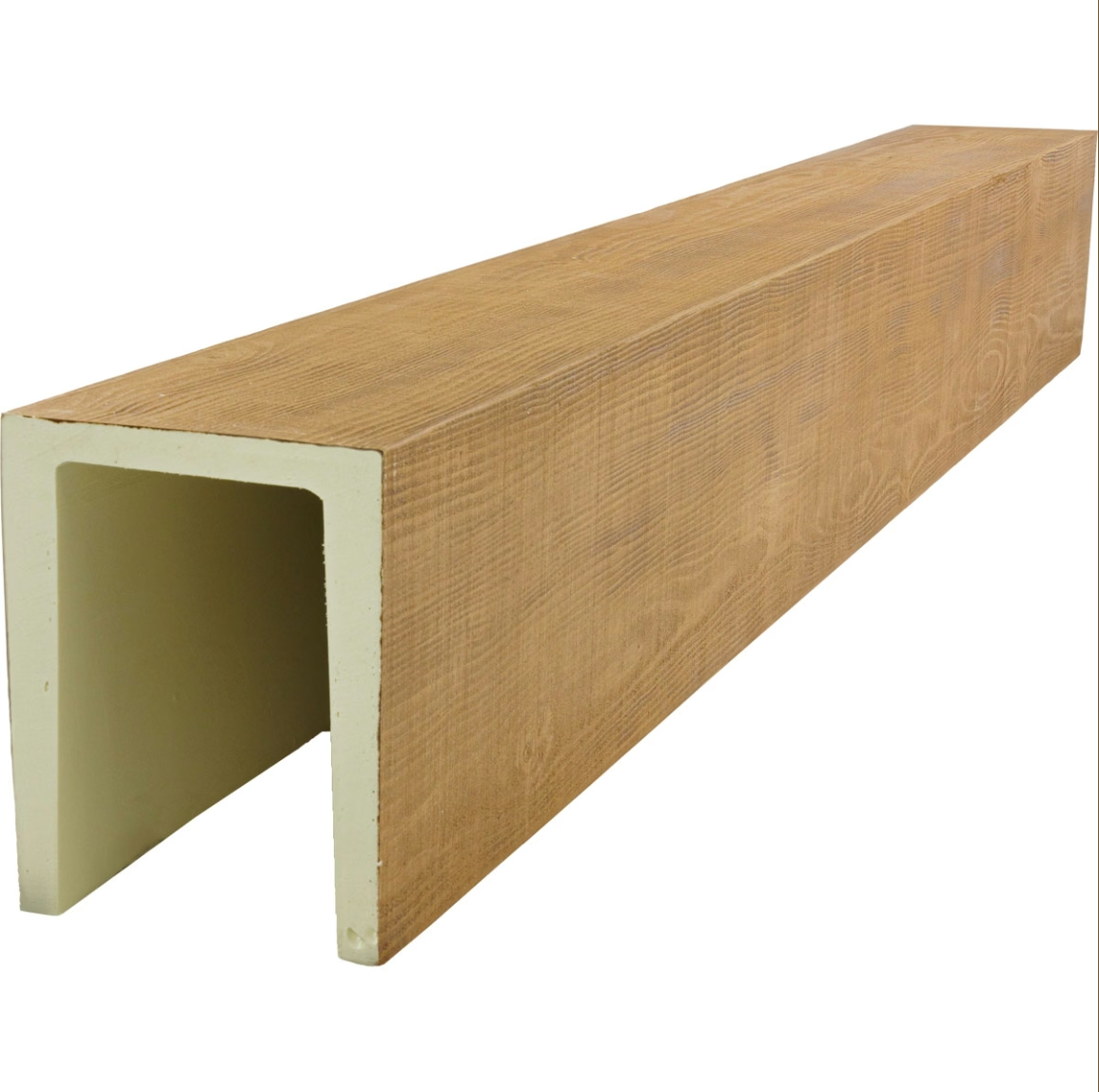
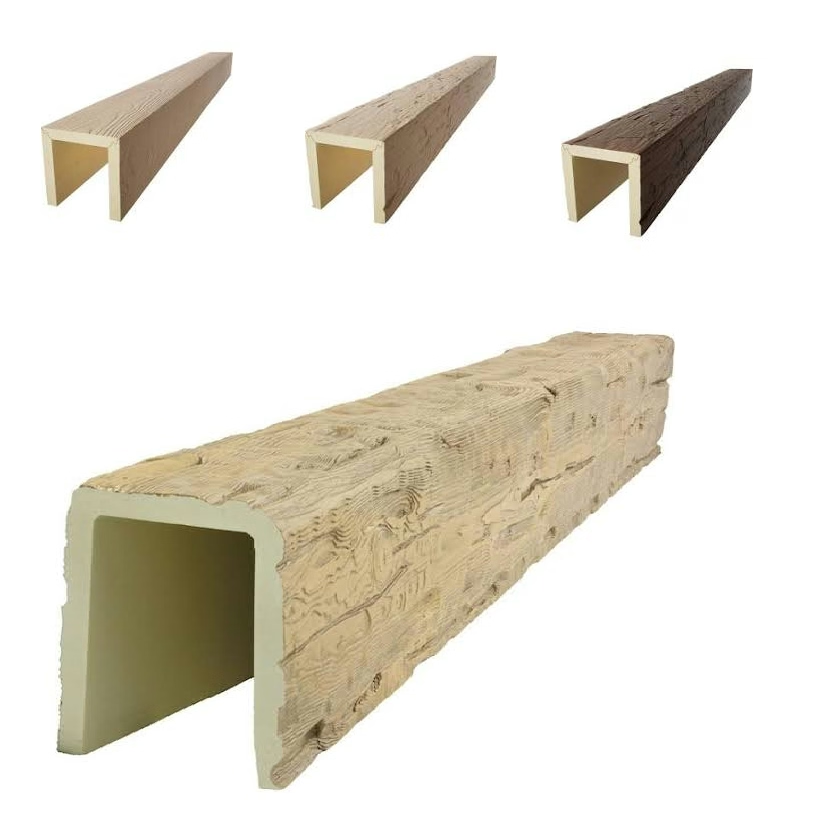
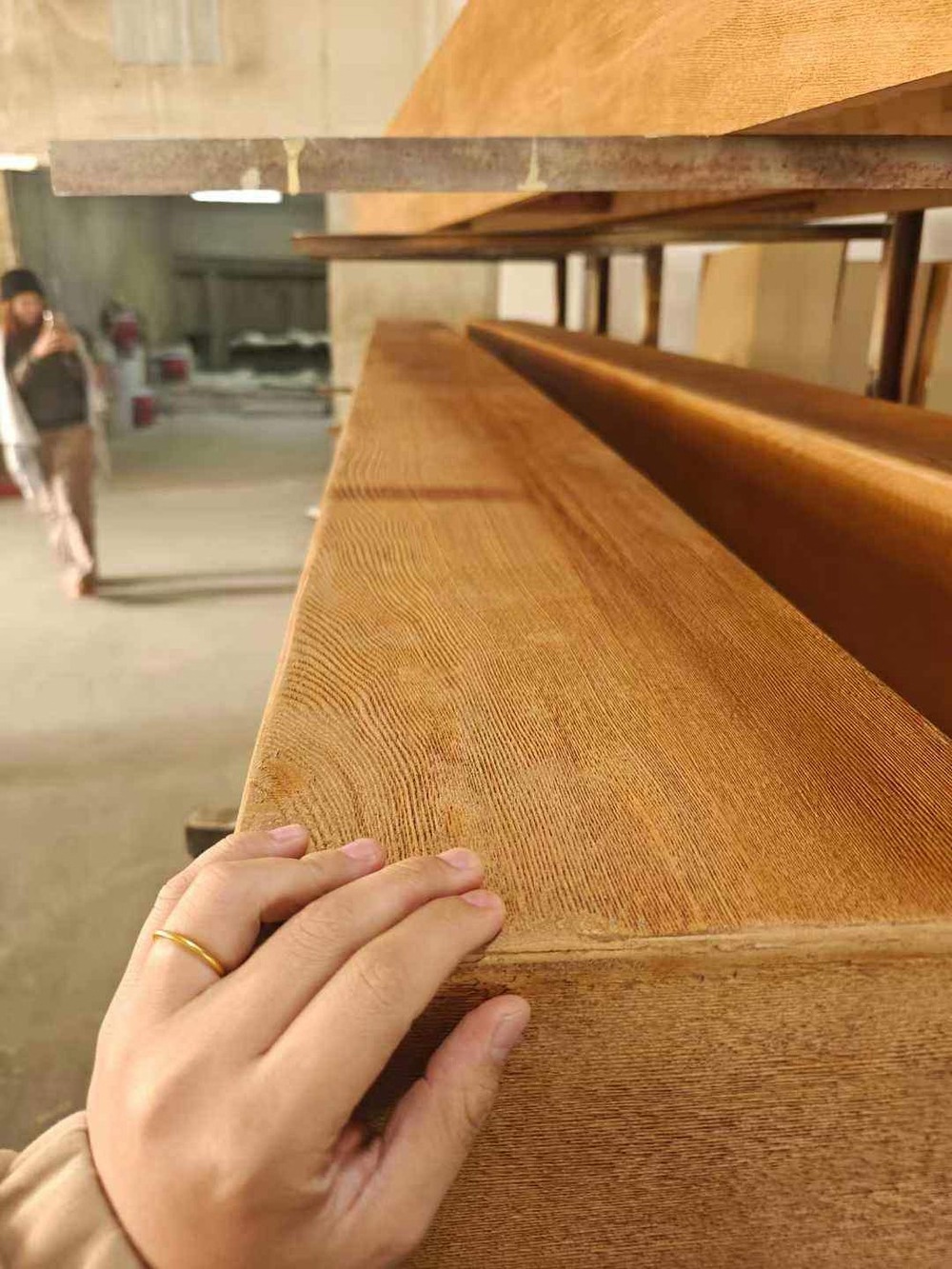
Most buyers of faux wood beams think of the product as a single thing — a polyurethane beam with a wood-grain finish. In practice, the surface hardness of a PU beam is one of its most variable properties, and tuning it correctly to the installation environment makes a meaningful difference in how the beam performs over its lifetime.
A beam in a formal dining room and a beam in a children's play area face very different demands. The standard off-the-shelf formulation is a compromise that serves neither environment perfectly. Custom adjustable surface hardness formulations solve this.
What surface hardness means in polyurethane
Surface hardness in polyurethane is measured on the Shore D scale. Typical values for PU faux beams:
- Soft formulation — Shore D 55 to 65
- Standard formulation — Shore D 70 to 80
- Hard formulation — Shore D 82 to 90
Lower numbers mean a softer, more flexible surface that feels slightly "warm" to the touch and is easier to cut or shape on site. Higher numbers mean a harder, more rigid surface that resists impact and abrasion but is more brittle under sharp impact.
For reference, oak wood itself measures around Shore D 70 to 75, so a standard PU beam formulation is already close to the feel of real wood.
Why hardness matters in different installation environments
The "right" hardness depends entirely on where the beam will live:
| Environment | Recommended hardness | Reason |
|---|---|---|
| Formal living or dining | Standard (70-80) | Aesthetic priority, minimal contact |
| Children's play areas | Hard (82-90) | Balls, toys, climbing risks |
| Commercial corridor | Hard (82-88) | High foot traffic, equipment contact |
| Outdoor covered space | Hard with UV topcoat | Weather exposure, debris |
| Low ceiling residential | Standard (70-80) | Visual realism prioritized |
| Restaurant dining | Hard (80-85) | Chairs, ladders, frequent cleaning |
| Hospitality lobby | Hard (82-88) | Luggage carts, maintenance equipment |
The hardness specification is usually made at the time of order, not retrofitted after installation. Choosing the right formulation upfront prevents costly replacements later.
Tradeoffs in the formulation
Every adjustment to surface hardness carries a tradeoff:
Softer formulations:
- Easier to cut and shape on site
- More forgiving during installation (less chipping)
- Better nail and screw retention
- Lower brittleness in cold weather
- More susceptible to denting and surface marking
Harder formulations:
- Better impact resistance
- More durable topcoat adhesion
- Easier to clean and maintain
- Better long-term appearance retention
- More prone to chipping if struck sharply
The "best" formulation isn't the hardest or softest — it's the one tuned to the specific conditions the beam will face.
How custom hardness is achieved
Polyurethane manufacturers adjust hardness through the resin formulation. The two main levers are:
- Polyol selection — Different polyols produce different base hardness and flexibility
- Crosslink density — The ratio of isocyanate to polyol affects how rigid the cured polymer becomes
For adjustable hardness products, the manufacturer typically maintains three to five base formulations. A custom order selects the base formulation closest to the target hardness and may make small adjustments through additives.
There's usually a setup cost for non-standard formulations, since the production line needs to be cleaned and recalibrated. For projects ordering a full container or large commercial order, the setup cost is amortized over enough units to be negligible.
The role of topcoats
Surface hardness doesn't tell the whole story. The topcoat applied over the PU beam affects surface performance significantly:
- Matte polyurethane topcoat — Adds a thin layer of hardness, slightly obscures grain detail
- Satin polyurethane topcoat — Standard balance of protection and appearance
- High-gloss polyurethane topcoat — Maximum surface hardness, easier to clean, but shows every fingerprint
- Wax-modified topcoat — Soft, natural feel, lower hardness, requires periodic reapplication
- UV-resistant topcoat — Harder and more durable, essential for outdoor or skylight-adjacent beams
For most installations, a satin polyurethane topcoat over the base beam formulation provides the best balance of appearance and durability.
Where harder formulations really earn their premium
A few installation scenarios genuinely benefit from the hardest formulations:
- Mounted low enough to be touched regularly — beams at 7 feet or below in commercial corridors
- Subject to cleaning chemicals — restaurants, healthcare, hospitality back-of-house
- In playgrounds or family entertainment centers — high risk of impact from toys and equipment
- Adjacent to doorways — swinging doors can contact nearby beams
- Below operable windows — window hardware, screens, and cleaning tools can contact beams
In these cases, the harder formulation can extend the beam's service life by 30 to 50 percent compared to a standard formulation.
Where softer formulations make sense
On the other end of the spectrum, softer formulations genuinely shine in:
- Museum-quality installations — visual authenticity prioritized over durability
- Period restoration projects — matching the working properties of historical wood
- Cold-climate outdoor applications — flexibility reduces cracking risk
- Custom carving or shaping — softer material is easier to work with hand tools
For most residential applications, the standard formulation is fine. The soft and hard variants are most useful in commercial and specialty installations.
Testing and quality control
A serious PU beam manufacturer will provide hardness data for each production batch, typically measured with a durometer. For projects with strict performance requirements, specifiers can request:
- Sample coupons from the actual production batch for independent testing
- Hardness readings at multiple points on the sample
- Documentation of the formulation used (proprietary, but the general chemistry family is usually disclosed)
This kind of documentation is essential for commercial projects with performance specifications and for any installation that will be subject to warranty claims.
Communicating the requirement to the manufacturer
When ordering custom hardness PU faux beams, the specifier should describe:
- The installation environment in plain language
- Expected contact frequency (low, moderate, high)
- Cleaning regime and chemicals used
- Temperature range (especially if outdoor or unconditioned space)
- Any specific performance requirements from the building owner
A good manufacturer's technical team will translate that description into a recommended hardness range and formulation.
Cost implications
The premium for non-standard hardness formulations depends on the order quantity:
- Small custom orders (under 100 linear feet) — 15 to 30 percent premium
- Medium orders (100 to 500 linear feet) — 5 to 15 percent premium
- Large orders (over 500 linear feet) — often no premium if the run fits standard production
For most projects, ordering the closest standard formulation and accepting minor compromises is more economical than commissioning a fully custom hardness.
The takeaway for design professionals
Surface hardness is one of the most overlooked variables in faux beam specification. Most specifiers default to "standard" without thinking about whether the installation environment calls for something different.
Taking the time to evaluate the actual conditions — traffic, contact risk, cleaning regime, climate — and selecting a hardness that matches pays off in longer service life and better appearance retention. It's the kind of detail that separates a thoughtful specification from a generic one.
For manufacturers, offering adjustable surface hardness as a standard product option — not just a special-order item — opens up commercial projects and demonstrates technical depth that competitors without formulation expertise cannot match.
Technical References
ASTM standards cited in every specification
Test Data
Lab results from internal testing program
Updated 2026
Reviewed against current product specs