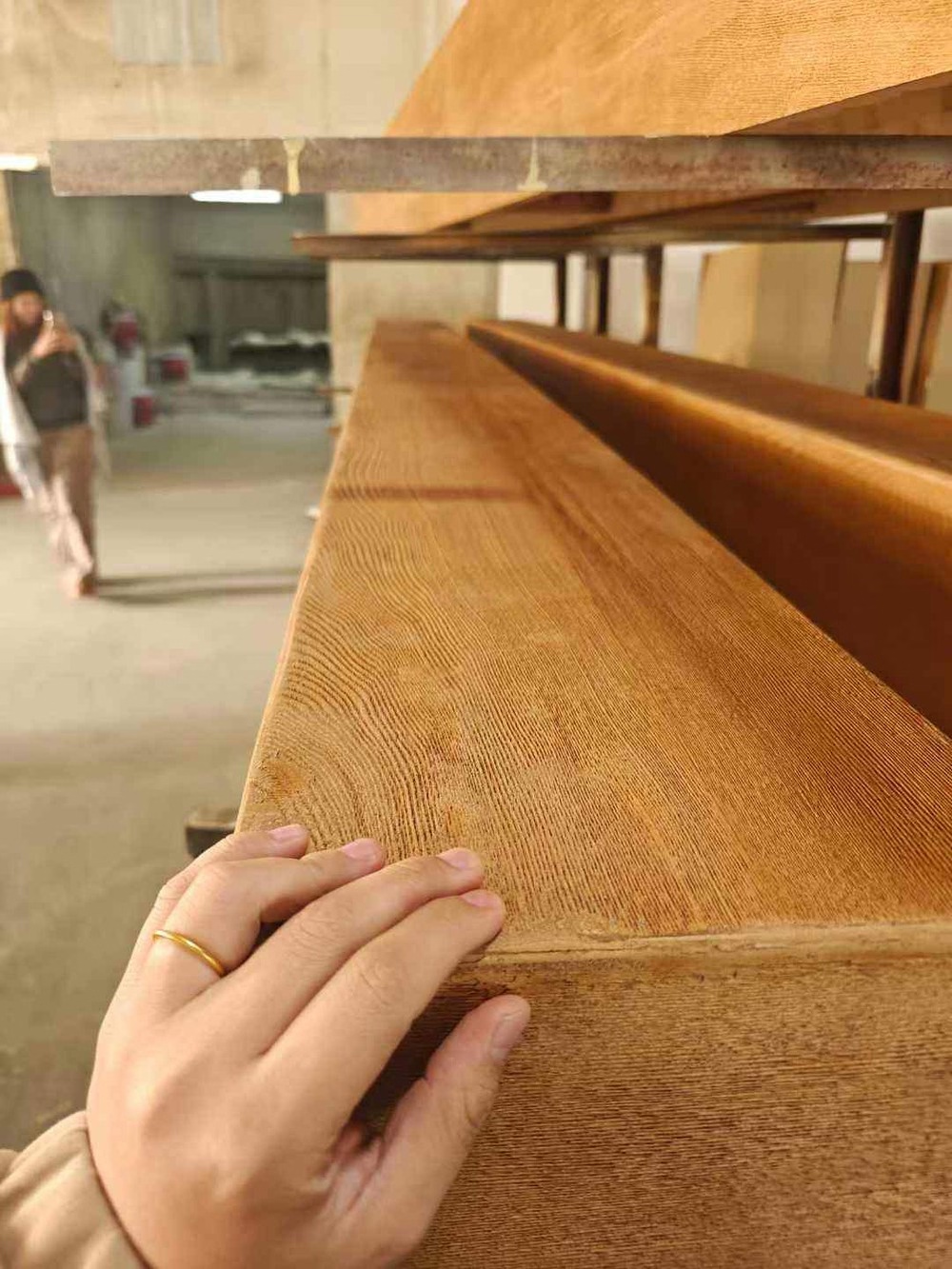
A beam ceiling isn't really finished until the color is right. Designers spend hours dialing in the perfect warm oak tone, the right driftwood grey, or the deep walnut that anchors a room's palette. Field-finishing a beam after installation is slow, messy, and almost always inconsistent across long runs — especially when the work spans multiple days and the stain batches vary from day to day. Factory finishing solves all of that and gives the project a predictable, professional result from the first piece to the last.
For trade buyers, project managers, and interior designers specifying beams for residential and commercial interiors, custom color finishes are the difference between buying a commodity and buying a service. We don't just ship a generic beam and hope the client is satisfied. We ship the exact tone the designer specified, sealed and ready to install, with a formula that's documented and repeatable for future orders.
This article explains how factory finishing works on polyurethane, how we match colors to design references, what sheen levels are available, and how to order custom finishes for a project.
How factory finishing works on polyurethane
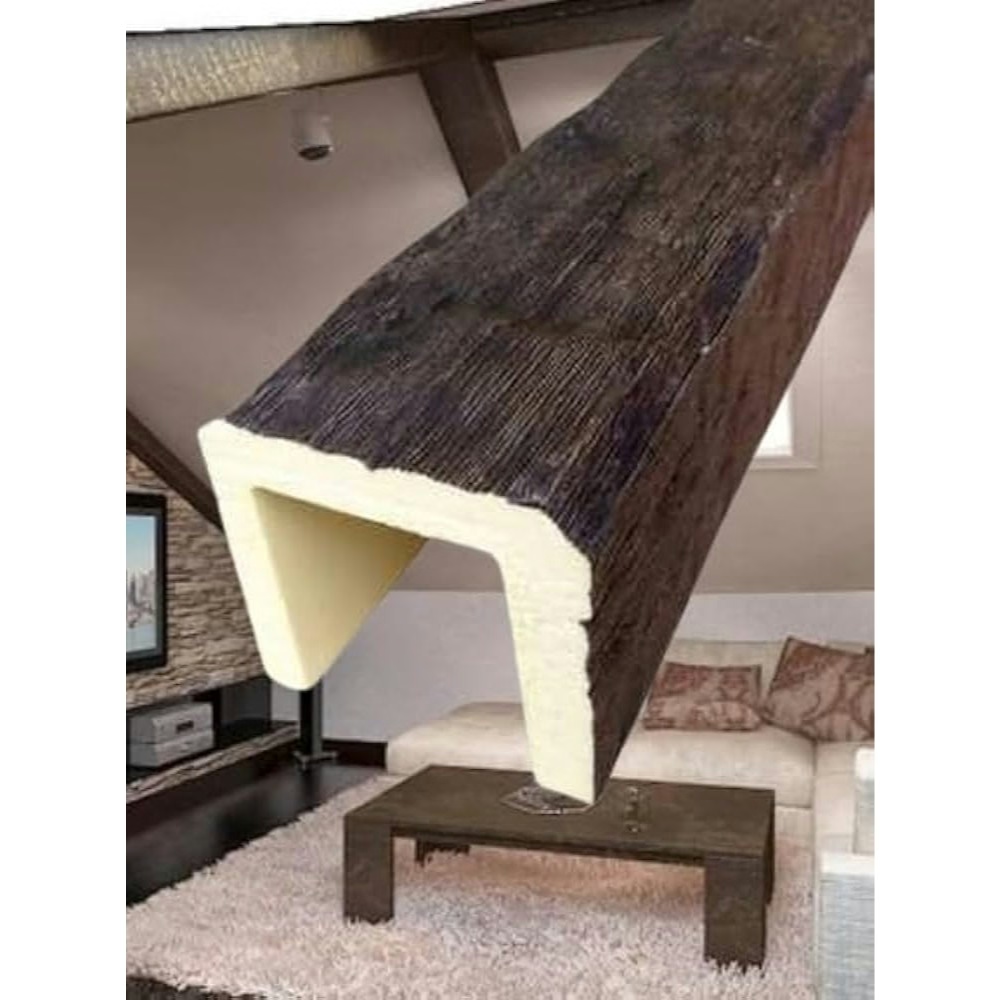
Polyurethane beams are cast in molds that already carry the wood-grain texture — a three-dimensional embossing that replicates the look of real timber. The casting process leaves the surface slightly porous, which is actually an advantage for finishing because stain and paint bond more effectively to the micro-textured surface than to a perfectly smooth plastic face.
After demolding, each beam passes through a multi-stage finishing line. The sequence is: sand the surface with 220-grit abrasive, apply a sealer coat to close the pores, sand again with 320-grit, apply the color coats (stain or paint), apply a glaze coat if a multi-tone finish is specified, sand lightly between coats, and finally apply the topcoat. Every stage is performed under controlled temperature and humidity conditions to ensure consistent absorption and cure rates.
Our standard finishing line supports five base processes: solid stain (single color, grain texture visible through the color), multi-tone stain (base color plus grain wash plus low-light glaze), painted opaque (solid color, minimal grain visibility), cerused white wash (white paint in the grain pores with transparent finish over it), and weathered driftwood (deliberately aged appearance with grey and brown tones in layers). Custom requests — metallic washes, two-tone distressing, limewash effects, color blocking — go through a separate specialty finishing line and add 10 to 14 days to lead time.
Stain versus paint: when to use each
The choice between stain and paint is a design decision, not just a cost consideration. Each produces a fundamentally different visual effect.
Stain finishes preserve the wood-grain texture and let the embossing read clearly through the color. The grain peaks catch the light differently from the grain valleys, which gives stained faux beams their characteristic visual depth. Solid stains cover the natural cast tone but don't fill the embossed grain pattern. Even a dark walnut stain on a PU beam still shows the grain texture — that's the defining characteristic of a stained beam versus a painted one.
Paint finishes fill the grain slightly with each coat and create a more uniform surface. Paint is the right choice for modern farmhouses, coastal interiors, Scandinavian-inspired spaces, and any application where the beam is meant to read as a painted architectural element rather than as timber. Painted beams also photograph more consistently across different lighting conditions, which is worth considering for projects that will be heavily photographed or featured in design publications.
The color matching process
Most trade clients come to us with a color reference: a Pantone number, a RAL code, a Benjamin Moore or Farrow & Ball color name, or a physical sample. We work from all four reference types and can usually return a first-pass match within three to five business days.
The process begins with our color lab mixing the target formula and applying it to a 200 x 200 mm sample chip of the actual beam substrate — not a printed approximation, not a flat piece of MDF, but the real high-density polyurethane that the beams are made from. The chip is photographed under three standardized lighting conditions: D65 daylight (6500K, simulating north-facing natural light), 2700K warm white (standard residential LED), and 3000K halogen (warmer incandescent). The photos are emailed to the designer for initial review.
Most projects approve the first-pass chip. The few that don't usually require an adjustment in undertone — making it cooler (more blue/grey), warmer (more yellow/orange), or shifting the chroma (more or less saturated) — to read correctly in the room's specific lighting environment. We make the adjustment, apply a new chip, and repeat until approved.
For physical samples, we send two 150 x 300 mm chips by international courier. Clients place the chips against the wall color and the flooring in the actual room and either approve, request a specific adjustment, or hold one chip as a reference for the on-site mockup.
Sheen levels and their practical implications
The same color reads very differently at different sheen levels, and the sheen interacts with the embossed grain in ways that flat paint swatches can't convey. Matte finishes absorb light and feel grounded and rustic; satin finishes reflect a small amount of light and feel clean and contemporary; semi-gloss finishes highlight the texture and feel more formal and polished; high gloss finishes create a dramatic effect that works best on feature beams in gallery or hospitality settings.
| Finish | Gloss units | Typical use | Cleanability |
|---|---|---|---|
| Matte | 5–10 GU | Rustic, farmhouse, Tuscan, craftsman | Dust only |
| Satin | 25–35 GU | Transitional, modern farmhouse, most residential | Damp cloth |
| Semi-gloss | 55–65 GU | Coastal, Scandinavian, contemporary | Mild soap |
| High gloss | 85+ GU | Feature beams, accent walls, gallery settings | Mild soap |
For most residential projects, satin is the default choice. It hides minor surface irregularities, reads well in both natural and artificial light, and cleans easily. For beams in kitchens, dining rooms near cooking areas, or commercial spaces, semi-gloss gives better resistance to grease and moisture. High gloss is reserved for projects where the beam is a deliberate design statement — a single dramatic beam above a reception desk, for example.
Multi-tone and weathered finishes
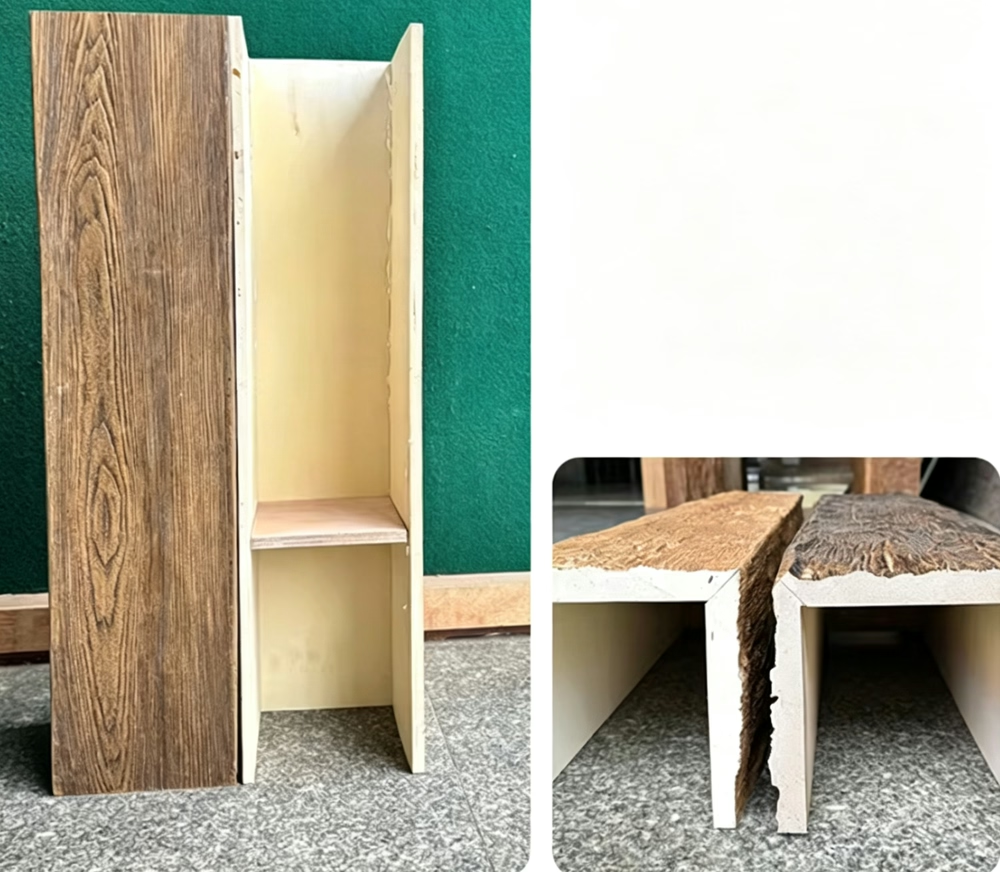
Single-tone finishes are straightforward and consistent, but the most visually rich and photogenic faux beams are multi-tone. The process involves a base stain, a highlight wash that catches the high points of the grain, and a low-light glaze that settles into the embossed grain pores. The result is a beam that looks like real aged timber rather than a uniform colored surface.
We maintain a library of around 80 multi-tone recipes, each named and documented so repeat orders arrive identical years later. Custom recipes can be developed for projects with a unique design vision. The development process involves the color lab creating three candidate recipes, applying them to 200 x 200 mm chips, and sending them for approval.
Weathered finishes simulate years of sun, rain, and oxidation. They pair naturally with coastal, mountain, and farmhouse aesthetics. Because the finish is applied in multiple thin layers with deliberate color variation, weathered finishes add approximately 8 days to production lead time but produce a result that photographs beautifully and reads convincingly in person.
Lead times and minimum order quantities
Standard colors from our library — 35 stain tones and 20 paint colors — ship in 18 to 22 days from order confirmation. Custom color matching adds 5 to 8 business days for the lab work and sample approval before production begins.
Minimum order quantities depend on the beam profile and finish complexity. For standard 8x8 and 6x8 beams in stock colors, we accept orders as small as 30 linear meters. For custom colors or multi-tone finishes, the minimum is 80 linear meters to justify the lab time. Below that threshold, we offer a custom-color surcharge that covers the laboratory work.
How to specify a custom color
The cleanest way to specify a custom color is to send three things: the color reference (Pantone, RAL, or a manufacturer color code), a photograph of the desired look, and a note on the lighting environment. The lighting note matters because a beam under north-facing skylights reads cooler than the same beam under warm 2700K recessed lighting. We adjust the undertone accordingly during matching.
For project managers running multiple units with the same finish across a development or a hotel chain, we strongly recommend ordering a 10% material overage on the first production run. This covers installation cuts, breakage, and any future repair needs, and it gives the property manager a reserve of matching material for any future replacement. We hold the formula on file for five years, so reordering the same color in the same finish is a straightforward, quick-turnaround process.
Send your color reference and we'll return a sample chip, a complete finish specification sheet, and a project quotation within five business days.

Technical References
ASTM standards cited in every specification
Test Data
Lab results from internal testing program
Updated 2026
Reviewed against current product specs