
An exterior beam faces a fundamentally different set of challenges than an interior one. The UV radiation is harsher and more direct, the temperature swings are wider and faster, and the moisture exposure is constant and often driven by wind. A finish that looks beautiful on day one but fades, chalks, or peels within 18 months is more expensive in the long run than buying the right system from the beginning.
We've spent years developing and refining an exterior finish system for PU beams that holds up across climates ranging from the Mediterranean to the Gulf Coast, from mountain resorts to coastal resorts. The system isn't just a thicker version of an interior finish — it's a different chemistry, a different application process, and a different maintenance schedule.
For designers specifying outdoor beams and contractors installing them, understanding the finish system is essential to setting accurate client expectations and planning the right maintenance schedule.
What makes a finish "exterior grade"
An exterior finish isn't simply an interior paint with a UV additive thrown in. It has to be formulated as a coordinated system where each layer addresses a specific failure mode. We break it down into four components: primer, color coats, glaze (for multi-tone finishes), and topcoat.
The primer bonds to the cast polyurethane surface and seals the micro-porous texture. It's formulated to resist hydrolysis — the chemical breakdown of the bond between coating layers that occurs under prolonged moisture exposure. Without a hydrolysis-resistant primer, the topcoat can delaminate from the substrate even if the topcoat itself is undamaged.
The color coats carry the pigment and build the visual character of the beam. Exterior-grade pigments are light-stable and resist photodegradation, but they still break down over time. The rate depends on the color — dark pigments absorb more UV energy and degrade faster than light ones.
The topcoat is the workhorse. It takes the direct UV, sheds the water, resists biological growth, and handles abrasion from wind-blown dust and debris. The topcoat is where most of the engineering lives in an exterior finish system.
UV stability: how we measure and guarantee it
Standard interior stains on exterior beams typically fade at 5–8% per year of direct sun exposure, measured by colorimetry. After three years of full sun exposure, a warm oak finish can have shifted enough in color to read as a tired grey-beige. After five years, the finish is usually chalked and peeling.
Our exterior formulation uses a marine-grade acrylic urethane as the standard topcoat. It contains a UV absorber (UVA) package that selectively absorbs the most damaging wavelengths and converts them to heat, plus a HALS (hindered amine light stabilizer) that interrupts the free-radical chain reaction that causes polymer degradation. The combination is the most effective available for architectural coatings.
Independent laboratory testing (ASTM G154, QUV accelerated weathering) shows the topcoat maintains over 90% of its gloss and over 95% of its color after 2,000 hours of accelerated UV exposure. In real-world terms, this translates to approximately 7–10 years before any visible change in a temperate climate. In high-UV environments — equatorial regions, high altitude, south-facing in the Northern Hemisphere — the expected life is 5–7 years before a maintenance topcoat is needed.
For darker stains (walnut, ebony, dark mahogany), we add an extra UV inhibitor directly to the color coat. Dark pigments absorb more light energy and run hotter, which accelerates finish breakdown even with the best topcoat. The additional inhibitor in the color layer buys meaningful additional service life.
Moisture, hydrolysis, and biological growth
Polyurethane itself is highly moisture-resistant, but the interface between the topcoat and the substrate is vulnerable to hydrolysis under constant wet conditions. Hydrolysis causes the bond between layers to weaken, eventually leading to delamination — the topcoat peeling away from the color coat, or the color coat peeling from the substrate.
We minimize hydrolysis risk with a high-build topcoat (minimum 60 microns dry film thickness) that creates a continuous, non-porous film over all the color layers. We also use a primer with documented hydrolysis resistance tested to 2,000 hours of humidity exposure without delamination.
In tropical and subtropical climates with high humidity, we recommend an additional anti-fungal additive in the topcoat. The additive is colorless and has no effect on the finish appearance. It prevents the mildew streaks that commonly appear on north-facing exterior surfaces in humid environments — the dark grey-brown lines that run down from the top of the beam and collect at the bottom edge. Without the additive, these streaks require regular cleaning; with it, they don't develop in the first place.
For projects within 1 km of the ocean, we upgrade to a marine-specification topcoat with documented salt-spray resistance tested to 1,000 hours per ASTM B117 without any finish degradation. The salt-spray environment is one of the most aggressive for architectural coatings, and the marine spec is essential for beachfront properties, poolside installations, and yacht club exteriors.
Color options for exterior applications
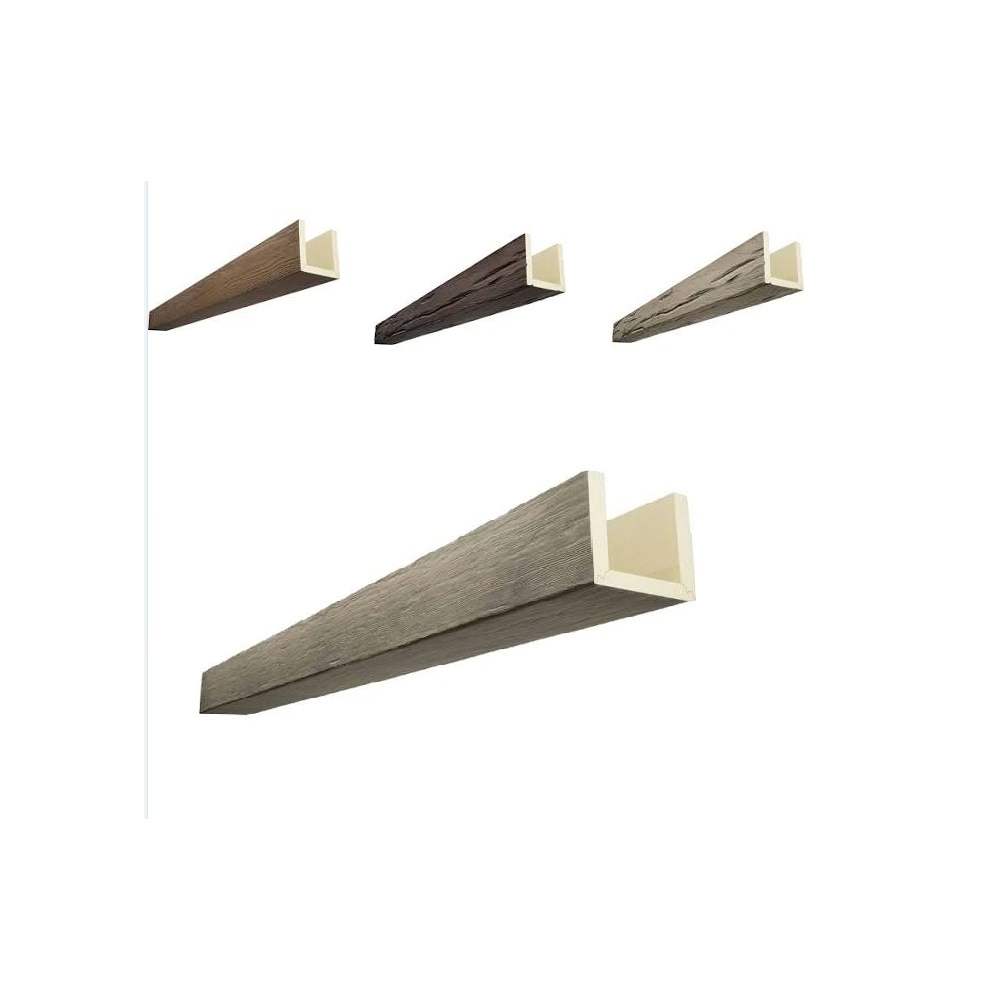
Most exterior projects fall into three color families with distinct performance profiles:
| Color family | Best climates | Typical maintenance | Topcoat recommendation |
|---|---|---|---|
| Warm timber tones (cedar, oak, teak) | Temperate, mountain, coastal | Clean annually, recoat every 6–8 years | Satin marine acrylic urethane |
| Driftwood and grey tones | Coastal, modern farmhouse, Scandinavian | Clean annually, recoat every 5–7 years | Matte marine acrylic urethane |
| White and light paint colors | Mediterranean, contemporary, coastal | Clean every 6 months, recoat every 4–6 years | Semi-gloss marine acrylic urethane |
| Charcoal and dark stains | Modern, industrial | Clean quarterly, recoat every 4–6 years | Satin with extra UV inhibitor |
White and pale finishes show dirt more readily than darker tones and require cleaning every 12–18 months in most climates to maintain their bright appearance. We supply a mild cleaning concentrate formulated for our topcoat chemistry — standard household cleaners can soften the surface over time because they're designed to dissolve kitchen grease, not to be chemically compatible with acrylic urethanes.
Application environment and cure protocol
The finish is applied in a temperature- and humidity-controlled finishing room — never on the construction site. Site-applied exterior finishes suffer from dust contamination, temperature variation, dew point problems during cure, and inconsistent film thickness. By finishing in the factory, we control every variable and produce a consistent result every time.
After application, each beam is force-cured at 35°C for 4 hours, then rack-cured at room temperature for 72 hours before packing. This ensures the finish is fully cross-linked before it ships. A fully cured topcoat can handle the rigors of container transport, on-site handling, and installation without suffering damage. A topcoat that's not fully cured when it ships is vulnerable to marring, chemical attack from cleaning products, and premature UV degradation.
For very large beams that don't fit in our standard finishing room, we apply the exterior finish on a covered outdoor finishing pad with climate control tents. The process takes longer but produces the same result.
Maintenance schedule by climate
Even the best exterior finish needs periodic care. We provide a written maintenance schedule with every exterior beam order, customized to the project location and climate zone.
For temperate continental climates (most of North America, Europe, and inland Asia): rinse the beams with fresh water every 6 months to remove accumulated dust and biological spores. Inspect annually for any damage or finish degradation. Apply a maintenance topcoat every 7–10 years.
For tropical and subtropical climates (Southeast Asia, Caribbean, Central America, southern Florida): rinse monthly during the rainy season and inspect every 6 months. Apply a maintenance topcoat every 5–7 years.
For coastal and salt-spray environments: rinse weekly with fresh water to remove salt deposits, inspect every 3 months for any chips or scratches, and apply a maintenance topcoat every 4–6 years.
For hot desert climates (Gulf states, Arizona, central Australia): rinse quarterly to remove dust accumulation, inspect annually, and apply a maintenance topcoat every 8–12 years.
The recoat process is straightforward: light scuff sand with 400-grit abrasive, clean the surface with our cleaning concentrate, and apply one new topcoat. No need to strip the old finish. We supply the topcoat in matched batches so the new layer blends invisibly with the old.
Send the project location (city is sufficient to determine the climate zone), the color reference, the beam profile and quantity, and the intended installation height, and we'll return a finish specification sheet, a sample chip in the requested color, a maintenance schedule for your climate, and a quotation within five business days.

Technical References
ASTM standards cited in every specification
Test Data
Lab results from internal testing program
Updated 2026
Reviewed against current product specs


