
The phrase "match the existing beam" strikes fear into experienced finishers everywhere. Existing timber varies in color from plank to plank, sometimes from end to end on the same plank. Faux beams from a previous order may have aged slightly — the color hasn't changed dramatically, but the perceived tone has shifted as the topcoat has yellowed or as accumulated dust has altered the surface reflectance. Photography on the original specification sheet doesn't capture the actual room lighting or the way the grain texture interacts with the wall color. By the time the new beam arrives on site and looks slightly off against the old one, the project schedule is already blown.
Custom swatch samples solve the problem by putting the actual proposed finish on the actual substrate and letting the designer evaluate it in the actual room before any production begins. It's a small upfront investment that prevents large downstream costs.
The four matching scenarios we see most often
There are four scenarios that account for the vast majority of beam matching requests. Each has its own complications and its own approach.
The first is adding new beams to a room that already has faux beams from a previous order with us. This is the easiest scenario because we have the original formula on file. The archived formula is mixed in the same finishing room with the same chemistry, so the new beam matches the original within 1–2% on a spectrophotometer. Send us the original order number and we'll pull the file and create a fresh swatch.
The second is adding faux beams to a room with existing solid timber — real oak, real pine, real Douglas fir. This requires physical sample comparison. The best reference is a 100 x 100 mm piece of the existing timber, ideally cut from a concealed location: behind a beam, inside a closet, from an off-cut pile if the original construction is recent. We tint the swatch to match the timber's color and sheen. For highly figured or distressed timber, the swatch captures the color but may not perfectly replicate the grain pattern, which is inherent to the specific piece rather than the species.
The third is replacing a damaged beam with a new one that needs to match the surviving beams. This is complicated by the fact that the surviving beams have aged. New faux timber usually looks "too fresh" — the color is too clean, the contrast is too sharp, and the grain is too pronounced. We solve this by adding a light weathering layer to the new beam's finish so it reads as the same age as the survivors.
The fourth is adding beams to an addition or an adjacent room that needs to match the original construction. The existing finish has usually aged enough to look different from a freshly made beam of the same original specification. We apply the same weathering technique as the replacement scenario, and we sometimes also recommend a slight undertone adjustment toward the current tone of the existing beams rather than trying to recreate the original color exactly.
How the matching swatch approval works
The swatch approval is a two-step process. First, we send a 200 x 200 mm sample on the actual beam substrate. The designer places the swatch against the reference — existing beam, timber piece, or sample board — under the room's actual lighting at the time of day the room is most used. If the swatch reads correctly, we proceed to production.
If the swatch doesn't read correctly, we adjust the formula and send a second swatch. The most common adjustments are to the undertone (cooler, warmer, more red, less yellow) and to the depth of the grain glaze for multi-tone finishes. Each round takes about 5 business days for lab work plus shipping.
Most projects resolve within two or three rounds. Exceptionally difficult matches — highly figured exotic timber, heavy weathering, rooms with unusual mixed lighting — may need four or five rounds. In those cases, we recommend that the designer send us a larger reference sample (150 x 300 mm) and a detailed note about the lighting conditions so we can make more precise adjustments.
For multi-tone matching, the swatch approval rounds take longer than for solid colors because there are more variables to tune. The base stain, the grain wash, and the glaze each need to align with the reference, and the interaction between layers matters as much as the individual layer tones. Plan on three to four weeks for complex multi-tone matches.
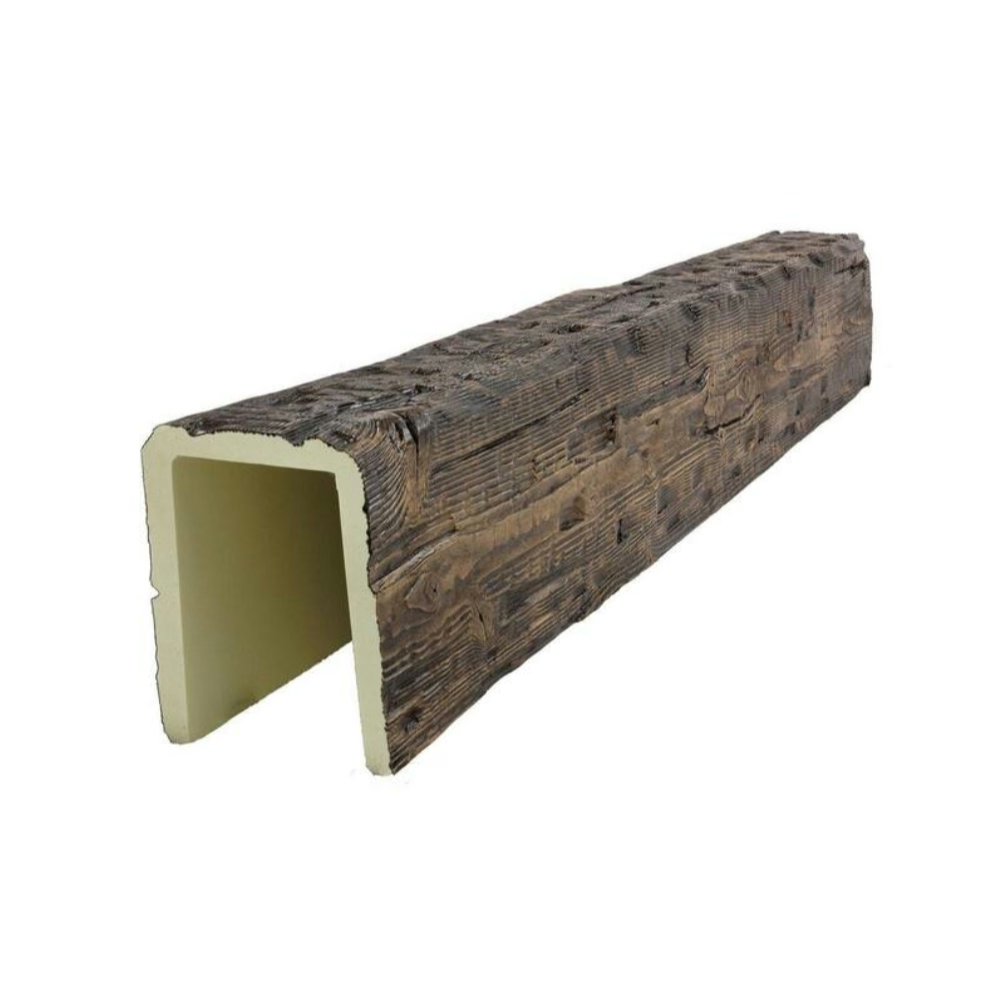
Multi-tone matching: the details matter
Multi-tone finishes are harder to match than solid colors because the visual result depends on the interaction of three separate layers, each of which can be adjusted independently. The base stain sets the overall color temperature and depth. The grain wash lightens the high points of the grain. The glaze darkens the low points and fills the embossed grain pores.
A swatch that has the right base stain but the wrong grain wash depth will look flat or muddy. A swatch with the right grain wash but the wrong glaze will lack the depth and richness of the reference. Getting all three layers correct requires iterative adjustment.
For multi-tone approval, we send 300 x 300 mm samples that show the full pattern at a workable scale. At this size, the grain pattern is clearly visible and the interaction between the three layers can be evaluated properly. The designer can see whether the contrast is right, whether the depth is sufficient, and whether the overall effect reads as the intended timber species.
For projects with multiple beams in different rooms — for example, a hotel where the lobby beams and the restaurant beams need to match — we sometimes find that a single swatch doesn't work for all rooms because the lighting varies significantly between them. In that case, we create two or three slightly different formulas and apply the appropriate one to each room's beams. This is more expensive per formula but produces the right result in each space.
Color tolerance: what "match" means technically
A color match within 1–2% on a spectrophotometer is generally invisible to the human eye under any lighting condition. A match within 3–5% is visible on close inspection (within 1 meter) but reads as the same color from normal viewing distance (2–3 meters). Anything beyond 5% is a noticeable mismatch that will be apparent to the client.
For most projects, we aim for 2% or better. For premium projects where the beam will be viewed up close and photographed frequently — reception desks, feature walls in luxury hospitality — we aim for 1% or better and archive the spectrophotometer readings with the formula.
For replacement beams that need to match aged survivors, the target is different. We're not trying to match the original formula — we're trying to match the aged appearance of the survivors. This is inherently more subjective, and we work with the designer to establish a reference standard before production.
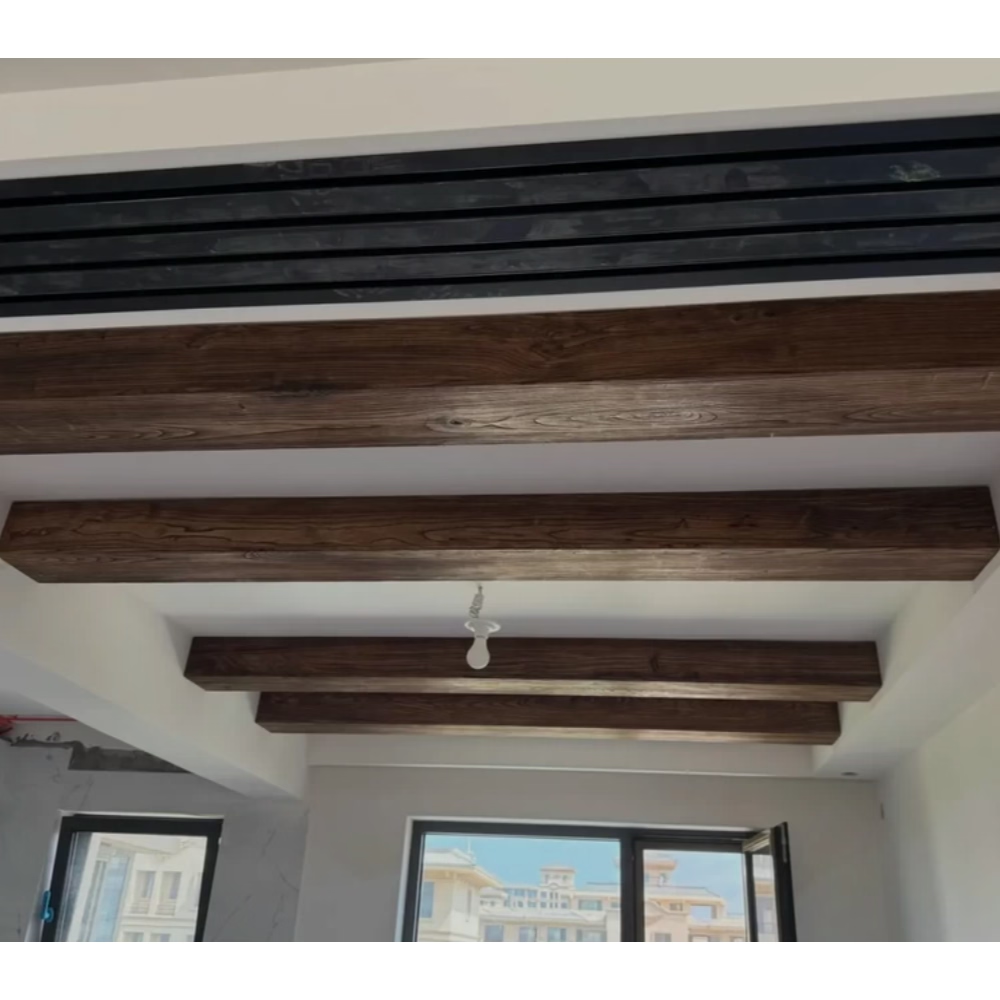
Practical tips for sending reference samples
When sending a physical reference, follow these guidelines to help us achieve the most accurate match:
Send a piece at least 80 x 80 mm. Smaller pieces are difficult for the finishing lab to read accurately because the surface area is too small to evaluate properly under standardized lighting.
Wrap the sample in acid-free tissue paper, not plastic. Plastic can trap moisture and cause the sample to discolor or develop mold in transit.
Include a note about where the reference came from — "this piece was cut from the south beam in the main living room, approximately 1.5 m from the east wall." This contextual information helps us understand the lighting environment and any environmental factors that may have affected the color.
For timber references, include a sample from a concealed spot if possible. The visible surfaces of timber are often cleaned, polished, or treated in ways that alter the color from the base material. A sample from inside a cabinet or behind a fitting gives us a truer reading of the original color.
For digital references, photograph the reference under natural daylight and under the room's installed artificial lighting. Send both photos so we can understand the color shift between conditions and tune the formula accordingly.
Send your reference and we'll return a first-pass swatch within 5 business days.

Technical References
ASTM standards cited in every specification
Test Data
Lab results from internal testing program
Updated 2026
Reviewed against current product specs


