
Stand in a room with a faux wood beam and something doesn't quite look right. What's wrong? Usually it's not the profile — manufacturers have gotten good at producing accurate cross-sectional geometry. It's not the color — staining technology is sophisticated. It's the grain texture. The grain is the one detail that most separates the convincing faux from the obviously fake.
This article is about grain texture in PU faux beams: how it's made, how it's applied, what options exist, and how to specify the right grain for a project.
Why grain texture matters
The human eye is exquisitely sensitive to wood grain. We grow up surrounded by wood — floors, furniture, door frames, window sills — and we process wood grain at a subconscious level. We don't look at a wood surface; we read it.
When a grain pattern is absent or wrong, the eye catches it immediately, even before the conscious mind forms a judgment. The reaction is often something like "that looks fake" — and the texture is usually why.
Grain texture adds three things to a faux beam:
- Authenticity signals: The grain tells the eye this is wood, or something trying to be wood. Even a stylized grain pattern provides that signal.
- Depth and dimension: Grain creates variation in the surface that catches light differently across the beam. Without grain, a beam is a flat-colored rectangle. With grain, it has highs and lows that create visual interest.
- Age and character: Real wood grain varies naturally — some rings are tight, some are wide, there are knots, rays, and subtle color differences within the grain lines. A grain texture that captures this natural variation reads as aged timber rather than new lumber.
How grain texture is applied to PU beams
The grain texture on a PU beam is not painted on. It's embossed — pressed into the surface of the foam as it cures against a textured mold surface. The mold carries the negative of the grain, and the foam picks it up as it solidifies.
This means the grain quality is determined by the mold texture, not by the finishing process. You cannot paint good grain onto a poorly textured beam. You can, to some extent, hide bad grain with a heavy textured paint finish — but that's a workaround, not a solution.
Source textures
The wood grain texture on a PU beam mold comes from one of three sources.
Natural wood masters: A piece of real wood — typically reclaimed timber with pronounced grain — is used as the source pattern. The grain is photographed, scanned, or physically replicated into the mold surface. Natural wood masters produce the most authentic grain patterns because they capture the genuine variation of real timber.
CNC-machined textures: A grain pattern is designed mathematically or modeled in CAD and then CNC-machined into the mold surface. CNC textures can be highly detailed but tend to be more uniform than natural wood textures. They're good for consistent, repeatable grain patterns.
Hand-carved textures: A skilled craftsman carves the grain pattern into the mold surface by hand, using specialized tools. Hand-carved textures offer the most artistic control — the carver can vary the grain density, add knots and character marks, and respond to the specific profile of the beam. They're more expensive but produce the most characterful results.
Texture depth and scale
Grain texture is characterized by two variables: depth and scale.
Depth is how far the grain lines are embossed below the surface plane of the beam. Deeper grain creates stronger shadow and highlight effects under directional lighting. Shallow grain reads more subtly but can be lost under heavy staining.
For most ceiling beam applications, a grain depth of 0.5 to 1.5 mm is appropriate. Deeper grain can look exaggerated at normal viewing distances. Shallower grain can look flat.
Scale is the size of the grain features relative to the beam profile. A grain pattern designed for a 150 mm wide beam will look wrong on a 350 mm wide beam — the rings will be too tight, too many, too busy. The grain scale should be proportional to the beam size.
Most factories maintain a library of grain textures at different scales to match different beam sizes. When specifying, confirm that the factory is using a grain scale appropriate for your profile.
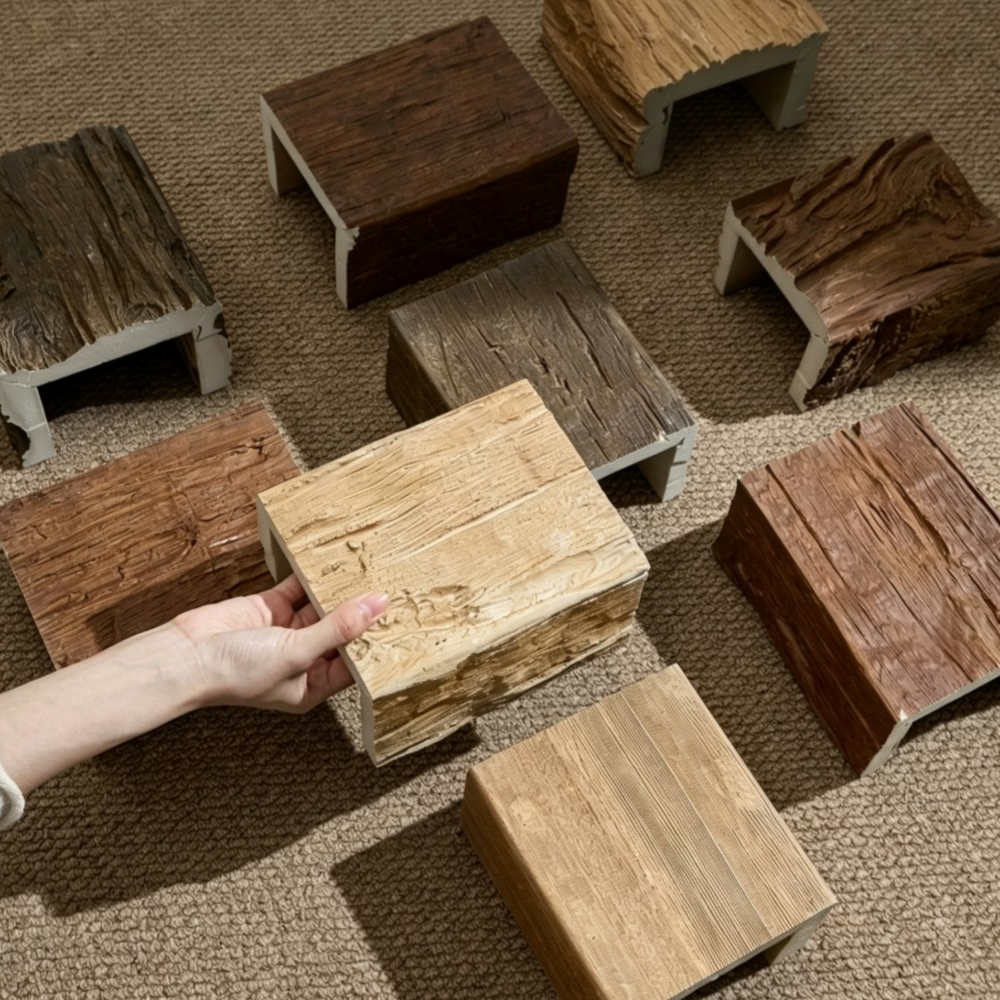
Common grain types and their uses
Oak grain
Oak is the most common grain type for PU faux beams, and for good reason: oak grain is recognizable, versatile, and reads well in both traditional and contemporary interiors.
White oak grain has a subtle, flowing pattern with occasional rays (flecks that run perpendicular to the grain lines). Red oak grain is slightly more pronounced and has a warmer color base. Both are available in tight-grain and open-grain variants.
Oak grain works well for medium and large beam profiles. It's too busy for small cross-sections.
Pine grain
Pine grain is subtler than oak — narrower growth rings, fewer rays, more uniform. It's the classic grain for rustic and farmhouse interiors, where the wood is meant to look like it came from a barn or a hand-hewn cabin.
Pine grain works across a wide range of beam sizes. On very small cross-sections (under 100 mm), pine grain can look almost like smooth wood, which may or may not be the intent.
Walnut grain
Walnut grain is dark, rich, and relatively straight. The color of walnut — a deep chocolate brown — combines with the grain to create a moody, sophisticated look.
Walnut grain is less common than oak and pine because the color of walnut wood is so distinctive that a walnut-grain texture on a beam that's finished in honey oak looks wrong. Walnut grain pairs naturally with dark espresso or ebony finishes.
Reclaimed wood grain
Reclaimed wood grain is not a species — it's a style. Reclaimed wood grain patterns show heavy weathering, checking (cracks along the grain lines), and irregular wear patterns. The grain lines are often wider and more pronounced than on new wood.
Reclaimed grain is specified for rustic interiors, industrial lofts, and any project where the beam is meant to look like it was salvaged from an old building. It's less appropriate for formal interiors where a refined look is desired.
Hand-scraped grain
Hand-scraped grain is a manufactured texture that mimics the look of hand-scraped hardwood flooring — deliberately irregular lines that simulate wear and manual smoothing. It's a popular choice for contemporary interiors that want the warmth of wood without the perfection of machine-made flooring.
Hand-scraped grain on a beam is less common than hand-scraped flooring, but it works well in rooms with hand-scraped floors or in spaces where the beam needs to match the floor's texture character.
Evaluating grain texture quality
When reviewing a sample beam for grain texture quality, look for:
Consistency
The grain pattern should be consistent across the beam face — not varying wildly from one section to another. Some variation is natural and desirable, but the pattern should feel coherent, not random.
Depth evenness
The grain should be embossed at a consistent depth across the beam. Avoid looking for this under harsh spotlights; examine the grain in normal room lighting from a few angles. Variations in embossing depth show up as uneven shadow patterns.
Scale appropriateness
The grain scale should feel proportional to the beam. A 300 mm wide beam with fine-grain texture looks dainty and wrong. A 100 mm wide beam with coarse-grain texture looks busy and exaggerated.
Knot and character marks
If the specification calls for character (knots, checking, ray flecks), those details should be present and convincingly placed. A single knot in the wrong position is more distracting than no knot at all.
End-grain treatment
The ends of the beam — where the grain would naturally terminate in real timber — should be treated differently from the face grain. End grain is typically rougher and darker. A beam with uniform grain texture on all faces looks manufactured.
Specifying grain texture for a custom order
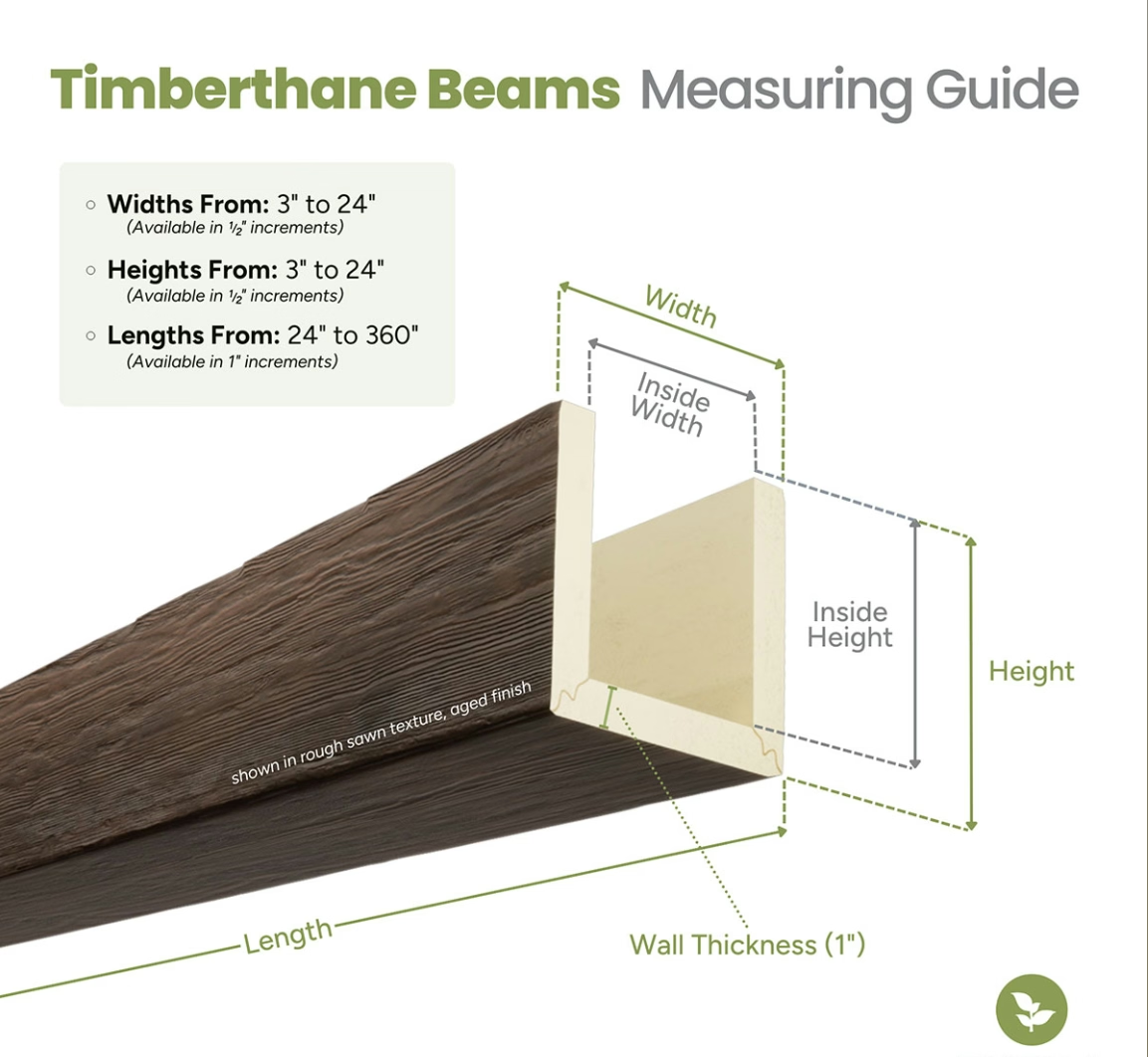
When requesting a custom grain specification from a supplier, specify:
- Grain species or style: Oak, pine, walnut, reclaimed, hand-scraped, or custom
- Grain scale relative to beam size: Fine, medium, or coarse
- Character level: Clean (minimal knots), moderate (occasional knots), or rustic (prominent knots, checking, weathering)
- End-grain treatment: Match face grain, or natural end-grain effect
- Reference samples: Photos of the look you want are the most reliable specification
Most factories maintain a library of 10 to 30 standard grain textures. A good factory can also create a custom grain texture from a sample piece of real wood or a detailed reference image. Custom grain creation adds 2 to 4 weeks to the tooling development timeline.
When grain texture should be customized
Standard grain textures work for the majority of projects. But there are situations where a custom grain is worth the extra cost and lead time:
- Very large beams (over 400 mm wide): Standard grain scales look too fine on very large beams. A custom grain scaled to the beam produces a more proportional appearance.
- Historic reproductions: When a beam must match a specific historic timber — a specific species, a specific period's milling style, a specific weathering pattern — a custom grain based on a reference sample is the only accurate option.
- Unusual beam profiles: Beams with deeply carved ornament or complex profiles may need grain textures designed specifically for those profiles, where the grain follows the ornament rather than being interrupted by it.
- Brand-specific aesthetics: Hospitality brands and restaurant chains with a defined visual identity sometimes commission custom grain textures as part of their branded product specification.
Grain texture is the detail that makes a faux beam convincing. Get it right and no one questions whether the beam is real. Get it wrong and no amount of color matching will save the illusion.
Technical References
ASTM standards cited in every specification
Test Data
Lab results from internal testing program
Updated 2026
Reviewed against current product specs


