
Engineering project reference samples serve a different purpose from design approval samples. While a design sample answers the question "does this look right?", an engineering sample answers questions about weight, density, thermal behavior, fire performance, and dimensional stability. For projects where the structural engineer, building inspector, or specification writer needs a physical reference, we supply engineering-grade sample pieces that carry certified test data alongside the physical material.
Why Engineers Request Physical Samples
Structural engineers and specifiers typically need a physical sample when the project specification requires verified material properties in the submittals package, the building inspector needs to confirm the material matches the approved specification, the installing contractor needs to coordinate the beam's weight and fixing requirements with the structural design, or the architect needs to demonstrate that the material meets the project's sustainability or fire rating requirements.
A data sheet alone is not enough in these situations. The physical sample demonstrates that the material exists, has the expected mass and surface character, and is the product described in the test certificates.
What an Engineering Sample Includes
An engineering-grade sample from our factory includes the following documentation:
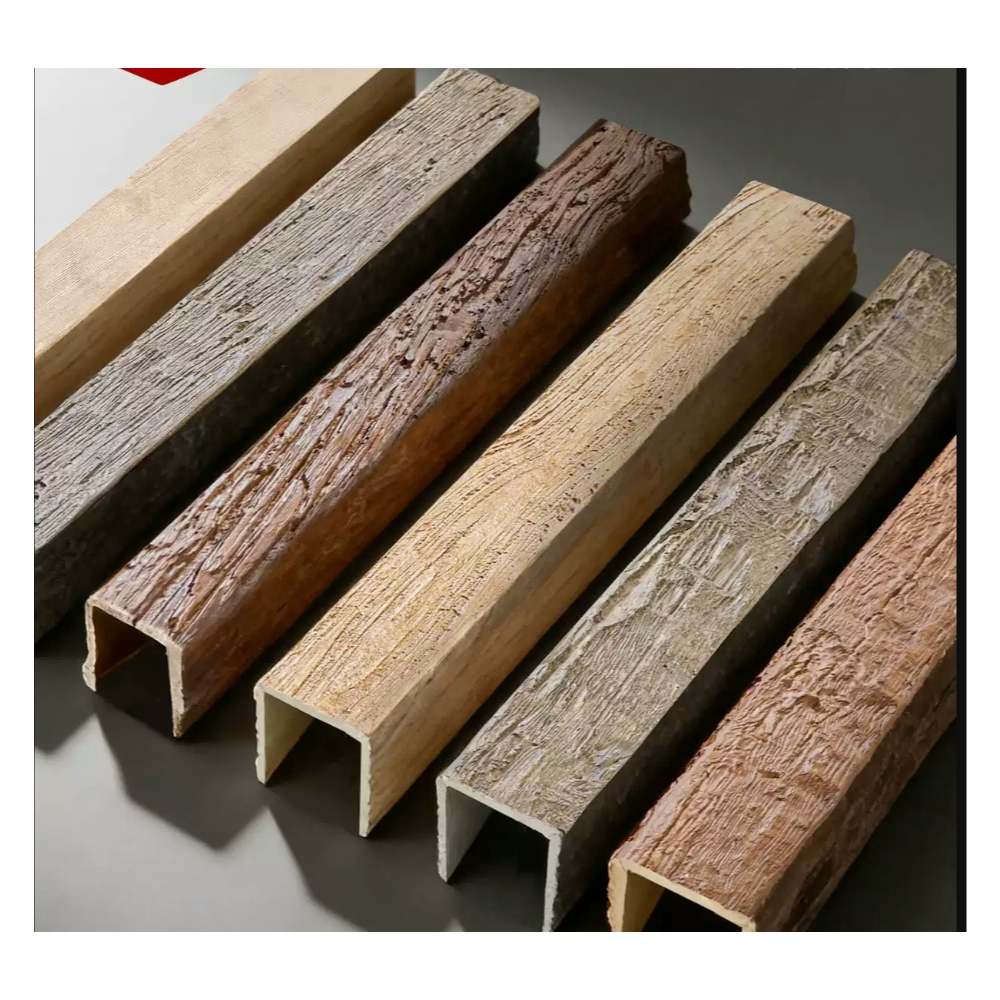
Physical sample. A cross-section cut of the actual beam profile being proposed, typically 150-300 mm long. This shows the wall thickness, hollow vs. solid construction, and any internal reinforcement.
Density certification. A factory test report showing the actual foam density in kg/m³, measured from the production batch the sample came from.
Fire test summary. If the project requires ASTM E84, EN 13501-1, or an equivalent fire rating, we supply the relevant test report excerpt with the sample.
Thermal expansion data. Polyurethane expands and contracts with temperature changes. For projects where this matters, we provide a thermal expansion coefficient so the engineer can calculate joint spacing.
Dimensional tolerance report. A factory QA report showing the measured dimensions of the sample against the specified dimensions, including the tolerance band.
Working With Structural Engineers
When a structural engineer is involved in the beam specification, the sample request usually comes with specific questions about weight per linear meter, whether the beam can be notched on site, approved fixing methods with load ratings, fire rating confirmation, and long-term dimensional stability. We provide answers to all of these as part of the engineering sample package.
Fire Rating Verification
Fire ratings are one of the most common reasons an engineering sample is requested. The standard ratings requested for polyurethane faux beams are ASTM E84 (Class A, B, or C) for US commercial interiors, EN 13501-1 (B-s1,d0, C-s2,d0) for Europe and Middle East, BS 476 (Class 0 or 1) for UK spec, and CAN/ULC S102 (FSR, FD) for Canada.
Each classification is achieved through specific resin formulations. The fire rating must be specified at the time of the order because it cannot be added to a standard formulation after production. We maintain test certificates for all standard profiles and formulations.

Long-Term Sample Retention
Engineering samples should be retained for the duration of the project and the defects liability period. Label each retained sample with the project name, date, profile and finish specification, batch or production code, and name of the approving engineer. Store samples flat, in a clean dry location, away from direct sunlight.
Technical References
ASTM standards cited in every specification
Test Data
Lab results from internal testing program
Updated 2026
Reviewed against current product specs


