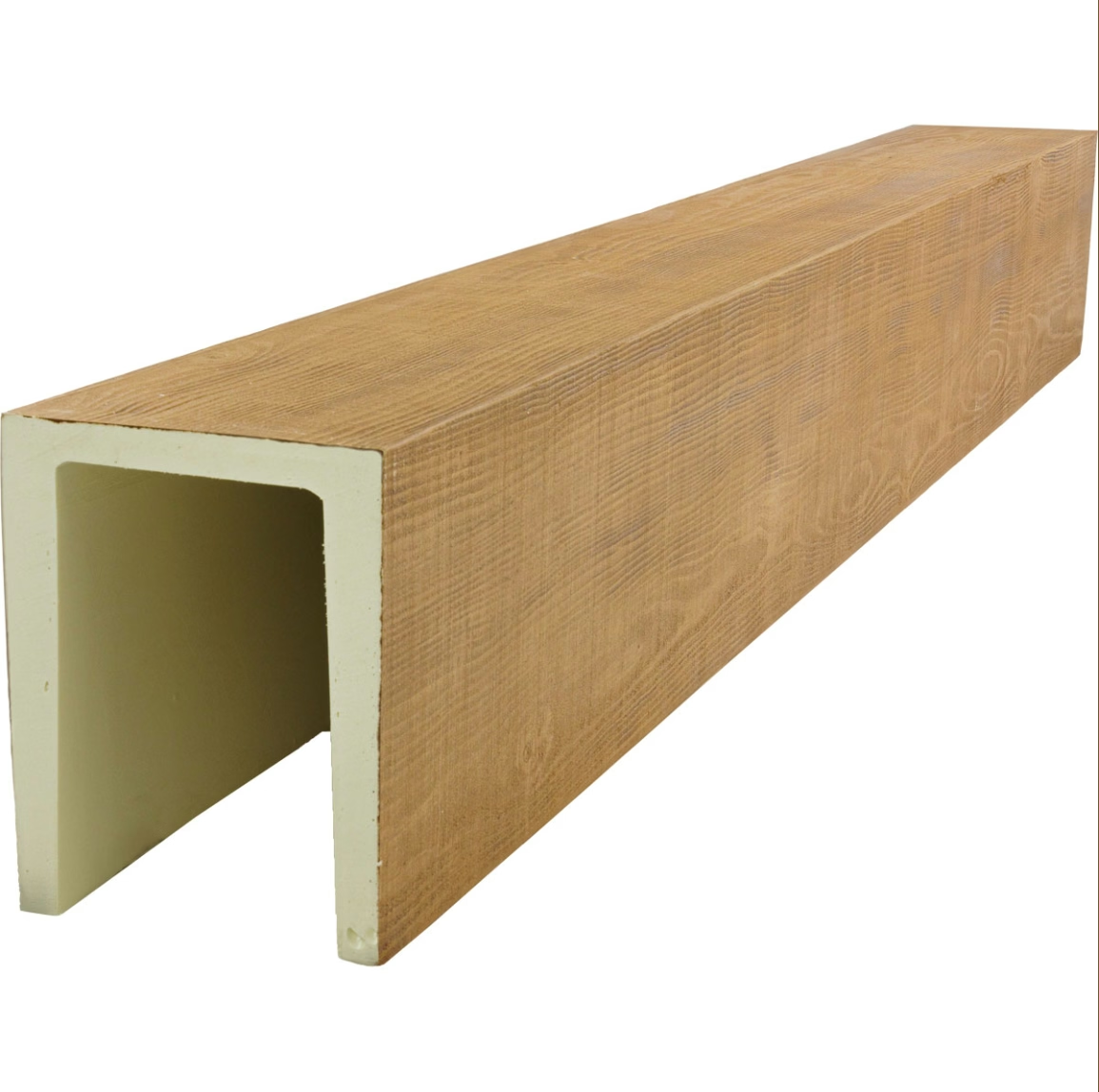
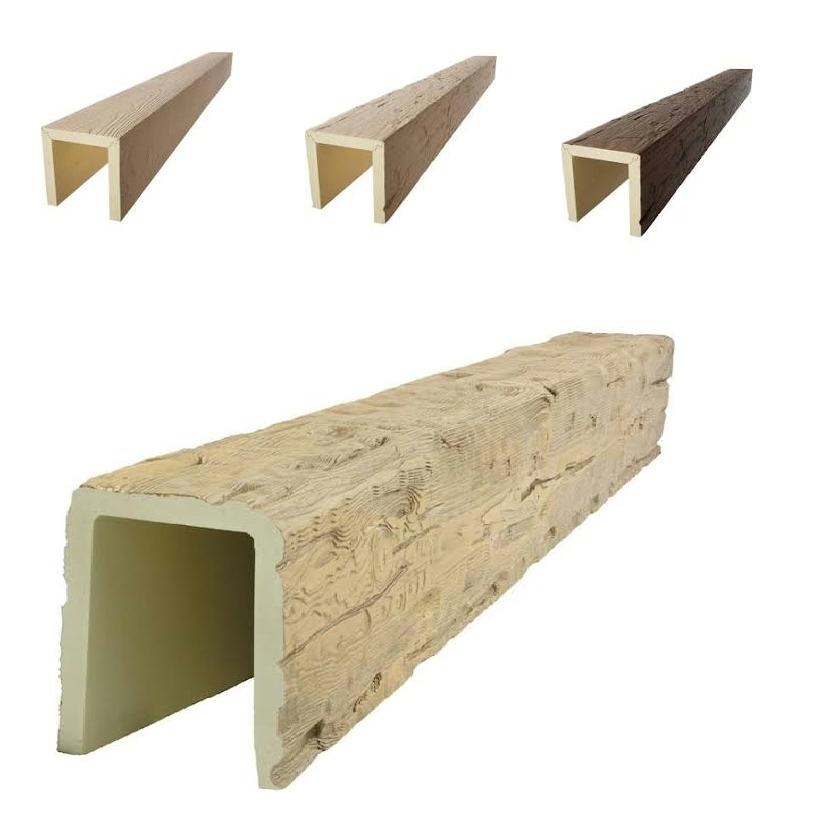
Architecture rarely conforms to standard dimensions. High ceilings, unconventional room proportions, and design visions that call for statement beams often exceed what off-the-shelf products can provide. When your project demands beams that are longer, deeper, wider, or have entirely custom profiles, the search narrows considerably to suppliers capable of meeting those specifications with craftsmanship that matches your design intent.
The Reality of Custom Beam Manufacturing
Custom-sized polyurethane beams occupy a different manufacturing space than standard catalog items. Production involves mold modifications or creation, formulation adjustments for different densities, and finishing processes calibrated to handle larger or uniquely shaped pieces.
Not every supplier genuinely manufactures custom products. Many advertise customization capability while actually providing extended versions of standard designs, using joinery to combine multiple pieces, or outsourcing to limited manufacturing partners when requirements exceed their core capabilities.
True custom capability means the supplier controls the production process sufficiently to modify dimensions, profiles, and finishes according to project specifications. This requires engineering resources, tooling flexibility, and quality systems that can validate non-standard dimensions consistently.
Understanding where a supplier falls on this spectrum matters enormously for project planning. Misaligned expectations lead to disappointment, delays, and potentially expensive rework.
Evaluating Engineering and Design Support
Custom projects benefit enormously from suppliers who engage as design partners rather than simple fulfillment vendors. This support manifests in several valuable ways.
Technical consultation during specification development helps refine designs for manufacturing efficiency without compromising aesthetic goals. Experienced engineers understand how polyurethane behaves during production and can suggest profile modifications that improve quality outcomes while maintaining the visual impact you're seeking.
Detailed shop drawing development ensures both parties agree on exact specifications before production begins. These drawings document dimensions, tolerances, finish requirements, and any special considerations, creating reference points that prevent misunderstandings.
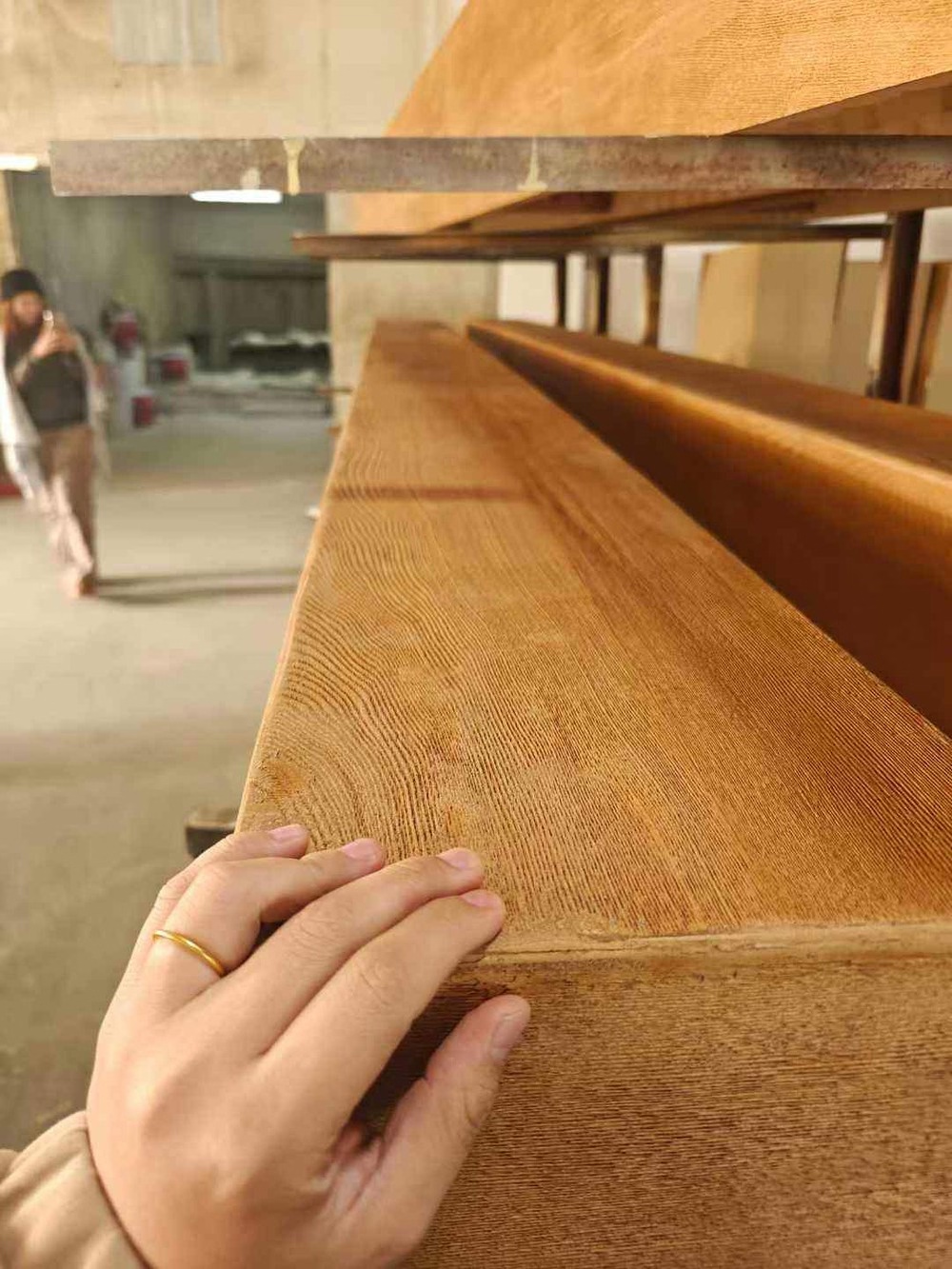
Prototype development allows physical evaluation of custom designs before committing to full production. Reviewing prototypes reveals how wood grain patterns will align with profile contours, how finishing will affect the final appearance, and whether structural elements meet the project's requirements.

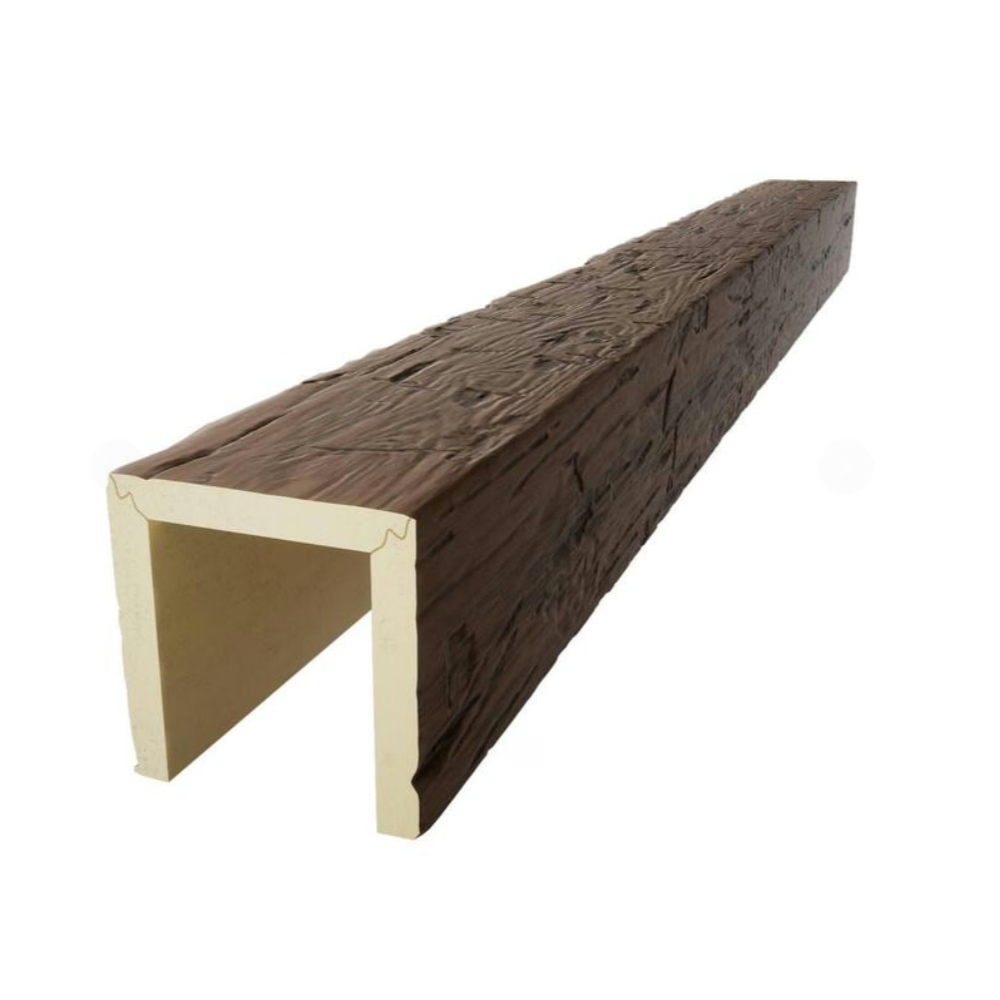
Tolerances and Quality in Custom Fabrication
Standard products benefit from optimized production processes refined over many units. Custom beams, by definition, don't receive this refinement, making supplier expertise even more critical for consistent quality.
Discuss dimensional tolerances explicitly. How closely will finished beams match specified dimensions? What variation is acceptable? Polyurethane expands and contracts with temperature changes differently than wood, so tolerances need specification in absolute terms rather than wood-industry percentages.
Finish quality on custom pieces deserves particular attention. Large or unusually shaped beams may require different application techniques for stains and sealers. Edge coverage, corners, and areas where different mold sections meet need inspection protocols adapted to the specific product.
Structural validation matters for oversized beams. While polyurethane beams are typically decorative rather than structural, larger pieces may require internal support systems to prevent sagging or damage. Suppliers experienced with custom work should proactively address these considerations.
Lead Times and Production Planning
Custom fabrication takes longer than standard inventory fulfillment. Understanding realistic timelines prevents project disruptions and allows proper planning.
Production lead time for custom beams typically ranges from four to eight weeks depending on complexity and supplier workload. Complex profiles requiring new tooling may extend this timeline significantly. Add additional time for shipping, especially for international deliveries.
Build timeline buffers into project schedules. Custom beam production cannot be accelerated easily once underway—rushing creates quality risks. The consultation, design, and prototype phases preceding production also require time commitments from both parties.
Discuss production scheduling explicitly. Will your beams be produced in dedicated runs or interspersed with other orders? Dedicated runs typically provide better quality control, while interleaved production may offer faster turnaround when suppliers have available capacity.

Cost Considerations for Custom Fabrication
Custom pricing inevitably exceeds standard catalog costs. Understanding how suppliers structure custom pricing helps evaluate proposals and budget appropriately.
Tooling costs represent the most significant variable. Modifying existing molds incurs setup charges, while entirely new tooling requires investment that suppliers typically amortize across initial production quantities. These costs appear as one-time charges separate from unit pricing.
Unit pricing for custom beams reflects the additional handling, processing time, and quality verification required for non-standard items. Expect pricing premiums of twenty to fifty percent compared to closest standard equivalents, varying based on complexity and quantity.
Larger quantities generally reduce per-unit costs through economies of scale. However, the relationship isn't always linear. Quantities that align with efficient production runs—maximizing material utilization from standard sheet or block dimensions—achieve better economics than arbitrary quantities.
Finding the Right Partner for Custom Work
The ideal supplier for custom polyurethane beams combines manufacturing capability with collaborative spirit. They should confidently explain their custom fabrication process, demonstrate past projects with comparable requirements, and communicate transparently about limitations or challenges.
Request references specifically from custom projects similar to yours. Speaking with previous clients reveals how suppliers handled the particular challenges of custom work—timeline management, specification refinement, and quality problem resolution when issues arose.
Quality custom beam suppliers treat each project as an opportunity to demonstrate capability rather than an obligation to fulfill. That orientation shows in communication responsiveness, attention to detail during specification development, and pride in finished products.
Patience during the selection process pays dividends. Investing time finding the right custom supplier prevents the far greater cost of quality failures, project delays, and difficult conversations with clients whose expectations weren't met.
Technical References
ASTM standards cited in every specification
Test Data
Lab results from internal testing program
Updated 2026
Reviewed against current product specs