A beam is only as good as its ends. The most beautifully textured and stained faux timber beam looks amateurish if the end cuts are rough, the return miters are open, or the end cap does not fit the profile cleanly. Custom sized precision cut polyurethane faux beam end caps solve this problem by producing factory-finished terminations that match the beam profile exactly, ship with the beam, and install in minutes rather than hours.
What End Caps Do
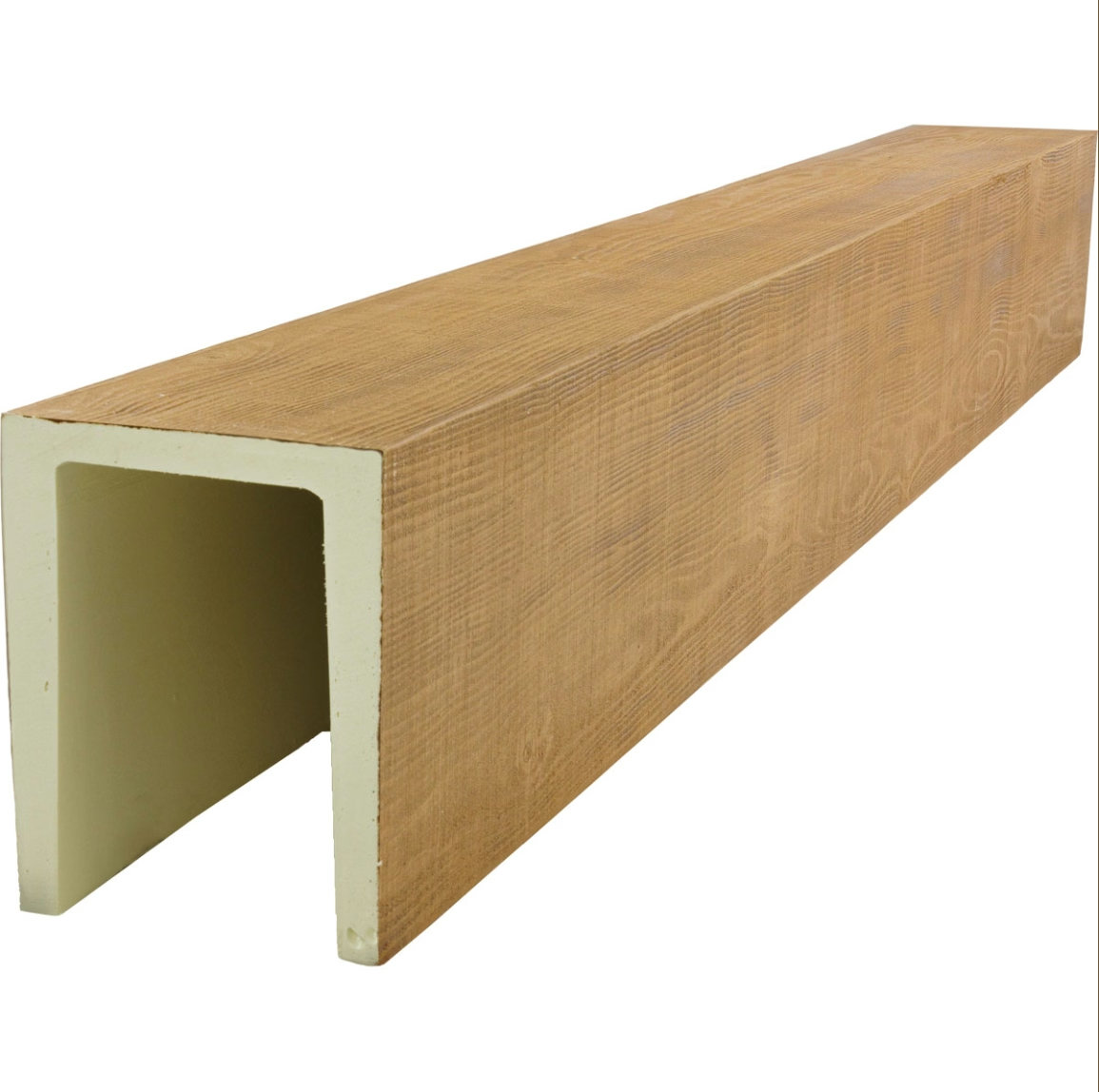
An end cap on a faux timber beam serves two functions: structural and aesthetic. Structurally, it closes the open end of a hollow beam, provides a solid face for fixing, and prevents dust and insects from entering the hollow cavity. Aesthetically, it creates a clean termination that reads as intentional rather than cut off.
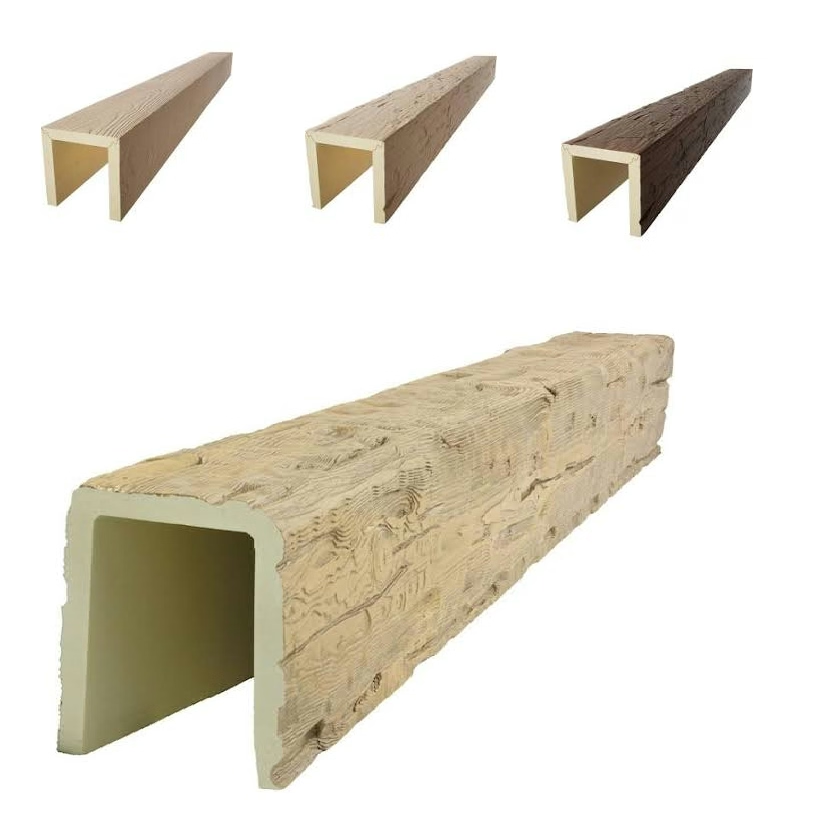
There are three common end cap types. Square cut cap: a flat face closing the end of the beam at 90 degrees to the length. The simplest end cap; used where the beam terminates against a wall. Return end cap: the beam end folds back on itself, continuing the U-shape profile around the end. Used where the end is visible from below or from the side. Decorative end cap: a profiled end shaped to match the beam's texture or to add a decorative detail.
How End Caps Are Produced
End caps are produced as part of the beam casting process. For standard profiles, the end cap is cast as an integral part of the beam. For custom profiles or for return-style end caps, the cap is a separate piece that is bonded to the beam end during finishing.
Integral End Caps. For U-shape beams, the end cap is part of the hollow shell. The casting mold includes an end cap plug that forms the closed end of the U-shape. The tolerance on an integral end cap is ±2 mm on the profile dimensions.
Bonded End Caps. Return end caps and decorative end caps are produced as separate pieces and bonded to the beam end in the finishing shop. The bond is a structural polyurethane adhesive that creates a joint stronger than the foam itself.
Precision Machined End Caps. For projects requiring very tight tolerances (typically high-end hospitality), end caps are CNC-machined from solid polyurethane blocks rather than cast. Machining produces a perfectly square end within ±0.3 mm.
Common End Cap Mistakes
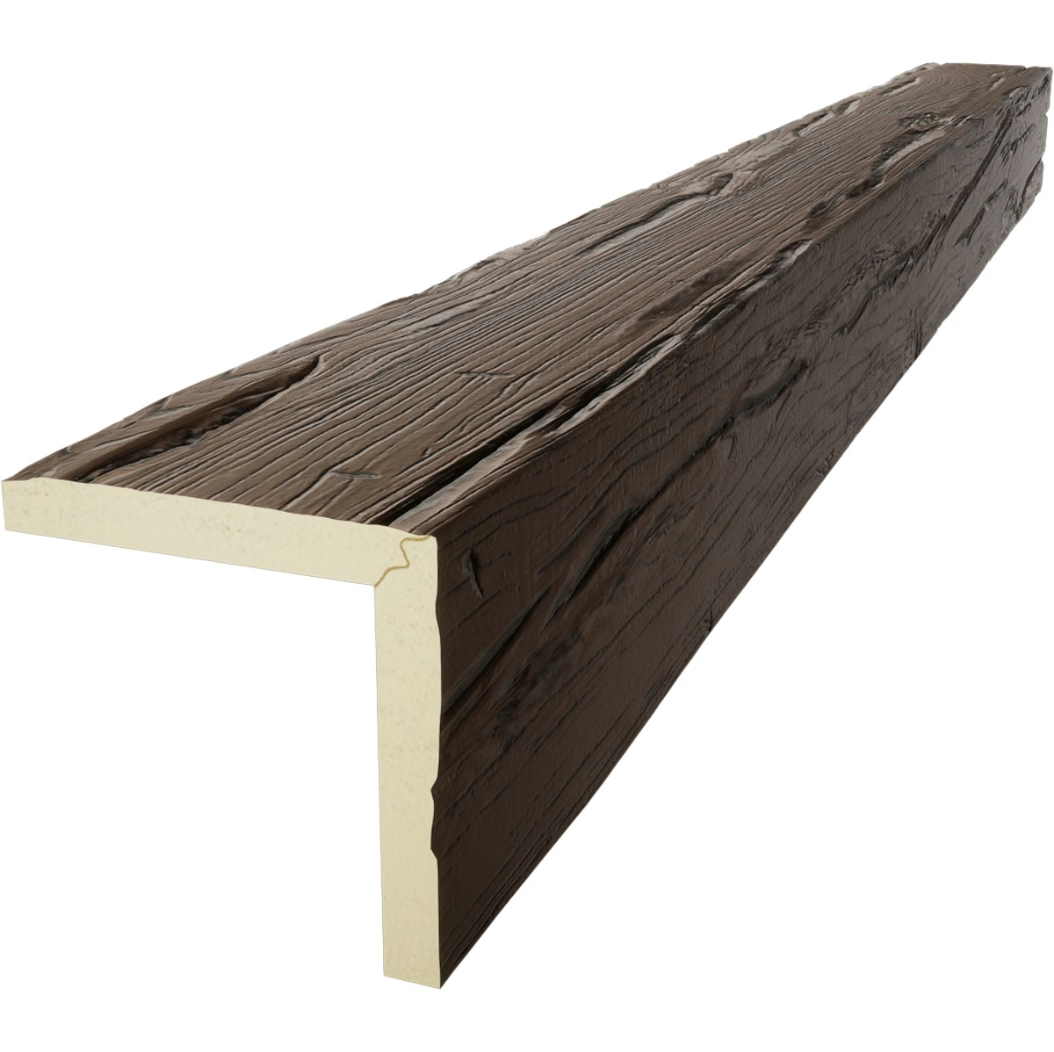
Specifying the wrong type. A square end cap against a wall in a room where the beam end is clearly visible from the adjacent room reads as a mistake. If the end will be seen, specify a return cap.
Forgetting the return depth. Return end caps are specified by the return dimension. If not specified, we default to 25-40 mm, which may be too shallow or too deep.
Not accounting for wall irregularities. In retrofit projects, walls are rarely perfectly plumb or straight. A beam with a factory end cap assumes a flat, plumb wall surface. The fix is to dry-fit and scribe the end cap or specify a small gap at the wall joint sealed with caulk.
Leaving end caps unprimed on the back face. If a beam is cut on site to a custom length, the newly exposed foam at the end must be sealed with primer before installation.
Precision cut end caps are a small detail that makes a disproportionate contribution to the finished installation. Spend the time to specify them correctly, and the beams will look right from every angle.
Technical References
ASTM standards cited in every specification
Test Data
Lab results from internal testing program
Updated 2026
Reviewed against current product specs