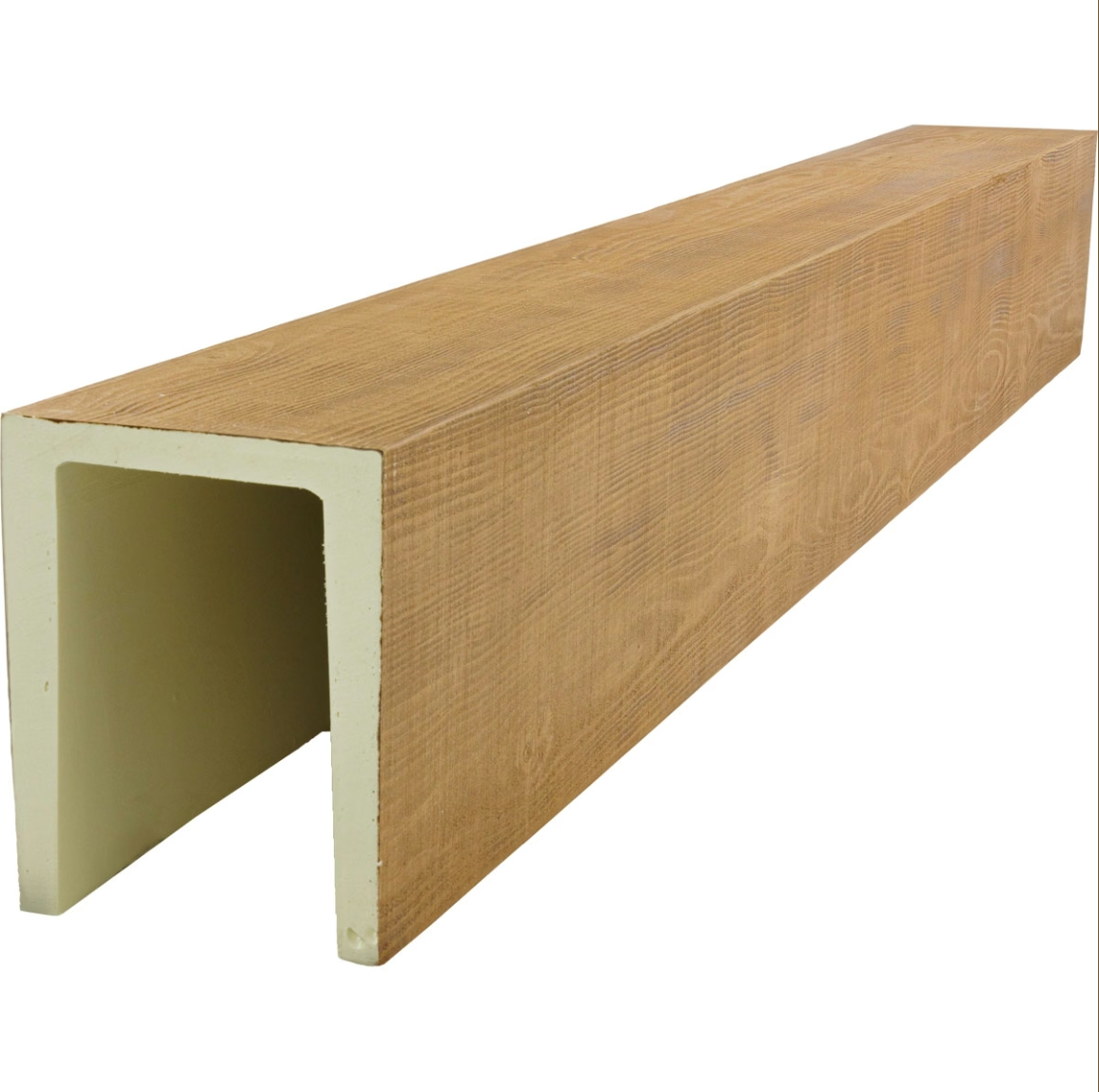
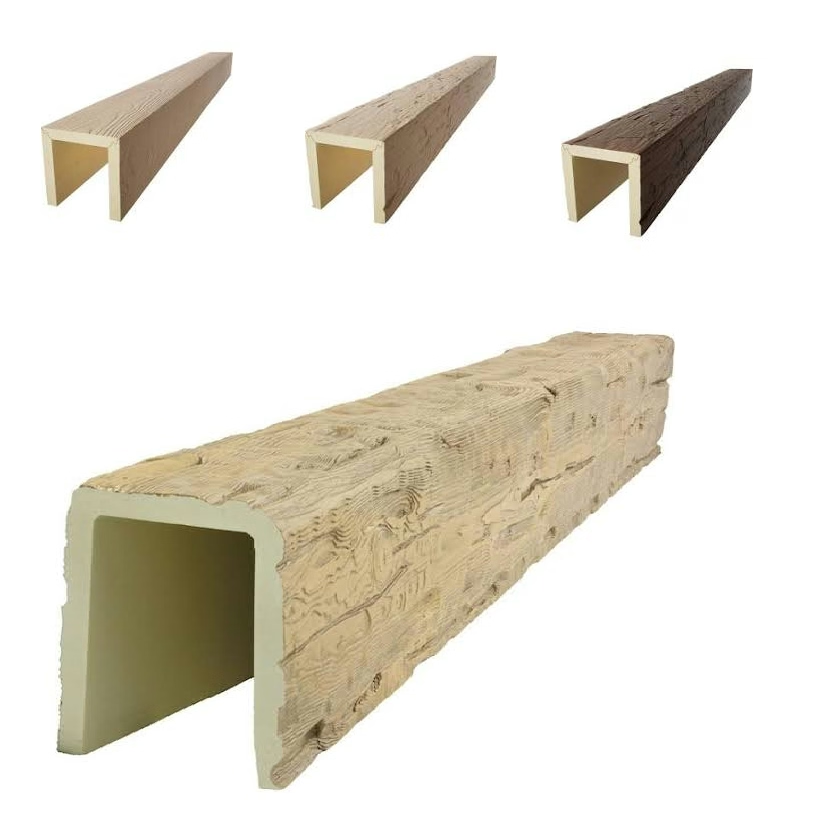
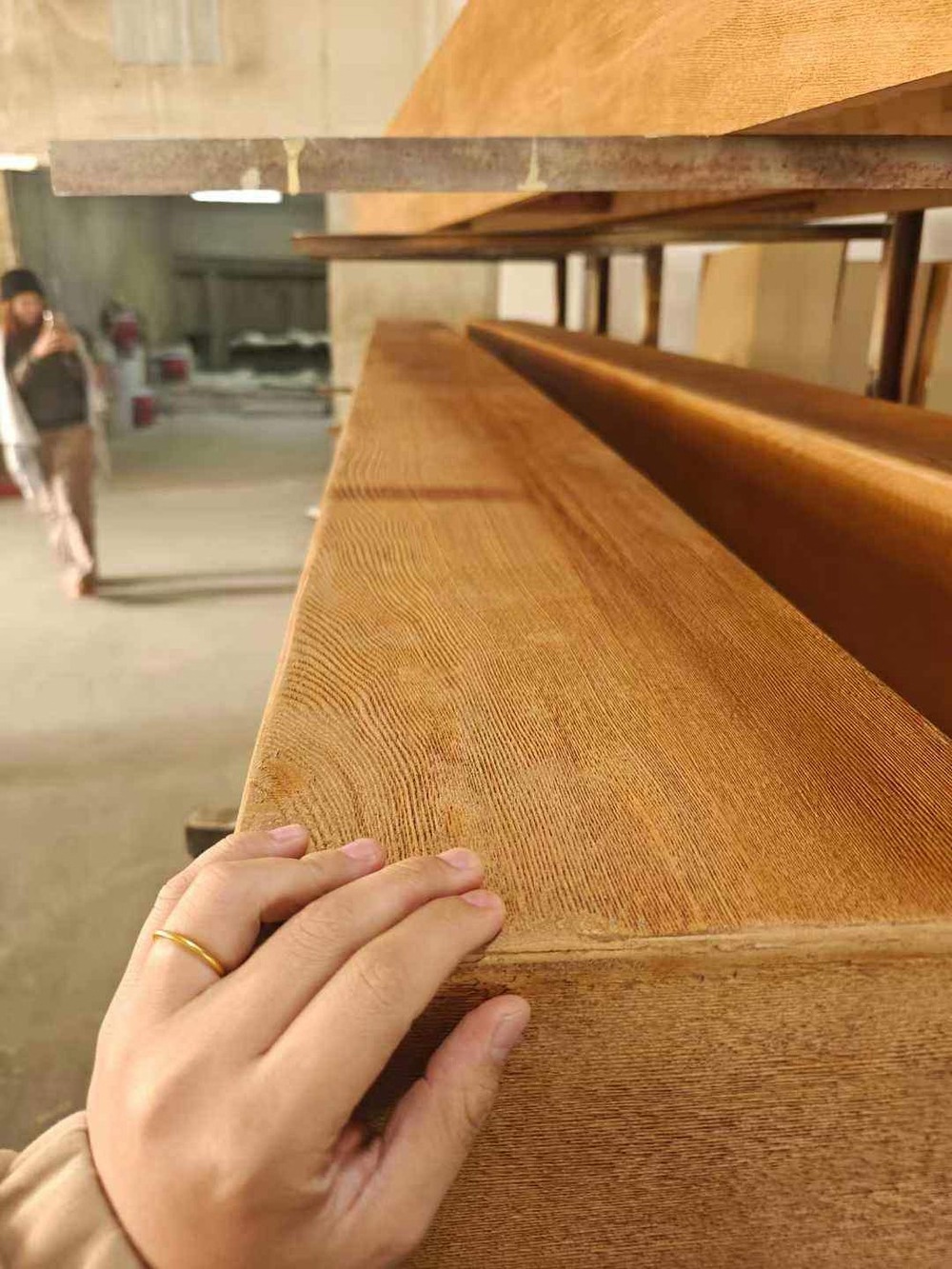
The finish on a faux beam is the difference between a piece that reads as plastic from across the room and one that fools a contractor at arm's length. Polyurethane's surface accepts a remarkable range of finishes — far more than solid timber in some respects — but the options come with trade-offs in cost, lead time, and field repairability.
The finish tiers we offer
We organize finishes into four tiers, each with its own pricing band and lead time:
| Tier | Finish Type | Lead Time | Relative Cost |
|---|---|---|---|
| 1 | Factory primer, unfinished | 2 weeks | Base |
| 2 | Solid color, single tone | 3 weeks | +12–18% |
| 3 | Multi-tone wood grain stain | 4 weeks | +25–40% |
| 4 | Hand-painted distressed premium | 5–6 weeks | +60–120% |
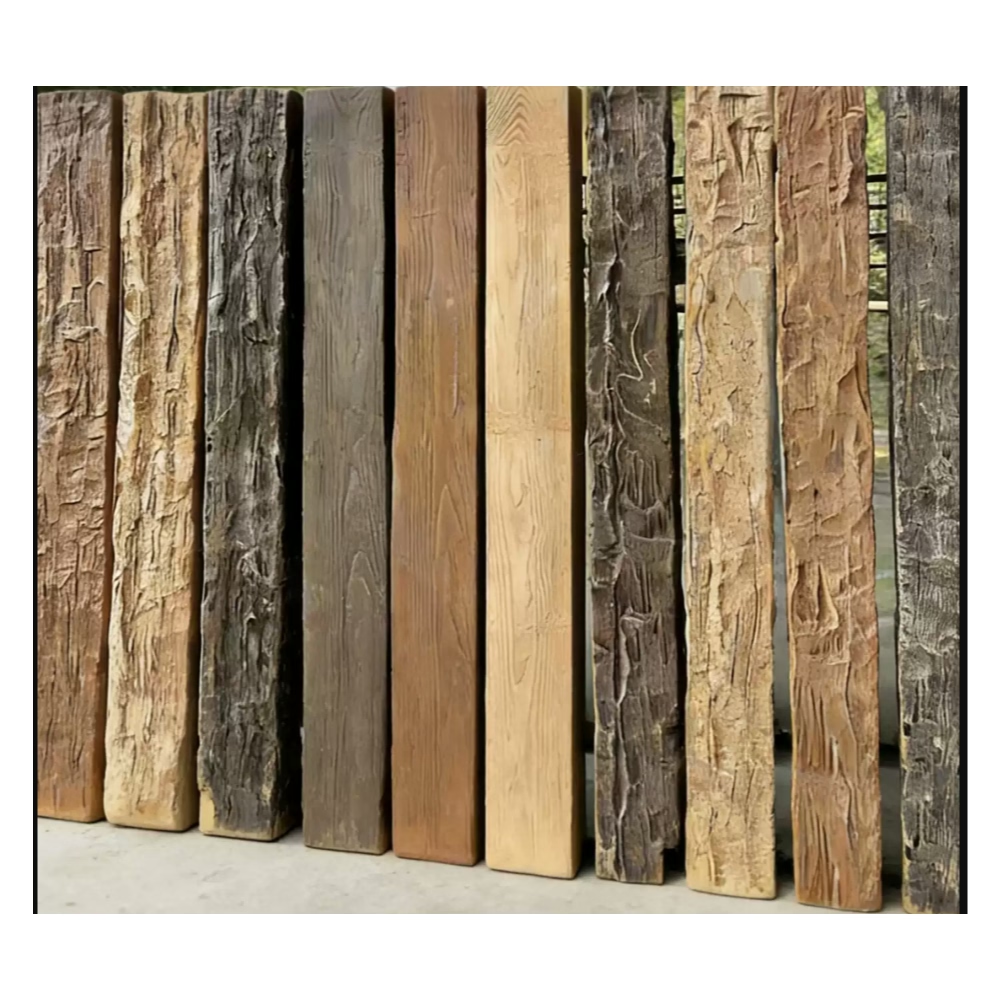
Tier 1 is what most installers choose when they'll be painting on-site to match existing trim. Tier 2 covers white and off-white tones in matte, satin, and semi-gloss. Tier 3 is where most premium residential and commercial work lands — walnut, oak, driftwood, weathered gray, and similar wood-grain looks. Tier 4 is reserved for high-end residential, hospitality, and reproduction work where the finish has to be indistinguishable from a specific reference piece.
Tier 2: Solid colors and why they're trickier than they look
A solid color finish is just paint, in principle. In practice, polyurethane foam has a slightly porous surface that needs to be sealed properly before the topcoat goes on, or the topcoat absorbs unevenly and looks blotchy. Our Tier 2 process starts with a penetrating sealer, follows with a tinted primer, and finishes with two coats of color-impregnated topcoat.
The color depth matters more than people expect. A "white" beam against a "white" ceiling will look slightly off if the ceiling is one paint brand and the beam is another. Color matching across brands requires spectrophotometer readings and usually adds a week to the lead time. For large projects where the beams will live alongside painted drywall, we recommend sending a paint chip from the wall paint so we can calibrate the topcoat.
Matte finishes show fingerprints and dust more visibly than satin or semi-gloss. For ceiling beams where no one touches them, matte is fine. For accent beams at eye level, satin is more forgiving.
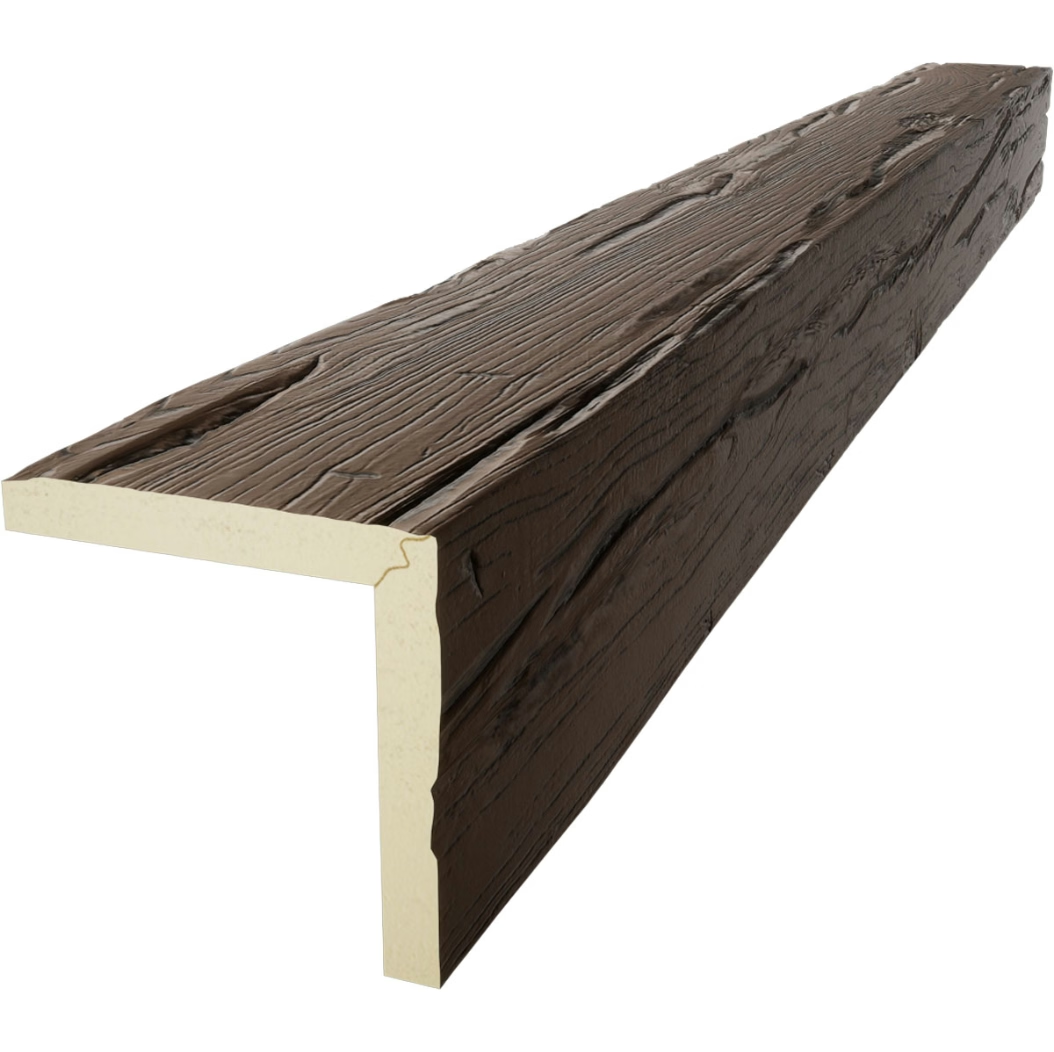
Tier 3: Multi-tone wood grain
This is the workhorse finish category for faux wood beams. The base coat is a mid-tone that matches the average color of the wood species. Then a darker glaze is wiped across the surface in patterns that follow the grain direction. A third highlight tone catches the high spots. Finally, a clear matte sealer locks everything in.
Each tone is hand-applied in our workshop, which is why lead times are longer and costs are higher. Hand application isn't a marketing phrase — it's the only way to get the irregular, organic look of real wood grain at close inspection. Spray-applied grain patterns look printed, which they essentially are.
Color matching to reference species
Walnut, oak, pine, and driftwood are our four most-requested wood tones, and each has a master reference panel in our finishing room. The reference panels are refreshed every six months because even master panels shift slightly under UV exposure, and we want to be comparing new beams to a current panel rather than a faded one.
For jobs that specify a non-standard wood tone — say, a particular reclaimed barn wood that the client fell in love with — we need a physical sample. Photographs don't carry enough color information to match reliably, even when displayed on a calibrated monitor. A small piece of the actual wood, or a paint store color match against the wood, gives our finishing team a workable reference.
Distressing and aged finishes
Distressed finishes go beyond the three-tone process. They add deliberate wear patterns: subtle dents along the edges, occasional "knot" features, areas where the dark tone concentrates as if from old stain pooling, and highlights that suggest the wood has been handled over decades.
These finishes are the most expensive not because of materials but because of labor. Each beam spends 20 to 40 minutes at the distressing station depending on how worn the target look is. A subtle weathered look is on the low end. A heavily aged barn-wood replica is on the high end.
Distressed finishes also have a higher touch-up rate. The hand-painted nature means roughly one beam in twenty will need a small retouch after we photograph it for QA. We catch most of these internally before they ship, but occasionally a repairable flaw gets past us. Field repair kits ship with every distressed order.
Tier 4: Premium hand-finished work
Tier 4 is for projects where the beam finish is the project — heritage restorations, high-end hospitality, museum work, and custom residential commissions where the client has reference photos of a specific historical beam.
Pricing in this tier is project-based rather than per-beam. We typically need the reference, a site visit if possible, and sometimes a sample beam that the client approves before production starts. The sample fee is credited against the production order.
Lead times run six to ten weeks depending on the queue. We've turned around urgent Tier 4 orders in four weeks for an additional expedite fee, but that's the exception. Most premium finish projects are scheduled six months out from the install date, which gives us room to do the work properly.
OEM color matching for importers
Importers and brand owners often want a proprietary color that doesn't appear on our standard palette. We offer OEM color matching against any physical reference. The process:
- Send a reference sample — paint chip, wood piece, fabric swatch, anything with the target color.
- Our finishing team develops a custom formula in our lab, typically 2 to 5 working days.
- We send back a painted sample panel for approval, usually 4 by 6 inches, on the same substrate as the production beam.
- Upon approval, the formula is locked into our production system under an OEM code.
Minimum order quantity for a custom OEM color is typically 50 linear feet of beam. Below that, the setup time and material waste make the per-beam cost prohibitive. The formula itself is a one-time development fee of $180 to $350 depending on complexity.
Durability across finish tiers
All four tiers use the same topcoat chemistry — a UV-stabilized acrylic polyurethane that resists yellowing, scratching, and most household chemicals. The difference is what's underneath. Tier 1 leaves the foam fully exposed at any scratch point. Tier 4 has four layers of protection plus the visual depth of multiple tones.
For exterior applications or high-humidity interiors (bathrooms, indoor pools, coastal properties), we add an extra marine-grade topcoat. This isn't a finish tier by itself but an additive option across tiers.
Field repairability scales inversely with finish complexity. A Tier 2 white beam is easy to touch up with a small can of matching paint. A Tier 4 distressed beam needs the original artist and original color formulas to do invisible repairs. We keep finish formulas on file for 36 months after the original order ships, so we can produce touch-up kits or replacement beams with color consistency.
What we don't recommend
Painting over a Tier 3 or Tier 4 finish on-site is a bad idea. The original finish has sealers and glazes that the new paint won't bond to properly, and the result is usually peeling within a year. If the client's preferred finish changes after we've shipped, the right move is to return the beams (if within the return window) and reorder with the correct finish.
Glossy finishes on beams look wrong almost universally. Real wood beams are matte to satin, and a high-gloss faux beam reads as plastic from any angle. We don't offer gloss as a standard option. If a project insists on it, we can do it, but we'll ask questions first.
The finish specification process in detail
When a buyer requests a custom finish, the specification process involves several stages that ensure the final product meets expectations.
The process begins with a reference — a physical sample, a paint chip, a photograph, or a written description of the desired look. The most reliable reference is a physical sample of the target material. A photograph is useful but can be misleading under different lighting conditions. A written description ("dark walnut, matte finish") is the least specific but is a valid starting point.
Our finishing team evaluates the reference and proposes a finish specification: the base tone, the number and color of glaze layers, the distressing level, and the topcoat sheen. We produce a sample panel — typically 6 by 6 inches — and ship it for approval. The buyer reviews the sample in their space, under their lighting, and approves or requests modifications.
If modifications are needed, the process repeats with adjusted specifications. Each iteration adds approximately 5 working days to the timeline. Most custom finishes are approved on the second or third iteration.
Once approved, the formula is locked into our production system. Every beam in the order is produced to the same specification, and the formula is stored for future reference. If the buyer needs additional beams in the same finish in the future, the formula is available.
Finish durability and maintenance by tier
Each finish tier has a different maintenance profile over the life of the beam.
Tier 1 (unfinished) requires the most ongoing maintenance: priming, painting, and repainting as the paint ages or is damaged. The maintenance interval depends on the paint quality and the environment. A high-quality acrylic paint in a low-humidity residential environment may last 5 to 7 years before repainting is needed.
Tier 2 (solid color) is more durable than field-applied paint because it is applied in a controlled factory environment with proper surface preparation. The maintenance interval is 7 to 10 years for a solid-color finish in a residential environment.
Tier 3 (multi-tone wood grain) is the most durable of the standard finishes. The multiple glaze layers add depth and complexity to the surface, which also adds durability. The maintenance interval is 10 to 15 years before any touch-up is needed.
Tier 4 (distressed premium) requires the least maintenance because the distressing masks minor wear. A scratched distressed finish is less noticeable than a scratched smooth finish. The maintenance interval is the same as Tier 3: 10 to 15 years.
All tiers benefit from periodic cleaning with a soft cloth and mild soap. Abrasive cleaners should be avoided across all tiers.
Finish consultation for importers and brand owners
Importers and brand owners who are developing product lines that include polyurethane faux beams often need finish consultation as part of the development process. We offer a structured consultation service that includes:
Market analysis — A review of the finish preferences in the target market, based on our sales data and design trend research. This helps identify which finishes are most likely to succeed in the specific market.
Finish development — The creation of custom finishes that are optimized for the target market's preferences and price point. This includes production of sample panels and the establishment of production formulas.
Brand standard documentation — The creation of a finish specification document that can be used by quality control teams, third-party inspectors, or alternative suppliers to verify finish quality. This document includes color references, application procedures, and quality standards.
The finish consultation service is available as a standalone engagement or as part of an OEM partnership agreement. Contact your sales representative for details.
Technical References
ASTM standards cited in every specification
Test Data
Lab results from internal testing program
Updated 2026
Reviewed against current product specs