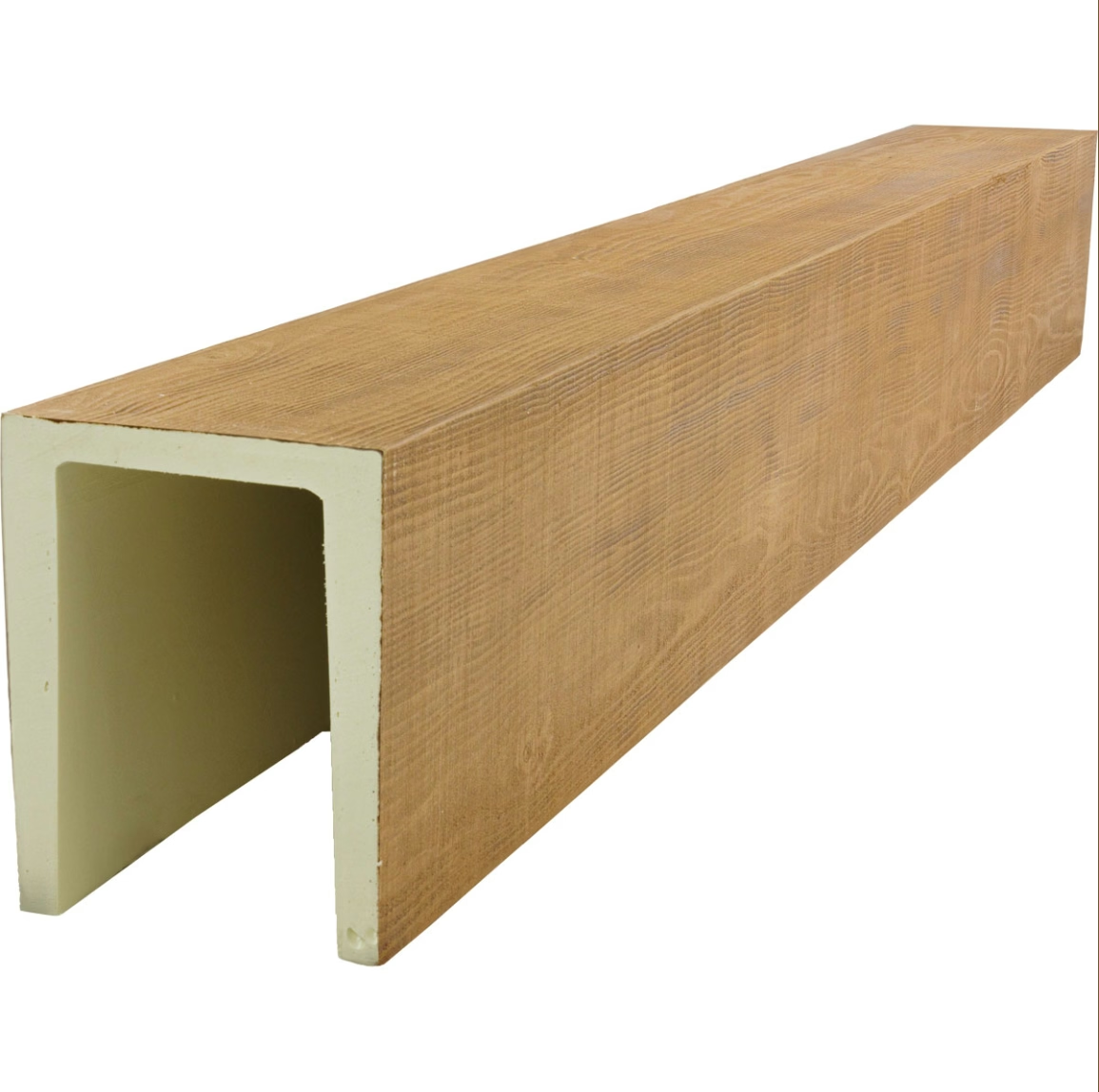
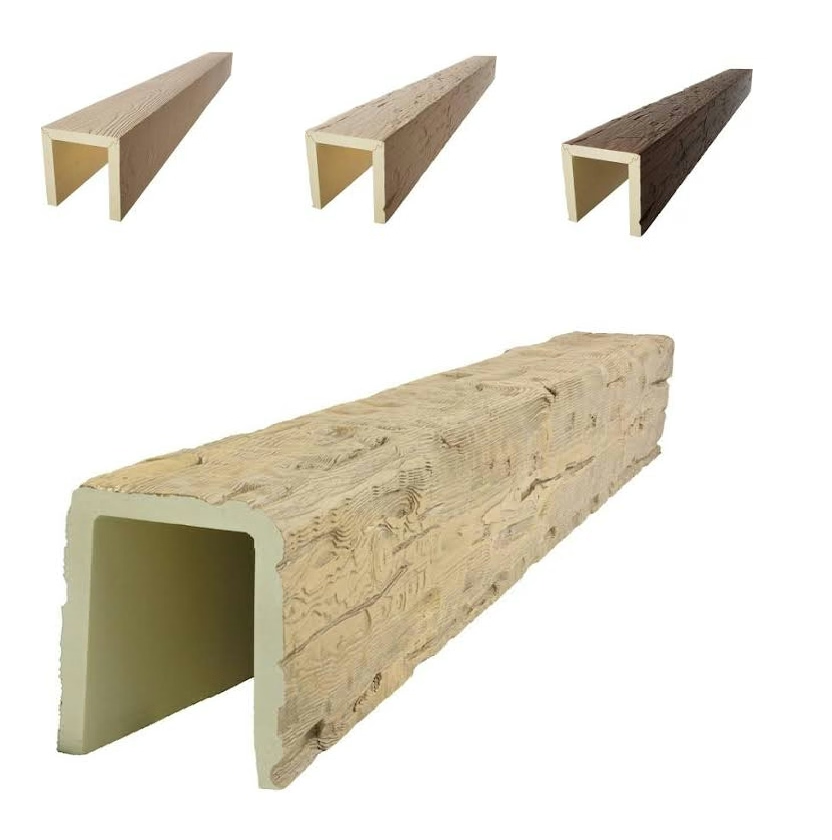
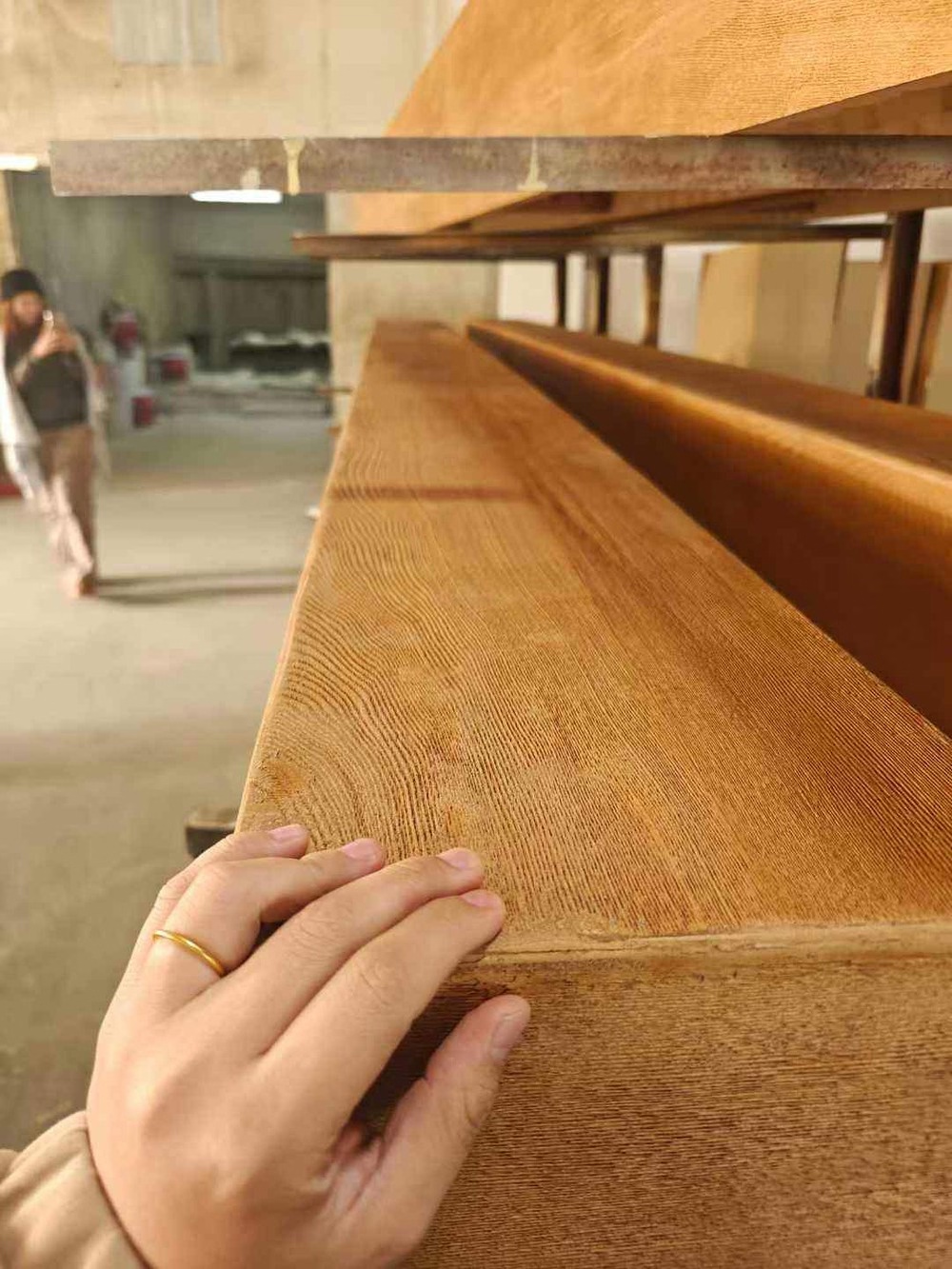
The difference between a mediocre faux beam and one that fools a contractor at arm's length is largely decided at the molding stage. Surface replication, dimensional accuracy, wall thickness consistency, and internal structure — all of it starts in the mold. The technology behind modern polyurethane faux beam production has advanced considerably in the past decade, moving from simple open-pour methods to computer-controlled systems that produce consistent results across tens of thousands of units.
The basics of polyurethane beam molding
Polyurethane beams are produced by mixing two liquid chemical components — an isocyanate and a polyol — in a precise ratio, then pouring the reacting mixture into a closed mold. The chemical reaction causes the mixture to foam, expand, and cure into a solid cellular structure.
The reaction is exothermic — it generates heat. The mold material, the mix ratio, the pour rate, and the cure time all interact to determine the final foam's density, cell structure, and surface quality. Control these variables precisely, and every beam is consistent. Let them drift, and you get variation.
Computer-controlled mixing systems
Modern production uses CNC mixing systems where the chemical components are metered by servo-driven pumps and mixed in a dynamic mixing head. The computer controls the ratio, temperature, and pressure of each component independently, then adjusts them in real time based on sensor feedback.
The ratio of isocyanate to polyol determines the foam's final properties. Too much isocyanate produces a rigid, brittle foam. Too much polyol produces a soft, weak foam. The correct ratio for structural beam applications is precise — typically 1.05 to 1.15 parts isocyanate to 1 part polyol by weight — and must be held within a tolerance of plus or minus 0.5% for consistent results.
Temperature matters too. The component chemicals are stored at controlled temperatures (typically 68 to 77°F) because the reaction rate changes with temperature. A cold component batch on a winter morning produces a slower reaction and different cell structure than a warm batch on a summer afternoon. Computer control of storage and mixing temperatures eliminates this variable.
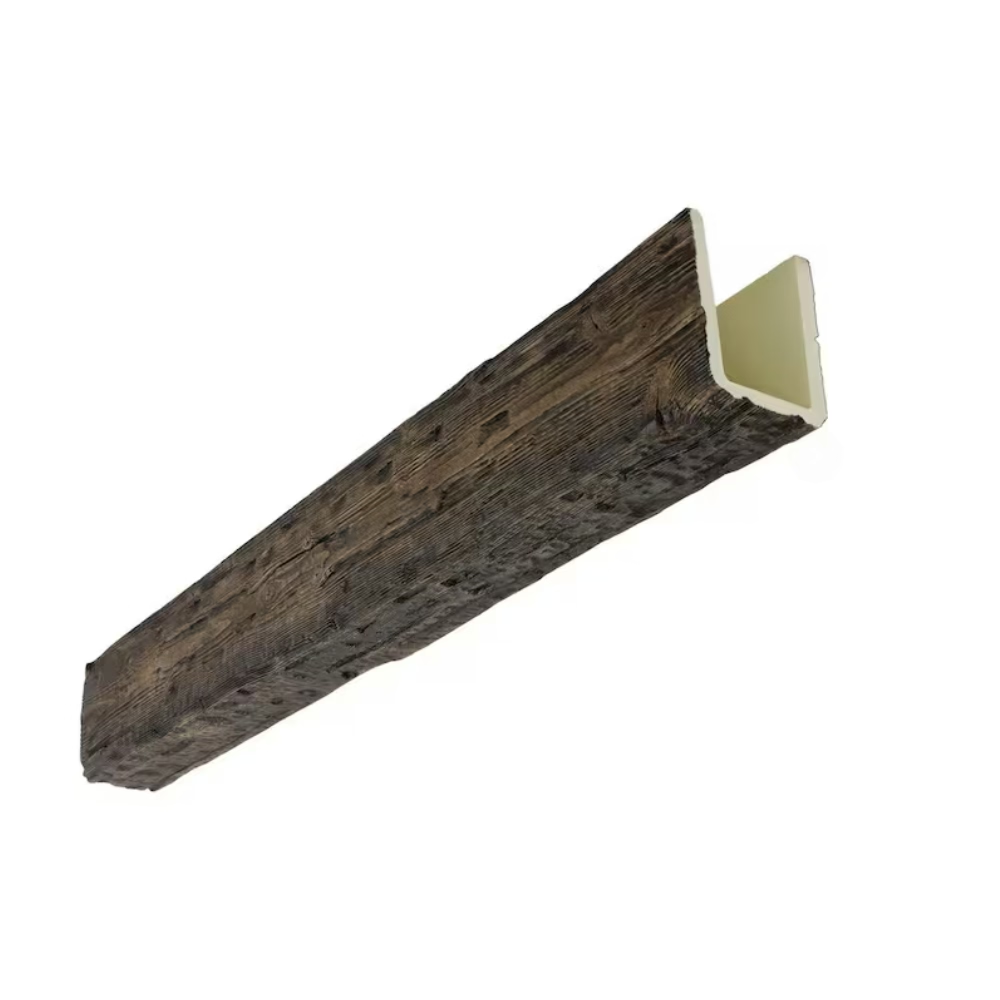
Mold design and precision
The mold for a beam profile is typically machined from aluminum or machined aluminum tooling plate. The surface finish of the mold determines the surface finish of the beam — a polished mold produces a smooth beam surface, while a textured mold surface produces a textured beam.
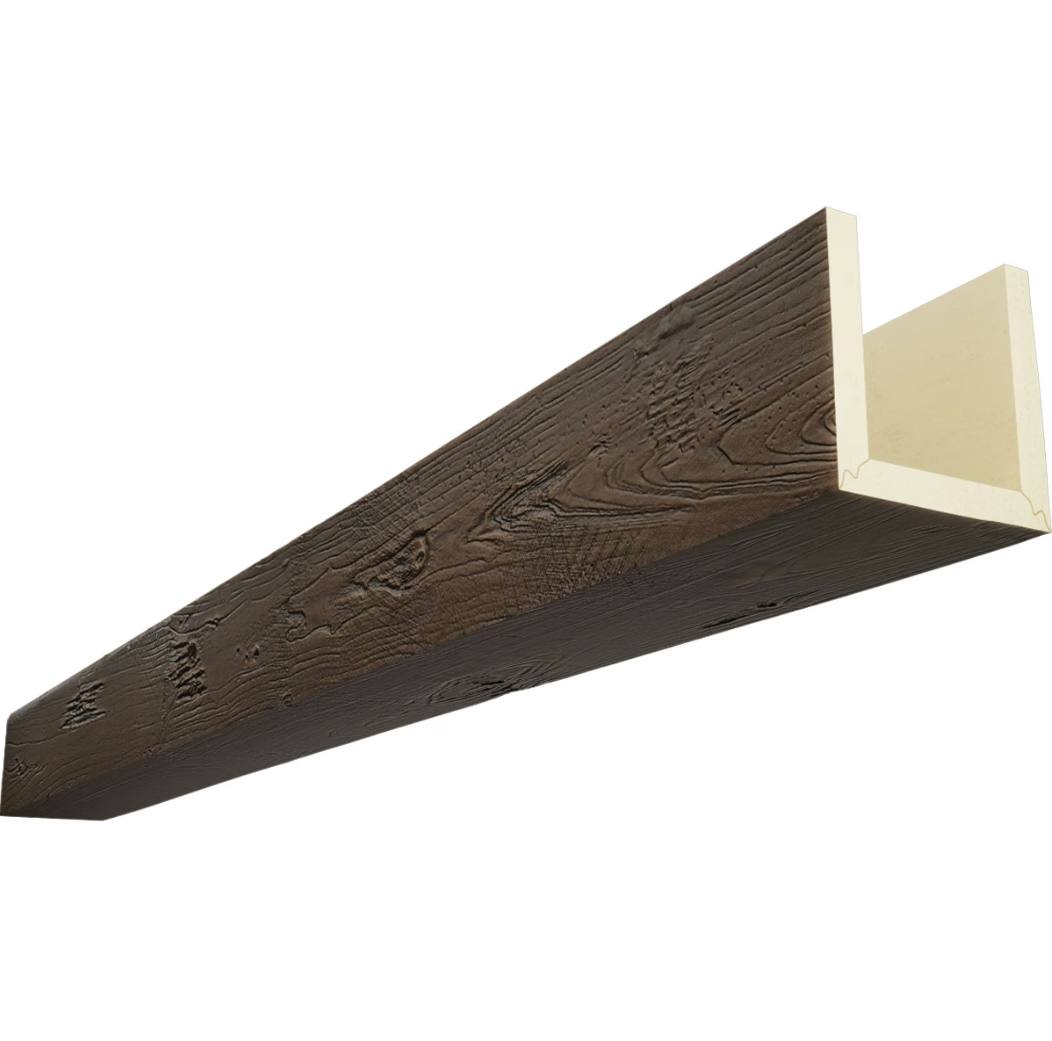
For wood-grain beams, the mold interior is lined with a silicone rubber impression taken from a master pattern. The master pattern is either a real wood beam (for reproduction of specific species and grain patterns) or a CAD-designed texture (for consistent, repeatable surface patterns). The silicone lining captures every pore, ridge, and grain line with fidelity that exceeds what the human eye can detect at normal viewing distance.
The mold also controls the wall thickness and internal rib geometry. These are determined by inserts and cores placed inside the mold cavity before the foam is poured. For a hollow-shell beam, a removable core sits inside the cavity, leaving an empty space. The core's shape and position determine the wall thickness and the shape of the internal cavity.
Surface replication: the grain and texture process
High-quality wood grain replication is the most technically demanding aspect of faux beam production. The silicone mold lining captures the surface topology of the master pattern, but the finished beam's visual quality also depends on how the foam fills the mold and how the surface releases from the mold after curing.
Inferior production methods use a single pour, which can result in thin spots where the foam didn't fill the mold's fine detail completely. Better methods use a controlled two-stage pour:
Stage 1: A low-pressure pour of foam into the mold, filling the fine surface detail. This layer sits for a short pre-cure period.
Stage 2: A second pour fills the remaining cavity and bonds to the first layer. The bond line between the two pours is invisible in the finished product because both layers are the same chemistry and fully compatible.
This two-stage method produces surface detail that is consistent across the entire beam surface — every inch of the grain pattern is fully replicated.
Dimensional consistency and tolerances
The manufacturing tolerance for our beam dimensions is plus or minus 2mm on linear dimensions. This is tighter than the typical tolerance for real timber, which can vary by 3 to 5mm over the same length due to moisture content changes. The polyurethane beam you order at 10 feet will be 10 feet when it arrives, and it will still be 10 feet a year later — real timber will have contracted or expanded with the seasons.
Dimensional consistency matters for layout. If you're installing beams in a parallel run with 24-inch spacing, each beam must be the same length or the spacing will drift across the room. Real timber of the same nominal length can vary by 1/4 inch or more between pieces. Polyurethane beams don't have this problem.
The molds themselves are inspected and measured regularly. We check critical dimensions — the four external faces and key internal features — using a combination of manual gauges and 3D scanning on a sampling basis. When a mold shows wear that approaches tolerance limits, it is remachined or replaced before it produces out-of-spec beams.
Internal structure and bracing
The internal bracing of a hollow-shell beam is not arbitrary. It is designed using finite element analysis (FEA) to maximize strength-to-weight ratio while minimizing material use. The result is a beam that is light enough to install without structural support hardware but strong enough to span 16 feet and resist the normal loads encountered in a residential or commercial ceiling.
The rib spacing is calculated based on the beam's cross-section and expected span. A 6x4 beam spanning 12 feet has ribs every 24 inches. The same cross-section spanning 20 feet has ribs every 18 inches. The design changes based on the application.
For importers evaluating factories, the internal structure is one of the clearest indicators of production sophistication. A factory that can show you FEA analysis of its beam designs is operating at a different level than one that produces by rule of thumb.
Quality control and sampling
Every production run is sampled and tested. We test for:
- Density (target: 6 to 10 pounds per cubic foot for structural beam applications)
- Compressive strength (target: 20 to 30 psi minimum)
- Surface hardness ( Shore D durometer reading of 55 to 65)
- Dimensional accuracy against the mold specification
- Adhesive bond strength between the two pour stages
For importers with large orders, we can provide test reports for each production batch. Third-party testing by SGS, Bureau Veritas, or Intertek is available on request for an additional fee.
The technology gap in the market
Not all faux beam manufacturers operate at this level. The market includes producers using simple open-pour methods, hand-mixed foam, and molds made from plaster or fiberglass that wear quickly and produce inconsistent surfaces. A beam from a low-tech producer can look passable in a photograph but look obviously wrong in person.
For buyers, the practical indicators of production quality are: dimensional consistency across multiple pieces, surface detail that holds up at close inspection, consistent color across multiple beams, and weight that matches the expected range for the beam size. If any of these feel off, the production technology is likely sub-optimal.
We welcome factory visits and video walkthroughs of the production process. Seeing the mixing equipment, the mold storage, and the quality control process gives buyers confidence in what they're ordering and helps us understand what they need.
Foam chemistry and its role in beam performance
Polyurethane foam is a thermosetting polymer produced by the reaction of an isocyanate with a polyol. The chemistry of this reaction determines the foam's final properties.
The most important variables in the chemistry are the index (the ratio of isocyanate to polyol), the catalyst package (which controls reaction rate and cell structure), the blowing agent (which produces the gas that creates the cellular structure), and the surfactant (which stabilizes the cells during the reaction).
For faux beams, the chemistry is optimized for high rigidity, good screw-holding strength, smooth surface quality, and dimensional stability. This is a different optimization than, say, a packaging foam or a furniture cushion.
Mold temperature management
Mold temperature is one of the most critical variables in the molding process. Variations of even 5 degrees Fahrenheit can affect the foam's surface quality, density distribution, and demolding time.
Our molds are heated to a target temperature of 100 to 120 degrees Fahrenheit before the pour, and the temperature is maintained throughout the cure cycle. The mold temperature is monitored by sensors embedded in the mold body, and the heating system adjusts in real time to maintain the target.
A mold that is too cold produces a foam with a thin, brittle surface skin and poor cell structure. A mold that is too hot produces a foam with internal voids and a soft surface. The temperature management system includes water channels within the mold body that circulate temperature-controlled water.
Production scheduling and capacity
Our production capacity is designed to handle both small custom orders and large container-load orders. Small custom orders are scheduled in batches of five to fifteen orders, while large orders are scheduled as dedicated production runs.
Our standard production capacity is approximately 12,000 linear feet of beam per week, distributed across the standard profile molds. Custom profiles are produced on a project-specific basis with capacity allocated to each project.
For very large orders spanning multiple containers over a multi-month period, we offer production capacity reservation agreements that guarantee capacity and provide pricing stability over the agreement period.
Quality certifications and audit trails
For projects requiring quality documentation, we maintain ISO 9001 certification covering the production process from raw material inspection through final packaging.
For projects requiring specific certifications (LEED documentation for green building, FSC chain-of-custody certification for wood-finish beams, CE marking for European markets), we maintain the relevant certifications and provide the documentation on request.
The audit trail for each production batch includes the raw material batch numbers, the mold used, the pour temperature and time, the cure time, the finishing recipe, the QC inspection results, and the photographic record. This documentation is available to importers and project specifiers on request.
Technical References
ASTM standards cited in every specification
Test Data
Lab results from internal testing program
Updated 2026
Reviewed against current product specs