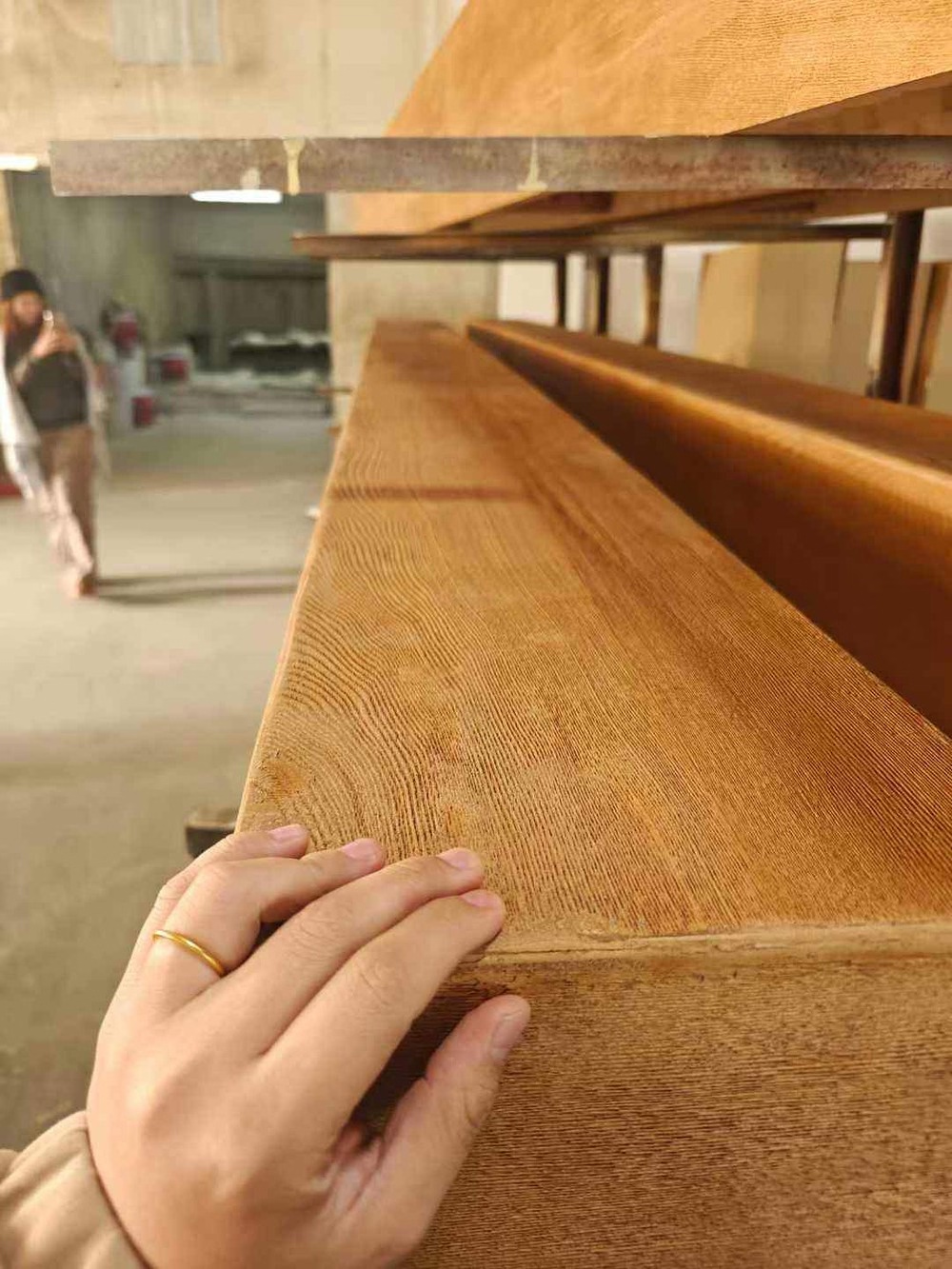
Polyurethane faux timber beams require far less maintenance than real wood, but they aren't maintenance-free. Dust accumulates, occasional spills happen, and in kitchens or commercial spaces, grease and cooking residue can settle on any horizontal surface. A practical cleaning routine keeps beams looking good for years with minimal effort.
Why maintenance differs from real wood
Real wood beams require regular oiling or sealing to prevent drying, cracking, and moisture damage. They stain easily and can harbor insects. They expand and contract with humidity. Polyurethane eliminates most of these concerns: it doesn't absorb moisture, doesn't support insect life, and doesn't crack from drying. What it does have is a painted or sealed surface that accumulates dust and can be stained by certain chemicals.
The maintenance burden for polyurethane beams is lower than for real timber, but it's not zero. The surface needs to be kept clean to maintain its appearance, and certain cleaning agents can damage the finish.
Routine dust removal
For most residential installations in typical living spaces, dust removal is the only regular maintenance required. Ceiling beams collect dust at the same rate as any other ceiling surface — more slowly than horizontal furniture surfaces but faster than vertical walls.
Dust removal options, in order of effectiveness:
Lamb's wool duster on an extension pole — The lamb's wool fibers trap dust rather than spreading it, and the extension pole allows access to beams at ceiling height without a ladder. Shake out the duster outdoors after each use. This is the fastest method for regular maintenance.
Microfiber cloth on an extension pole — Dampen the cloth lightly with water, wring it until nearly dry, and wipe the beam faces. The microfiber captures dust and light grime. Rinse and wring between passes. This is slower than a duster but more thorough.
Vacuum with soft brush attachment — Use the upholstery brush, not the crevice tool. The soft bristles lift dust from the grain texture without scratching the finish. This is the best method for beams with heavy distressed or textured finishes where dust settles in the surface relief.
Compressed air — For beams with complex surface detail (deep grain lines, carved textures), compressed air blown across the surface dislodges dust from crevices. Use short bursts. Do not hold the nozzle too close to the surface — the force can damage the finish.
Frequency depends on environment. In a typical single-family home, monthly dust removal is sufficient. In a commercial space with HVAC that runs continuously, every two weeks may be appropriate. In a kitchen or cooking-heavy environment, every week.
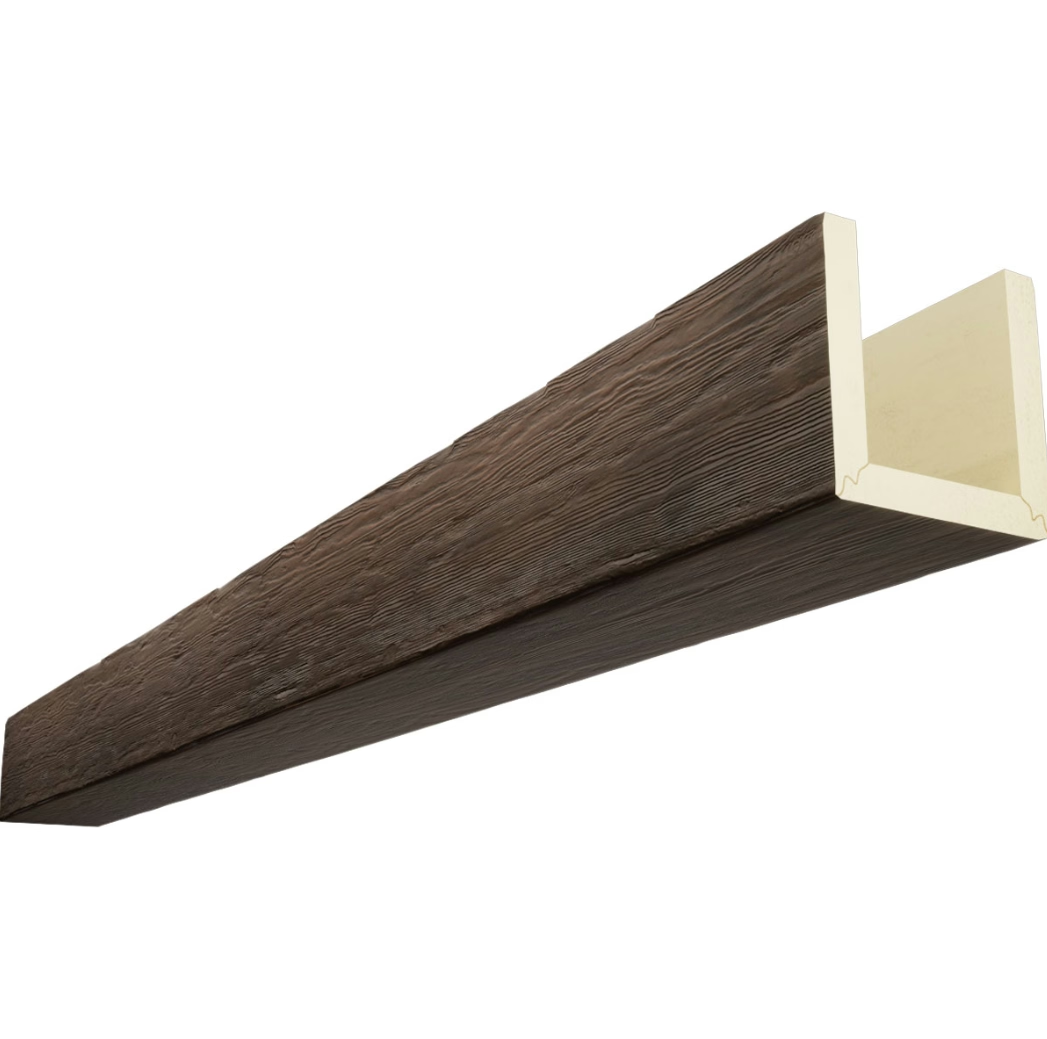
Spot cleaning and stain treatment
Stains on polyurethane beams are generally of two types: surface contamination (dust and grime that builds up over time) and localized stains (a specific spot from a spill, a fingerprint, a scuff mark).
For general surface grime: Mix a few drops of mild dish soap in warm water. Dampen a microfiber cloth with the solution, wring it nearly dry, and wipe the affected area. Follow immediately with a clean damp cloth to rinse, then a dry cloth to wipe dry. Never let water pool on a polyurethane surface — while the foam itself is closed-cell and won't absorb water, pooled water can work its way into seams or joints.
For scuff marks: Scuffs from foot traffic or furniture movement usually come off with a soft pencil eraser. Rub gently and wipe away the eraser residue with a dry cloth. For heavier scuffs, apply a small amount of white toothpaste (the plain kind, not gel) to a soft cloth and rub the scuff in a circular motion. Wipe clean and dry.
For grease or cooking residue (kitchens): Mix warm water with a few drops of dish soap and a tablespoon of white vinegar. Apply with a soft cloth, let sit for two minutes, then wipe clean. The vinegar cuts grease without damaging most finishes. Test on an inconspicuous area first if the beam has a custom or non-standard finish.
For ink marks or permanent marker: Apply a small amount of isopropyl alcohol (rubbing alcohol) to a cotton swab and dab the stain. Do not rub — dabbing prevents spreading. The alcohol evaporates quickly and usually lifts the mark. Follow with a clean damp cloth and dry.
Products to avoid
Certain cleaning products will damage a polyurethane beam's finish and should not be used:
Abrasive cleaners — Soft Scrub, Comet, powdered cleansers, and steel wool scratch the surface finish. Even "gentle" abrasive pads can leave micro-scratches that dull the finish over time.
Solvent-based cleaners — Acetone, paint thinner, lacquer thinner, and nail polish remover dissolve the topcoat. Even brief contact can leave a dull or cloudy spot.
Bleach — Concentrated bleach damages most paint and stain finishes. Diluted bleach solutions are less harmful but still not recommended.
Ammonia-based glass cleaners — Glass cleaners like Windex contain ammonia, which can soften and cloud certain topcoats. Use water-based cleaners instead.
High-pressure water — Pressure washers or high-pressure nozzles will force water into seams and joints. Use low-pressure methods only.
If you're uncertain about a specific cleaning product, test it on an inconspicuous area — behind a light fixture or inside a closet — and wait 24 hours to see if the finish is affected.
Environmental maintenance schedules
Residential living spaces (living room, bedroom, hallway): Dust monthly, spot-clean as needed. Deep clean (full soap-and-water wash) every six months.
Kitchens: Dust biweekly, wipe visible grease films weekly, deep clean monthly. Grease builds up on horizontal beam surfaces in kitchens, particularly above the cooktop. An extraction fan running during cooking reduces the buildup significantly.
Bathrooms: Dust monthly, wipe down with a damp cloth monthly. In high-humidity bathrooms, check the beam-to-ceiling joint annually for any sign of moisture intrusion. Reseal with paintable caulk if the joint has opened.
Commercial spaces (restaurants, retail, lobbies): Dust weekly, spot-clean high-traffic areas weekly. Deep clean monthly. Commercial spaces accumulate dust and grime faster due to higher occupancy and HVAC load.
Dusty or high-pollution environments: In industrial areas, near major roads, or in regions with high airborne particulate, increase cleaning frequency accordingly. Dust in these environments is often slightly oily or acidic and can etch finishes if left for extended periods.
Long-term finish maintenance
Over years, the topcoat on a polyurethane beam may begin to lose some of its initial luster — a process that takes five to ten years in most residential environments. When this happens, the finish can be refreshed with a thin coat of clear acrylic matte finish spray. This restores the uniform sheen and adds a fresh layer of protection.
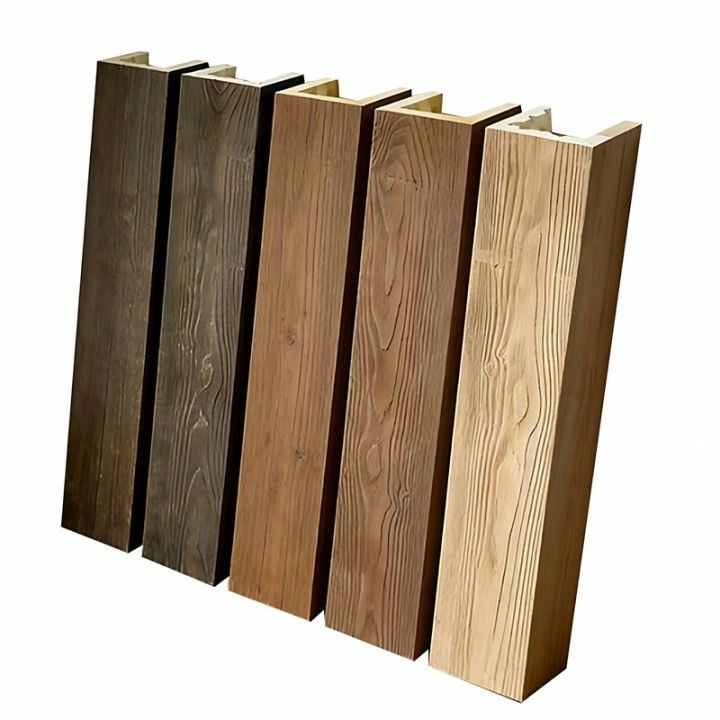
For beams with wood-grain finishes, re-spraying with a clear coat is the simplest maintenance step. For beams with solid colors, touching up the color first, then clear-coating, gives the best result.
This maintenance step is usually not needed for the first five to seven years in a residential installation. In commercial spaces with higher traffic and cleaning frequency, it may be needed in three to five years.
The key to long-term finish maintenance is catching the decline early. An annual inspection — taking a ladder up to the beams once a year and looking at them from arm's length — will reveal when the finish is beginning to show its age before it becomes obvious from below.
Cleaning schedules and labor planning
For property managers and cleaning service providers, a documented cleaning schedule for polyurethane beam maintenance ensures consistency and prevents deferred maintenance.
A reasonable schedule for residential beam cleaning:
Weekly — Visual inspection by the homeowner, light dusting only where needed.
Monthly — Thorough dusting with lamb's wool duster or microfiber cloth.
Quarterly — Spot cleaning of any stains or marks, particularly in kitchens and high-touch areas.
Annually — Comprehensive cleaning with soap and water, inspection for any finish issues, scheduling of any touch-up work.
For commercial spaces:
Daily — Spot cleaning in high-touch areas, particularly near concession counters and restrooms.
Weekly — Thorough dusting of all accessible beam surfaces.
Monthly — Comprehensive cleaning with soap and water in all areas.
Quarterly — Inspection of finish condition, scheduling of any refinishing work.
The labor cost for this maintenance schedule is modest: most residential cleaning requires 15 to 30 minutes per session; commercial cleaning requires more time but is typically performed during off-hours.
Professional cleaning services
For high-end installations or commercial spaces where DIY cleaning is impractical, professional cleaning services can maintain the beam finish to a high standard.
Professional cleaners who work with architectural finishes — typically the same firms that maintain marble, polished wood, and other high-end materials — have the tools and techniques for safe, effective polyurethane beam cleaning. They use commercial-grade microfiber systems, neutral-pH cleaning agents, and the appropriate tools for ceiling-height work.
The cost of professional cleaning varies by region and project size but is typically $0.25 to $0.50 per square foot of beam surface per cleaning. For a typical home with 200 linear feet of beam (roughly 100 square feet of beam surface), the quarterly cleaning would cost $25 to $50 per session.
For commercial spaces, professional cleaning is often bundled with other maintenance services (window cleaning, floor maintenance, restroom cleaning) and may not be billed separately.
Cleaning safety considerations
Beam cleaning is generally a low-risk activity, but a few safety considerations are worth noting.
Working at height. Beam cleaning often requires a step ladder, an extension ladder, or a scaffold. Use the appropriate equipment for the ceiling height. Never stand on a chair or other unstable surface to reach a beam.
Eye protection. Cleaning solutions and dust can splash into eyes. Safety glasses are recommended, particularly when working overhead.
Skin protection. Some cleaning agents can irritate skin. Use gloves when applying cleaning solutions, particularly for extended cleaning sessions.
Ventilation. When using cleaning agents indoors, ensure adequate ventilation. Open windows or run the HVAC system to circulate air. Most cleaning agents we recommend are low-VOC and safe for indoor use, but ventilation is always a good practice.
Slip hazards. Wet floors from cleaning solutions can be a slip hazard. Place warning signs or wet floor indicators in the area being cleaned.
Long-term appearance retention
A well-maintained polyurethane beam installation will retain its appearance for 15 to 20 years in a residential environment with minimal intervention. The finish does not fade significantly, the foam does not degrade, and the structural integrity is maintained indefinitely.
The most significant change over time is the topcoat's gradual loss of initial luster. This is a surface phenomenon, not a structural one, and it is reversible with a clear coat refresh. The color depth and the multi-tone wood grain pattern are preserved through the topcoat refresh.
For installations where the finish has been neglected or damaged, the beam can be refinished entirely. The process involves sanding the existing finish (which does not damage the underlying foam at light grit levels), applying a new base coat, applying the glaze layers, and a new topcoat. A fully refinished beam looks indistinguishable from a new beam, at a fraction of the replacement cost.
Maintaining beam installations in vacation properties
Vacation properties — short-term rental homes, vacation villas, timeshares — present specific maintenance challenges because the property is occupied by different people with different cleanliness standards and different relationships to the space.
For polyurethane beam installations in these properties, the maintenance approach is more aggressive than in owner-occupied homes. The cleaning cycle is shorter, and the inspection schedule is more frequent.
Best practices for vacation property beam maintenance:
- Include beam cleaning in the property turnover checklist.
- Stock the property with appropriate cleaning supplies (microfiber cloths, mild soap, duster).
- Inspect the beam finish during quarterly deep cleans.
- Address any damage or wear immediately rather than deferring to the next major maintenance cycle.
The cost of this maintenance is modest compared to the cost of replacing or refinishing damaged beams, and it preserves the property's visual appeal — which is a key factor in the property's rental pricing and guest satisfaction.
Technical References
ASTM standards cited in every specification
Test Data
Lab results from internal testing program
Updated 2026
Reviewed against current product specs