Wholesale importers of building materials live with a familiar set of headaches. A container arrives at port, and suddenly there's a customs broker, a freight forwarder, an inland trucking company, a warehousing decision, possibly a tariff classification dispute, and a final-mile courier all in the same conversation. Each handoff introduces paperwork, cost variability, and delay risk. Multiply that across multiple orders per year and the operational burden becomes substantial.
Delivered Duty Paid, or DDP, shipping exists specifically to collapse that complexity into a single transaction. The seller takes legal and financial responsibility for the goods from the factory floor to the buyer's specified address. Duties, taxes, freight, customs clearance — all rolled into one negotiated price. For wholesale buyers of polyurethane faux beams, it's a delivery model that often changes the economics of international sourcing.
How DDP Reshapes Wholesale Import Logistics
International building material sourcing has always involved handoffs between parties who may not know each other, don't share software systems, and bill on different schedules. DDP doesn't eliminate those parties — it folds them behind a single contract with one accountable party.
What DDP Actually Means in Practice
When a quote is labeled DDP, it means the supplier has agreed to deliver the goods, fully cleared through customs, with all applicable duties and taxes paid, to a named destination. The buyer is essentially the recipient, not the importer of record. The supplier takes on the importer-of-record role for that shipment, which carries legal responsibility for accurate declaration, tariff classification, and compliance with the destination country's import regulations.
This is materially different from the more common Free On Board or Cost, Insurance, and Freight terms. Under FOB, the buyer takes responsibility once the goods cross the ship's rail at the origin port. Under CIF, the seller is responsible for freight and insurance to the destination port, but the buyer handles everything from the dock onward. DDP goes further — the seller's responsibility extends through customs and inland delivery to the buyer's door, warehouse, or job site.
For a wholesale buyer, the practical difference is huge. Instead of managing four or five separate contracts with different service providers, you're managing one. The supplier handles the freight forwarder, the customs broker, the inland carrier, and the duties. You receive one invoice, one delivery, and one point of accountability if something goes wrong.
Why This Matters for Faux Beam Buyers
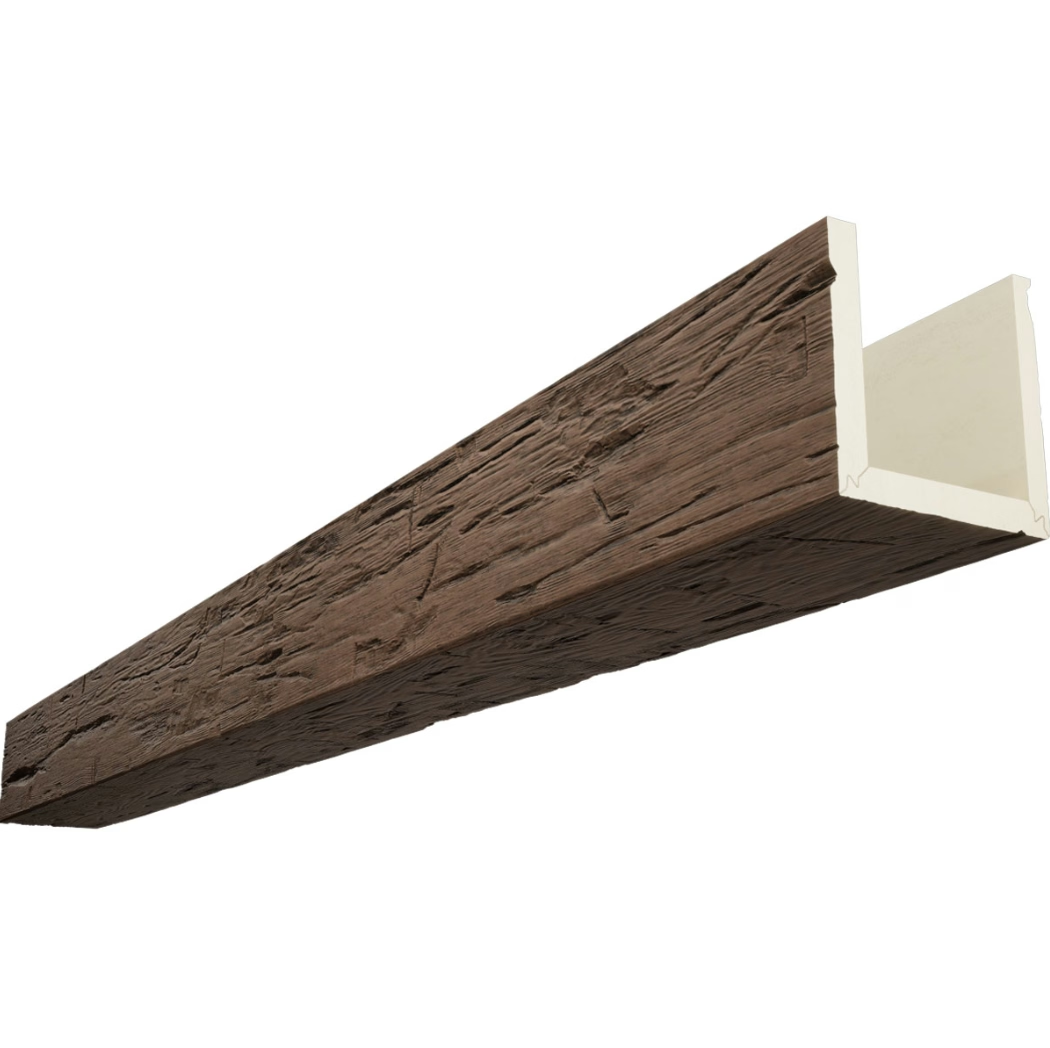
PU faux beams are a particular kind of product to import. They're bulky but extremely lightweight for their volume. A typical order involves long lengths — often 12 to 20 feet per beam — which means specialist crating, careful container loading, and consideration of how the beams will be handled at each handoff. They're also durable, which is good, but their irregular dimensions mean they don't stack efficiently the way pallets of uniform goods do.
This combination of characteristics creates real logistical complexity. Standardized shipping calculators don't always handle them well. Trucking companies unfamiliar with the product can quote conservatively because they're padding for unusual handling. Customs officials in some countries occasionally question the classification of polyurethane decorative products, which can hold containers at port while the question gets resolved.
DDP arrangements shift all of that uncertainty to the seller. An experienced faux beam exporter has handled these wrinkles enough times that the friction largely disappears. They've already negotiated with carriers who understand how to handle long, light loads. They have standing relationships with customs brokers in major destination countries. They've worked through tariff classification issues and built consistency into their export documentation. That institutional knowledge becomes part of what you're buying when you choose DDP.
Cost Structure and Transparency
A common concern from wholesale buyers is that DDP obscures the actual cost breakdown. There's some truth to this. When a supplier quotes a single delivered price, it can be harder to see exactly how much went to freight, how much to duties, and how much to the supplier's margin on the logistics services. For buyers who want to optimize their landed cost, that opacity can feel uncomfortable.
The better DDP providers have addressed this. Mature suppliers quote DDP pricing as a structured build-up: ex-works price of the goods, plus freight cost per container or per cubic meter, plus estimated duties and taxes at current tariff rates, plus a transparent logistics service fee. The buyer can see each line and validate that the numbers are reasonable. Some suppliers go further and provide the HS code, the duty rate, and the receipt from customs so the buyer can verify post-shipment.
For buyers new to international sourcing, this transparency is often more valuable than chasing the absolute lowest headline price. A DDP quote that's slightly higher but fully transparent tends to deliver more predictable landed cost than a cheaper alternative that turns out to require additional fees, demurrage charges, or unexpected duties at port.
Choosing the Right Incoterm for Your Business
DDP isn't always the right choice. Some buyers — particularly those who already have strong logistics operations, prefer to maintain direct relationships with their own freight forwarders, or want full control of their import compliance — will find FOB or CIF terms more suitable. Large distributors with bonded warehouses, in-house customs teams, or specialized logistics staff often benefit from maintaining control over as much of the chain as possible.
For smaller importers, first-time international buyers, companies without dedicated logistics staff, and project-based purchasers who would rather focus on their core business than freight management, DDP removes a category of work that would otherwise consume significant time. It also moves delivery timing risk — a major source of stress in building material supply — to the supplier, who has more leverage over the carriers.

The right answer depends on your operational scale, your in-house capabilities, and how much variability you can absorb. There's no universally correct incoterm for all importers in all situations.
Common Pitfalls in DDP Arrangements
Not all DDP arrangements are equal. Several recurring issues catch buyers off guard. The first is destination inaccuracy. DDP is only as good as the address on the quote. If the actual delivery location has restrictions — limited truck access, time-of-day delivery windows, remote addresses that require specialized carriers — the cost may be higher than the quote assumed. Always confirm the specific delivery address and any access constraints before accepting a DDP quote.
The second is customs handling of duties. Some countries and product categories require the actual consignee — not a third-party importer of record — to hold certain licenses or registrations. Electrical products, food items, and certain regulated materials sometimes fall into this category. Decorative building materials typically don't, but it's worth confirming that the destination country doesn't have specific import requirements that would complicate a third-party importer-of-record arrangement.
The third is documentation for downstream buyers. If your imported beams will be resold to your own customers, they may need invoices and documentation that show specific information. Some DDP suppliers issue simplified invoices to roll multiple costs into one line, which can be useful for landed cost accounting but unhelpful for VAT, sales tax, or downstream resale documentation. Confirm what paperwork you'll receive and whether it meets your downstream needs.
Practical Mechanics and Long-Term Outcomes
Once the conceptual differences between incoterms settle in, what buyers actually care about is the operational detail: how each component of a DDP quote is built, when goods will actually arrive, and how the relationship matures over repeated orders. These practical questions often decide whether a DDP arrangement stays in place or quietly gets replaced with a different model.
How Suppliers Structure DDP for Beam Orders
When a PU faux beam supplier quotes DDP for a wholesale order, the breakdown usually looks something like this. There's a base product cost per beam, multiplied by the order quantity. There's a crating and packaging cost, often quoted per beam or per crate. Ocean freight is quoted per container for full container loads, or per cubic meter for less-than-container loads. Customs duties and import taxes are calculated against the customs value using the appropriate HS code, which for polyurethane decorative articles is typically 3925 or 3926 in the Harmonized System. Inland delivery from port to the buyer's destination is quoted separately or absorbed into the logistics service fee.
For full container orders, DDP pricing tends to be quite competitive because the supplier can negotiate volume freight rates and has predictable duty costs per shipment. For smaller wholesale orders — partial containers, consolidated shipments, or smaller pallets going by air freight — DDP still works but the per-unit cost of the logistics component is higher. Knowing your order volume upfront helps you decide whether DDP is the most economical option.
Timing and Lead Times
DDP doesn't shorten the underlying transit time. A container ship crossing the Pacific still takes two to three weeks depending on origin and destination. Custom clearance still takes days. Inland trucking still has its own scheduling. What DDP changes is the buyer's exposure to those timeframes. With DDP, the supplier is on the hook if delivery slips because of logistics problems on their side. With FOB, the buyer absorbs that variability.
Lead times for faux beams under typical DDP arrangements are usually four to six weeks for standard finishes and sizes, plus one to three weeks for inland delivery once the container arrives at port. Custom finishes, oversized beams, or unusual destinations can extend that timeline. Planning ahead is critical for project-based buyers, especially when installation crews are scheduled in advance.
Building a Working Relationship
Wholesale buyers tend to start with a single DDP shipment to test the relationship. A supplier who handles the first shipment well — with accurate duties, clean documentation, on-time delivery, and proactive communication when issues come up — earns the buyer's repeat business on much larger orders. A supplier who under-quotes, hides fees, or blames third parties when problems occur tends not to get a second chance.
Beyond the transactional aspects, a strong DDP relationship gives buyers a logistics partner who understands their product and their destination. Over time, that partner can recommend cost-saving opportunities — different container loading patterns, alternative carriers, duty optimization strategies, or seasonal timing windows — that materially improve the buyer's margin. That kind of value is hard to put a line to but it shows up clearly across a year of orders.
For importers serious about PU faux beams as part of a sustainable product line, the conversation usually evolves from "how much per beam delivered" into "how do we make this supply relationship work better over years." DDP is the framework that makes that long-term conversation practical.

Technical References
ASTM standards cited in every specification
Test Data
Lab results from internal testing program
Updated 2026
Reviewed against current product specs