
There is a moment when a faux wood beam goes from looking like a piece of decorative trim to looking like a piece of architecture, and that moment almost always involves hardware. The single detail that delivers that shift most reliably is a row of decorative faux iron bolts running across the face of the beam where it meets a post or a perpendicular beam.
Used by itself or paired with matching faux iron straps, bolts give the beam a sense of weight and age that even the best stain and grain texture cannot achieve. For designers working on farmhouse, industrial, mountain lodge, or Mediterranean projects, faux iron bolts are a foundational detail in the visual vocabulary.
Why Faux Iron Bolts Work
A real timber-frame joint uses wooden pegs or iron bolts that pass all the way through the timber. The bolts hold the joint together, and their heads are exposed on the surface because there is no reason to hide them. They were honest hardware in the most literal sense.
Modern faux beams do not need real bolts because nothing is being held together structurally, but the brain still reads a beam with bolts as older, heavier, and more substantial than the same beam without them. This is a design trick that has been used for centuries in painted scenery and stage sets, and it works in real rooms too.
The bolt head itself is the focal element. A round or square head with a slightly rough texture catches light differently than the surrounding wood grain, which gives the eye a place to land. A line of bolts along the joint becomes a deliberate visual rhythm rather than a single distraction.
Material and Finish Options
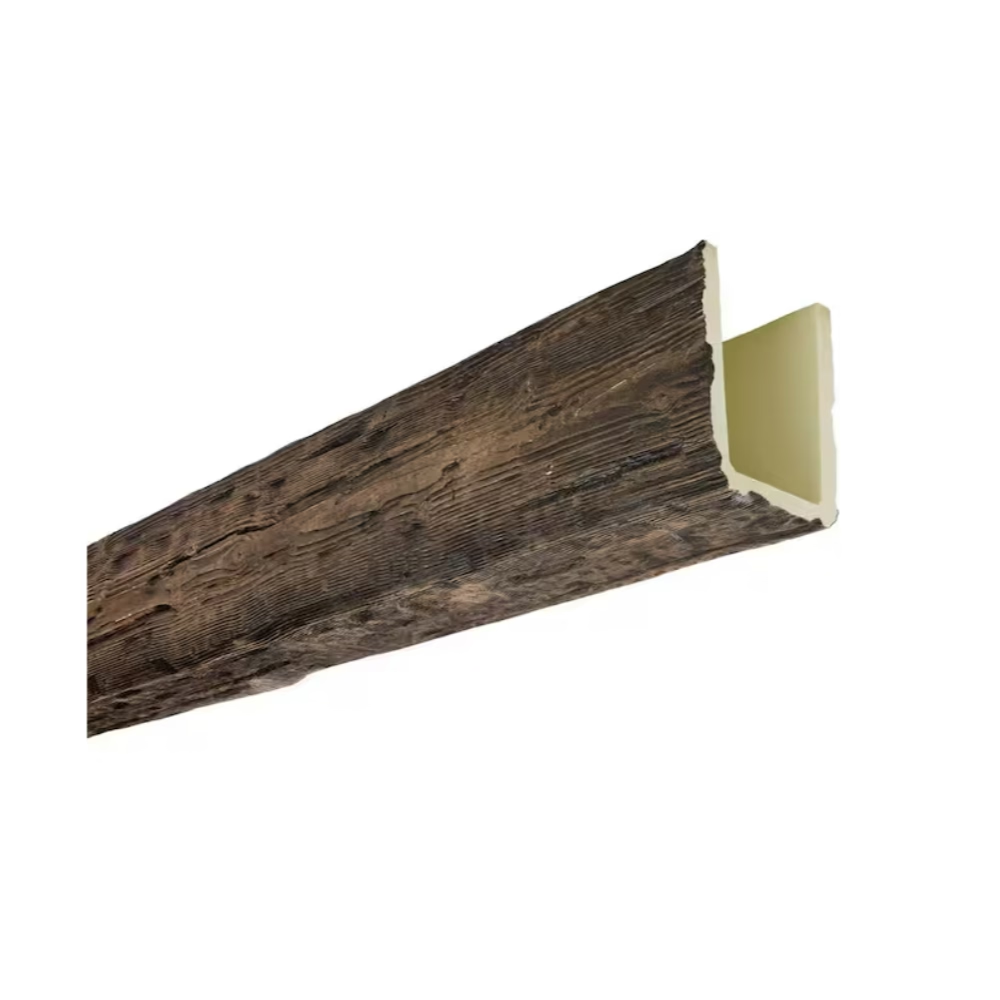
Most decorative faux bolts for PU beams are made from cast iron, cast aluminum, or molded polyurethane with a metallic finish. Each option has tradeoffs.
Cast iron bolts look the most authentic but are heavy and can rust if the environment is humid. For interior applications, the rusting risk is low, and the weight is rarely a structural concern because the bolt is purely decorative.
Cast aluminum bolts are much lighter and do not rust, which makes them a good choice for coastal projects or for installations near pools and outdoor kitchens. The surface finish on cast aluminum has come a long way in recent years and now mimics cast iron convincingly.
Molded polyurethane bolts are the lightest option and the most affordable. They can be painted with metallic finishes to look like iron or bronze. They lack the cold feel and weight of real metal, but for projects on a tight budget or with weight constraints, they deliver the right visual at a workable price point.
Sizing the Bolts to the Beam
The size of the bolts should be proportional to the size of the beam. A general rule is that the bolt head should be roughly one-fifth to one-quarter the width of the beam face. So a six-inch beam looks right with bolts that are about an inch and a quarter across the head, while a ten-inch beam can take bolts up to two inches across.
Larger bolts read as more rustic and older. Smaller bolts read as more refined and modern. A mountain lodge project often benefits from larger, rougher bolts, while a contemporary loft looks better with cleaner smaller bolts that almost disappear at a distance.
Layout and Placement on the Beam
The most common placement for faux iron bolts is in a single row across the face of the beam at the joint with another beam or a vertical post. The bolts typically alternate in spacing, with a wider gap between bolts at the center of the joint and tighter spacing toward the edges, mimicking the way real timber framers laid out their pegs.
Some designers also place bolts along the length of the beam at regular intervals, particularly on rustic beams where the bolt heads serve as visual punctuation. This works best on beams that are unusually long, because the bolts break up what would otherwise be a flat surface.
Bolts should never be placed randomly. Even a slightly off-grid bolt will catch the eye and pull attention away from the rest of the room. A simple measurement along the beam face and a pencil mark before drilling is enough to keep the layout consistent.
Installation Methods for Faux Iron Bolts
The simplest installation method uses a short screw passing through the back of the bolt into the beam face. The screw is hidden inside the bolt body and does not show on the surface. This method is fast, reversible, and works well for both real and faux wood beams.
For PU beams, the installer should pre-drill a shallow pilot hole to avoid splitting the foam or compressing it unevenly. A small countersink on the back side of the bolt allows the screw head to seat cleanly so the bolt sits flush against the beam.
A second method uses adhesive, which works for lightweight molded polyurethane bolts. The adhesive is applied to the back of the bolt, and the bolt is pressed into place and held for a few seconds until the adhesive grabs. Adhesive-only mounting is not recommended for cast iron bolts because the weight pulls the bond loose over time.
A third method, used on the highest-end installations, involves a small threaded insert embedded in the beam that the bolt threads into. This is the most secure method and is the only one suitable for outdoor installations where wind and temperature swings put stress on the bond.
Common Finishes and Their Effects
The finish on the bolt changes the character of the entire beam assembly. A matte black bolt finish reads as traditional and works in farmhouse and craftsman-style interiors. A bronzed or oil-rubbed finish reads as older and more refined, suitable for European-inspired or Tuscan interiors. A hammered silver or pewter finish reads as industrial or modern farmhouse.
For projects that want to push the vintage look even further, the bolts can be lightly rusted or distressed before installation. A quick wipe with a sponge dipped in white vinegar and salt solution speeds up the oxidation on cast iron bolts, producing a varied surface that looks decades old.
Pairing Bolts with Other Hardware
Bolts are usually the first piece of hardware added to a faux beam, but they rarely stand alone. Designers often pair them with matching faux iron straps that wrap around the beam joint, or with corbels and brackets that visually support the beam at its connection point.
When pairing hardware, the finishes must match exactly. A bronze bolt with a black strap looks like two different ideas fighting for attention. Distributors that sell beam hardware as a coordinated kit help contractors avoid this problem and speed up the specification process.
Use Cases Across Different Project Types
In residential projects, faux bolts show up most often in kitchens, great rooms, entryways, and master bedrooms where the ceiling is a focal element. Designers working on farmhouse or barn-inspired homes often specify bolts on every beam in the main living area.
In commercial projects, faux bolts appear in restaurant interiors, hotel lobbies, retail stores, and tasting rooms where the brand identity leans on a vintage or industrial aesthetic. They are especially popular in wine bars and craft breweries, where the rustic look reinforces the product story.
In hospitality venues like ski lodges and mountain resorts, faux bolts are a near-universal detail on every beam because the entire design language is built around exposed timber-frame aesthetics.
What to Watch for When Sourcing Faux Iron Bolts
For importers and wholesalers, the most important specification to watch is the consistency of the finish across a production run. Bolts that vary in color from one carton to the next will frustrate installers and create uneven results on the beam face.
Sample approval is essential for any new vendor relationship. Two bolts from different production runs should look identical when placed side by side. If they do not, the supplier's quality control is not consistent enough to ship to professional customers.
Long-Term Maintenance Considerations
Faux iron bolts are essentially maintenance-free in interior applications. A light dusting once or twice a year is enough to keep them looking new. In humid environments, cast iron bolts can develop surface rust that is actually desirable in some design styles but problematic in others. A thin coat of clear matte sealer applied at the factory prevents rust without changing the appearance.
For outdoor installations, only cast aluminum or properly sealed cast iron bolts should be used. Molded polyurethane bolts will fade and degrade in direct sunlight unless they carry a UV-resistant coating.
Closing Thoughts From the Workshop
A beam without hardware is a piece of trim. A beam with hardware is architecture. Faux iron bolts are the most affordable way to make that transformation happen, and they are also one of the easiest details to install correctly even for a contractor who has not worked with them before. For designers building a vintage or industrial aesthetic, bolts are an essential tool in the kit.
Technical References
ASTM standards cited in every specification
Test Data
Lab results from internal testing program
Updated 2026
Reviewed against current product specs


