
The joist beam is the most fundamental form of decorative beam. It is, at its core, a rectangular length of material that spans from wall to wall or from beam to beam, carrying the visual weight of the ceiling without unnecessary ornamentation. The simplicity of the joist beam is its greatest strength: it works in any style of interior, from the most refined contemporary space to the most rustic cabin.
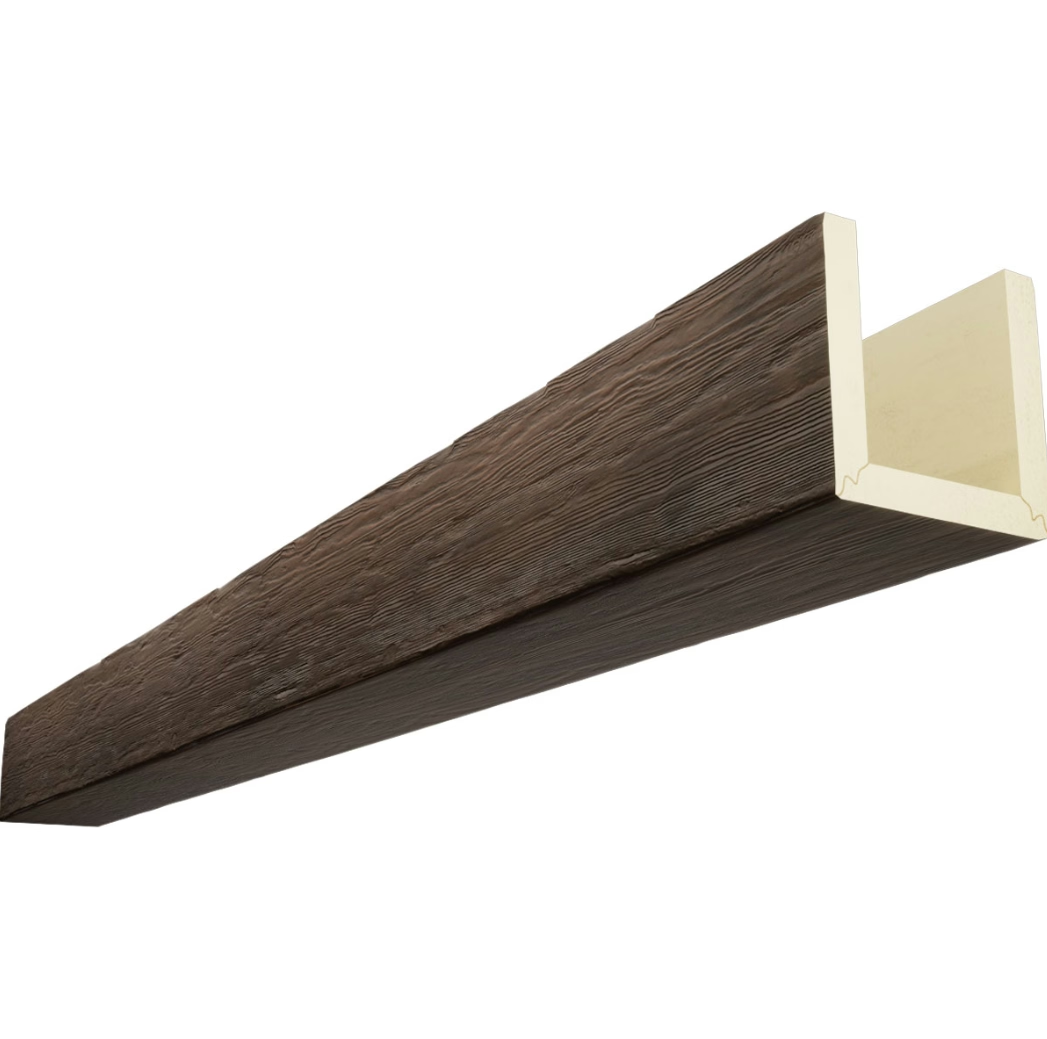
Polyurethane faux joist beams are manufactured by molding high-density foam into the shape of a dimensional lumber joist, then applying a wood-grain texture and a factory finish that mimics real timber. The result is a product that looks like timber from every viewing distance while being lighter, more consistent, and more affordable than the real thing.
The Manufacturing Process
Polyurethane faux joist beams are produced through a molding process that begins with a master pattern, typically a piece of dimensional lumber that has been selected for its attractive grain and proportions. The master pattern is used to create a negative mold, which is then used to produce the finished beams.
The polyurethane material is mixed from two liquid components and poured or injected into the mold. The material expands and cures, taking on the exact shape of the mold including every grain line and knot from the master pattern.
After curing, the beam is removed from the mold and inspected for defects. Any flash or excess material is trimmed, and the surface is reviewed for consistency. Beams that pass inspection are finished with stain or paint in the specified color, then packaged for shipment.
The molding process produces beams that are dimensionally consistent from end to end and from beam to beam. Each beam matches the master pattern exactly, which means the visual result is more uniform than real timber.
Available Profiles and Sizes
Faux joist beams are available in a range of standard profiles that correspond to real dimensional lumber sizes and a selection of custom profiles that are specific to the faux beam industry.
Standard profiles include the four-by-six, four-by-eight, four-by-ten, and four-by-twelve, which mimic the appearance of dimensional lumber. The four-by-six and four-by-eight are the most common for residential applications, while the larger sizes are used in commercial spaces and vaulted ceilings.
Custom profiles include the hollow-core beam, which is lighter than a solid beam and can be installed over existing structural members without significantly reducing ceiling height. The two-piece beam, which ships in halves and joins on-site, is used for long runs where a single solid beam would be impractical to ship.
The length of a standard beam is typically limited to sixteen to twenty feet for solid profiles, with longer spans achieved by splicing two or more beams at a joist or blocking position.
Wood-Grain Texture and Authenticity
The authenticity of a faux joist beam depends largely on the quality of the wood-grain texture. Budget beams use a simple embossed texture that repeats over the length of the beam and looks artificial up close. Premium beams use a hand-tooled texture that varies naturally along the length of the beam and looks convincing from any viewing distance.
When evaluating faux joist beams, designers and contractors should review a full-length sample at the intended viewing distance rather than a short sample from the catalog. The texture should not repeat in a way that is visible from a normal viewing angle.
Knots and other natural characteristics should be distributed naturally along the beam length. A beam with all knots concentrated in the center third looks artificial, while a beam with knots distributed throughout the length reads as authentic.
Finish Options
Faux joist beams are available in three main finish categories: clear coat, stain, and paint.
Clear coat finishes leave the natural polyurethane color visible and add a protective layer. These finishes are appropriate for beams that will be painted by the installer on-site or for projects where the natural foam color is acceptable.
Stain finishes apply a colored coating that penetrates the surface and mimics the appearance of wood stain. The stain is applied in the factory, which ensures consistency across all beams in the order. Popular stain colors include natural, honey, butterscotch, walnut, and espresso.
Paint finishes apply a solid color coating over the beam surface. These are appropriate for contemporary installations where the beam color should match the wall paint or for projects where a specific brand color is required.
For the most convincing result, the finish should include some tonal variation that mimics the natural variation of real wood. A perfectly uniform finish on every beam looks artificial.
Mounting Methods
Faux joist beams are mounted to the ceiling using one of three methods, depending on the beam profile and the installation conditions.
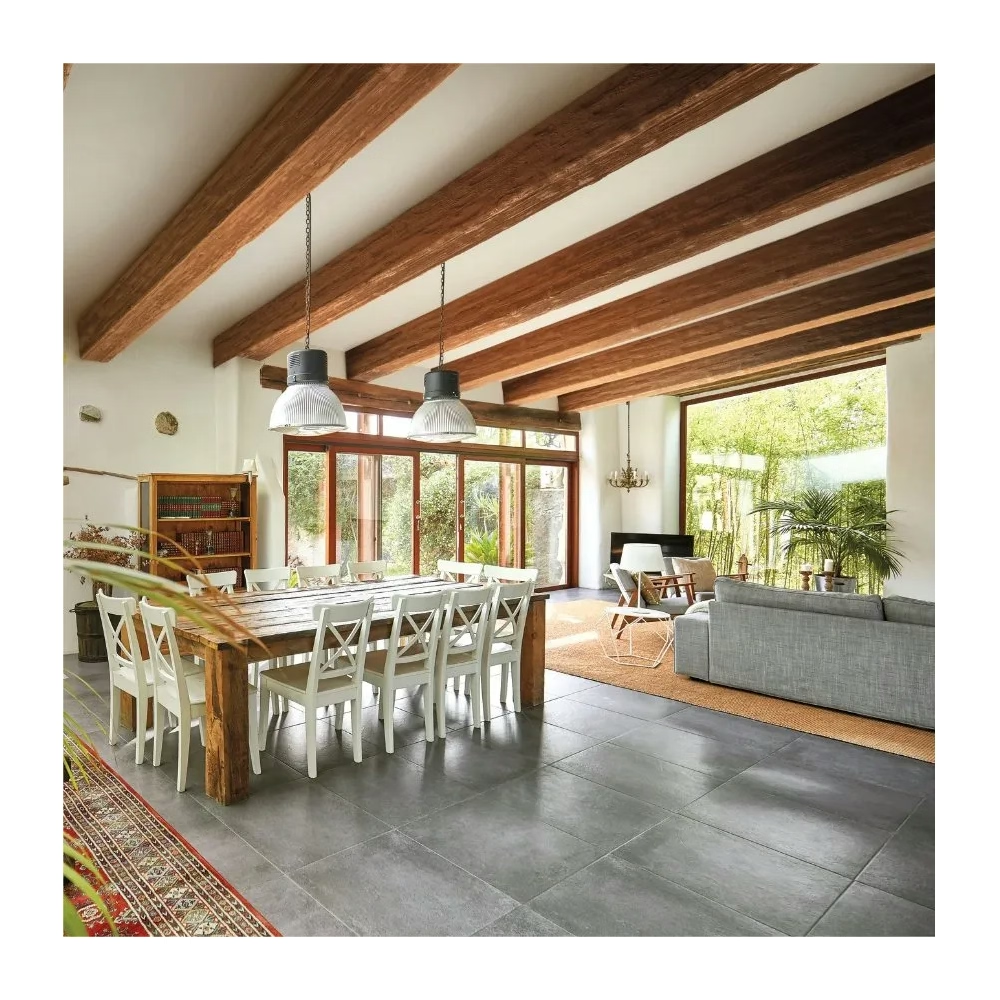
The blocking method uses wood or metal blocking installed between the ceiling joists at the beam positions. The beam is then slid over the blocking and screwed through the flange into the blocking from below. The screws are concealed by the beam profile, and the result is a clean, professional installation.
The cleat method uses metal cleats or French cleats that are mounted to the ceiling and to the back of the beam. The beam is then lifted and hung on the cleats, which support the weight while hiding the mounting hardware. This method is useful for beams that are too heavy to slide over blocking.
The surface-mount method uses construction adhesive and finishing nails to attach the beam directly to the drywall or ceiling surface. This method is faster but less secure, and it is not recommended for beams longer than eight feet or for installations where the ceiling is exposed to significant vibration.
Weight and Handling
One of the primary advantages of polyurethane joist beams over real timber is the weight. A four-by-six polyurethane beam weighs approximately two to three pounds per linear foot, compared to eight to twelve pounds per linear foot for a comparable softwood beam.
This weight difference has practical implications for the installation. A single installer can handle most residential beam lengths without assistance, which reduces labor costs and simplifies logistics. The lightweight beams are also easier to ship and easier to handle in tight spaces like stairwells and narrow hallways.
Fire Ratings and Code Compliance
Polyurethane faux joist beams are available with fire-retardant formulations that meet the requirements of most residential and commercial building codes. The fire rating is typically Class A or Class B, depending on the formulation and the thickness of the material.
For commercial installations, the fire rating documentation should be requested from the supplier and provided to the building official for review before installation begins. For residential installations in jurisdictions that do not require fire-rated finish materials, standard polyurethane beams are usually acceptable.
Cost Comparison to Real Timber
The cost of a faux joist beam is typically thirty to fifty percent less than the cost of a comparable real timber beam, depending on the profile, the finish quality, and the source. For a typical residential installation, the material cost savings alone are significant, and the labor savings from faster installation add to the advantage.
For commercial installations, the cost advantage of faux beams is even more pronounced because the labor savings multiply across a larger quantity of beams.
Applications Across Project Types
Faux joist beams are used in every type of interior project, from single-room residential renovations to large-scale commercial installations. Their versatility and affordability make them the default choice for designers and contractors who need a reliable, consistent product.
In residential applications, faux joist beams appear in living rooms, kitchens, bedrooms, and entryways. They are specified by interior designers working on farmhouse, craftsman, contemporary, and transitional projects.
In commercial applications, faux joist beams appear in restaurants, hotels, retail stores, and office buildings. They are specified by architects and interior designers who need a durable, low-maintenance ceiling treatment.
Technical References
ASTM standards cited in every specification
Test Data
Lab results from internal testing program
Updated 2026
Reviewed against current product specs


