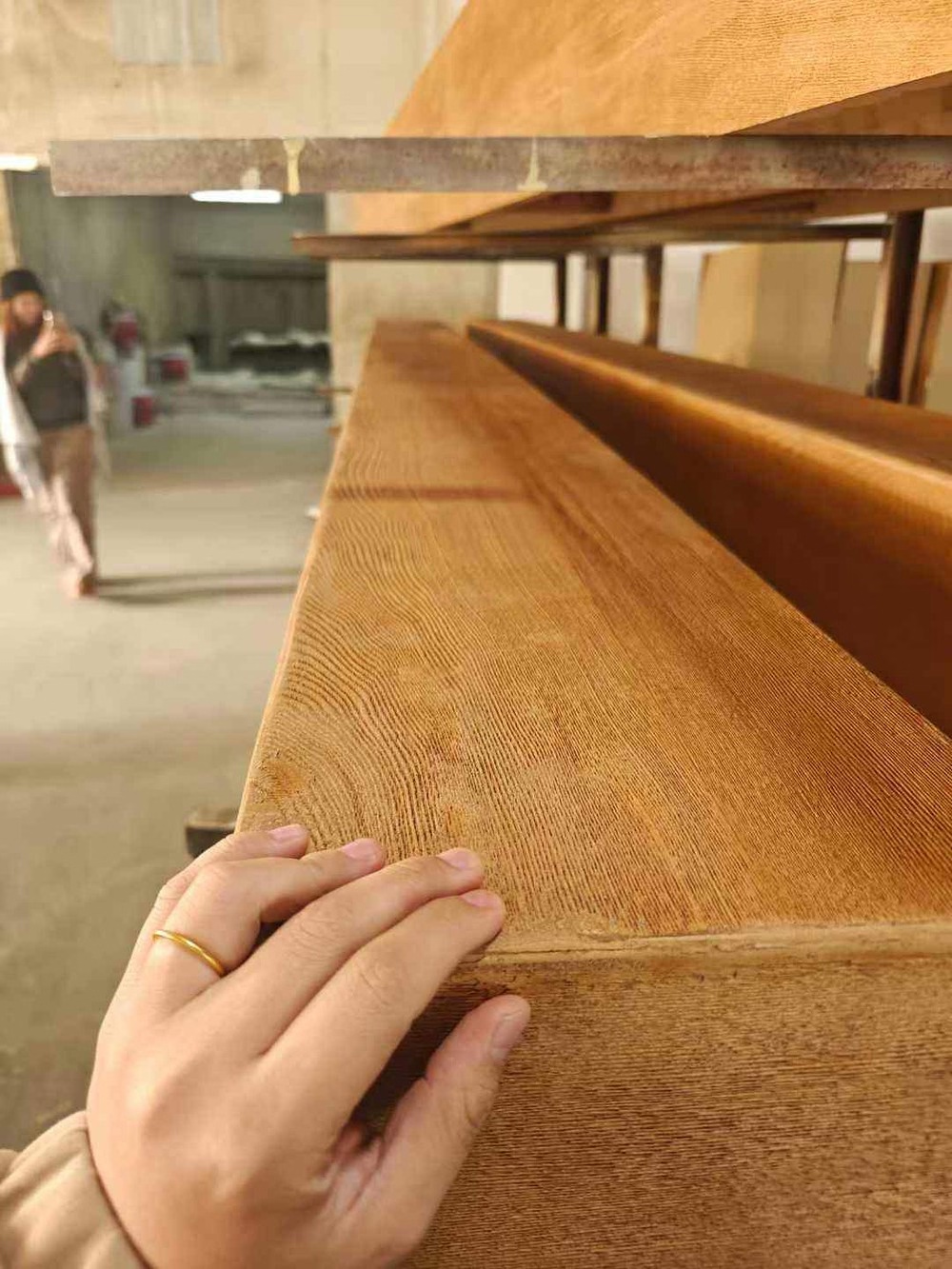
The ceiling is the most underutilized surface in interior design, and polyurethane faux wood beams are the most effective tool for bringing that surface to life. These beams have transformed the ceiling treatment industry over the past two decades by making the timber beam aesthetic accessible to projects of every size and budget.
Polyurethane ceiling beams are not a compromise. They are a deliberate design choice that offers advantages over real timber in every category that matters: weight, consistency, durability, and cost. Understanding these products helps designers and contractors make better specification decisions and helps homeowners understand why their contractor is recommending them.
How Polyurethane Ceiling Beams Are Made
Polyurethane ceiling beams are manufactured through a molding process that produces consistent, high-quality pieces at a fraction of the cost of real timber.
The process begins with a master pattern, typically a piece of dimensional lumber that has been selected for its attractive grain, consistent color, and clean profile. The master pattern is used to create a negative mold, which captures every detail of the wood grain and profile.
The polyurethane material is mixed from two liquid components and poured or injected into the mold. The material expands and cures, taking on the exact shape of the mold. The curing process is fast and produces a rigid, dimensionally stable piece.
After curing, the beam is removed from the mold and inspected for defects. Any flash or excess material is trimmed, and the surface is reviewed for consistency. Beams that pass inspection are finished with stain or paint in the specified color and packaged for shipment.
Material Properties
Polyurethane ceiling beams have a unique combination of properties that make them ideal for decorative ceiling applications.
Lightweight is the most immediately apparent property. A four-by-six polyurethane beam weighs approximately two to three pounds per linear foot, compared to eight to twelve pounds per linear foot for a comparable softwood beam. This weight difference makes the beams easy to handle and install, even in locations that are difficult to access.
Dimensional stability is another important property. Polyurethane does not absorb moisture, expand, contract, or warp. A polyurethane beam that is installed in a humid bathroom will look exactly the same after ten years as it did on the day it was installed. A real timber beam in the same environment would show signs of moisture damage within a few years.
Consistency is the third key property. Every beam from a given mold is identical to every other beam from that mold. The grain pattern, the profile, and the dimensions are constant from piece to piece. This consistency makes the installation look more refined and makes the specification process more predictable.
Available Profiles
Polyurethane ceiling beams are available in a wide range of profiles to suit every design aesthetic.
The standard joist profile mimics dimensional lumber in common sizes including four-by-six, four-by-eight, four-by-ten, and four-by-twelve. This profile is the most versatile and the most commonly specified.
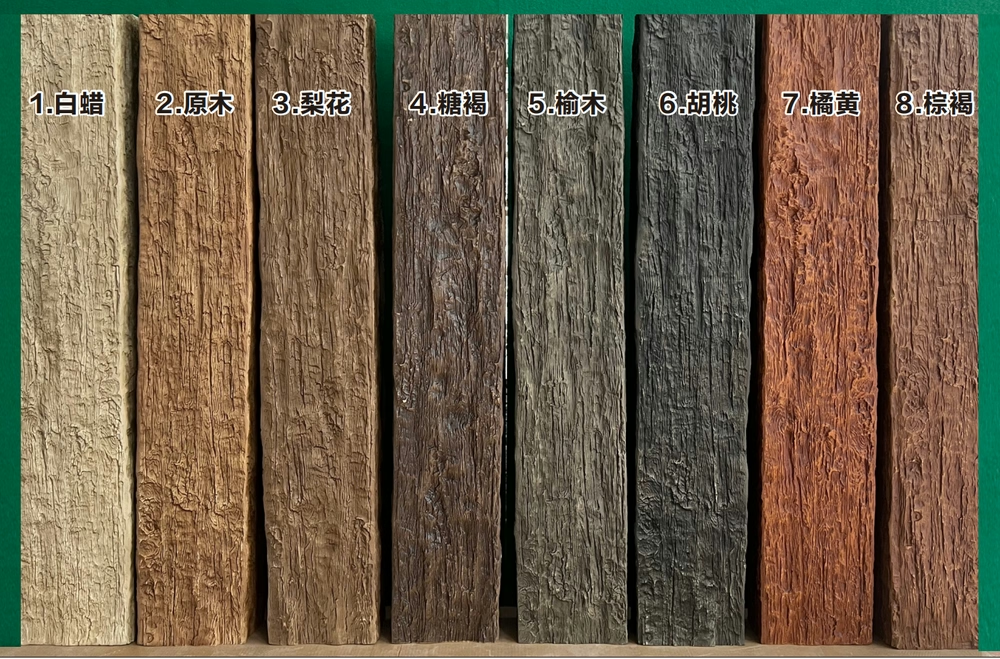
The hand-hewn profile mimics the appearance of beams that have been shaped with an axe or adze. The surface has an irregular texture that suggests age and craftsmanship. This profile is appropriate for rustic, farmhouse, and lodge interiors.
The timber frame profile is a complex multi-component system that mimics the appearance of traditional heavy timber frame construction. It includes beams, purlins, corbels, and hardware that together create an authentic timber frame look.
The contemporary profile is a clean, minimal beam with sharp edges and no decorative details. It is appropriate for modern and Scandinavian interiors where the design language favors simplicity and restraint.
Finish Options
Polyurethane ceiling beams are available in three main finish categories: clear coat, stain, and paint.
Clear coat finishes leave the natural polyurethane color visible and add a protective layer. These finishes are used when the beam will be painted on-site or when the natural foam color is acceptable.
Stain finishes apply a colored coating that penetrates the surface and mimics the appearance of wood stain. The stain is applied in the factory under controlled conditions, which ensures consistency across all beams in the order. Popular stain colors include natural, honey, butterscotch, walnut, and espresso.
Paint finishes apply a solid color coating over the beam surface. These are used for contemporary installations where the beam color should match the wall paint or for projects where a specific brand color is required.
For the most authentic result, the finish should include tonal variation that mimics the natural variation of real wood. A perfectly uniform finish on every beam looks artificial from close range.
Mounting Methods
Polyurethane ceiling beams are mounted using one of several methods, depending on the beam profile and the installation conditions.
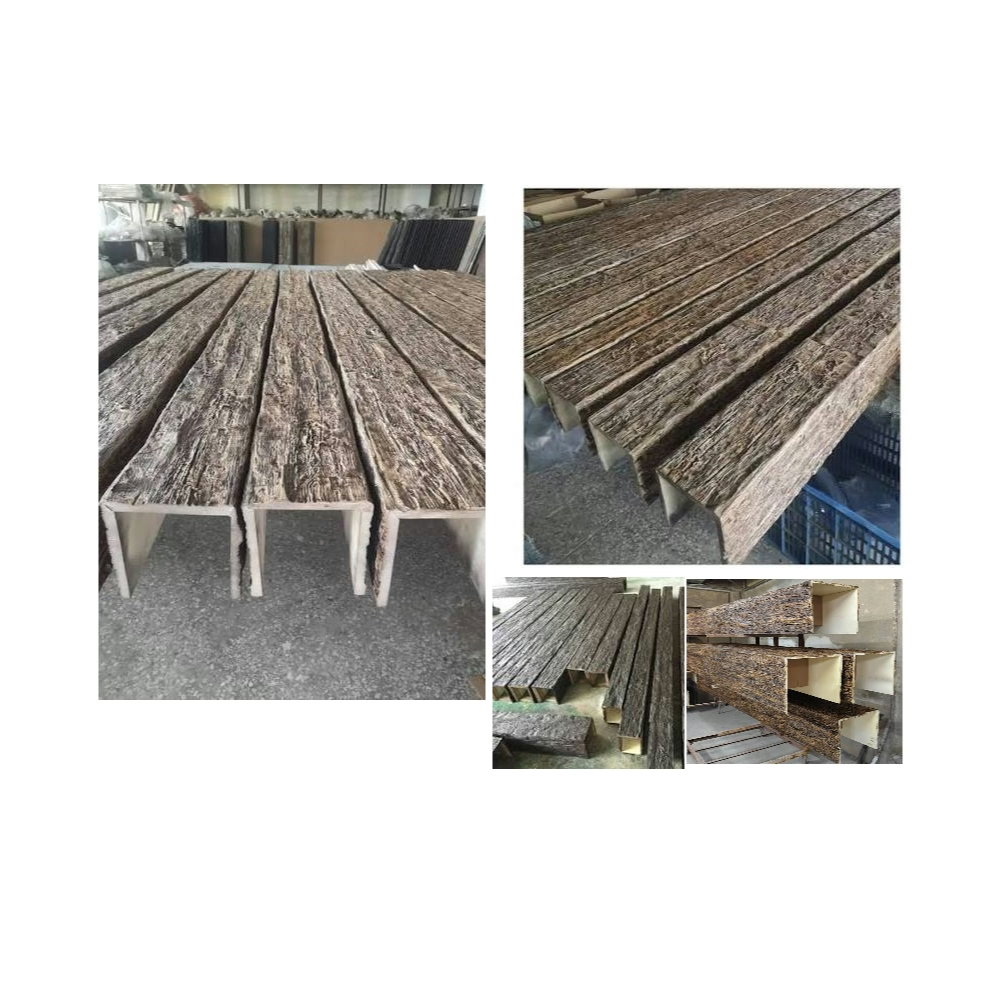
The blocking method uses wood or metal blocking installed between the ceiling joists at the beam positions. The beam is slid over the blocking and screwed through the flange into the blocking from below. The screws are concealed by the beam profile, and the result is a clean, professional installation.
The cleat method uses metal cleats that are mounted to the ceiling and to the back of the beam. The beam is lifted and hung on the cleats, which support the weight while hiding the mounting hardware.
The adhesive method uses construction adhesive applied to the back of the beam and finishing nails driven through the flange into the ceiling surface. This method is fast but less secure, and it is not recommended for beams longer than eight feet or for installations where vibration is a concern.
Fire Ratings
Polyurethane ceiling beams are available with fire-retardant formulations that meet the requirements of most residential and commercial building codes. The fire rating is typically Class A or Class B, depending on the formulation and the thickness of the material.
For commercial installations, the fire rating documentation should be requested from the supplier and provided to the building official for review before installation begins.
Cost Comparison
Polyurethane ceiling beams typically cost thirty to fifty percent less than comparable real timber beams, depending on the profile, the finish quality, and the source. The savings are even more significant when installation labor is considered, because polyurethane beams install faster and do not require on-site finishing.
For a typical residential installation, the total cost advantage of polyurethane beams over real timber is between forty and sixty percent.
Maintenance and Durability
Polyurethane ceiling beams require minimal maintenance. A periodic dusting and an occasional wipe-down with a damp cloth keeps the beams looking new.
The factory finish is more durable than on-site finishes and does not require periodic refinishing. The finish resists scratching and chipping better than real wood, which means the beams maintain their appearance even in high-traffic environments.
Damaged beams can be replaced individually without disturbing the surrounding installation. A small inventory of spare beams allows for quick repairs if damage occurs.
Environmental Considerations
Polyurethane is a synthetic material derived from petroleum, which raises environmental concerns for some buyers. However, the durability and longevity of polyurethane beams mean that they do not need to be replaced as often as real timber beams, which reduces the long-term environmental impact.
Some manufacturers offer polyurethane formulations with reduced volatile organic compound content and improved recyclability. For projects with specific environmental requirements, these options should be requested from the supplier.
What Importers and Distributors Should Know
For B2B importers and distributors, polyurethane ceiling beams are a high-volume product category with consistent demand. The key to success is maintaining adequate inventory of the most popular profiles and finishes while offering custom capabilities for special orders.
A complete product line should include at least four standard profiles in at least six stain colors and two paint colors to cover the range of project requirements. Custom profiles and finishes should be available with a reasonable lead time.
Why Designers Choose Polyurethane Beams
Designers choose polyurethane ceiling beams because they deliver a better result at a better price than the alternatives. The beams are consistent, durable, and available in a wider range of profiles and finishes than real timber. The installation is faster and cleaner, and the maintenance is minimal.
For projects where the budget must be controlled, polyurethane beams offer a way to achieve a premium aesthetic without a premium price. For projects where the timeline is compressed, polyurethane beams offer a way to complete the ceiling treatment without the drying time that site finishing requires.
For projects where the design must be precise, polyurethane beams offer a way to achieve exact dimensions and consistent profiles that are impossible with real timber.
Technical References
ASTM standards cited in every specification
Test Data
Lab results from internal testing program
Updated 2026
Reviewed against current product specs