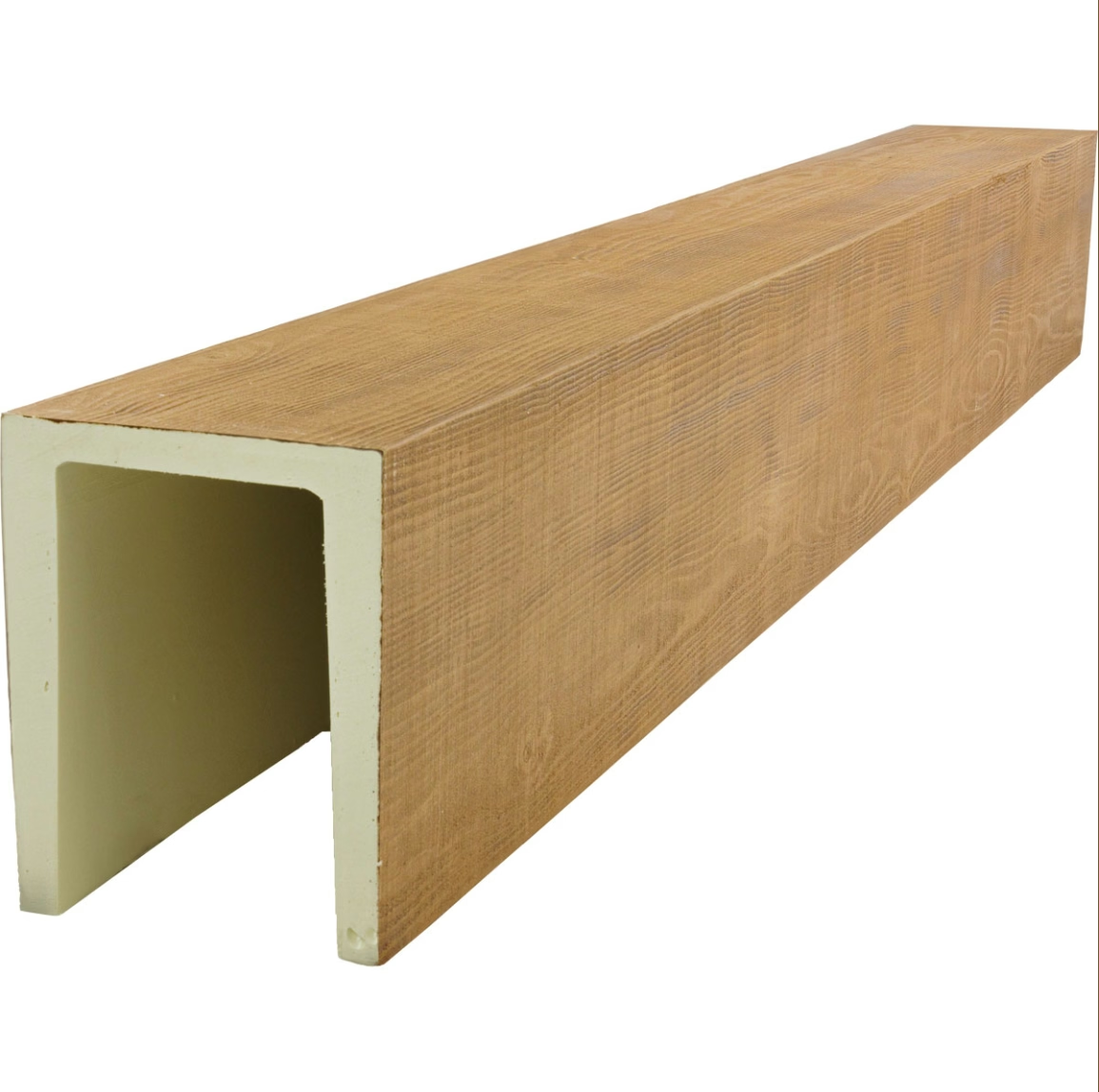
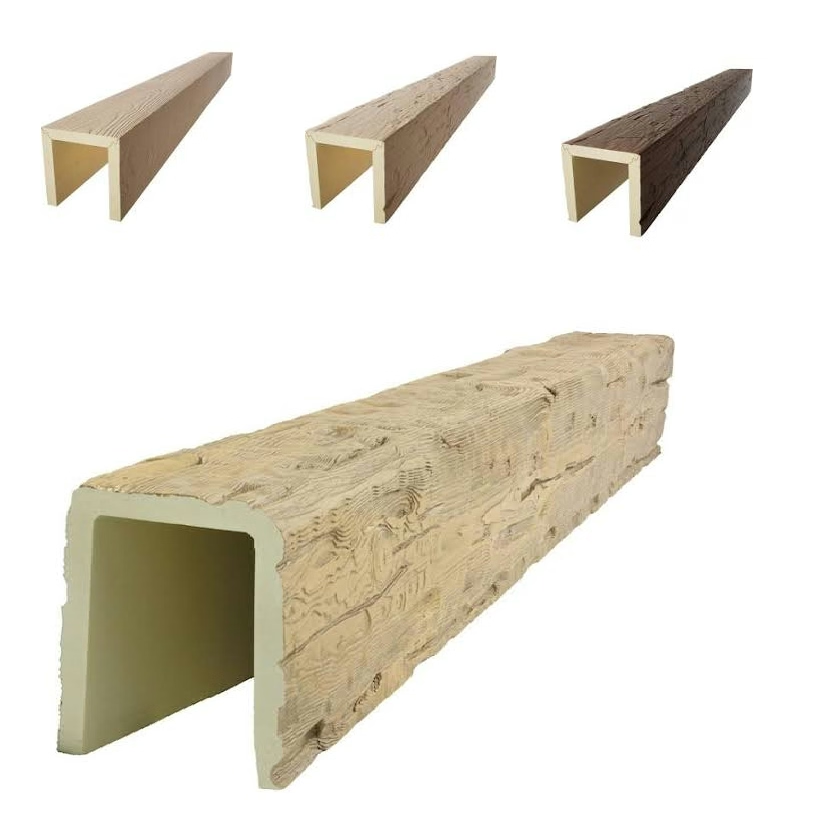
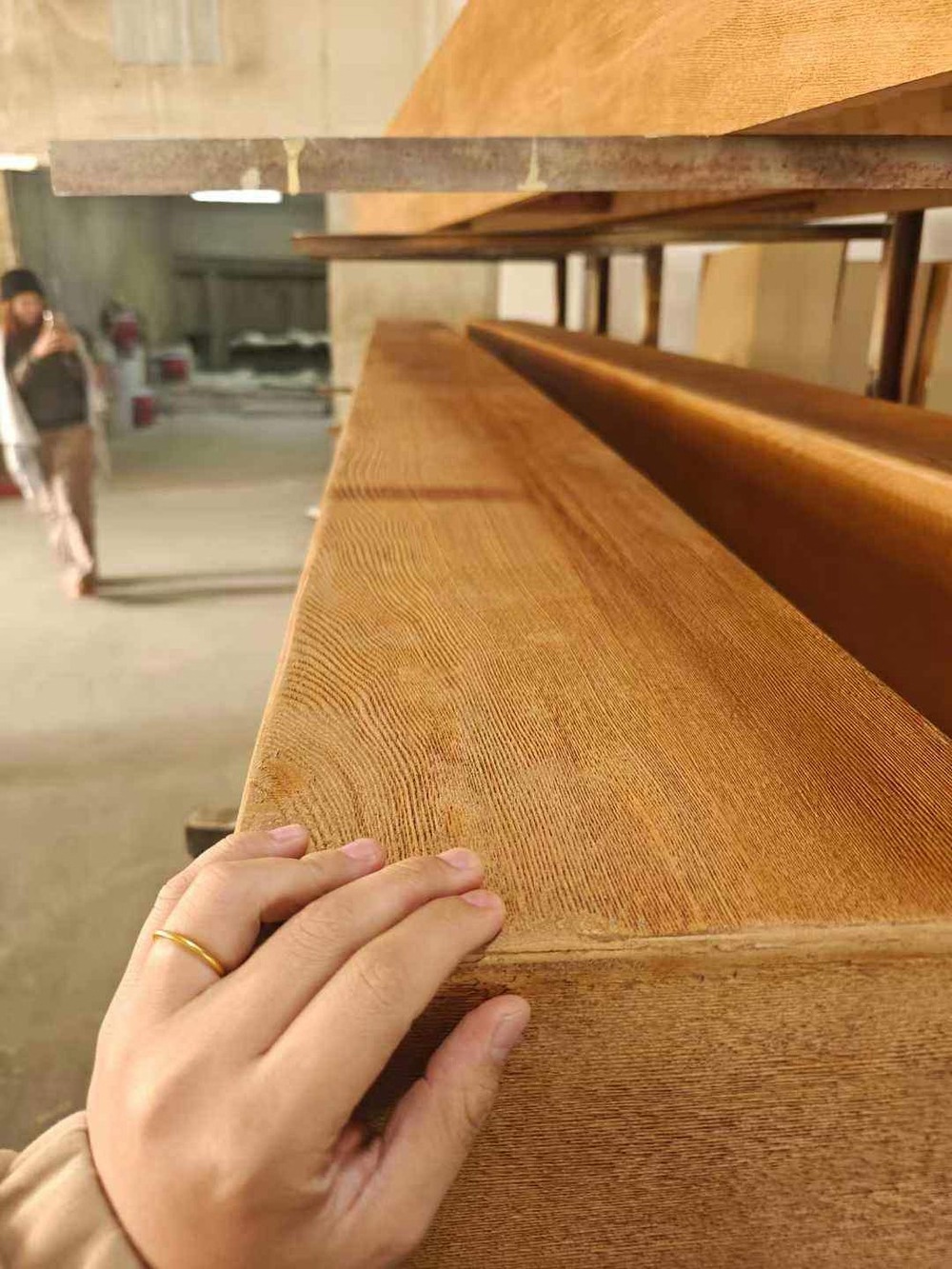
Every beam installation has joints. The beam runs from wall to wall or from beam to beam, and at each junction, two pieces must be connected. In real timber frame construction, these connections were made with wooden pegs or iron bolts that passed through the timber. The hardware was exposed because there was no reason to hide it, and the exposed hardware became part of the aesthetic vocabulary of timber frame building.
Decorative faux beam straps bring this vocabulary into the world of polyurethane faux beams. They are not real structural hardware, but they create the visual impression of structural connection. A joint that is wrapped with a faux strap looks more substantial and more authentic than a joint that is simply glued and screwed.
Why Joints Need Special Treatment
The joint between two beams is the weakest point in the installation. It is also the point where two pieces of material meet, which means there is an opportunity for a visible seam or gap if the joint is not handled properly.
A decorative strap covers the joint and hides any minor imperfections in the connection. It transforms the joint from a potential problem into a design feature.
Beyond the practical function, a decorative strap adds visual weight to the joint. The joint is where two beams come together, and it is naturally a point of visual interest. A strap at the joint makes this interest explicit and intentional.
Material Options for Faux Beam Straps
Faux beam straps are available in the same material range as the beams themselves: cast iron, cast aluminum, and molded polyurethane with a metallic finish.
Cast iron straps have the most authentic look and the most weight. They are cast in molds that capture the texture and detail of real iron, including slight surface variations that suggest age and use. Cast iron straps are appropriate for traditional, rustic, and lodge interiors.
Cast aluminum straps are lighter than cast iron and do not rust, which makes them a practical choice for humid environments and outdoor applications. They can be finished with the same coatings as cast iron to achieve a similar appearance at a lower weight.
Molded polyurethane straps with a metallic finish are the most affordable option and are suitable for projects on a tight budget. The finish quality has improved significantly in recent years, and the best polyurethane straps are difficult to distinguish from cast metal at normal viewing distances.
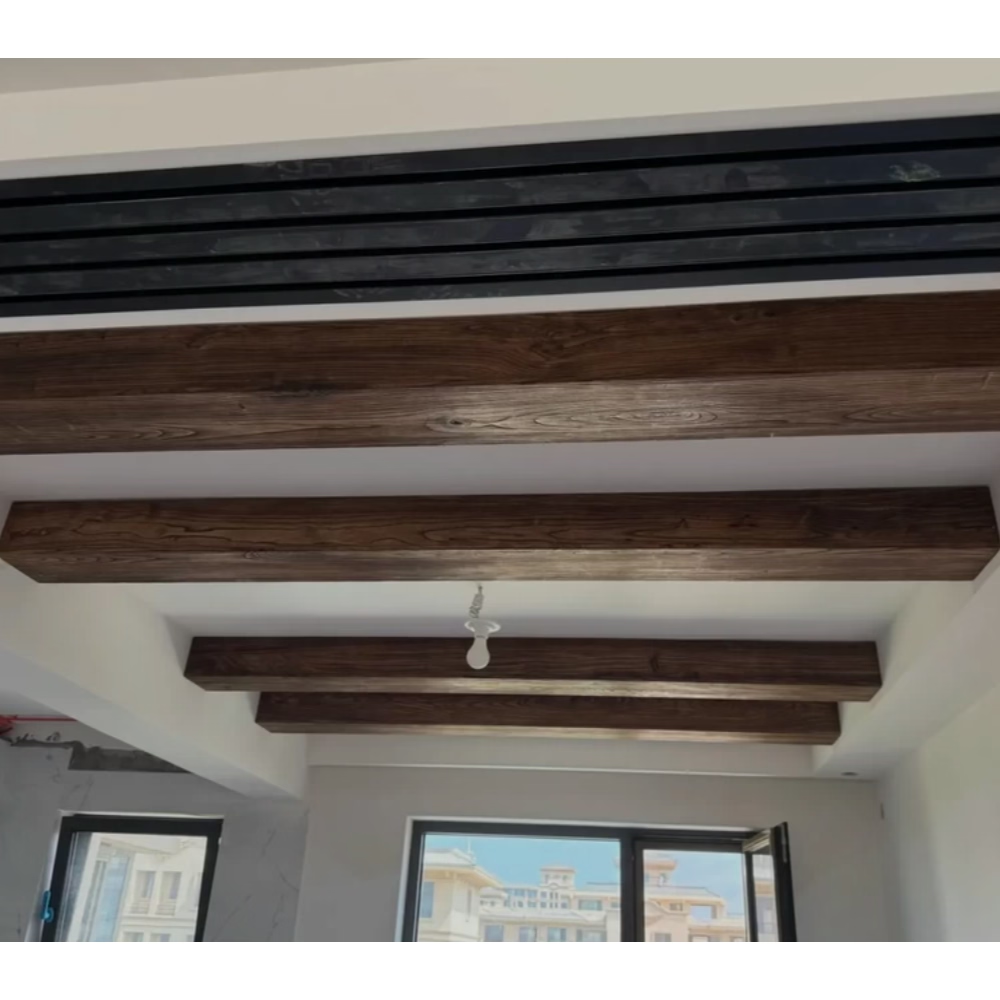
Strap Styles and Profiles
Faux beam straps are available in several styles, each with a different visual effect.
The flat strap is a simple rectangular piece with a plain or slightly textured surface. It wraps around the beam at the joint and is the most versatile option. The flat strap works in both contemporary and traditional interiors.
The bent corner strap is shaped to wrap around the corner of the beam, covering both the face and the edge. This style provides more complete coverage of the joint and creates a more substantial visual effect.
The decorative strap has a profiled or shaped surface that adds visual interest beyond the flat profile. Scrolls, curves, and other shapes can be incorporated into the strap design to match the corbel and bracket styles used elsewhere in the installation.
Sizing Straps to the Joint
The strap should be sized to the beam and the joint type. A strap that is too small for the beam looks inadequate. A strap that is too large looks heavy and out of proportion.
As a general guideline, the strap width should be approximately one-fifth to one-quarter of the beam face width. For a six-inch beam, a strap that is one to one and a half inches wide is appropriate. For a ten-inch beam, a strap that is two to two and a half inches wide is appropriate.
The strap length should extend at least two-thirds of the way around the beam perimeter for a wrapped installation. A strap that is too short to wrap around the beam adequately looks insubstantial.

Installation Methods
Faux beam straps are installed after the beams are in place and after the finish is applied. The strap is positioned over the joint and attached with screws or adhesive.
For cast iron and cast aluminum straps, pre-drilling pilot holes in the beam prevents the material from cracking under the screw pressure. The screws should be long enough to penetrate the beam by at least half an inch.
For polyurethane straps with adhesive mounting, the adhesive should be a construction-grade product that is compatible with polyurethane. The strap should be pressed firmly into place and held for thirty to sixty seconds while the adhesive grabs.
For the most secure installation, a combination of adhesive and screws provides both immediate holding power and long-term mechanical strength.
Coordinating with Other Hardware
Faux beam straps should be part of a coordinated hardware system that includes matching bolts, corbels, and brackets. Using consistent material and finish across all hardware elements creates a unified aesthetic.
A typical coordinated hardware package might include straps at the beam joints, bolts at the beam ends, and matching corbels at the wall connections. The hardware should be consistent in material and finish across all elements.
If the room features other iron or metal elements, the beam hardware should be coordinated with them. Door hardware, light fixtures, and furniture legs in the same material and finish create a cohesive design language throughout the space.
Maintenance and Care
Faux beam straps require minimal maintenance. A periodic dusting removes accumulated dirt and dust, and a damp cloth cleans fingerprints and smudges.
For cast iron straps in interior applications, a clear matte topcoat can be applied to seal the finish and prevent oxidation. This is recommended in humid environments like bathrooms and kitchens.
For outdoor applications, all straps should be sealed with a marine-grade clear coat that provides UV protection and prevents moisture penetration.
Cost of Faux Beam Straps
Decorative faux beam straps are priced per piece, with costs ranging from ten to forty dollars for standard catalog styles and significantly more for custom designs. A complete strap package for a typical residential installation typically costs between one hundred and five hundred dollars, depending on the number of straps and the style selected.
This is a modest investment relative to the visual impact the straps provide. The straps transform the joints from potential problem areas into design features that reinforce the timber frame aesthetic.
What Installers Should Know
Installers should plan the strap requirement during the layout phase, identifying all joints where straps will be used before the hardware is ordered. The quantity and placement of straps should be documented in the installation plan.
The installation of straps should be the last step in the beam installation, after all beams are mounted, leveled, and finished. Any touch-up work on the beams should be completed before the straps are installed.
For best results, the strap positions should be marked on the beams before the adhesive is applied. This prevents alignment errors that would be difficult to correct after the adhesive sets.
Technical References
ASTM standards cited in every specification
Test Data
Lab results from internal testing program
Updated 2026
Reviewed against current product specs