
International trade in decorative building materials presents distinct challenges that differ fundamentally from domestic transactions. Time zone separations complicate communication. Cultural expectations around business relationships influence how partnerships develop. Documentation requirements for cross-border shipping create paperwork burdens unfamiliar to buyers focused on domestic suppliers. Product specifications must translate accurately across languages and measurement systems. Quality standards that seem obvious in one market may be entirely absent in another. These complexities multiply when products require coordination across multiple container shipments, extended lead times, and ongoing replenishment cycles.
Recognizing these realities, manufacturers and distributors serving global markets increasingly emphasize relationship-based service models centered on dedicated account managers. Rather than funneling international buyers through anonymous customer service systems, these companies invest in professionals who understand the specific demands of cross-border procurement. The result is service that feels responsive and knowledgeable rather than generic and bureaucratic.
The Value of Single-Point Contact
Account fragmentation represents one of the most frustrating experiences in international business relationships. When inquiries route through general inquiry forms, automated systems, or rotating customer service personnel, buyers find themselves repeating context that the next representative lacks. Order history disappears into systems that different employees access differently. Commitments made by one representative conflict with information provided by another. The cumulative effect wastes time, creates confusion, and undermines confidence in the supplier relationship.
Dedicated account managers solve this fragmentation by maintaining continuity across all interactions. The same person receives your inquiry whether it arrives via email, phone, or messaging platform. They know your order history, your project timelines, and your quality expectations without requiring explanation. When you reference a conversation from six months ago, they remember it. When circumstances change and you need to adjust an order, they understand the downstream implications because they've been tracking your situation all along.
This continuity creates accountability that distributed service models cannot match. When something goes wrong—and something eventually goes wrong in every complex international transaction—the account manager who knows your situation must address the problem. They cannot redirect you to another department, claim unfamiliarity with your case, or shuffle responsibility across shifting personnel. The relationship structure itself enforces responsiveness.
Navigating Product Selection and Customization
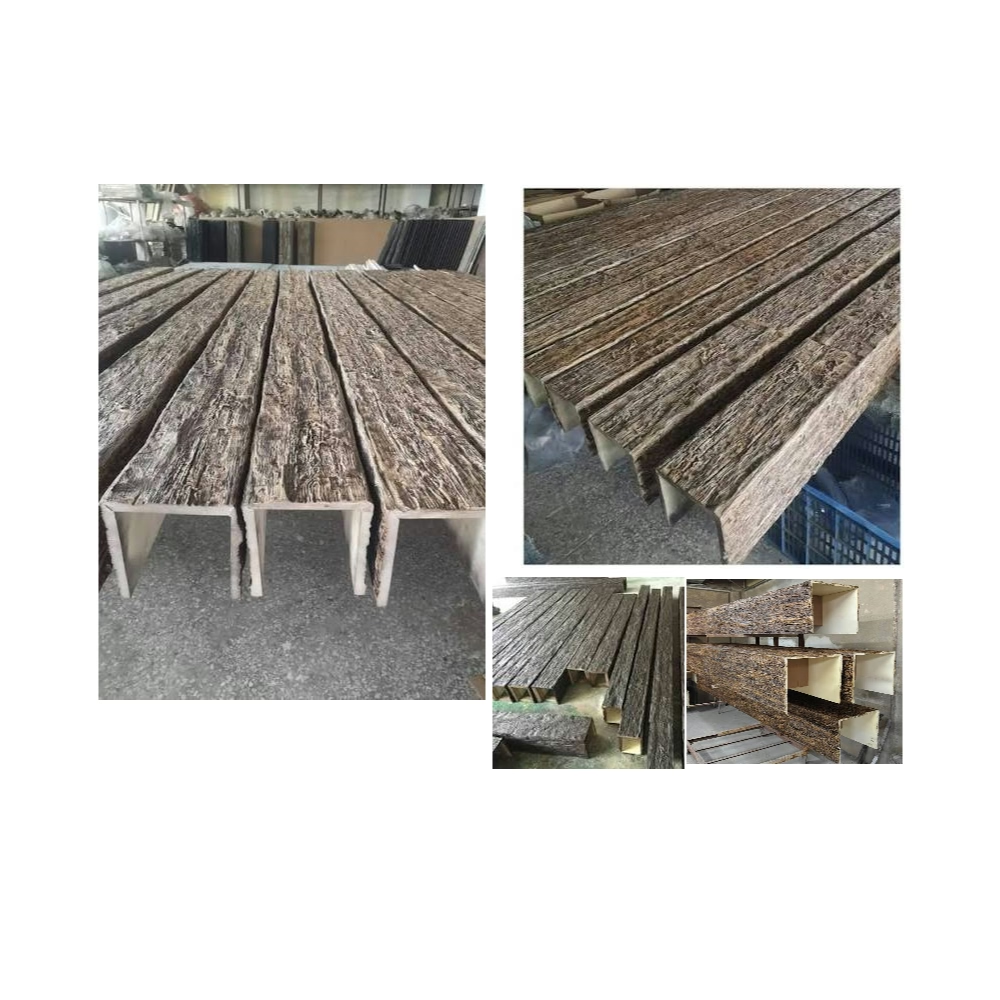
B2B buyers of faux wood beams often face product selection challenges that consumer purchasers do not encounter. Projects may require non-standard dimensions, custom finishes matched to existing materials, or specialized profiles that standard catalog items do not address. Communication of these requirements across language barriers and cultural contexts demands precision that casual email exchanges rarely achieve. Misunderstandings about specifications lead to products that don't fit, colors that don't match, or quantities that don't align with actual needs.
Account managers fluent in technical product vocabulary help bridge these communication gaps. They understand the difference between a beam profile that works architecturally and one that creates installation problems. They catch specification errors before orders enter production, preventing expensive mistakes that would otherwise arrive at shipping docks with no remedy beyond costly returns. Their familiarity with both the manufacturing process and the end-use application positions them to ask clarifying questions that reveal hidden requirements.
Customization requests particularly benefit from account manager involvement. The back-and-forth necessary to finalize custom tooling, establish minimum order quantities, confirm pricing for non-standard specifications, and verify production schedules works most efficiently when conducted between parties who have established working relationships. Account managers maintain these relationships as ongoing professional connections rather than transactional encounters.
Coordination Across Order Lifecycle Stages
International orders progress through distinct phases—sampling, production, quality inspection, documentation, shipping, and delivery—each requiring different attention and different response capabilities. Generic customer service typically excels at some phases while struggling with others. Order status inquiries receive prompt responses. Specification clarifications prove more challenging. Quality concerns during production require escalation that anonymous service representatives may not handle effectively.
Account managers serve as coordinators across all phases, tracking progress internally and communicating status externally according to buyer preferences. Some buyers prefer weekly updates regardless of whether changes have occurred. Others prefer notification only when milestones complete or problems arise. Account managers learn these preferences and adapt their communication style accordingly, providing service that feels attentive without becoming intrusive.
When problems arise, account managers mobilize internal resources to address them. Production delays triggered by material shortages, quality issues identified during inspection, documentation errors that threaten customs clearance—each problem type engages different internal stakeholders with different expertise. The account manager coordinates these responses, translating technical information into terms the buyer understands and translating buyer concerns into specifications that internal teams can address.

Building Long-Term Partnership Value
Transaction-focused relationships treat each order as a discrete event, maximizing efficiency for routine reorders but failing to leverage accumulated knowledge over time. Partnership-focused relationships accumulate understanding that improves every subsequent interaction. The account manager who has worked with a buyer through several projects understands their quality standards from direct observation. They anticipate order patterns based on historical behavior. They recognize when deviation from standard practice serves the buyer's interests and when it creates unnecessary risk.
This accumulated knowledge enables account managers to provide proactive support that buyers might not request directly. An account manager noticing that a buyer's orders have decreased might reach out to understand whether market conditions have changed, offering flexible terms or product alternatives that address emerging challenges. One noticing that a buyer always orders the same items might suggest volume discount opportunities the buyer hadn't considered. These proactive contributions create value that purely reactive service cannot match.
Partnership value extends beyond individual transactions to encompass strategic collaboration. Buyers expanding into new markets benefit from account managers who understand those markets' requirements and can advise on product modifications, documentation needs, or pricing adjustments. Buyers developing proprietary products benefit from manufacturing partners willing to collaborate on custom development rather than simply fulfilling standard orders. Account managers positioned as relationship managers rather than order processors create space for these strategic conversations to occur.

Selecting Suppliers Based on Service Capabilities
Buyers evaluating faux wood beam suppliers should assess service capabilities alongside product specifications. Catalogs and sample quality demonstrate manufacturing capability, but the service model reveals how those capabilities translate into buyer experience. Consider how initial inquiries are handled—whether they route through anonymous systems or connect you with professionals who demonstrate product knowledge and interest in understanding your needs.
Trial orders provide opportunity to evaluate service quality directly. Note responsiveness timing, accuracy of communication, how problems are handled when they arise, and whether the person handling your order seems empowered to resolve issues or merely to report them. These observations predict future experience more reliably than marketing claims or sales presentations.
For buyers managing multiple projects or ongoing procurement needs, service model assessment deserves significant weight in supplier selection. Product quality that seemed excellent becomes irrelevant if communication failures prevent timely delivery or if quality problems go unaddressed. The supplier with slightly inferior products but superior service often delivers better project outcomes because the service model catches problems early and resolves them efficiently.
Language and cultural alignment matter for international buyers. Account managers who share or understand your business culture reduce friction in communication and reduce the likelihood of misunderstandings that arise from different expectations about responsiveness, formality, or negotiation style. This alignment often proves more valuable than technical expertise alone, particularly in complex or custom situations where clear communication matters most.
Technical References
ASTM standards cited in every specification
Test Data
Lab results from internal testing program
Updated 2026
Reviewed against current product specs


