The contractor had installed those "faux wood beams" three years ago. Now the owner complained: visible dents from accidental impacts, a cracked corner where moving furniture caught the beam, and worst of all, mysterious soft spots where the surface compressed under pressure. Investigation revealed the truth—these beams contained a Styrofoam core beneath a thin urethane skin. When that skin failed, the foam beneath showed through. The owner wanted answers; the contractor wanted a solution that wouldn't embarrass them again.
This scenario plays out repeatedly across construction projects as low-quality faux wood products fail in service. The problem stems from manufacturing cost-cutting that substitutes lightweight foam cores for solid polyurethane. While this approach reduces material costs and shipping weights, it creates products that cannot withstand real-world use. Understanding the difference between solid PU construction and foam-cored imitations helps projects avoid these disappointments.
The Problem with Styrofoam Core Construction
Styrofoam and similar expanded polystyrene (EPS) materials have legitimate applications in construction—insulation, void filling, lightweight packaging. They fail as structural cores for decorative beams because they lack the density and surface integrity that service demands.
Impact resistance proves immediately inadequate. A beam with thin PU skin over EPS core dents under modest impact that solid PU handles without damage. Furniture bumps, maintenance activities, and accidental contact create permanent damage requiring repair or replacement.
Moisture sensitivity compounds the problem. While EPS doesn't absorb water like natural wood, it can crack if frozen while saturated. More importantly, any breach in the outer skin—scratch, gouge, or manufacturing defect—allows moisture into the foam core. Trapped moisture promotes mold growth and eventually destroys the beam structure.
Surface consistency becomes impossible when foam core shows through inconsistent skin thickness. Manufacturing variations create areas where foam texture telegraph through the outer surface, destroying the wood grain appearance that justified specification in the first place.
Solid Polyurethane Construction Benefits
Quality deep molded wood-grain decorative beams utilize solid polyurethane throughout their cross-section. This construction provides consistent properties across the entire beam:
Density throughout the beam provides impact resistance proportional to the overall product quality. Solid PU densities of 200-400 kg/m³ create surfaces that resist denting under reasonable service conditions. Higher density options handle demanding commercial applications where furniture movement and high traffic create frequent contact potential.
Surface texture consistency results from uniform material throughout. The wood-grain embossing captures in solid PU maintains consistent depth and definition across the entire surface. No variations in skin thickness create telegraphing or surface irregularities that compromise appearance.
Moisture resistance extends through the entire cross-section. Even if outer surfaces become damaged, the interior material provides continued structural support without degradation. Water penetration cannot cause the collapse and failure modes that afflict foam-cored products.
The weight penalty compared to foam-core alternatives remains modest—typically doubling or tripling weight while delivering vastly superior performance. A solid PU beam weighing 15 pounds per linear foot compared to a foam-core alternative at 5 pounds represents meaningful but manageable difference in handling requirements.


Deep Mold Technology for Authentic Grain
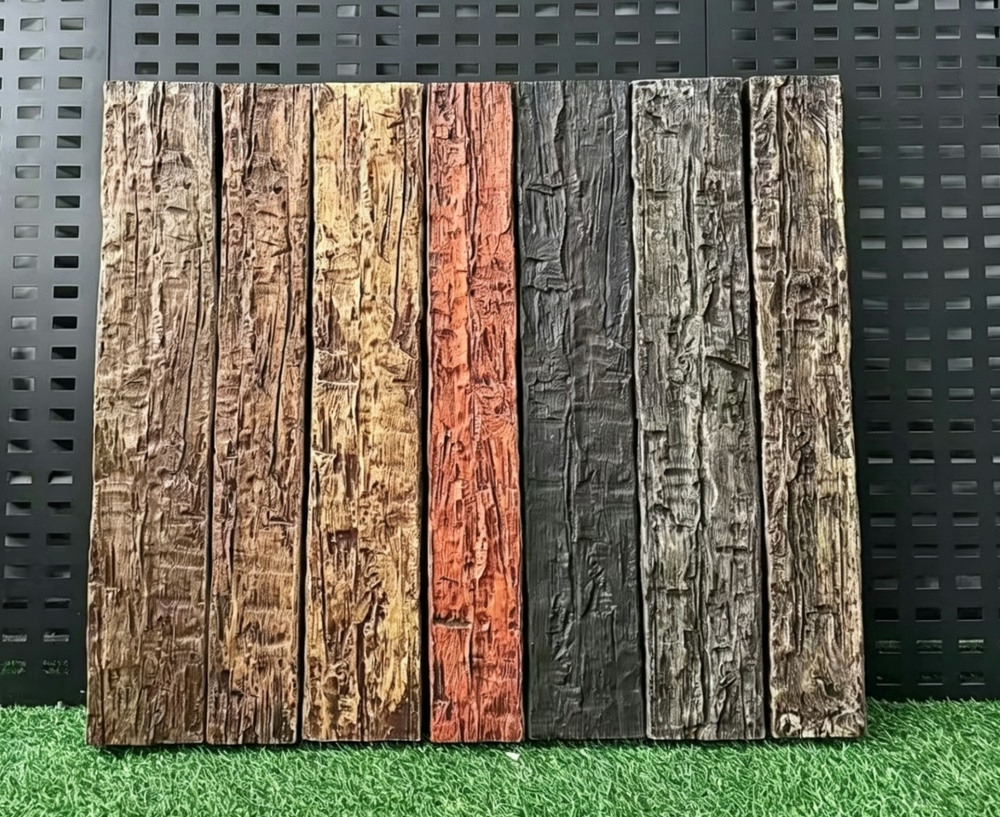
The term "deep molded" distinguishes quality solid-PU products from shallow-textured alternatives. Deep mold technology creates embossed wood grain surfaces with dimensional characteristics approaching natural timber:
Mold creation starts with genuine wood samples selected for exemplary grain character. High-resolution scanning captures topographic data at sub-millimeter resolution. Precision machining transfers these patterns into production molds that maintain detail through thousands of cycles.
Embossing depth distinguishes premium products. Quality deep molded beams exhibit grain valley depths of 2-5mm depending on wood species. This depth creates genuine topographic variation that influences light reflection, accepts realistic color treatment, and feels authentic to touch.
Consistency across production runs ensures every beam matches specification identically. Natural wood varies between boards; deep molded PU offers perfect reproducibility. Projects requiring dozens of beams for consistent ceiling treatments benefit from this uniformity.
The wood species library available through deep mold technology spans domestic hardwoods, imported specialty timbers, and reclaimed wood aesthetics. Custom molds from project-specific samples enable perfect matching in renovation applications.
Identifying Quality Products in the Market
Skepticism serves buyers well when evaluating faux wood beam options. Several indicators help distinguish solid PU construction from foam-core compromises:
Weight provides immediate comparison. Two beams of similar dimensions should have comparable weights; significant disparity suggests construction differences. Ask suppliers for weight specifications and compare across options.
Sample sectioning reveals core construction. Requesting a sample end cap or accepting a damaged piece allows visual inspection of the cross-section. Solid PU shows consistent material throughout; foam core appears distinctly different in texture and density.
Price comparison across similar products often indicates construction differences. If one option quotes substantially lower than competitors, investigate whether construction differences justify the price variation.
Manufacturer documentation should specify polyurethane density. Products claiming "polyurethane construction" without density specifications may be foam-core products marketed with ambiguous terminology.
Warranty terms reflect manufacturer confidence. Solid PU products typically carry multi-year warranties covering finish and structural integrity. Limited warranties or warranty exclusions for core materials suggest foam-core construction.
Applications Where Solid PU Excels
Certain applications demand the performance that solid polyurethane construction provides:
High-traffic commercial installations see regular contact that foam-core products cannot handle. Hotel lobbies, restaurant dining rooms, and retail environments require durable surfaces that maintain appearance despite furniture movement, cleaning activities, and visitor contact.
Kitchens and bathrooms present moisture challenges that foam-core products cannot reliably address. Solid PU handles humidity fluctuations and occasional water exposure without the structural compromise that affects organic or foam-core materials.
Exterior applications push material requirements further. Only solid PU products rated for exterior exposure should be specified for covered outdoor installations, where UV exposure, temperature cycling, and weather exposure test material limits.
Renovation projects involving existing solid beams benefit from matching solid construction. The authenticity of deep molded wood grain combined with structural performance matching the original beams prevents appearance disparities between new and existing elements.
Installation Implications of Solid Construction
Solid PU weight affects handling requirements and mounting specifications. Plan accordingly:
Two-person installation handles most residential beam sizes comfortably. The manageable weight of solid PU beams (typically 8-15 pounds per linear foot for standard dimensions) allows positioning without mechanical assistance.
Structural mounting must account for actual beam weight. While dramatically lighter than timber, solid PU beams still require appropriate mounting hardware for their specific weight. Manufacturer load ratings indicate safe working parameters.
Long spans may require intermediate support regardless of beam material. Solid PU provides excellent span capability but engineering judgment should determine appropriate support spacing based on specific installation conditions.
Handling techniques should avoid impact that could damage surfaces. While more resistant than foam-core alternatives, solid PU beams still benefit from careful handling during storage, transport, and installation.
Long-Term Performance and Value
Initial cost comparison sometimes favors foam-core alternatives, but lifecycle analysis consistently favors solid PU:
Replacement costs accumulate when foam-core products fail prematurely. Each failure involves removal, disposal, replacement material, and reinstallation expenses. Solid PU's extended service life eliminates these cycles.
Maintenance requirements remain minimal for solid PU but increase for damaged foam-core products. Dent repairs, surface refinishing, and structural reinforcement that foam-core damage requires do not apply to solid PU.
Client satisfaction correlates with product performance. Callbacks for complaints, negative reviews, and reputation damage accompany product failures. Solid PU products generate satisfied clients rather than warranty claims.
Resale and reconfiguration value exists when solid PU installations remain serviceable through multiple use cycles. Commercial spaces that change ownership or tenant improvement requirements benefit from beam installations that require no modification for continued service.
Making Informed Specification Decisions
Projects benefit from explicit quality requirements in specifications that prevent substitution with inferior alternatives:
Specify minimum polyurethane density that excludes foam-core products from compliance. Standard specification language like "minimum 200 kg/m³ polyurethane density throughout cross-section" creates clear quality thresholds.
Require physical samples before procurement approval. Sample evaluation reveals construction quality, surface finish, and appearance characteristics that documentation cannot fully convey.
Verify warranty coverage matches expectations. Coverage periods, covered defects, and remedy limitations should align with project quality standards.
Document mounting requirements including fastener specifications, adhesive compatibility, and structural support spacing. These requirements also exclude marginal products that cannot meet specified performance parameters.
The construction marketplace includes options at every quality level and price point. Projects that specify carefully, verify thoroughly, and choose based on lifecycle value rather than initial cost select products that serve their clients well. Deep molded wood-grain decorative beams with solid polyurethane construction represent that value proposition—authentic appearance with performance that endures.
Technical References
ASTM standards cited in every specification
Test Data
Lab results from internal testing program
Updated 2026
Reviewed against current product specs


