Standing before a wall of timber beams in a high-end design showroom, many visitors assume they're seeing the genuine article. Running a hand across the surface confirms what the eye suspects—authentic grain, natural variation, the subtle irregularities that no manufacturing process can truly replicate. Yet these beams lift easily, far lighter than solid timber should be. The reveal that they are polyurethane copies rarely comes without surprise. This moment of discovery speaks to how far faux beam technology has progressed, particularly in the area of deep texture development.
Understanding Texture Depth in Faux Timber
The term "deep texture" refers to physical relief across the beam surface—the measurable distance between the highest points of raised grain and the lowest points of recessed areas. This dimensionality serves both visual and functional purposes. Light interacts with textured surfaces differently than smooth ones, creating natural shadow patterns that emphasize grain direction and depth. A smooth-surfaced beam appears flat and unconvincing regardless of color accuracy; a deeply textured beam catches and casts light in ways that mirror authentic timber behavior.
Genuine wood surfaces develop texture through growth patterns—annual rings creating concentric variations, tension wood and reaction wood producing distinctive grain angles, knots forming where branches once connected. When craftsmen mill and plane solid timber, they often remove this natural relief, creating smooth surfaces that require additional texturing through wire brushing or hand carving. PU faux beam manufacturers have learned to preserve and even enhance this natural complexity by casting against actual timber patterns.
The simulation quality depends heavily on the master pattern selection process. Engineers examine thousands of board feet of natural wood, photographing and cataloging representative sections. They identify patterns that display the specific characteristics each product line targets—dramatic cathedral grain for rustic applications, subtle even texture for refined settings. The best patterns include the small imperfections that make wood feel authentic: small voids where bark once grew, subtle checking cracks, variations in ray fleck density across quartersawn surfaces.
Manufacturing Processes for Realistic Results
Modern PU faux beam production typically employs one of two primary methods: pour-in-place molding or segment assembly. Pour-in-place techniques create seamless single-piece beams of any length, eliminating joint visibility entirely. Workers prepare the mold surface with release agents, mix polyurethane components under controlled conditions, and fill the cavity before allowing cure time. The resulting beam emerges ready for finishing with minimal post-processing.
Segment assembly builds beams from multiple manufactured pieces—individual faces, structural cores, and end caps that join at engineered locations. When executed carefully, these joints become invisible after finishing, particularly when positioned at naturally occurring break points. This method offers manufacturing advantages for complex beam profiles and facilitates shipping of longer pieces that would exceed logistics limitations in single-piece form.
Surface texturing occurs after the beam structure achieves sufficient cure. Workers apply texture using rotary cutters, abrasives, and hand tools calibrated to reproduce the specific pattern characteristics identified during pattern development. This labor-intensive step distinguishes premium products from budget alternatives. Automated texturing can approximate natural patterns, but experienced craftspeople adjust technique continuously based on observed results, ensuring each beam meets exacting standards.
Color Application and Grain Definition
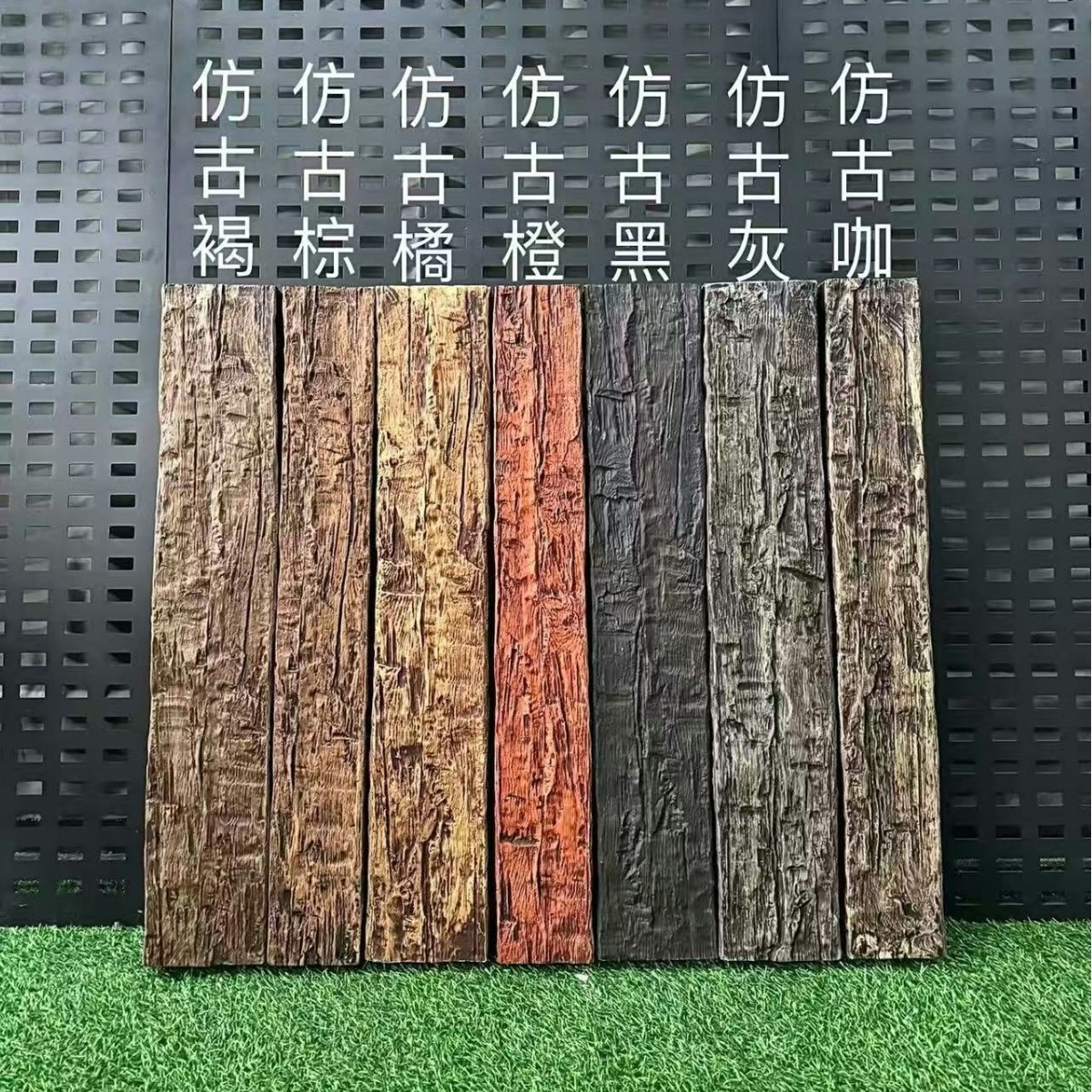
Deep texture serves color application as much as visual interest. Stain pools naturally in recessed areas, building density where authentic wood would accumulate natural aging. High points maintain cleaner, lighter exposure, mimicking the wear patterns that develop on genuine timber over decades of use. This differential staining creates the layered coloration that distinguishes authentic-looking wood from flat, uniformly colored surfaces.
The staining process typically involves multiple applications of progressively darker tones. Initial wash coats establish fundamental wood species coloration—warm undertones appropriate to the target wood type. Subsequent applications introduce aging effects, concentrating in grain areas while remaining thinner across cellular patterns. Final steps add highlight touches that catch light on raised points, adding perceived dimensionality beyond what physical texture alone provides.
Quality control during staining requires experienced technicians rather than automated processes. Human operators assess each beam's specific coloration needs, applying additional treatment where patterns demand. This individualized attention ensures consistent quality across production runs while preserving natural variation that automated systems would average away. The result displays the subtle irregularities that make wood feel genuine rather than manufactured.
Weight and Structural Advantages
The practical benefits of PU faux beams extend beyond visual considerations. Weight reduction compared to solid timber typically ranges from 80-90%, meaning a 20-foot beam that would weigh several hundred pounds in solid oak might weigh under 50 pounds in PU. This differential transforms installation logistics entirely, enabling single-person handling where teams and equipment were previously mandatory.
Reduced weight reduces structural requirements for mounting systems. Solid timber ceiling beams impose substantial load forces that demand robust structural connection to building framework. Faux beams of equivalent visual impact require minimal mounting hardware, often utilizing adhesive systems supplemented with concealed brackets. This advantage proves particularly valuable in retrofit applications where existing structure cannot accommodate additional loading.
Transport and storage logistics benefit similarly. Containers and trucks carry more beam length in weight-limited loads, reducing per-unit shipping costs. Warehouses store more inventory in space-constrained environments, improving stock availability without proportional space expansion. These supply chain efficiencies translate into competitive pricing advantages for importers and distributors serving geographically dispersed customer bases.
Applications Across Project Types
Residential basements present ideal faux beam opportunities. Lower ceilings that would overwhelm with solid timber mass instead benefit from beams that provide visual interest without structural weight concerns. Homeowners gain the rustic aesthetic associated with exposed beams while avoiding the complications of installing genuine timber in spaces where moisture variations and limited access create significant challenges.
Commercial hospitality projects—restaurants, bars, boutique hotels—increasingly specify high-simulation PU beams for their combination of aesthetic quality and maintenance practicality. Grease, humidity, and constant cleaning demand materials that withstand harsh conditions without specialized care. Faux beams provide the warmth and character associated with timber without the vulnerability that genuine wood displays in demanding commercial environments.
Retail environments seeking seasonal or temporary installations find faux beams particularly suitable. Their light weight facilitates rapid installation and removal, enabling feature displays that would be impractical with permanent timber construction. Event spaces, trade show exhibits, and pop-up installations can incorporate dramatic beam features without committing to permanent installation requirements.
Evaluating Supplier Quality
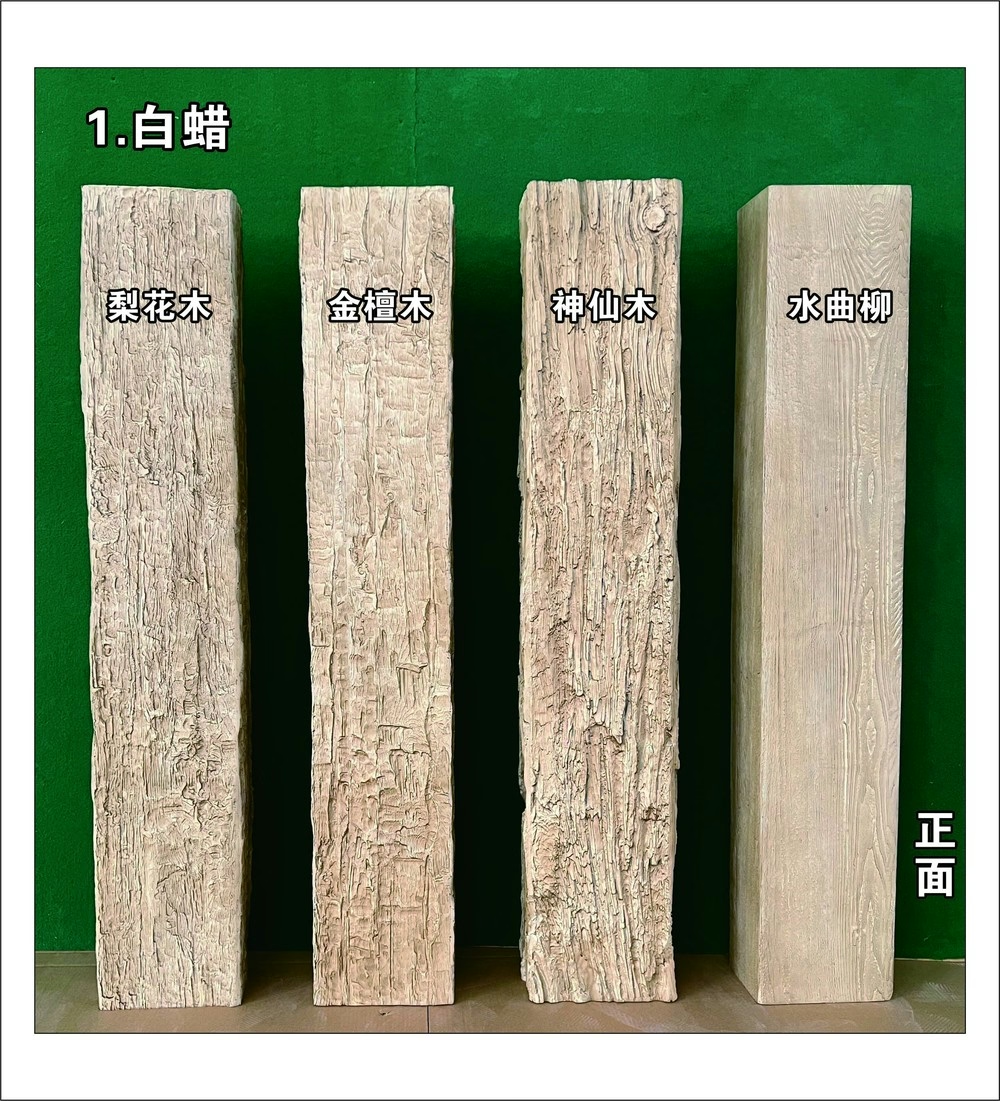
Importers assessing potential manufacturing partners should examine texture depth through physical sample inspection. Measurements should reveal relief of at least 1-2mm across typical grain patterns, with deeper relief in areas naturally associated with significant grain variation. Flat or minimally textured samples indicate inferior products regardless of color accuracy.
Color consistency across samples reveals manufacturing process control. Requesting three to five samples from potentially different production batches demonstrates whether staining processes produce consistent results. Visible variation between samples suggests quality control issues that would affect project installations, potentially creating mismatched beams across large installations.
Technical specifications regarding fire resistance, UV stability, and temperature tolerance indicate whether products meet project requirements. Commercial applications often mandate specific fire ratings that budget faux beams may not achieve. Outdoor applications require UV-resistant formulations that prevent degradation and color shift. Clarifying these requirements before order commitment prevents costly specification mismatches.
The combination of authentic appearance, practical handling advantages, and versatile application potential makes high-simulation PU faux beams increasingly standard in both residential and commercial interior design. Understanding the manufacturing and quality factors that distinguish premium products enables informed specification decisions that serve project requirements effectively.
Technical References
ASTM standards cited in every specification
Test Data
Lab results from internal testing program
Updated 2026
Reviewed against current product specs


