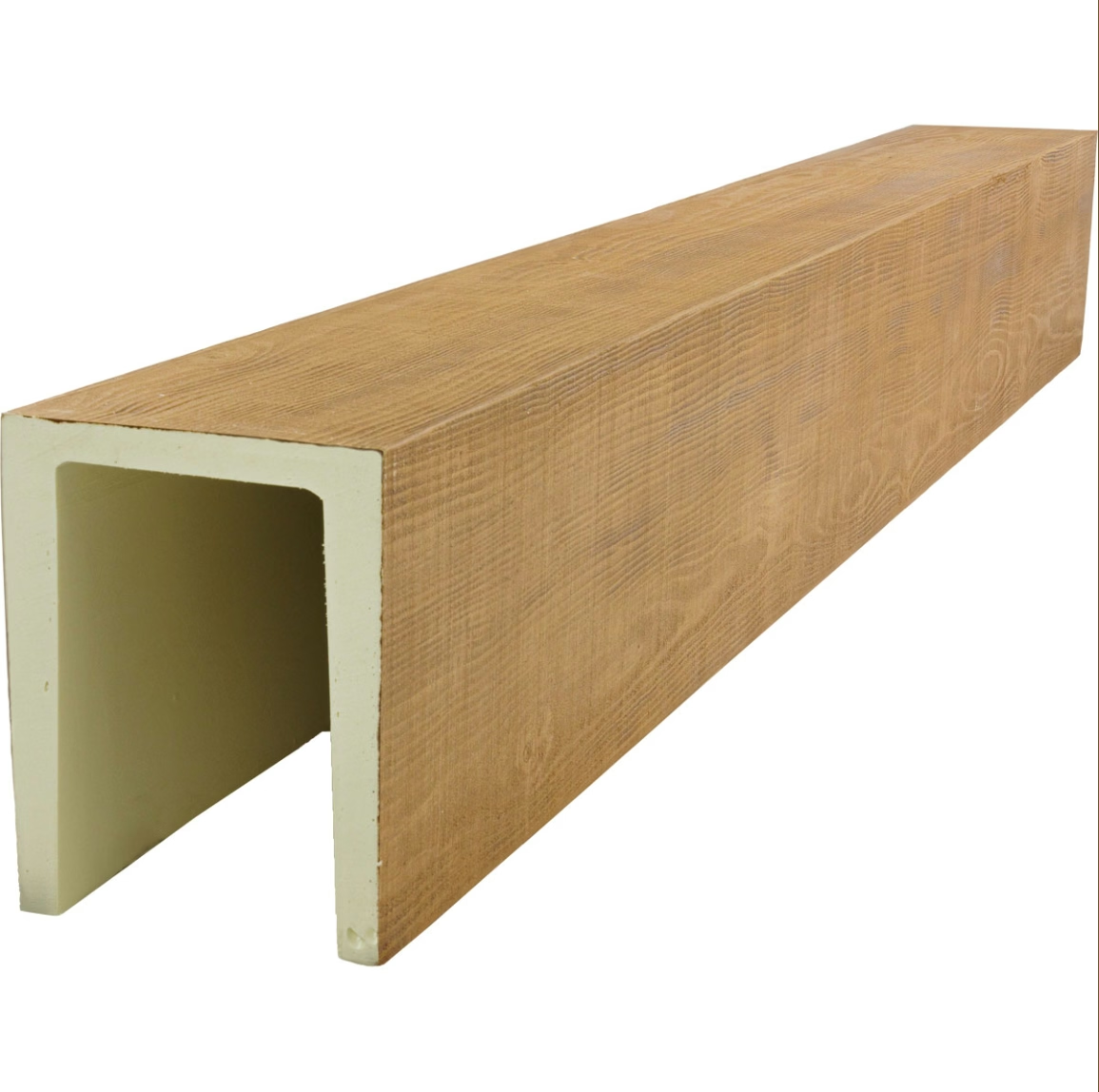
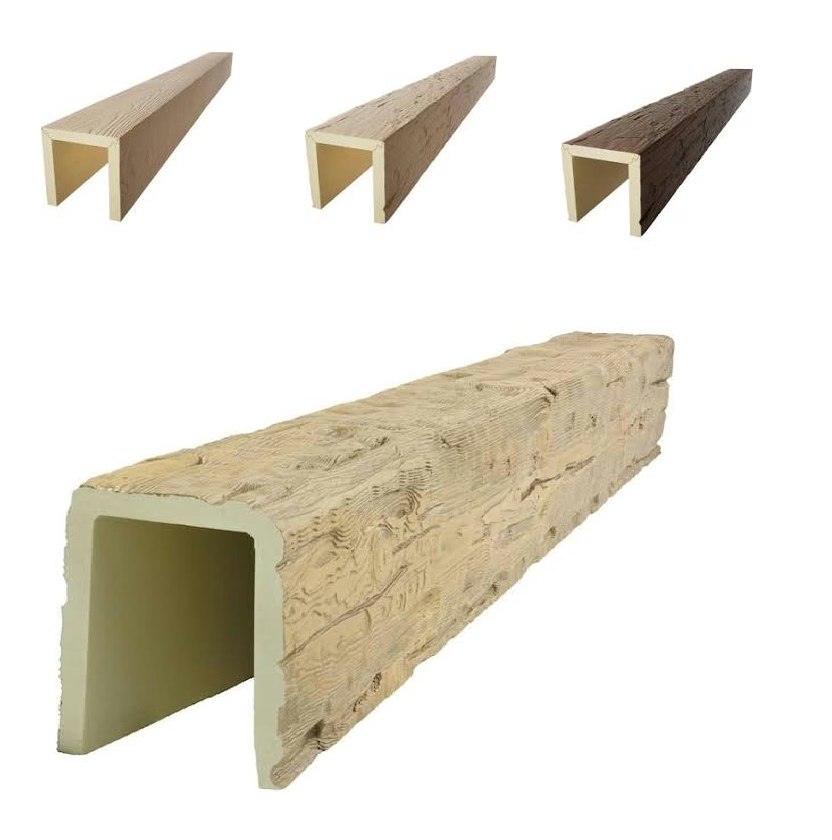
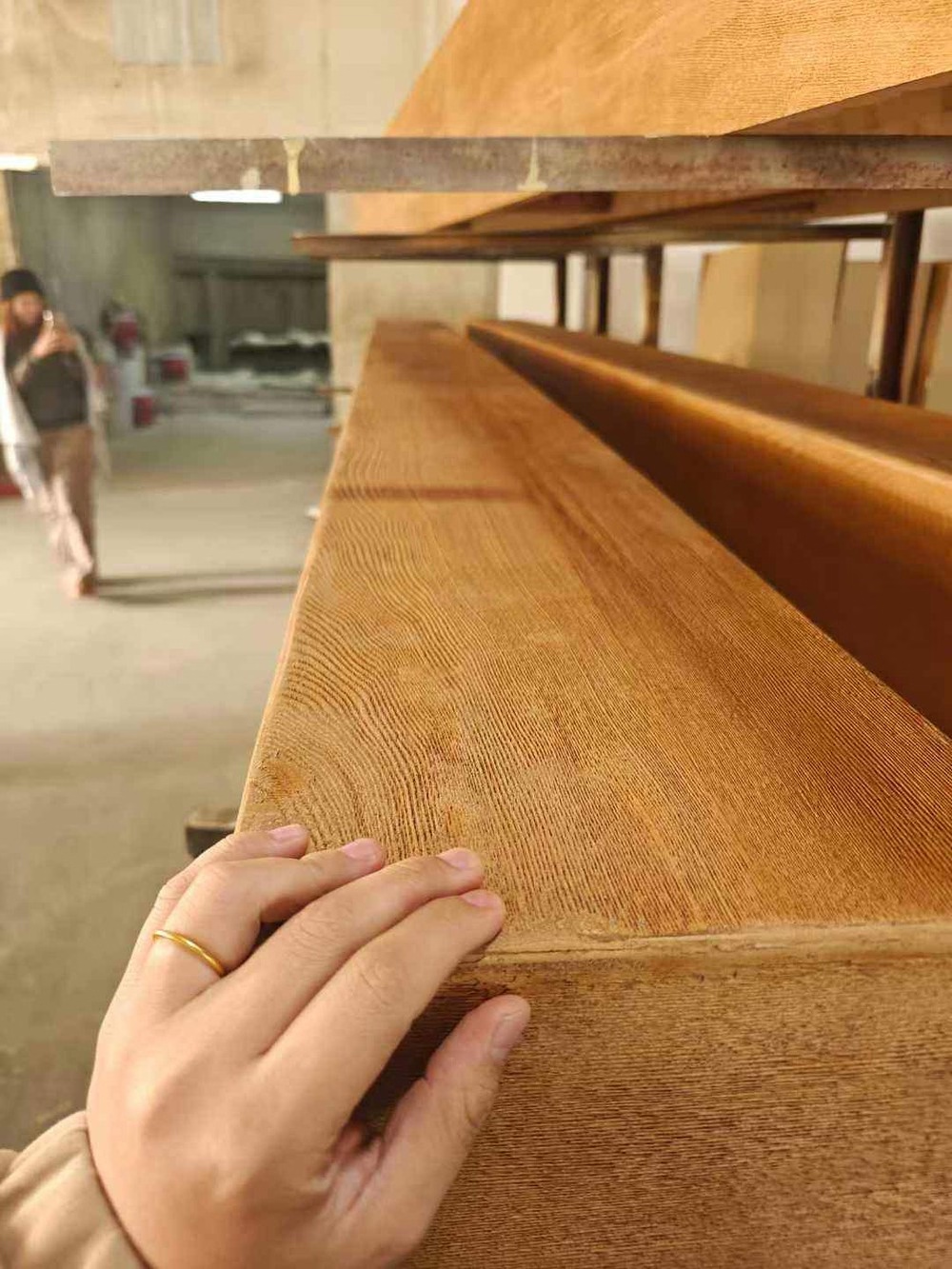
Ask any experienced contractor about their most memorable project challenges, and ceiling beam installations frequently surface. Not the installation itself—that part is usually straightforward—but the client reaction when they discover the beams they assumed were solid timber are actually lightweight alternatives. This moment of genuine surprise, when someone completely familiar with building materials cannot distinguish faux from authentic at first glance, represents the pinnacle of what deep texture PU faux beams can achieve. The technology has advanced to the point where ultra-realistic simulation represents the baseline expectation rather than an aspirational goal.
The Technology Behind Convincing Simulation
Modern polyurethane faux beam manufacturing draws from decades of materials science development. Polyurethane itself provides ideal casting characteristics—the material accepts fine detail from molds, cures reliably, and accepts staining systems developed specifically for this substrate. What transforms raw PU into convincing timber lies in the combination of master pattern development, multi-stage texturing, and sophisticated color layering.
Master pattern creation begins with natural timber selection. Engineers work with specialty lumber suppliers to source boards displaying exceptional character—the dramatic grain patterns, interesting knots, and natural variations that make wood visually compelling. These boards get carefully documented, with thousands of photographs capturing their characteristics from multiple angles and lighting conditions. Selected boards become master patterns, their surfaces preserved in durable casting materials that can produce hundreds of identical reproductions.
The casting process itself requires precision engineering. Mold preparation ensures complete detail capture without air pockets or surface imperfections. Component mixing ratios, temperature conditions, and cure timing all influence final product quality. Variations in any parameter can introduce subtle differences that affect texture fidelity or color acceptance. Quality manufacturers maintain tight process control, treating each production run as an opportunity to refine techniques based on observed results.
Texture Development and Refinement
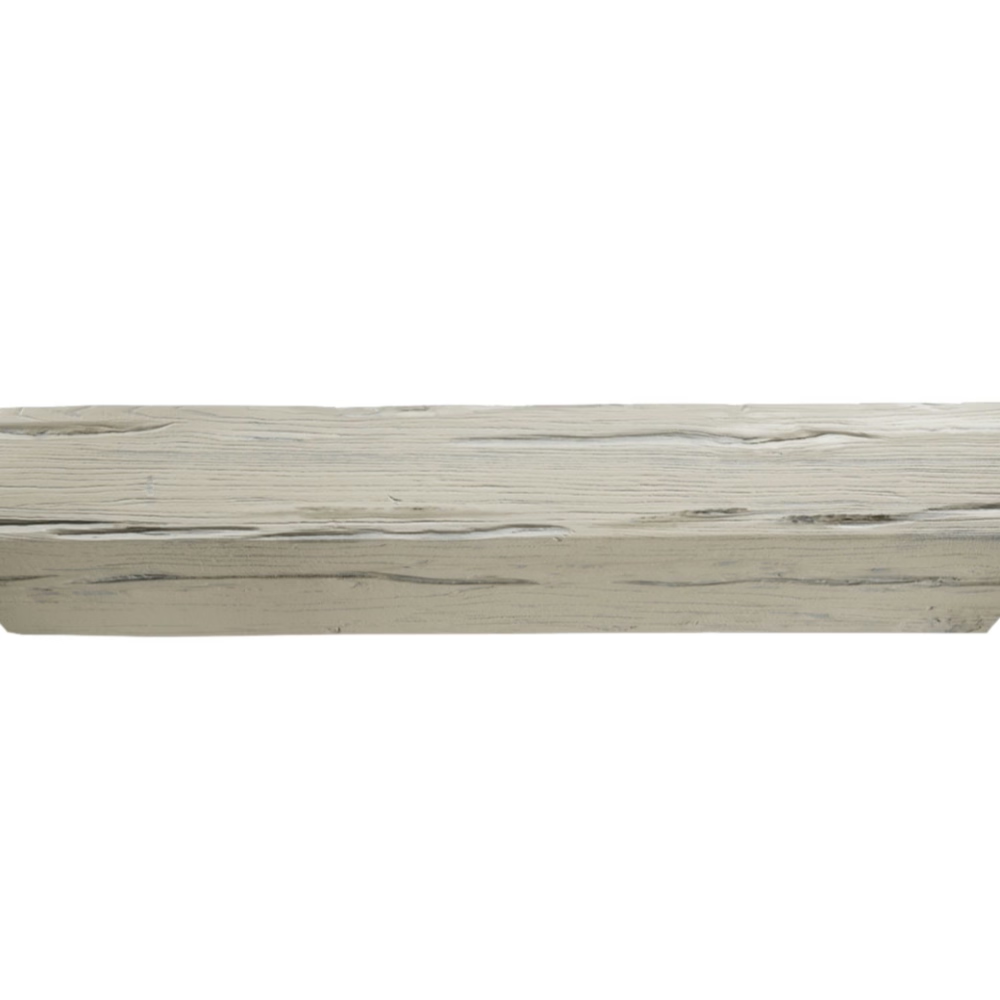
Texture distinguishes premium faux beams from budget alternatives more decisively than any other characteristic. Color can approach authenticity through careful formulation, but texture must physically exist to interact with light convincingly. The relief variations that create shadow patterns in natural wood must appear in the faux product with similar depth and distribution.
Initial casting texture represents only the starting point. Post-casting refinement involves skilled technicians who evaluate each beam against quality standards and apply targeted texturing adjustments. Areas displaying insufficient relief receive additional hand work—careful carving, abrading, or tooling to enhance natural characteristics. Knots, where they appear in the design, require individual attention to ensure convincing depth and irregularity.
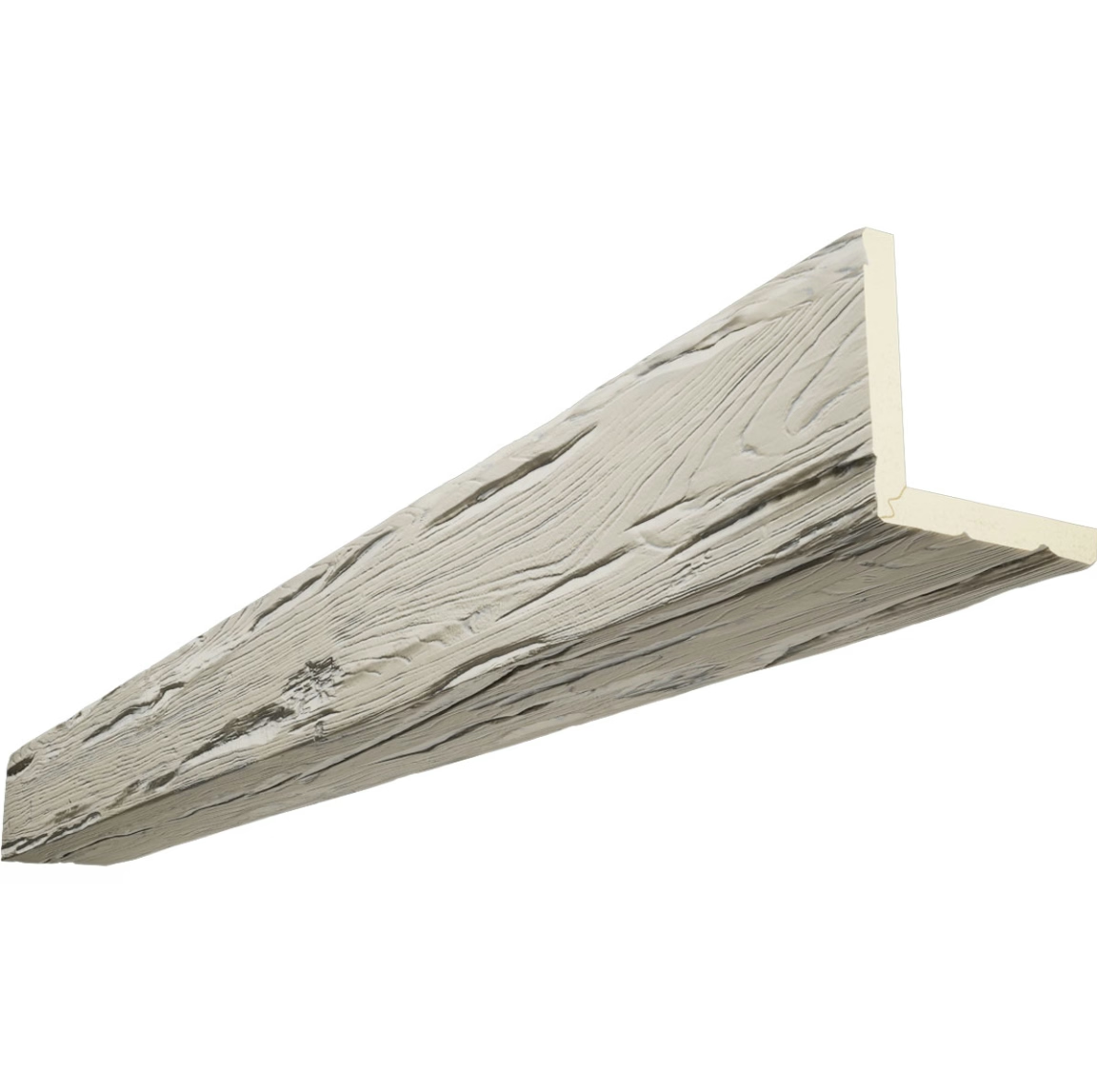
The depth targets for quality beams typically exceed 2mm of relief across primary grain patterns. This substantial variation creates genuine shadow-catching capability, the hallmark of authentic timber. Lighting at different times of day and angles reveals this dimensionality, with beams appearing to have genuine mass and presence. Budget products often display texture measured in fractions of millimeters—sufficient to suggest grain without creating the three-dimensional effect that makes simulation truly convincing.
Color Layering Techniques
Authentic wood coloration develops over decades through complex chemical and physical processes. UV exposure, oxidation, dust accumulation, and natural finish aging all contribute to the rich, layered tones found in genuine aged timber. Faux beam manufacturers replicate this complexity through multi-stage staining processes that build similar depth.
The staining sequence typically begins with base coat application. These foundational layers establish the fundamental wood species coloration—the underlying tones that read as "oak" or "fir" or "walnut" before surface detail develops. Base coat formulations penetrate the PU surface slightly, creating mechanical bonding that ensures long-term adhesion despite environmental variations.
Subsequent layers introduce aging effects progressively. Darker stains concentrate in recessed areas where natural wood would accumulate grime and oxidation. Lighter tones remain on high points where wear would naturally expose fresher wood. The interplay between these layers creates the impression of a surface that has aged authentically rather than appearing artificially treated.
Highlight and accent applications complete the process. Subtle color touches catch attention on specific details—the occasional mineral streak, the slightly warmer tone around knot margins, the faint color variation across annual ring boundaries. These finishing touches require experienced applicators who understand natural wood's color behavior and can apply similar logic to faux surfaces.
Installation Strategies for Maximum Impact
Even the most realistic faux beam reveals its nature through poor installation. Joint visibility, inconsistent spacing, and grid-like regularity betray manufactured origins faster than any surface characteristic. Achieving convincing results requires attention to installation details that distinguish professional work from amateur attempts.
Joint placement should follow logic inherent in authentic timber construction. Beams terminate at structural points—at walls, above posts, at deliberately designed breaks. Random-length cutting that avoids obvious pattern repetition appears most authentic. When multiple beams join in a continuous run, joints should align with naturally occurring breaks rather than appearing at arbitrary positions.
Positioning variation reinforces organic quality. Rather than perfectly parallel spacing, slight adjustments in beam positioning create the impression of timber selected for character rather than manufactured uniformity. This intentional irregularity distinguishes thoughtful installations from those that appear formulaic. Experienced installers develop intuition for appropriate variation ranges, creating interest without obvious deviation from design intent.
Lighting design significantly influences perceived authenticity. Upward-facing illumination emphasizes beam undersides, where texture and color appear most prominently. Downward-facing fixtures create shadow patterns that enhance dimensionality. Combined approaches that vary lighting across the installation reveal different aspects of the simulation quality throughout the day.
Commercial Applications and Durability
Restaurant and hospitality designers increasingly specify ultra-realistic faux beams as standard approach for timber aesthetic elements. The practical advantages compound over time—initial installation simplicity becomes ongoing maintenance convenience, with beams that withstand commercial cleaning protocols without specialized care.
Food service environments present particular challenges that genuine timber cannot meet reliably. Grease-laden humidity, temperature fluctuations, and constant cleaning demands would quickly degrade authentic wood surfaces without intensive maintenance programs. PU faux beams with appropriate finish systems handle these conditions indefinitely, maintaining their as-installed appearance year after year without refinishing schedules.
Hospitality projects benefit similarly from maintenance advantages. Hotel lobbies, restaurants, and entertainment venues that experience heavy traffic and frequent cleaning benefit from beams that look continuously fresh without ongoing attention. Housekeeping staff appreciate surfaces that clean with standard methods rather than requiring specialized products or techniques. Operations managers value predictable maintenance requirements that fit established cleaning schedules.
Project Planning and Specification
Designers developing specifications for ultra-realistic faux beam installations should consider several factors that influence final results. Ceiling height affects appropriate beam scale—higher ceilings accommodate larger profiles that would overwhelm lower spaces. The rule of thumb suggests beam depth should relate proportionally to ceiling height, creating visual balance rather than competing with the space.
Finish selection should coordinate with overall material palette. Wood-tone beams interact with surrounding materials—brick, stone, plaster, metal—creating relationships that either reinforce or conflict. Early material selection enables informed beam specification that complements rather than clashes with other design elements. Requesting samples and testing combinations before commitment prevents costly specification changes mid-project.
Timeline planning should account for both standard and custom product availability. Catalog finishes typically ship more quickly than custom colors or sizes. Projects with compressed schedules benefit from identifying suitable catalog options early, reserving customization for projects with adequate flexibility. Importers managing inventory across multiple projects can optimize ordering to balance availability against carrying costs.
The combination of technological advancement and refined manufacturing techniques has elevated PU faux beams to the point where simulation quality exceeds what most observers would believe possible. Understanding the factors that distinguish ultra-realistic products enables specification decisions that achieve project aesthetic goals while capturing the practical advantages these materials offer.
Technical References
ASTM standards cited in every specification
Test Data
Lab results from internal testing program
Updated 2026
Reviewed against current product specs