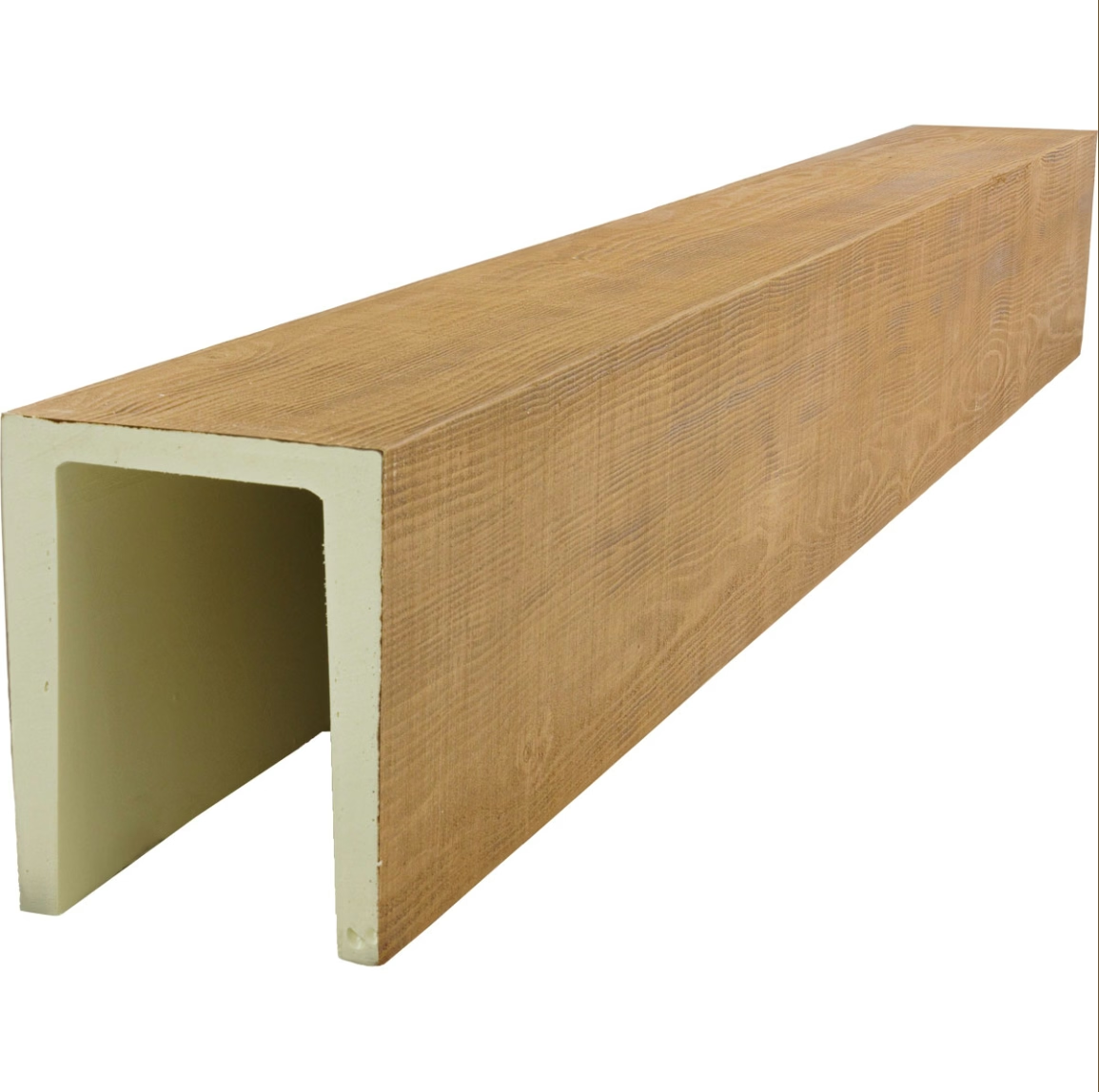
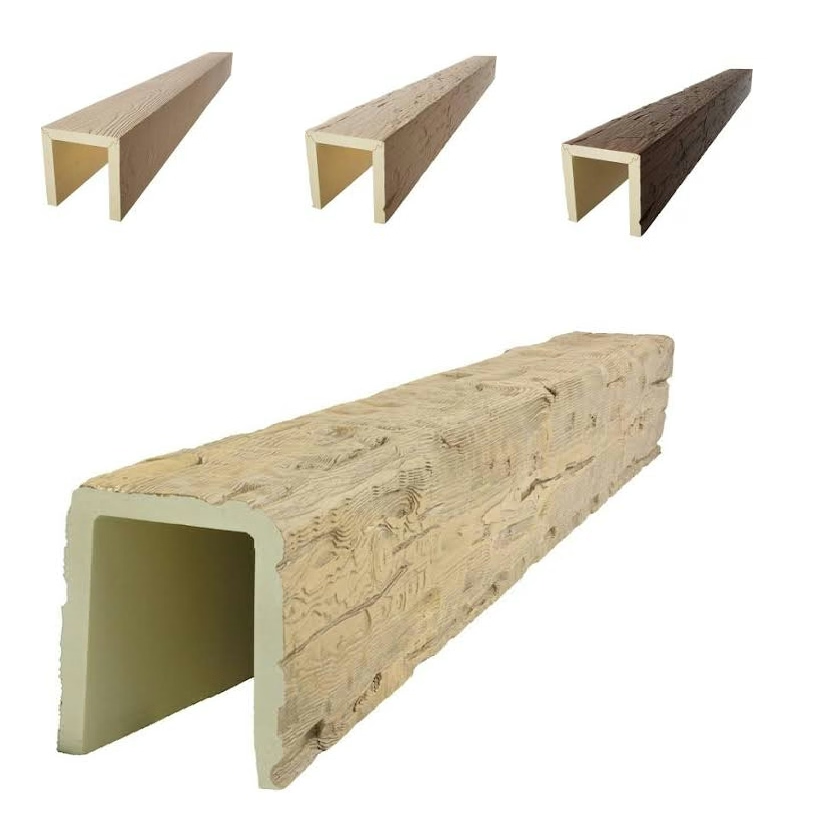
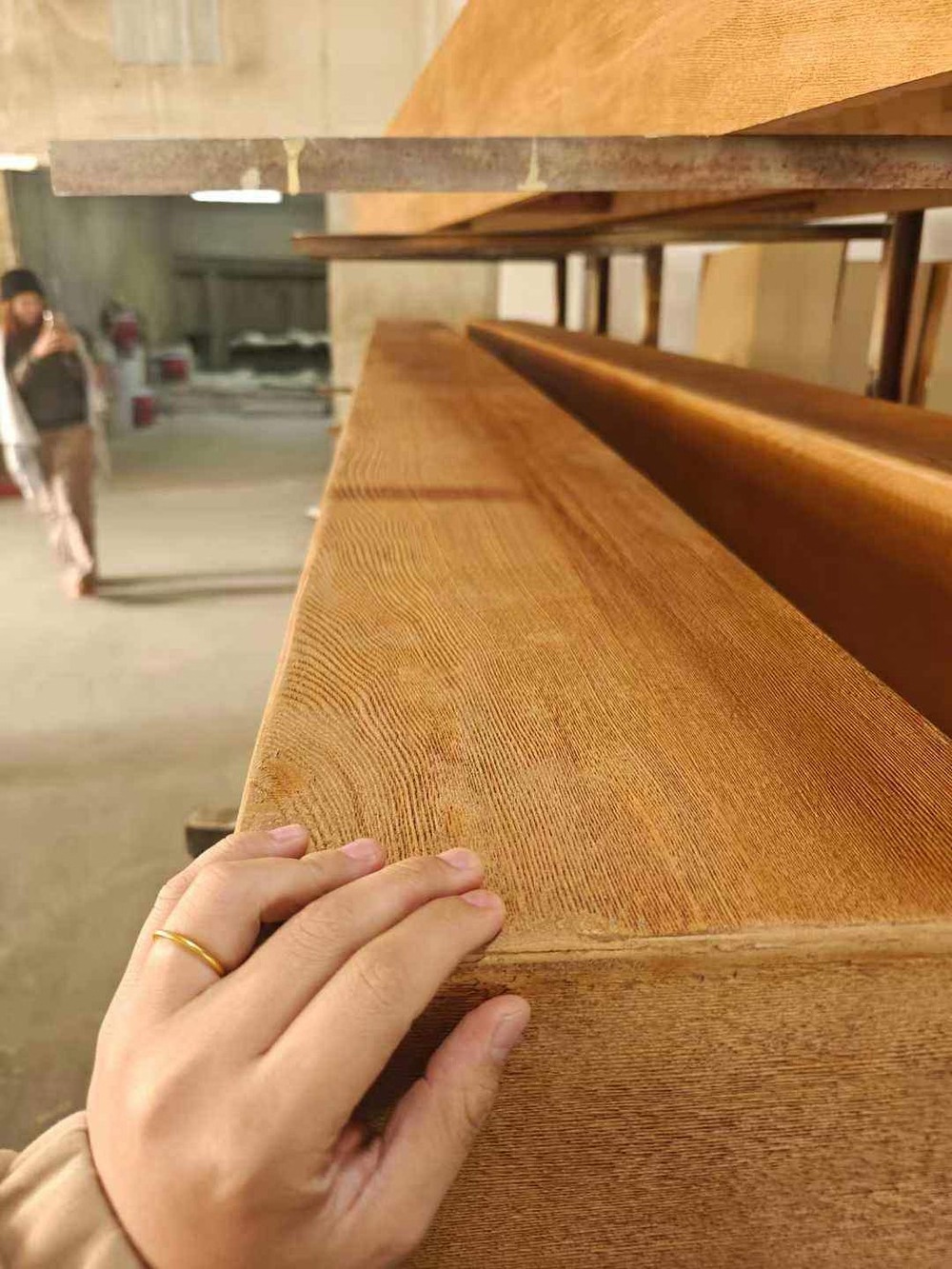
A "designer-spec" product sits one tier above what's merely recommended. The specifier isn't selecting among alternatives anymore — they've committed to a manufacturer, integrated the product into their construction documents, and taken responsibility for the result. That commitment changes the conversation entirely. A premium faux timber beam that meets spec-grade work has to perform not just on day one of installation, but across the entire life of the building.

What spec-grade means in this market
Spec-grade is shorthand for "this product meets the documentation, performance, and warranty criteria a serious design firm requires before putting pen to paper." In the faux timber category, that means the manufacturer has committed to:
- Fire rating documentation that names the specific formulation and the testing lab
- Structural engineering letters stamped by a licensed engineer for each market the product enters
- Material safety data sheets aligned with current regulatory frameworks
- A documented QA program — typically ISO 9001 or equivalent — with internal audit results available on request
- Replacement-part agreements that survive ownership changes at the manufacturer
If any one of those isn't in place, the beam isn't spec-grade. It's a sample-stage product. Plenty of good products live at sample stage; they just don't end up in construction documents without an upgrade path.
Why the fire rating has to be formulation-tied
The most common documentation gap on imported or newer faux timber products is a fire rating from "the same formulation we've been using for years" without a date. That phrasing isn't sufficient on a spec-grade project. The specification needs to know:
- The production lot covered by the test report
- The specific resin and additive system evaluated
- The testing lab's accreditation (typically NVLAP or ILAC equivalent)
- The publication date of the report
A 2019 fire rating on a 2026 production run is not valid. Multiple ASTM E84 ratings can live alongside each other for the same product family if the formulation evolves, and the specifier needs to see the current rating against the actual production batch they're buying.
This is also the documentation that gets checked at inspection. Building departments in California, New York, the Gulf states, and EU jurisdictions see design professionals regularly, and they recognize dated certificates on sight. Issuing a construction document with a five-year-old fire rating is the kind of error that turns into an inspection stop-work order.

Structural engineering across markets
Premium faux timber beams are increasingly used in roles that touch structural performance. The structural contribution is sometimes direct — a beam built around a steel channel that carries a hung load — and sometimes indirect — a beam sitting above a structural opening, where its mass, dead load, and attachment detail affect the engineering of the assembly.
A specification requires:
- Engineering letter stamped by a professional engineer licensed in the project's jurisdiction
- Connection details drawn for the specific profile, length, and load case
- Documentation of any internal reinforcement (steel channel, composite stiffener, hidden mounting plate)
- A clear statement of allowable load, written so the project's structural engineer can incorporate it into their calculations
Engineers who work with premium faux timber regularly will sometimes ask for shop drawings before signing off. Manufacturers who have built the relationship well provide those drawings as standard deliverable, with a turnaround of 5–10 working days. The drawings should show profile, length, internal structure, connection detail, and finishing notes on the same sheet where possible.
Finish systems across the project life
Spec-grade beams carry a finish warranty that covers realistic exposure conditions, not just the first year of installation. The typical manufacturer finish warranty runs:
| Condition | Coverage | Notes |
|---|---|---|
| Interior, controlled climate | 15–25 years | Manufacturer standard |
| Interior, high humidity (bath, pool, spa) | 10–15 years | Specific formulation |
| Exterior, covered (loggia, soffit) | 10–15 years | UV-stable formulation required |
| Exterior, fully exposed | 5–10 years | UV-stable formulation, periodic maintenance |
| Custom finishes | Matched to project | Documented in project specifications |
The warranty only counts if the manufacturer is still in business and still producing the same finish system. Spec-grade manufacturers address this by either holding the formulation recipe in escrow or publishing the recipe so a successor manufacturer can continue production. Designers running multi-decade commercial relationships should ask about continuity of supply, particularly for buildings with long service lives like hotels and institutional projects.
The QA chain behind the beam
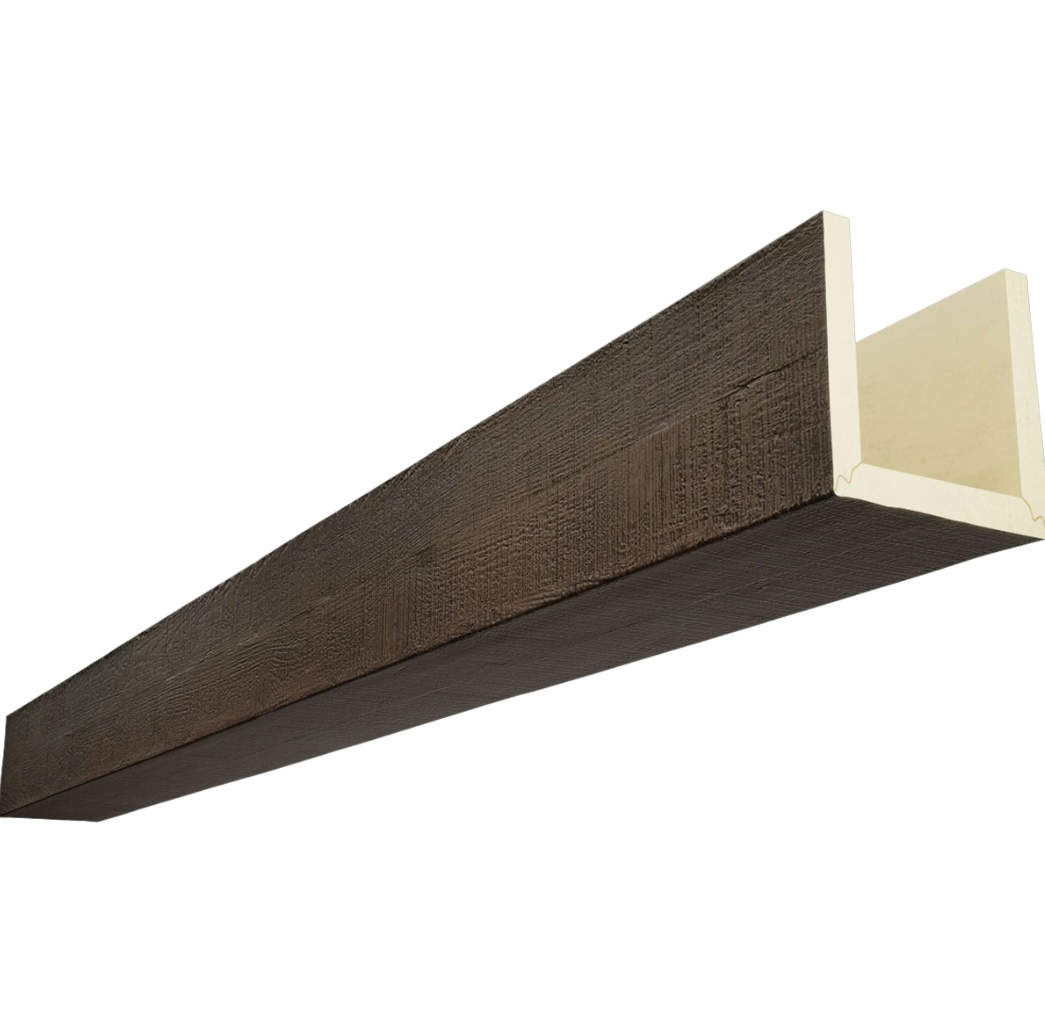
ISO 9001 certification isn't a marketing trophy. It's a working QA system with documented internal audits, supplier controls, calibration routines, and non-conformance handling. A spec-grade manufacturer runs an audit at least annually and makes the results available to specifier partners.
What to look for in a QA chain:
- Incoming material inspection (resin, additives, reinforcement steel)
- In-process checks at molding, demolding, finishing, and packing stages
- Final inspection against an AQL (acceptable quality limit) sample plan
- Traceability from raw resin batch to finished beam serial number
- Documented corrective action when defects are found
Trade buyers running large commercial portfolios will sometimes run a second-tier QA check on a sample of received beams, measuring density and skin thickness to verify the manufacturer's published values. The cost is minor relative to the project value. The check creates a feedback loop the manufacturer takes seriously.
The contractual commitments that bind
Premium faux timber beam procurement runs on contracts that look closer to custom millwork agreements than commodity supply. The standard terms a designer expects before signing:
Continuity of supply. Manufacturer commits to hold mold tooling for the agreed period (typically 10 years), with a defined escalation procedure for tooling replacement if the original tooling fails.
Color and finish lock. A retained master sample is held under controlled conditions at the manufacturer, and the project specification references that sample. Any color drift across production runs requires designer sign-off.
Replacement beam guarantee. Within the warranty window, the manufacturer produces a single replacement beam within an agreed window (typically 14–21 days) at a defined price (often cost-plus-shipping, occasionally fixed-price).
Field repair protocol. Field repair kits with matched glaze, topcoat, brushes, and instructions ship with the bulk delivery. The manufacturer provides a contact who can answer technical questions during installation.
Project-record binder. A per-project binder with as-built dimensions, finish recipes, supplier contact details, and a copy of all signed documentation. The binder ships with the beam order and is held by the designer or GC for the building record.
These terms aren't unique to one manufacturer. They're the standard the premium end of the industry operates against.
How specifiers evaluate manufacturers
Designers who write premium faux timber beam specifications typically maintain a personal library of three to six qualified manufacturers. The library isn't static; it gets refreshed every few years as product lines evolve, ownership changes, or new factories enter the market.
The qualification process most designers follow:
- Initial sample review — visual, tactile, and cross-section inspection on a prototype sample
- Documentation request — fire rating, structural letter, MSDS, ISO certificate
- Mockup install — a single full-size beam dry-fitted on a real project
- Reference check — phone call to three prior customers with comparable projects
- Trial specification — full product specified on a smaller, lower-risk project
- Standard specification — product becomes part of working library for premium work
Each step builds confidence incrementally. By the time a manufacturer makes it to step 6, they've earned a place in the designer's specification library, and that place typically lasts years.
The specifier-manufacturer relationship
At its best, the relationship between a designer and a spec-grade faux timber beam manufacturer resembles an extension of the designer's own practice. The manufacturer's engineering team fields questions about structural coordination. The color lab holds the finish recipes. The production manager flags schedule concerns before they become problems. The QC team welcomes the designer's site visits during production runs.
The worst-case alternative is a transaction where the manufacturer takes a PO, ships a box, and disappears. That alternative still works for catalog SKUs on straightforward projects. It doesn't work for the projects that justify the premium in the first place.
Closing notes
Designer-spec premium faux timber beams aren't a luxury. They're the working tool that gets premium interior projects delivered on schedule, within budget, and built to perform. The manufacturers who understand that — who treat the specification as a collaborative document rather than a marketing opportunity — earn their place in the specifier's library and keep it.
The next wave of premium interior work will lean even harder on this kind of relationship. Buildings are getting more demanding, jurisdictional requirements more complex, and finish expectations more refined. The faux timber beam industry that meets those demands with serious documentation, transparent QA, and real contractual commitments will earn the work. The rest will stay in the sample stage.
Technical References
ASTM standards cited in every specification
Test Data
Lab results from internal testing program
Updated 2026
Reviewed against current product specs