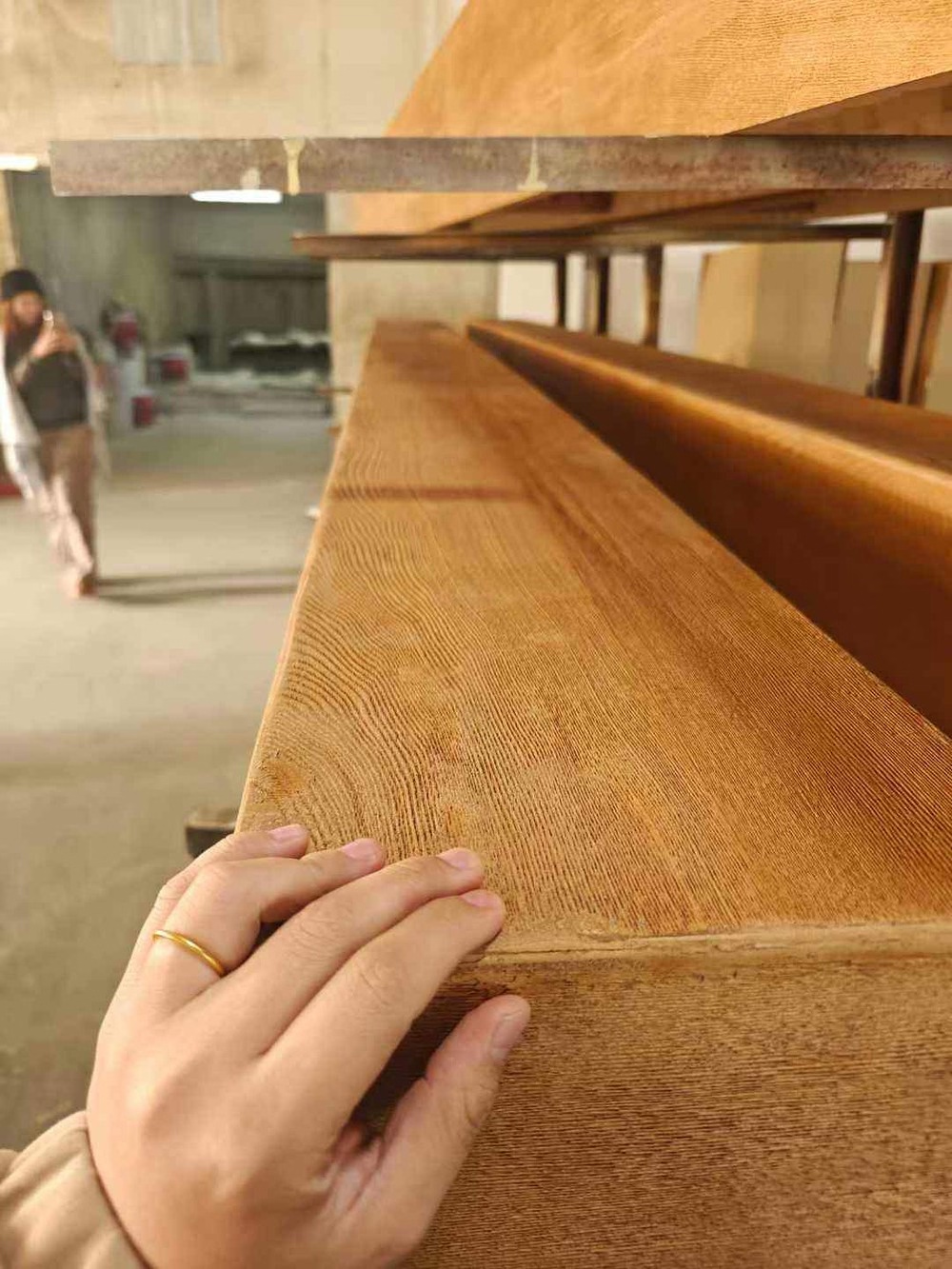
A project manager in Lisbon is mid-renovation on a 14th-century townhouse conversion into a boutique hotel. The exposed roof structure calls for timber-look beams, but old stone walls cannot carry the weight of solid oak across long spans. The spec shifts to polyurethane faux wood beams, and the question becomes logistics: where does a Portuguese contractor reliably source polyurethane beams that ship from a factory floor, arrive on time, and match the look specified by the designer?
That question shows up in our inbox every week. Buyers across Europe, the Middle East, Australia, and the Americas all run into the same gap between "we want factory pricing" and "we need factory-level reliability for a project on a hard deadline." This article walks through how direct factory supply of polyurethane faux wood beams actually works when you move past a sample order into real project volume.
What "factory direct" means in the faux beam trade
The phrase gets used loosely. A genuine factory-direct relationship means the buyer is purchasing inventory that the manufacturer produces, packages, and ships without passing through one or more domestic resellers. For polyurethane faux wood beams, that chain matters because faux beams are heavy, bulky, and dimensionally specific. Every extra hand on the product adds cost without adding quality.
A real factory-direct purchase typically includes:
- Production at the manufacturer's own facility, using molds and finishes they control
- Specifications set by the buyer's project (length, profile, color, texture, fire rating)
- Direct packaging onto pallets configured for export or domestic freight
- Shipping terms negotiated between the buyer and the factory's logistics desk
The opposite of factory direct is a domestic reseller who stocks a small range of standard profiles, marks them up, and cannot customize finishes for a specific project. For commercial work where the designer has specified a particular grain or aged patina, a stock-only supplier simply cannot deliver.
Why projects move to direct supply
There are three recurring triggers. The buyer's local supplier cannot match a specified profile or finish. The buyer's local supplier's lead time does not fit the construction schedule. Or the project has tightened its budget mid-design, and the contractor needs factory pricing to keep margins intact.
All three push the conversation toward the factory floor rather than a distributor's catalog.
How a factory-direct inquiry actually unfolds
The first email is usually a sketch on a napkin in human form: three or four beam sizes, a vague reference to a "weathered oak" or "antique chestnut" finish, and a project address somewhere overseas. From there, the conversation tends to follow a recognizable sequence.
The factory's export team asks for cross-sections and lengths in millimeters or inches, depending on the buyer. The project stage matters: schematic design, value engineering, or procurement. Each stage needs a different level of sample commitment.
A schematic designer usually wants a small set of hand samples to drop into a material board. A procurement officer on a hotel chain wants production-ready drawings with tolerances stated, fire-rating certificates, and shipping windows. Both are legitimate factory-direct conversations, but the documents they ask for look very different.
Sample phase
For most international projects, the relationship starts with a sample shipment. Two or three beam sections cut to a manageable length, finished to the agreed specification, then sent by courier. The cost is modest, and the value is high because color and texture are notoriously difficult to judge from a screen.
A good sample includes the actual end cap if the beam is a box style, a short length showing the tongue or mounting detail, and ideally a small mitered corner so the buyer can judge how two pieces meet. Photos on a monitor cannot replace this.
Specification confirmation
Once the sample is approved, the project moves into a written specification: lengths per line item, profile reference, finish name, quantity, packaging preference, and delivery window. This document becomes the basis for a proforma invoice and a production plan.
For projects in the 200 to 2,000 beam range, the specification phase usually takes a week or two of back-and-forth, depending on how organized the buyer's design team is. Larger developments tend to run longer because the designer is still finalizing room-by-room layouts.
Production and quality control
Production for polyurethane faux wood beams involves casting, demolding, surface finishing, and final inspection. Lead time depends on factory load, but a typical container-load order runs four to six weeks from deposit to ready-to-ship.
During this window, the factory sends production photos or short videos at agreed checkpoints. For buyers who cannot visit, this visual check is the main reassurance that the color drift between sample and bulk run stays within tolerance. Most factories also retain a reference sample from each batch as a permanent record.
Logistics from the factory floor
Once production clears final inspection, the order moves into the logistics lane. For sea freight, the factory loads the beams into a container at its own facility or hands them over to a consolidator's warehouse. Faux beams are long and bulky, so container loading requires planning to avoid dead space and prevent in-transit damage.
Incoterms matter here. FOB, CIF, and DDP each place a different amount of risk on the factory. Buyers running multiple projects tend to settle on one or two Incoterms they understand and stick with them across orders.

For a 40-foot high-cube container, a typical loadout runs between 800 and 1,200 linear meters of standard 8-inch beams, depending on profile and packing density. The factory's logistics desk provides the loading plan before the container arrives, which lets the buyer adjust receiving schedules on site.
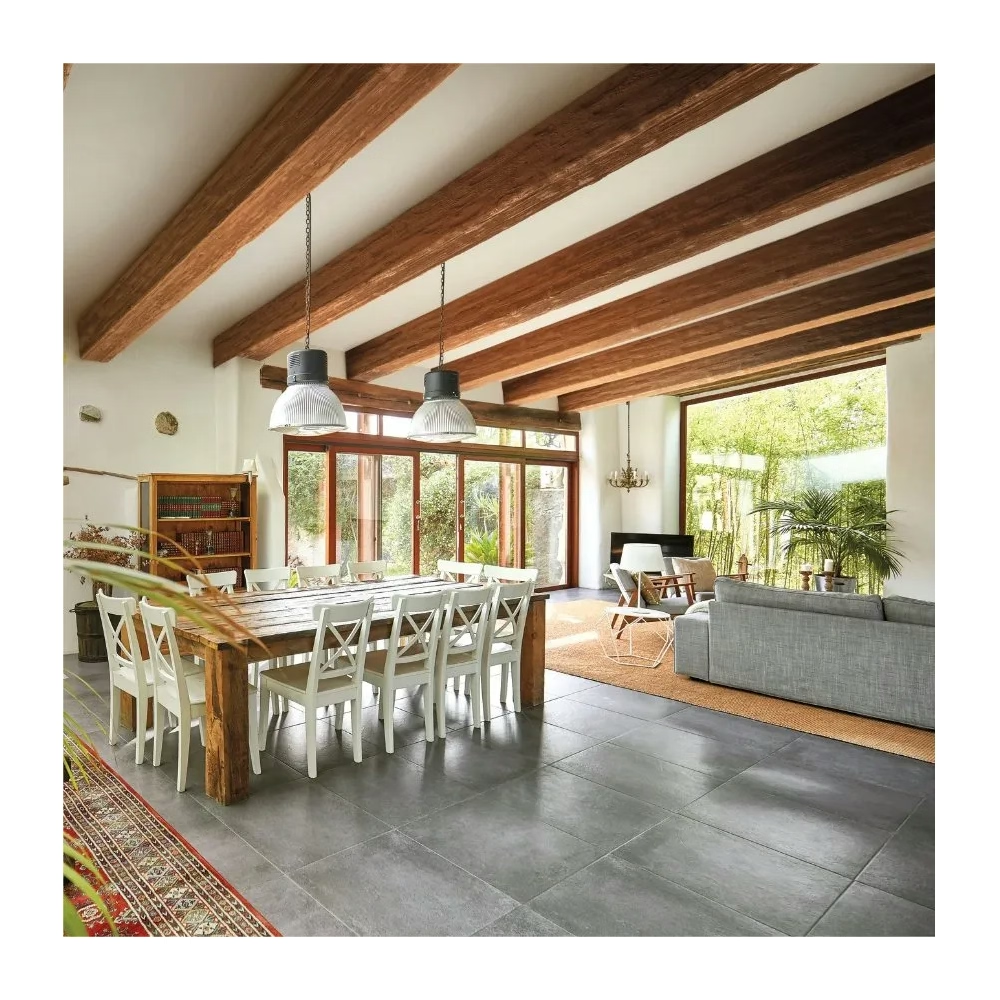
Who buys factory-direct polyurethane beams
The buyer profile varies, but a few categories stand out.
Commercial contractors on hospitality work. Hotels, restaurants, and event venues often want a consistent beam look across many rooms or many properties. Working with a factory removes the risk of a regional reseller running out of stock mid-project.
Residential developers on multi-unit builds. A developer putting faux beams in 80 townhouses benefits from a single production run rather than 80 separate orders through a local supply yard. Color and grain stay consistent, and the per-unit cost drops materially.
Architects and interior designers with custom finishes. Some designers want a finish that does not exist in any catalog: a specific grey, a particular weathering pattern, a brand-driven color. Factory-direct lets them commission the finish and keep the recipe for future phases.
Importers building a regional stock program. Some buyers are not end users at all. They are distributors who want to purchase container loads, hold them in a regional warehouse, and resell over the following year to contractors and designers.
Across all four categories, the pattern is the same. The buyer's project requires a level of control over specification, schedule, or cost that pushes them past a local distributor toward the factory itself.
Practical considerations before starting a factory-direct conversation
A factory-direct relationship sounds simple in writing. In practice, a few details separate a smooth order from a painful one.
Confirm the factory actually produces the profile. Many polyurethane factories have a standard range of 15 to 30 profiles. A buyer who needs an unusual profile should expect new mold tooling or at least a tooling fee. That fee is usually modest but it does extend the timeline.
Lock in finish recipes in writing. Color drift is the single most common source of dispute in faux beam orders. The factory should keep a retained sample of the agreed finish, signed off in writing, and reference it during every production run. Buyers should require this and, ideally, keep their own physical sample on file.
Discuss packaging for export. Beams that survive a domestic truck ride do not always survive a container crossing if they are not blocked and braced. End caps, cardboard sleeves, and pallet configuration all matter. For orders over 500 linear meters, a sample crate opened at the destination port is a useful confidence check.
Plan receiving around container unloading. Long beams need a forklift or crane and a laydown area. Apartment blocks in tight urban cores sometimes struggle with this. Coordinating with the site team before the ship sails avoids a container of beams sitting at port accruing demurrage.
Clarify after-sales support. Scratches in transit, a wrong piece in a pallet, or a project that extends into a phase-two order all test the factory's responsiveness. Most established factories handle this well, but it is worth checking references.

Common questions from international buyers
Can the factory match an existing beam on site? Yes, in most cases. The buyer sends photos, dimensions, and ideally a small wood chip from the original. The factory's finishing team can usually blend a new finish close enough to disappear in a finished ceiling.
What about fire ratings? Many polyurethane faux beam lines carry a Class A or Class B fire rating depending on the formulation. The factory provides test certificates. For commercial work in the US, UK, UAE, and EU, this documentation is required at the inspection stage.
Can the factory produce one-offs? Yes, but unit cost rises sharply for small orders. Anything under 50 linear meters is usually priced closer to a custom job than a factory run, and minimum order quantities are common.
What is the realistic lead time? From approved specification to ship-ready, four to six weeks for a standard finish and 200 to 2,000 beam range. Custom finishes can extend this by two to four weeks. Shipping time on top depends on the destination port and the chosen service.
What makes a factory-direct relationship durable
The best factory-direct relationships are not transactional. They involve a project manager on the factory side who knows the buyer's preferences, a retained finish library, and a documented history of past orders that the buyer can reference on new projects.
For buyers running multi-year programs, this kind of continuity saves weeks of specification work per project. The factory already knows the preferred profiles, the standard packaging, the typical shipping routes, and the contact at the receiving end. New project orders become a confirmation exercise rather than a negotiation from scratch.
Factory-direct supply of polyurethane faux wood beams is not the right answer for every buyer. A homeowner with eight meters of beam for a single living room is better served by a regional stockist. A contractor doing a 600-meter commercial fitout, an importer building a stock program, or a designer chasing a specific custom finish benefits from going directly to the source. Knowing which side of that line your project sits on is the first practical step.
Technical References
ASTM standards cited in every specification
Test Data
Lab results from internal testing program
Updated 2026
Reviewed against current product specs