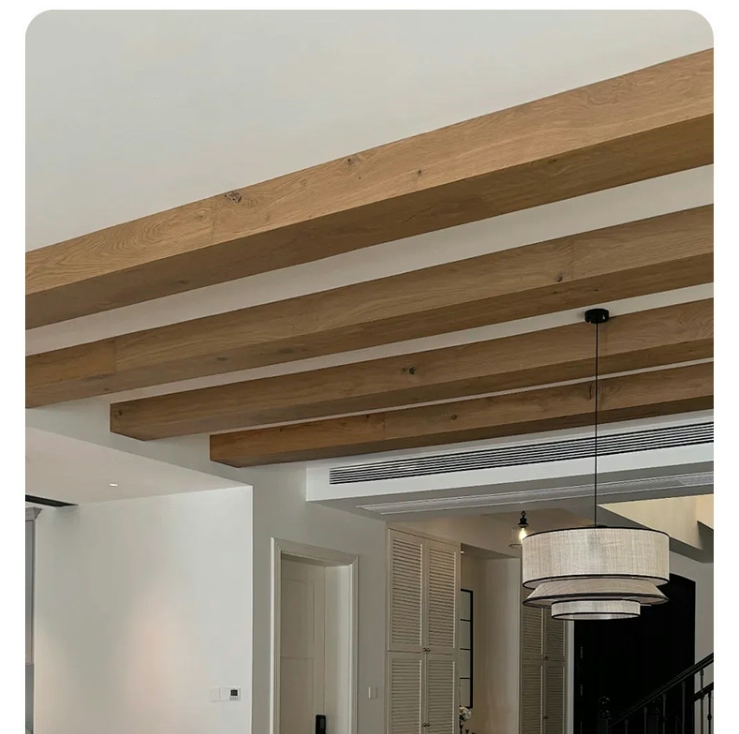
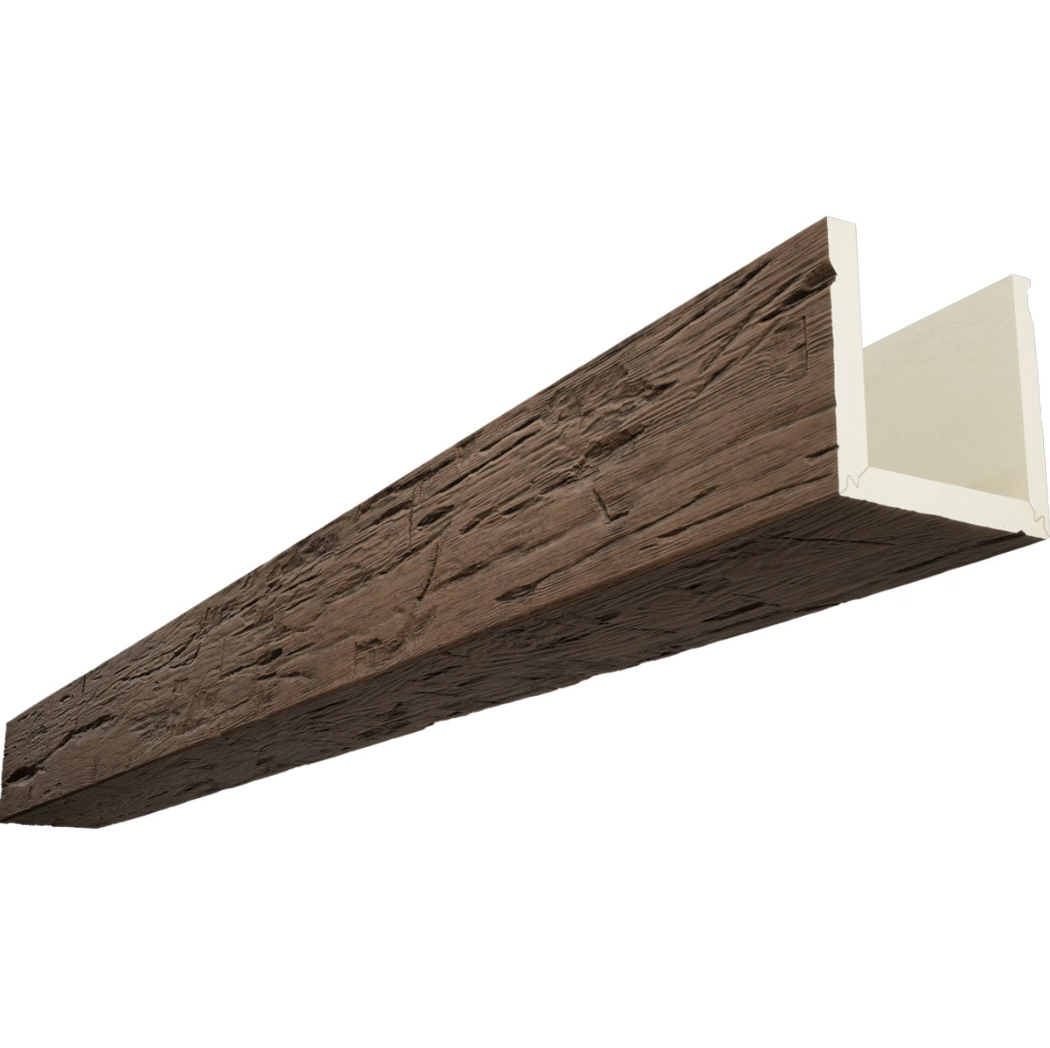
A freight coordinator books a 40-foot container of faux wood beams out of Ningbo and watches the booking confirmation come back with an arrival window at Los Angeles. The container holds 1,100 linear meters of 8-inch box beams, packed on 18 pallets, destined for a 220-unit apartment renovation in San Diego. The job looks straightforward until the coordinator starts listing what needs to happen between the container leaving the factory and the beams going up on the ceiling.
Seaport-to-port delivery of commercial faux beam bulk orders is one of the operational layers that separates a smooth supply chain from a stalled project. It is also one of the layers that factory-direct buyers are most often handed responsibility for, without a lot of guidance on what the process actually involves. This article is intended as that guidance.
What seaport delivery means in practice
Seaport-to-port delivery covers the journey from the manufacturer's loading port to the buyer's destination port. Once the container arrives at the destination port, the buyer typically takes over inland transport. This split is common because most importers have their own customs broker and inland freight operator in place.
The shipping window covers several distinct stages: factory loading, port-of-origin handling, ocean transit, port-of-destination handling, and customs clearance preparation. Each stage carries its own cost, its own documentation, and its own points of friction.
The Incoterm used on the order defines where the line sits between the factory's responsibility and the buyer's. FOB puts the line at the ship's rail at the origin port. CIF extends the factory's responsibility through to the destination port. DDP further extends it through customs clearance. Each option has a price and a service level.
Container loading is the foundation
Everything else in the seaport journey depends on the container being loaded properly at the factory. Polyurethane faux beams are awkward freight — long, often box-shaped, and prone to corner damage if not braced correctly.
A factory with export experience loads containers with several habits in place.
The beams are organized into pallets sized for the receiving equipment at the destination port. Forty-foot high-cube containers are the most common configuration for beam orders, with 20-foot containers used for smaller or specialty loads.
End caps and corners are protected with foam or cardboard bracing. Long box beams can flex inside a container during ocean transit if they are not blocked against the walls or bulkheads. Strapping and bracing plans are written down and shared with the buyer.

A container loading plan should be shared with the buyer before the container arrives at the port. The plan lists the pallets, their dimensions, and how they should be unloaded at the destination. A buyer with this plan can arrange their receiving equipment and labor ahead of time rather than improvising at the port.
Ocean transit and what affects the schedule
Once the container leaves the origin port, the ocean transit window is mostly outside anyone's control. Typical transit times from major Chinese ports to common destinations:
- West Coast North America: 14 to 18 days
- East Coast North America: 28 to 35 days
- North Europe: 28 to 38 days
- Mediterranean: 22 to 30 days
- Middle East: 14 to 22 days
- Australia: 18 to 25 days
These windows are averages, not guarantees. Weather, port congestion, carrier capacity, and routing decisions can extend them. A buyer planning a project around an arrival date should add buffer to the freight forwarder's estimate.
The carrier matters here. Large liner services run on predictable schedules and have the broadest port coverage. Smaller or regional carriers may offer lower rates on specific lanes but carry higher risk of schedule slippage or consolidation delays. For commercial project deliveries, the larger carriers are usually worth the modest rate premium.
Documentation required for seaport delivery
The documentation that travels with a faux beam container is standard for most export shipments, with a few product-specific items.
Always required
- Commercial invoice. Issued by the manufacturer, listing line items, quantities, values, and the parties to the transaction
- Packing list. Detailed description of the container contents, pallet by pallet, including weights and dimensions
- Bill of lading. Issued by the ocean carrier, serving as the contract of carriage and the title document for the cargo
- Certificate of origin. Issued by the relevant chamber of commerce or industry body, documenting where the goods were produced
Often required
- Material safety data sheet. Required for any shipment containing chemicals, which polyurethane beams technically are
- Fire rating certificate. Required if the beams are sold under a specific fire-rating claim, particularly for US and EU destinations
- Fumigation certificate. Required for some wood packaging materials; polyurethane beams usually exempt, but pallets may require treatment
- Insurance certificate. Often bundled into the freight forwarder's service; sometimes separately arranged
Sometimes required
- Conformity declaration. Required for some regulated markets, particularly the EU
- Phytosanitary certificate. Rarely required for polyurethane, but ships with composite orders sometimes need them
- Inspection certificate. Issued when a third-party inspection has been performed before shipment
The documentation is the operational backbone of the delivery. A buyer who treats it as an afterthought tends to have containers held at customs. A buyer who pre-files documents before the container arrives at port tends to clear cargo smoothly.
The destination port side
Once the container arrives at the destination port, the buyer's responsibilities kick in. The handoff between ocean carrier and customs broker needs to be coordinated carefully.
Free time and demurrage
Ocean carriers allow a free period, typically 7 to 14 days at the destination port, before demurrage charges begin. The clock typically starts from the day the container is unloaded from the vessel. A buyer who knows the container is coming can pre-arrange customs broker, drayage, and inland transport to use the free period efficiently.
A buyer who does not arrange these things in advance burns free time waiting for documents or equipment to line up. Demurrage charges on faux beams are not catastrophic per day, but they accumulate, and they are entirely avoidable.
Customs clearance
The customs broker files the entry with the destination country's customs authority. The documentation set described earlier is the working basis for this filing. The broker also handles duty payments, where applicable, and any inspections required by customs.
Some markets apply rigorous inspection regimes that hold containers for physical inspection. Drawing from this is rare, but the cost of an inspection delay falls on the buyer. A buyer importing from China or other regions with active trade enforcement should expect one to two percent of containers to be drawn for inspection, and should build that risk into the schedule.
Inland transport
After customs release, the buyer arranges inland transport from the port to the project site or to a regional warehouse. For full containers of beams, this usually means a drayage move to a transload facility, then over-the-road trucking to the destination. Beams are bulky freight, and not every trucking operation has the equipment and trailers suited to long loads.
Coordinating arrival with site readiness
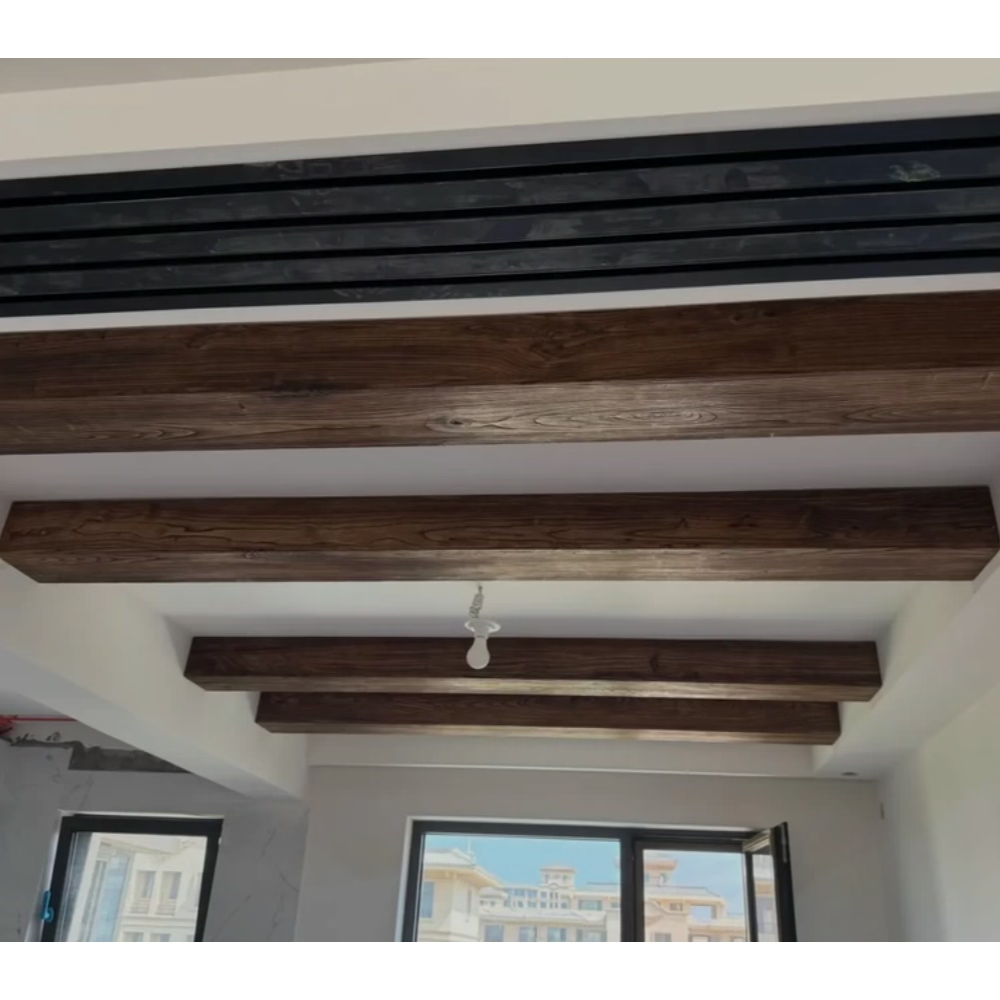
A coordination detail that gets missed often enough to be worth flagging: the beams arriving at port before the project site is ready to receive them. A renovation site without laydown space, an apartment building without working elevators, or a hotel under construction with limited access can all turn a delivered container into a logistical problem.
Mature buyers share the project's receive schedule with the factory and the freight forwarder early in the process. If the receive window moves, the ship date moves with it. Aligning delivery with site readiness reduces storage cost, demurrage exposure, and the risk of site damage to beam surfaces during handling.
When port-to-port is not the right service level
Port-to-port is the standard arrangement for full-container commercial orders, but there are cases where the buyer wants more.
A buyer without an inland freight network wants door-to-door service, which is DDP in Incoterm terms. The factory handles everything from origin to the buyer's address. The cost is higher, but the service simplification is real for buyers running their first few import orders.
A buyer ordering less than a full container usually pays for LCL (less-than-container-load) consolidation, which is a different service model. Beams are awkward LCL freight and the per-meter cost is noticeably higher than FCL. For small orders, LCL is sometimes the only realistic option.
A buyer ordering full containers on a recurring basis can establish a service-level agreement with a freight forwarder that simplifies booking, documentation, and arrival coordination. The savings from routine service quality are real, and they tend to grow with order volume.
Working with the factory's logistics team
A factory that handles seaport delivery regularly is also a source of practical advice about routing, scheduling, and documentation. The logistics team usually knows which carriers are reliable on specific lanes, which ports handle beam cargo efficiently, and where inspection delays tend to cluster.
For first-time importers, leaning on this expertise reduces the learning curve. The factory benefits from a smooth shipment as much as the buyer does — payment often depends on document presentation, and a clean shipment closes the financial transaction without friction. Both sides have reasons to make the seaport delivery work well, and that alignment is worth using.
The mechanics of seaport-to-port delivery for commercial faux beam orders are not glamorous, but they are the difference between an order arriving on time in good condition and an order that costs the project days or weeks of schedule slippage. For commercial work at scale, treating logistics as a core competency rather than a footnote tends to be the better path.
Technical References
ASTM standards cited in every specification
Test Data
Lab results from internal testing program
Updated 2026
Reviewed against current product specs