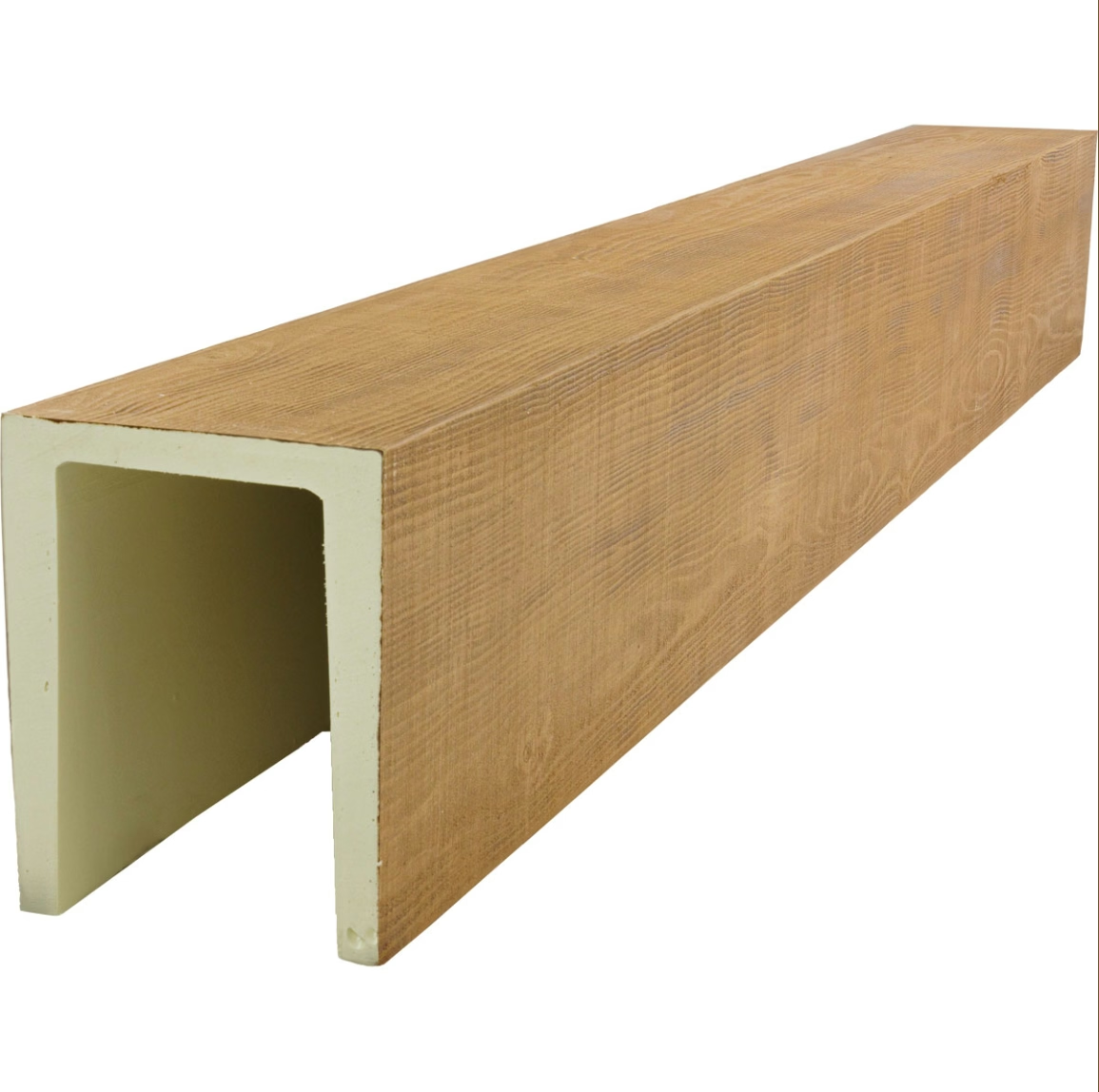
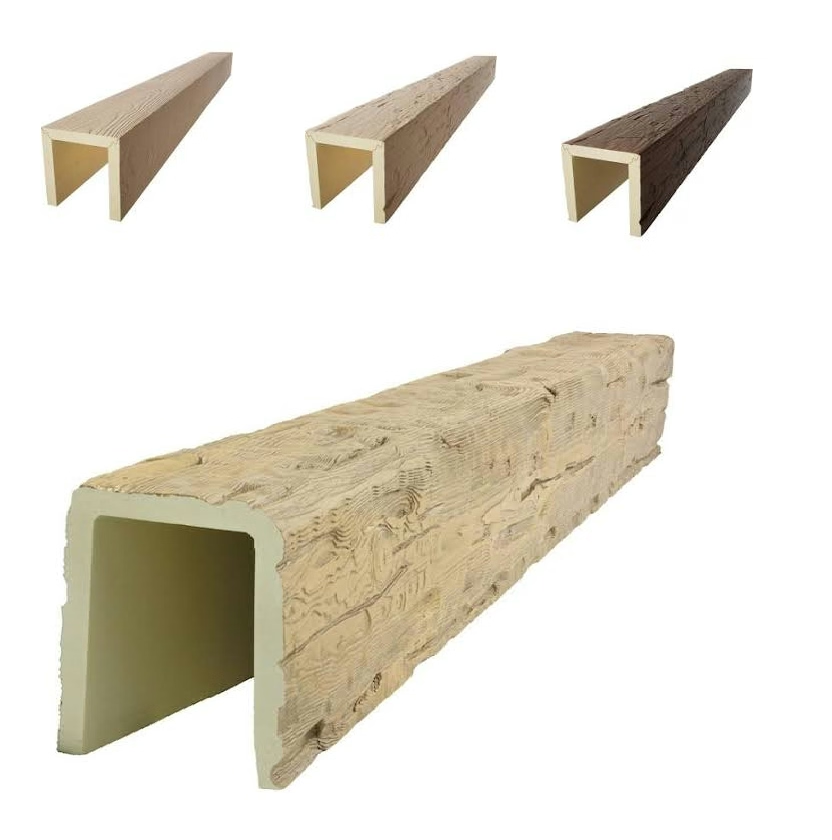
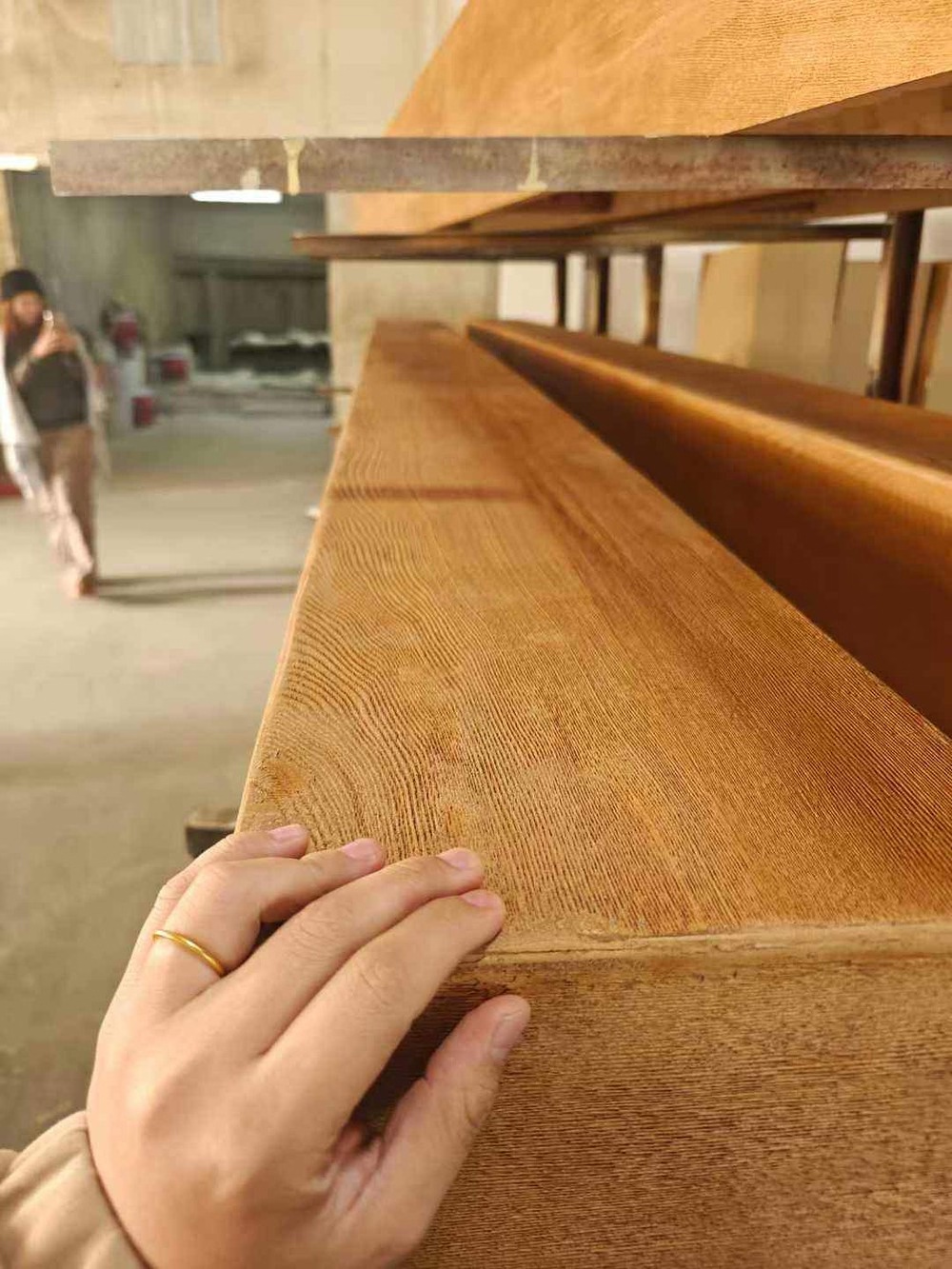
The question comes up before every quote we send out. A homeowner pictures a beam across a ceiling, then pictures the same beam ten years later, and wonders whether the line they fell in love with will still be a line. The worry is reasonable. Real timber beams twist, cup, and crown with humidity swings. Old houses have stories about beams that walked across the room over a few decades. So the question is fair: does a polyurethane faux beam do the same thing?
The short answer is that a properly manufactured and properly installed PU faux beam does not warp in the way real wood does. The longer answer, the one that matters for homeowners weighing a real timber purchase against a faux one, involves understanding what warp actually means, what PU is made of, and where the small set of things that can go wrong with a PU beam tend to come from.
What Warp Actually Means in a Beam
Warp is a general term that covers several specific movement patterns. Each one has a different cause and shows up in a different way.
Bow
A bow is a curve along the length of the beam, like a shallow smile or frown from end to end. A bowed beam no longer reads as straight from below. It is the most visually obvious movement because the eye uses straight horizontal lines to anchor the room.
Cup
A cup is a curve across the width of the beam, where the edges rise higher than the center or vice versa. A cupped beam catches light differently across its face and looks uneven from any angle.
Twist
A twist is a rotation along the length of the beam, so one end sits flat on the ceiling and the other end is angled. Twisted beams look subtly wrong from every angle and are very hard to disguise.
Crown
A crown is a permanent curve that develops as one face of the beam dries faster than the other. Crown is most common in solid sawn timber and is the classic problem in old timber-frame homes.
PU faux beams, when properly made and properly installed, exhibit none of these movements.
Why Polyurethane Does Not Behave Like Wood
Wood warps because wood is hygroscopic. It absorbs moisture from the air, swells when humidity rises, and shrinks when humidity falls. The swelling and shrinking is uneven across the grain, which is what produces bow, cup, twist, and crown. Every piece of wood in a home is constantly in motion, even if the motion is too slow to see in a given week.
Polyurethane foam is not hygroscopic in the same way. The closed-cell structure resists water absorption, and the factory-applied topcoat seals the surface against ambient humidity. The result is a beam that does not swell or shrink with the seasons.
The Foam Itself
High-density closed-cell polyurethane foam is dimensionally stable across the range of temperatures and humidities found in a residential interior. The cells are sealed against each other, so moisture cannot migrate through the body of the beam. This is the same family of materials used in rigid insulation boards, where stability over decades is essential to performance.
The Topcoat
The factory topcoat on a quality PU beam is engineered to be UV-stable, water-resistant, and slightly flexible. It moves with the small thermal expansions and contractions that any material experiences but does not allow moisture penetration. As long as the topcoat is intact, the foam underneath is protected from the humidity that drives wood movement.
The Casting Skin
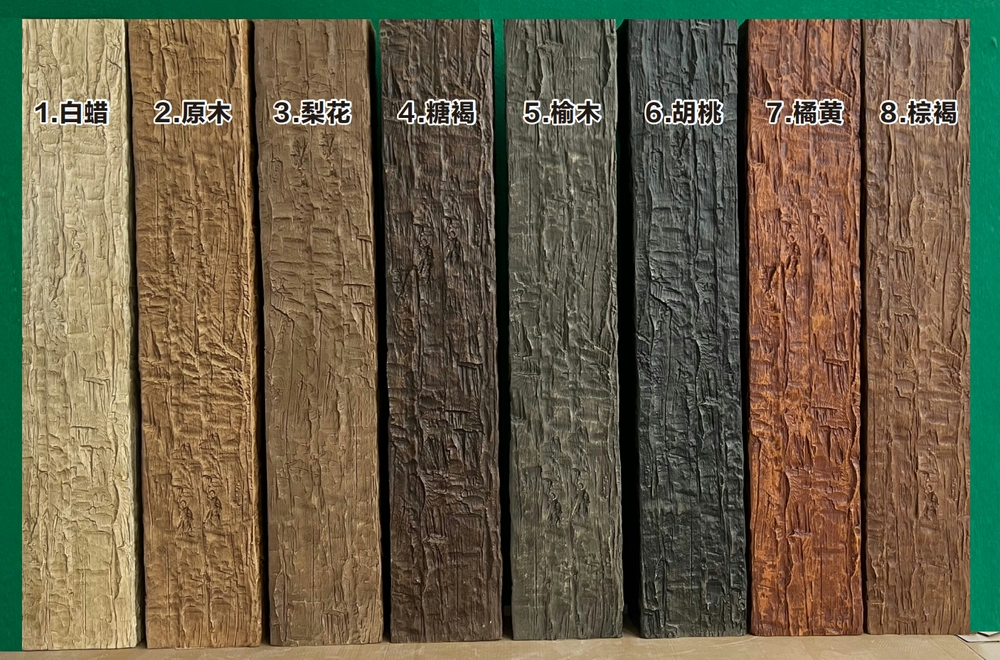
PU faux beams are cast against a mold that creates a high-density skin on the outside of the foam. This skin is denser than the foam core, smoother than foam would be on its own, and gives the beam its molded grain texture. The casting skin is what holds the molded color and the topcoat in place. It also adds another layer of dimensional stability to the outside of the beam.
The Small Set of Things That Can Still Go Wrong
PU beams do not warp in the wood sense, but they can move in other ways if certain conditions are met. Most of these are preventable. None of them are inherent to the material.
Installation Over a Twisted Ceiling
A PU beam that is mounted to a ceiling framing that itself has bowed, twisted, or sagged will follow the framing. The beam does not warp on its own, but it can sit in a line that no longer reads as straight because the structure behind it has moved. This is uncommon in modern homes but shows up in renovations of older houses where the joists have settled over decades.
If your ceiling framing is suspect, the fix is to shim or sister the joists before mounting the beam. Once the framing is straight, the PU beam will hold the line indefinitely.
Heat Damage Near Fixtures
Polyurethane foam softens at high temperatures. A can light, a recessed fixture, or a heat source that sits too close to the beam can cause localized softening, sagging, or surface damage. The fix is clearance. Manufacturers specify minimum distances between the beam and any heat-producing fixture. Follow the spec.
Impact Damage
A heavy ladder leaning against the corner of a beam, a basketball bouncing off a low ceiling beam, or a piece of furniture being moved carelessly can dent or crack a PU beam. Polyurethane is tough but not indestructible. The damage is localized and does not spread, so a small impact stays a small impact.
Water Infiltration From Above
A roof leak, a plumbing failure, or a condensation issue above the ceiling can saturate the back of the beam if the topcoat has been compromised. The foam will absorb water if exposed, which can cause swelling, color shift, and eventual surface failure. The fix is to address the water source first, then repair or replace the affected beam section.
Comparing PU Stability to Real Wood
Real wood beams do not always warp badly, but they do always move. The question is how much and how visibly.
Solid Sawn Timber
A solid sawn timber beam is cut from a single piece of wood. The grain runs in one direction, the moisture content changes with the seasons, and the beam moves. In a controlled interior environment with stable humidity, the movement is small. In a house with wide humidity swings, the movement can be visible. Quarter-sawn timber moves less than plain-sawn, but it still moves.
Glulam and Built-Up Beams
Glulam and built-up beams are more stable than solid sawn but still use wood adhesives and wood fibers. They move with humidity and can develop cracks along the glue lines over time.
Reclaimed Timber
Reclaimed timber has already moved through decades of humidity cycles. It is more stable than fresh-cut timber but can still shift in a new environment, especially if the new environment is much drier or much more humid than the building the timber came from.
Aged Solid Beams in Old Homes
Old timber-frame homes have beams that look perfectly straight because they have settled into the shape the structure gave them over decades. Move one of those beams into a new building, and it will move again as it adjusts to the new moisture conditions. Old timber stability is not the same as long-term stability in a new setting.
PU faux beams sit at the stable end of this spectrum. The material does not absorb water, does not respond to humidity, and does not settle or move with time. A PU beam installed straight will be straight a decade later.

How to Make Sure Your PU Beam Stays Straight
Five small decisions at install time determine whether a PU beam stays straight for the life of the building.
Mount to Solid Framing
Find solid wood, not just drywall. Use a stud finder. Install blocking where needed. A beam screwed only into drywall will eventually pull loose, and a beam that pulls loose will look like it has moved.
Shim Where the Ceiling Is Not Flat
Older ceilings are rarely flat. Run a straight edge or a laser along the proposed beam line before mounting. Shim low spots. Cut down high spots if you can. The beam wants to sit on a flat plane.
Use the Right Brackets and Fasteners
Match the bracket to the beam profile. Match the fastener to the framing. Under-sized brackets or short screws are the most common install mistakes. Manufacturers publish the recommended bracket and fastener for each profile. Use what they recommend.
Respect Heat Clearances
Keep the beam away from recessed lights, heating ducts, and any other heat source. Heat is the one thing that can affect a PU beam over time. Clearance solves it.
Inspect Annually
Once a year, walk through the room and look up. Look for any gap opening at the ceiling line, any joint shifting, any visible sag. None of these should happen on a quality install, but catching them early keeps them small.
What Manufacturers Mean by High-Quality
Not every PU beam on the market behaves the same way. The differences between a high-quality product and a budget product show up in long-term performance.
Foam Density
A high-density foam core resists impact, holds its shape under load, and supports the molded skin. A low-density foam feels spongy, accepts dents more easily, and can compress under the weight of an installer on a ladder. Density is one of the strongest predictors of long-term stability.
Casting Quality
A high-quality casting has uniform wall thickness, a consistent color layer, and a smooth molded grain. A poor casting has thin spots, color variation, and visible mold seams. Thin spots can flex under load and develop cracks over time.
Topcoat Quality
The topcoat is the only thing standing between the foam and the environment. A UV-stable, water-resistant, slightly flexible topcoat lasts decades. A budget topcoat chalks, yellows, and cracks within a few years.
Manufacturing Tolerance
A beam that is straight and square at the factory stays straight and square on the ceiling. A beam that ships with a slight bow, an angled end, or an inconsistent profile will reflect those inconsistencies forever. Manufacturers that publish tight tolerance specs and inspect every beam before shipping produce a more stable finished install.
Real-World Performance
The longest-running PU faux beam installations are now several decades old. The reports from those installs are consistent: the beams are straight, the color has held, and the only maintenance has been occasional cleaning. There is no documented case of a quality PU faux beam warping in service when installed correctly.
What does show up in older installs is wear at touch points, dust accumulation in the molded grain, and the occasional seam or joint that needs a touch-up. These are cosmetic, not structural. They do not affect the beam's straightness.

The straight line you install today is the straight line you will see in twenty years. That is the answer to the warp question, and it is one of the strongest reasons to choose PU over real timber when long-term stability matters.
The Bottom Line for Homeowners and Buyers
For homeowners weighing the choice between real wood and PU faux, warp is one of the few areas where the comparison is one-sided. Real wood moves. Quality PU does not. For installers and importers specifying product for a project where straight lines matter for decades, the choice is straightforward: a properly made PU faux beam from a reputable manufacturer will hold its line for the life of the building.
Technical References
ASTM standards cited in every specification
Test Data
Lab results from internal testing program
Updated 2026
Reviewed against current product specs