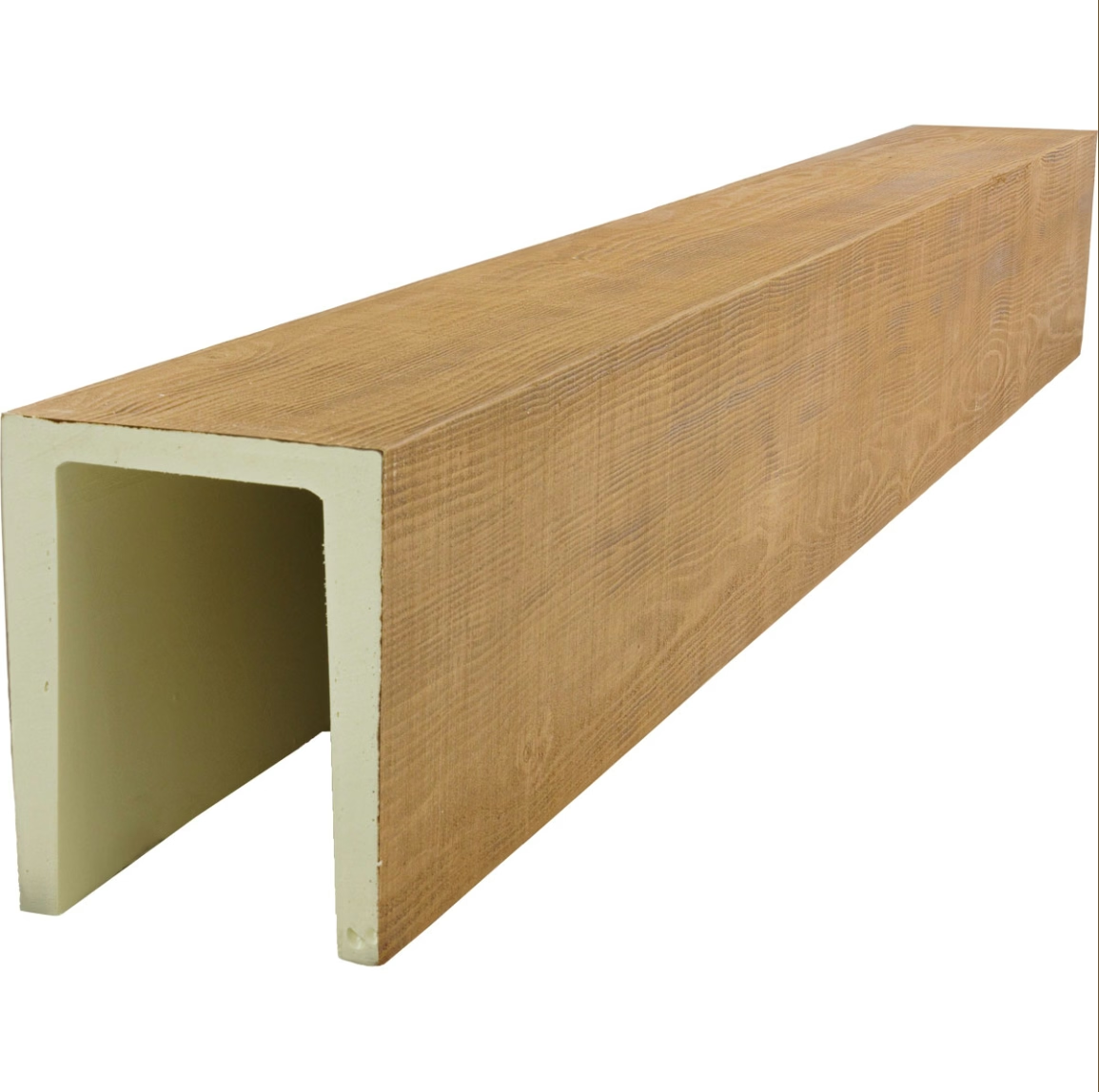
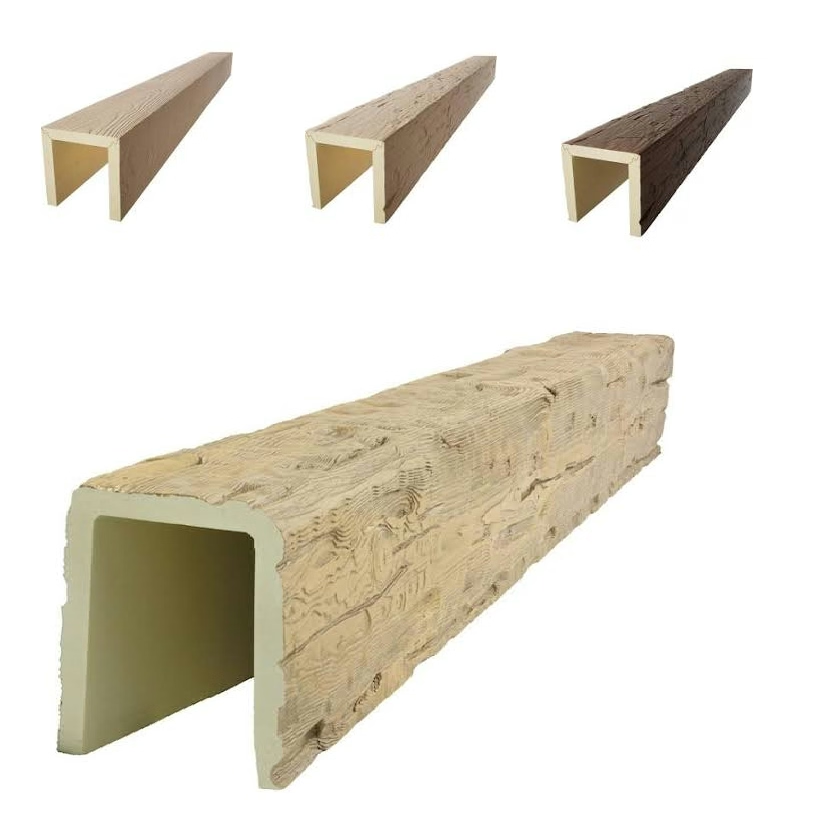
Walk into a kitchen showroom in Singapore, a basement renovation in Toronto, or a coastal villa in Portugal and you will see the same conversation happening. The client wants the warmth of timber beams on the ceiling. The architect or designer knows that real timber in those environments will move, check, and eventually look tired. Polyurethane faux timber is offered as the solution. The client asks the obvious question: but won't the foam absorb moisture?
The answer is more nuanced than a yes or no. Polyurethane is not waterproof in the way a glass tile is waterproof. But high-density closed-cell polyurethane is far more moisture-resistant than solid timber, and a properly specified dry-interior rated faux beam will hold its shape, color, and surface integrity across years of normal interior humidity exposure. The rating is meaningful — but only when you understand what it actually certifies.
This piece walks through what "dry interior rated moisture-resistant" means in technical terms, where these beams genuinely perform, where the limits are, and what to verify when specifying.
What the rating actually covers
"Moisture-resistant" in the polyurethane faux beam industry is a practical performance claim, not a standardized certification in the way that, say, a fire-rating or a structural load rating is. There is no single industry body that issues a moisture-resistance certification for faux beams. Instead, the claim refers to a set of material properties that the manufacturer tests internally and warrants.
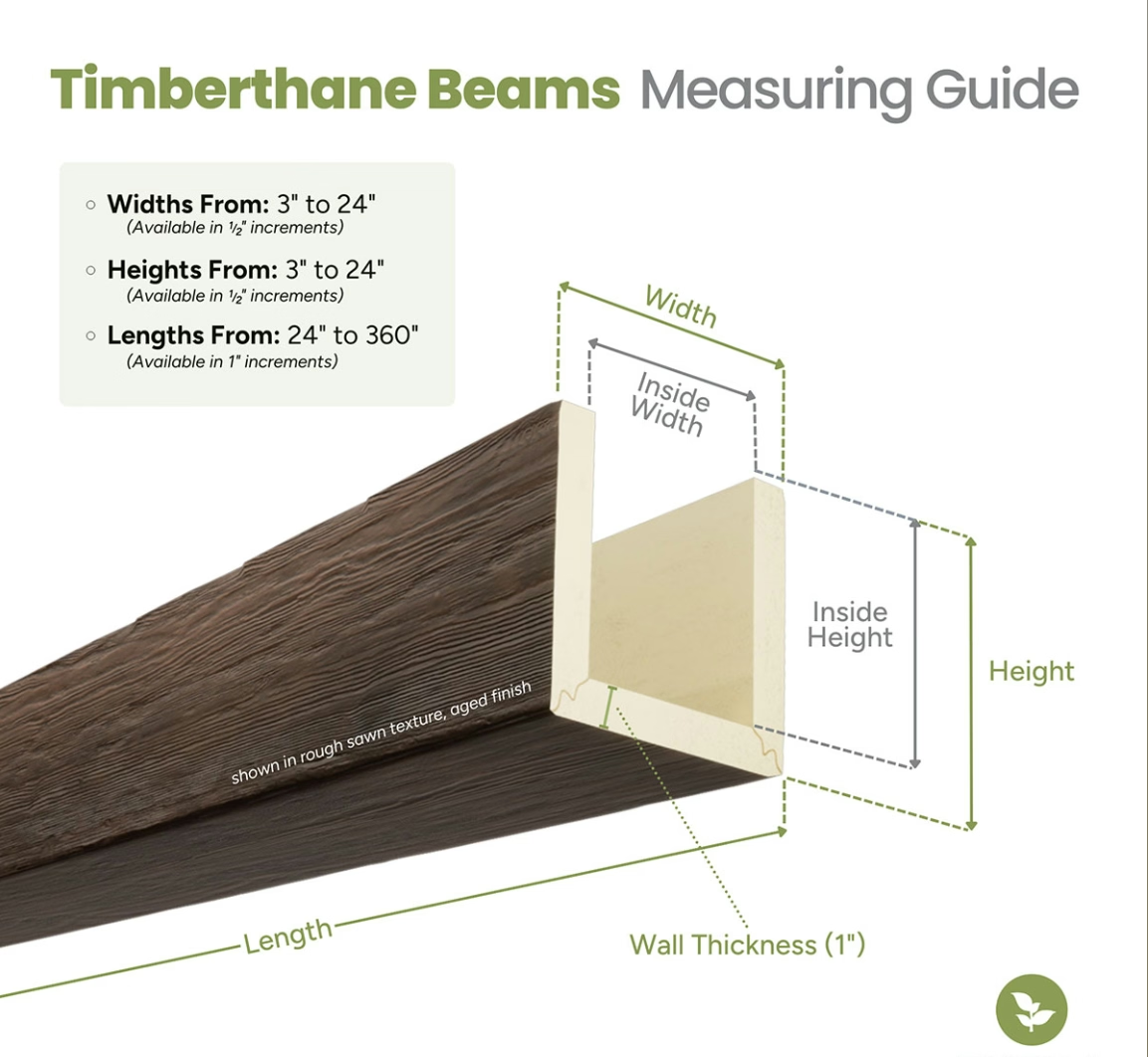
For a beam to be honestly described as moisture-resistant for dry interior applications, the underlying polyurethane should be a high-density closed-cell formulation with a density typically in the 180 to 320 kg/m³ range, a closed-cell content above 90 percent, and a water absorption rate below 1 percent by volume over a 24-hour immersion test. The skin layer — the outer molded surface that carries the wood grain texture and the color finish — should be integral to the foam structure, not a separate laminated film that can peel at the edges.
The embossed surface should also be sealed against moisture ingress. Untreated polyurethane skin can absorb small amounts of water through the open cells at the surface where the mold release agent has been removed. Most manufacturers address this with a topcoat sealant applied after the color finish, but not all topcoats are equal. A furniture-grade polyurethane topcoat or a marine-grade clear seal provides significantly better moisture resistance than a basic lacquer.
A dry interior rating specifically excludes direct water exposure — outdoor eaves with rain splash, shower enclosures with direct water contact, saunas, steam rooms, and submerged applications. Within a dry interior envelope (which includes most kitchens, bathrooms, basements, and coastal interiors), the rating holds.
Why closed-cell polyurethane resists moisture the way it does
The mechanism is structural. Polyurethane foam is created by a chemical reaction between polyols and isocyanates that produces a cellular matrix. In an open-cell foam, the cells are interconnected, and water can travel through the cell walls and accumulate in the matrix. In a closed-cell foam, each cell is its own sealed bubble, and water cannot penetrate past the cell wall unless the wall is mechanically ruptured.
For faux beams, the closed-cell content matters because any water that enters the beam has nowhere to go. It sits on the surface until it evaporates. Compare this to solid wood, where water is absorbed through the end grain, travels along the grain channels, and causes the wood to swell unevenly — leading to warping, cupping, splitting, and finish failure. Polyurethane simply does not have the grain structure that solid wood has, so the failure modes associated with wood moisture absorption do not apply.
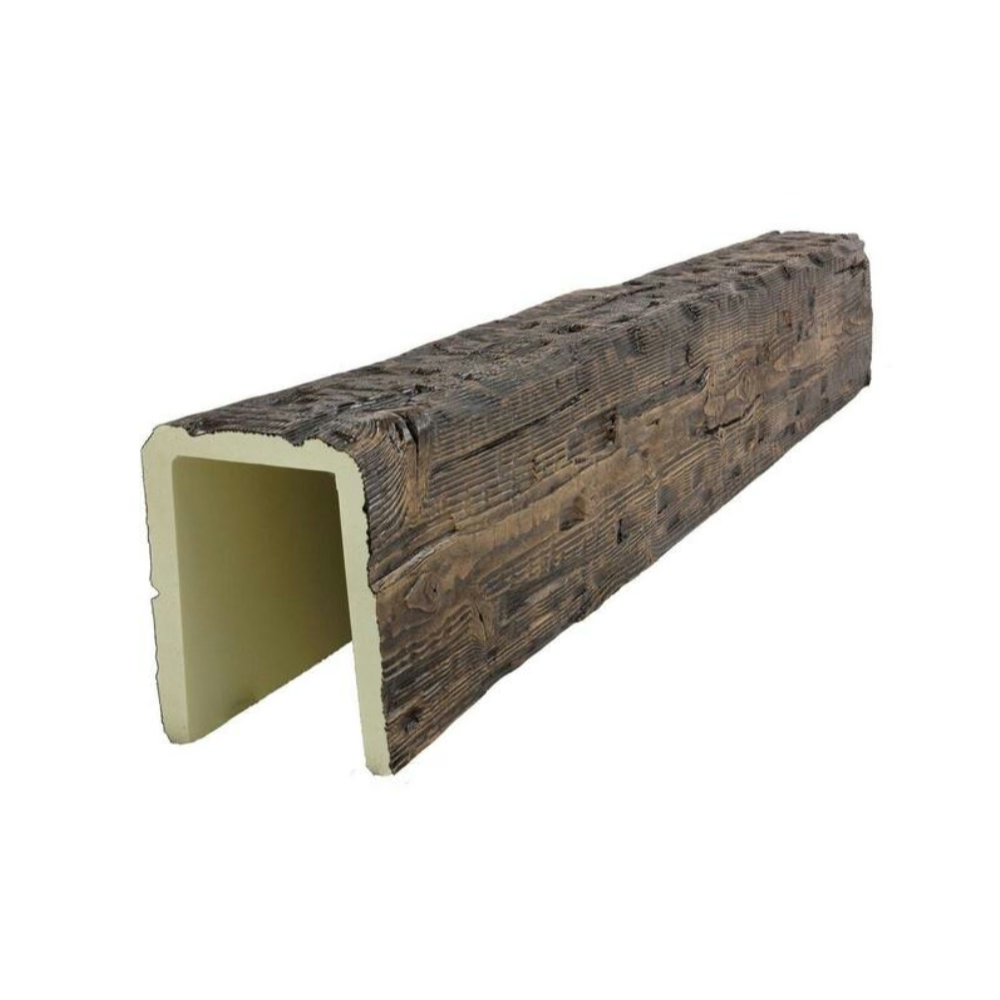
The skin layer adds a second line of defense. The molded surface of a faux beam is denser than the foam core — the mold packing creates a higher-pressure region at the surface that produces a denser skin. This skin is what carries the wood grain texture and what accepts the color finish. It is also the primary moisture barrier. As long as the skin remains intact, water has to work through it before it can reach the foam core.
This is why damage to the surface of a faux beam matters more in a moisture context than it does in a dry interior. A scratch, gouge, or cut that penetrates the skin exposes the foam core to direct water contact. In a bathroom application where the beam might be splashed, exposed foam at a damaged spot can absorb water and cause localized swelling.
Where dry interior rated moisture-resistant beams genuinely perform
The list of appropriate applications is longer than most people assume.
Kitchens. Kitchen ceilings experience moderate humidity from cooking, occasional steam from boiling pots, and condensation cycles from cooking heat. A moisture-resistant faux beam handles this environment without difficulty. The beam does not need to be rated for direct splash exposure — it is on the ceiling, well away from the sink — but it does need to survive sustained humidity in the 60 to 75 percent range during cooking and the natural diurnal cycles of a residential kitchen. Dry interior rated beams are well within their specification for this.
Bathrooms (excluding inside the shower enclosure). Bathroom ceilings above the vanity, around the bathtub, and outside the shower zone experience high humidity during shower use but not direct water contact. A dry interior rated moisture-resistant beam handles this without issue. The beam should not be installed inside a tiled shower enclosure where it would receive direct water spray, but in the main bathroom volume it performs consistently.
Basements. Basements are notorious for elevated humidity even when they are not technically wet. A basement that has been waterproofed externally and has a functioning dehumidifier still runs 55 to 65 percent relative humidity through much of the year. A basement with marginal waterproofing can run higher. Moisture-resistant faux beams hold their dimensional stability in both cases, where solid wood beams would cup, twist, and check within a season or two.
Coastal interiors. Homes within a few miles of the ocean experience elevated interior humidity from salt air infiltration, even with windows closed. The salt content does not damage polyurethane, but the sustained humidity would cause real wood to move. Moisture-resistant faux beams maintain their geometry.
Indoor pools (the surrounding area, not the pool room itself). The dry interior envelope around an indoor pool — the lobby, the locker room corridor, the viewing area — experiences high humidity. Faux beams in those adjacent spaces perform well. The pool room itself is a different environment that requires specialty materials.
Mudrooms and entryways. These spaces see wet coats, wet shoes, and tracked-in snow during winter. The ceiling may not be directly exposed but the humidity from drying outerwear can run high. Moisture-resistant beams are the right choice.
Where the rating does not apply
The honest limits of "dry interior rated moisture-resistant" should be clear to specifiers and homeowners.
- Inside a tiled shower enclosure or directly above a bathtub where splash reaches the beam: not appropriate.
- In a steam room or sauna: not appropriate. The sustained 100 percent humidity at elevated temperature is beyond the rating.
- Outdoor exposure to rain: not appropriate. The rating is for dry interiors, which excludes outdoor soffits, pergolas, and exposed eaves with direct weather.
- Pool rooms with chlorinated humidity: not appropriate. Chloramine vapor attacks polyurethane over time.
- Commercial kitchens with steam hoods directly below the beam: not appropriate. The sustained high-temperature steam is beyond the dry interior envelope.
For any of these applications, the specifier needs a different product — either a fully exterior-grade faux beam with appropriate sealing or a different material entirely.
Comparing to solid wood and to other faux beam materials
The honest comparison is not "polyurethane versus real wood" in absolute terms — it is "polyurethane versus real wood in conditions where real wood is going to fail."
In a climate-controlled interior with humidity held between 40 and 55 percent, real wood beams perform well. They are the traditional choice, they look and feel like the genuine material, and they have a longevity record measured in centuries. Polyurethane faux beams in the same environment look almost identical at conversational distance, weigh a fraction as much, and cost less to install. The decision between them comes down to budget, weight constraints, and personal preference.
In a humid interior — basement, bathroom, kitchen, coastal home — real wood beams will move. The amount of movement depends on the species, the cut, the finish, and the severity of the humidity exposure, but the result over time is predictable: cups form, checks open along the grain, finishes fail at the high-stress points, and the beam needs to be refinished or replaced within five to fifteen years. Polyurethane beams in the same environment hold their geometry and finish with only basic maintenance.
The other common faux beam material is medium-density fiberboard (MDF) with a vinyl or laminate wrap. MDF faux beams are cheaper than polyurethane but significantly less moisture-resistant. MDF swells irreversibly when it absorbs water — once it has swelled, it does not return to its original dimensions. Even in a moderately humid environment, MDF beams can show edge swelling within a few years. Polyurethane does not have this failure mode.
Verifying the rating before you specify
Sellers and specifiers should ask for documented test data before committing to a moisture-resistance claim. Specifically:
- Water absorption percentage by volume over 24-hour immersion, per ASTM D2842 or ISO 1776 or equivalent.
- Density in kg/m³, per ASTM D1622 or ISO 845.
- Closed-cell content percentage, per ASTM D6226 or ISO 4590.
- Dimensional stability under controlled humidity cycling (typically 30 percent to 80 percent RH over multiple cycles), per ASTM D2126 or equivalent.
A manufacturer that cannot provide these data points, or that provides them only verbally without a test report, is making a claim without evidence. The honest suppliers have the reports on file and will share them with serious buyers.
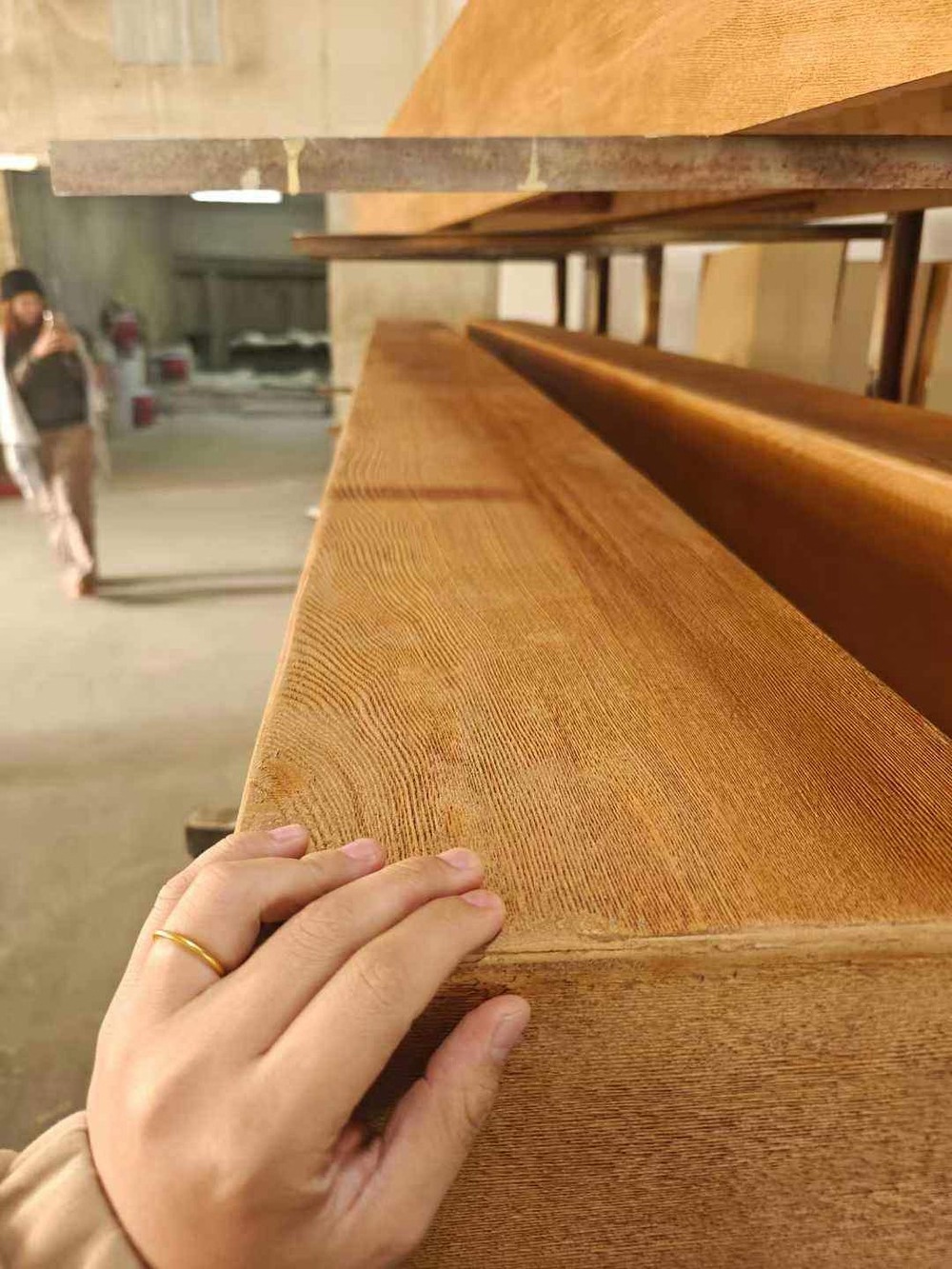
The second verification is physical inspection of a sample. A high-density closed-cell polyurethane beam feels notably heavier in the hand than an open-cell or low-density product of the same dimensions. The surface should feel dense and slightly resilient, not spongy. The cut edges should show a uniform cellular structure without large voids. If a sample feels light, looks porous at the cut edge, or has visible voids in the cross-section, the moisture-resistance claim is suspect.
Installation details that matter for moisture performance
The rating depends as much on installation as it does on the product. A moisture-resistant beam installed incorrectly can fail in ways the rating did not anticipate.
Allow the beam to acclimate. Polyurethane beams shipped to a humid site should be allowed to equilibrate to the interior conditions before installation. Twenty-four to forty-eight hours in the installation space with normal HVAC running is sufficient.
Seal all cut ends in the field. Any cut made on site to fit the beam to length exposes the foam core at the end. The cut end should be sealed with the same topcoat used on the factory surface — typically a polyurethane or marine-grade clear seal — before installation.
Use appropriate fasteners. Stainless steel or coated fasteners prevent corrosion in humid environments that would otherwise leave rust streaks down the face of the beam.
Provide ventilation behind the beam. In a bathroom or kitchen installation, the beam should not be sealed tight against a non-breathable surface. A small gap or a vented cleat behind the beam allows any incidental moisture to dissipate.
Maintain the finish. A dry interior rated beam's topcoat will eventually wear in high-touch or high-cleaning areas. Reapplying the topcoat every five to ten years in a bathroom or kitchen installation preserves the moisture-resistance for the life of the beam.
A practical summary
Dry interior rated moisture-resistant polyurethane faux timber beams are a real category with real performance characteristics, not a marketing label. They genuinely outperform solid wood in humid interior environments and genuinely outperform MDF faux beams across all moisture conditions. The rating has clear limits — direct water contact, steam rooms, outdoor exposure — and the specifier who respects those limits will get decades of service from the product.
For designers, contractors, and homeowners evaluating a beam for a kitchen, bathroom, basement, or coastal interior, the right starting question is not "will the foam absorb water?" but "what is the closed-cell content, what is the water absorption rate, and what is the appropriate application boundary?" The supplier who can answer those three questions with documented test data is the supplier worth specifying.
Technical References
ASTM standards cited in every specification
Test Data
Lab results from internal testing program
Updated 2026
Reviewed against current product specs