Composite Construction Enhances Beam Performance
Composite materials combine multiple components to achieve performance levels that individual materials cannot match alone. Polyurethane composite synthetic faux wood ceiling beams leverage this principle, incorporating reinforcing materials, protective additives, and specialized coatings that extend service life well beyond standard foam-only products.
The composite approach addresses specific weaknesses that pure polyurethane exhibits in demanding applications. By integrating complementary materials, manufacturers produce beams suitable for high-traffic commercial environments, challenging climate conditions, and installations where standard products would degrade prematurely.

How Composite Technology Works in Faux Beams
Composite faux wood beams integrate high-density polyurethane with reinforcing materials that enhance structural properties and surface durability. The composite structure typically consists of a polyurethane base with additives, fillers, or surface treatments that improve specific performance characteristics.
Common composite enhancements include fiberglass reinforcement for increased structural capacity, mineral fillers for improved fire performance, ceramic additives for enhanced surface hardness, and UV-stabilizing compounds for better light resistance. The specific composite formulation varies by manufacturer and intended application.
Distinguishing Composite From Standard Products
Composite beams differ from standard polyurethane products in measurable ways. They typically exhibit higher density, greater impact resistance, improved fire ratings, and better long-term color stability. These differences justify the premium pricing that composite products command over standard alternatives.
Buyers can verify composite construction through manufacturer specifications including density ratings, fire test certifications, impact resistance data, and warranty terms. Reputable manufacturers provide detailed technical information supporting composite performance claims.
Material Components in Quality Composite Beams
Understanding composite beam construction helps specifiers select appropriate products for specific applications.
Polyurethane Base Material
The polyurethane base provides the foundational properties including light weight, moisture resistance, and moldability. High-density formulations contain more material per unit volume, resulting in stronger, more durable beams. The base density significantly affects overall beam performance.
Quality manufacturers use high-density polyurethane formulations optimized for beam applications. These formulations balance weight considerations against performance requirements. The result is beams that handle and install easily while providing the structural properties needed for long-term use.
Reinforcing Additives
Various additives enhance specific performance characteristics:
Fiberglass fibers distributed throughout the polyurethane matrix improve flexural strength and impact resistance. This reinforcement helps beams resist damage from physical contact and environmental stress.
Mineral fillers including calcium carbonate, talc, and similar materials increase density, improve fire performance, and enhance dimensional stability. These fillers also reduce material costs while maintaining quality.
Ceramic microspheres add hardness and improve thermal properties. The resulting surface resists scratching and denting better than pure polyurethane surfaces.
Carbon black or similar pigments provide UV resistance throughout the material rather than only at the surface. This distributed protection extends color stability in sun-exposed applications.
Surface Treatment Systems
Composite beams receive enhanced surface treatments compared to standard products. These treatments include harder finish coats, additional UV inhibitors, improved stain resistance, and better adhesion properties. The surface system contributes significantly to long-term appearance retention.
Multi-layer finishing systems common on composite beams include primer coats for substrate adhesion, color coats for appearance, protective topcoats for durability, and specialty coatings for specific performance requirements. Each layer contributes to overall performance.
Internal Structural Elements
Some composite beams incorporate internal structural elements that enhance load-bearing capacity or mounting options. Steel inserts, aluminum reinforcement, or engineered wood cores provide specific performance benefits while maintaining the lightweight exterior appearance.
These internal elements particularly benefit applications requiring secure mounting, longer spans, or impact resistance. The reinforcement allows thinner beam profiles to handle demanding installations.
Performance Advantages of Composite Beam Construction
Composite construction delivers specific advantages over standard products in targeted applications.
Extended Service Life
The primary advantage of composite beams is extended service life under challenging conditions. Where standard polyurethane might last fifteen to twenty years in demanding applications, composite beams often exceed thirty years. This longevity reflects improved resistance to degradation factors.
The composite materials resist UV degradation, moisture damage, physical impact, and biological factors better than pure polyurethane. This comprehensive resistance translates to installations that maintain appearance and function for longer periods.
Enhanced Fire Performance
Composite formulations typically achieve better fire ratings than standard polyurethane. Mineral fillers and fire-retardant additives reduce flame spread and smoke generation. Many composite beams achieve Class A fire ratings suitable for commercial applications with strict code requirements.
Fire performance documentation for composite products typically includes tested ratings from recognized testing laboratories. Building code compliance depends on matching product ratings to specific application requirements.
Improved Impact Resistance
Composite beams resist impact damage better than standard products. The reinforcing materials distribute impact forces across wider areas, preventing localized damage. This property matters in commercial environments where accidental contact with beams is more likely.
The improved impact resistance also benefits residential applications in active households. Beams in game rooms, basement recreation areas, or workshops face higher impact risks that composite construction handles more reliably.
Better Dimensional Stability
Composite materials maintain dimensions more precisely than standard polyurethane across temperature variations. Lower thermal expansion coefficients mean less movement at mounting points, reducing stress on attachment hardware and adjacent building elements.
This dimensional stability particularly benefits long beam runs where cumulative movement could cause visible gaps or misalignments. The composite construction keeps beams precisely positioned throughout their service life.
Superior Color Stability
Enhanced UV protection in composite beams extends color stability significantly. Where standard beams might show noticeable fading within five to ten years of sun exposure, composite beams maintain appearance for fifteen years or longer. This stability matters for applications where color consistency affects design integrity.
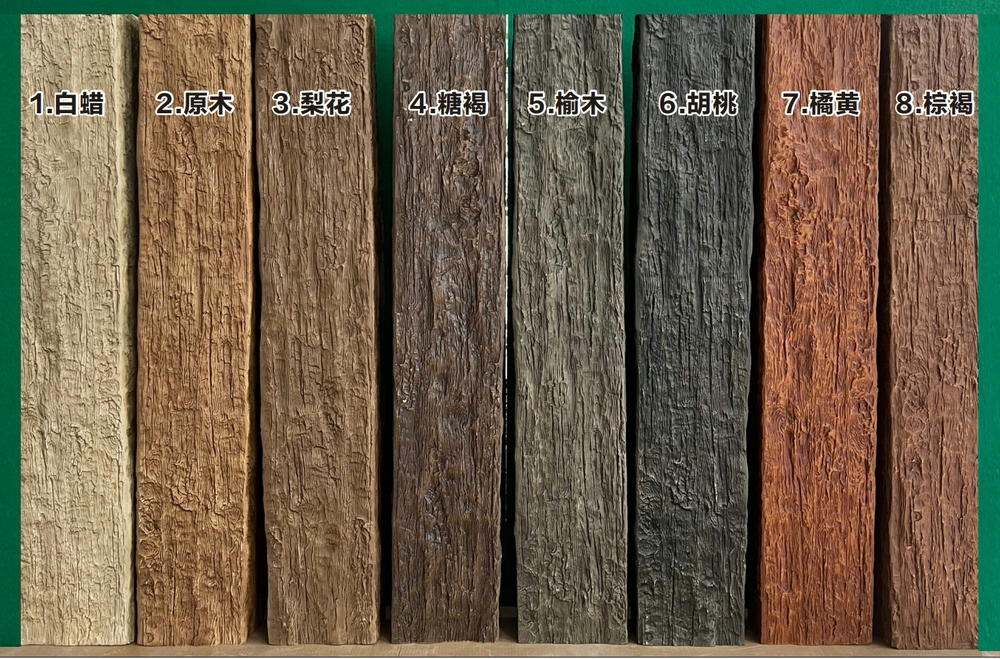
Applications Demanding Composite Beam Performance
Several application types particularly benefit from composite beam construction.
Commercial High-Traffic Environments
Hotels, resorts, restaurants, retail stores, and entertainment venues experience higher physical contact, cleaning intensity, and general wear than residential environments. Composite beams handle these demands more reliably than standard products.
The improved impact resistance and surface durability translate to lower maintenance costs and longer intervals between appearance updates. For commercial operators focused on minimizing lifetime costs, composite beam premium pricing often pays back through reduced maintenance expenses.
Coastal and High-Humidity Installations
Coastal properties face salt air, high humidity, and intense UV exposure that degrade standard materials. Composite beams with enhanced moisture and UV resistance perform better in these environments, maintaining appearance and structural integrity where standard products would deteriorate.
Beach resorts, oceanfront residences, and waterfront commercial properties particularly benefit from composite beam construction. The investment in premium materials prevents the frequent replacement that standard products would require in these challenging environments.
Sun-Exposed Interior Applications
Atrium ceilings, sunroom installations, and spaces with large skylights or south-facing windows experience UV exposure levels that exceed typical interior conditions. Composite beams with enhanced UV protection maintain appearance in these installations.
Standard polyurethane would fade noticeably within several years in these conditions. Composite beams with UV-resistant formulations extend color stability significantly, reducing the need for refinishing or replacement.
Climate-Controlled but Demanding Applications
Museums, galleries, and similar facilities require stable interior environments but experience high visitor traffic and frequent cleaning. Composite beams handle the cleaning intensity and occasional contact that these environments produce.
The hard surface finishes on composite products resist cleaning chemicals and abrasion better than standard surfaces. This resistance preserves appearance despite intensive maintenance protocols.
Specification Considerations for Composite Beams
Several factors should guide composite beam specification decisions.
Verifying Composite Construction
Confirm composite construction through manufacturer documentation. Request technical data sheets showing material composition, test results, and warranty terms. Physical inspection can also identify composite construction through density testing or surface hardness evaluation.
Avoid products marketed as composite without supporting technical documentation. True composite construction involves specific material science that legitimate manufacturers document clearly.
Matching Composite Grade to Application
Different composite grades suit different applications. Higher-performance composites with more reinforcement and better finishes suit demanding applications. Standard composite formulations may suffice for less challenging conditions.
Consult with manufacturers or technical representatives when application requirements are unusual or demanding. Their expertise helps identify the appropriate composite grade for specific performance requirements.
Cost-Benefit Analysis
Composite beams cost more than standard products, but the premium often justifies itself in demanding applications. Calculate total ownership costs including initial purchase, installation, maintenance, and replacement over expected service periods. Composite beams typically show favorable cost profiles in applications where they outperform standard products.
For applications where standard products would perform adequately, the composite premium may not be justified. Match material selection to actual performance requirements rather than specifying premium materials universally.
Installation Considerations
Composite beams install similarly to standard products but may have some differences. Higher density affects handling characteristics. Enhanced surface finishes may require different cleaning approaches. Mounting hardware selection may differ for reinforced products.
Review installation documentation from manufacturers before beginning projects. Composite beam installation is typically straightforward, but specific products may have unique requirements worth understanding in advance.
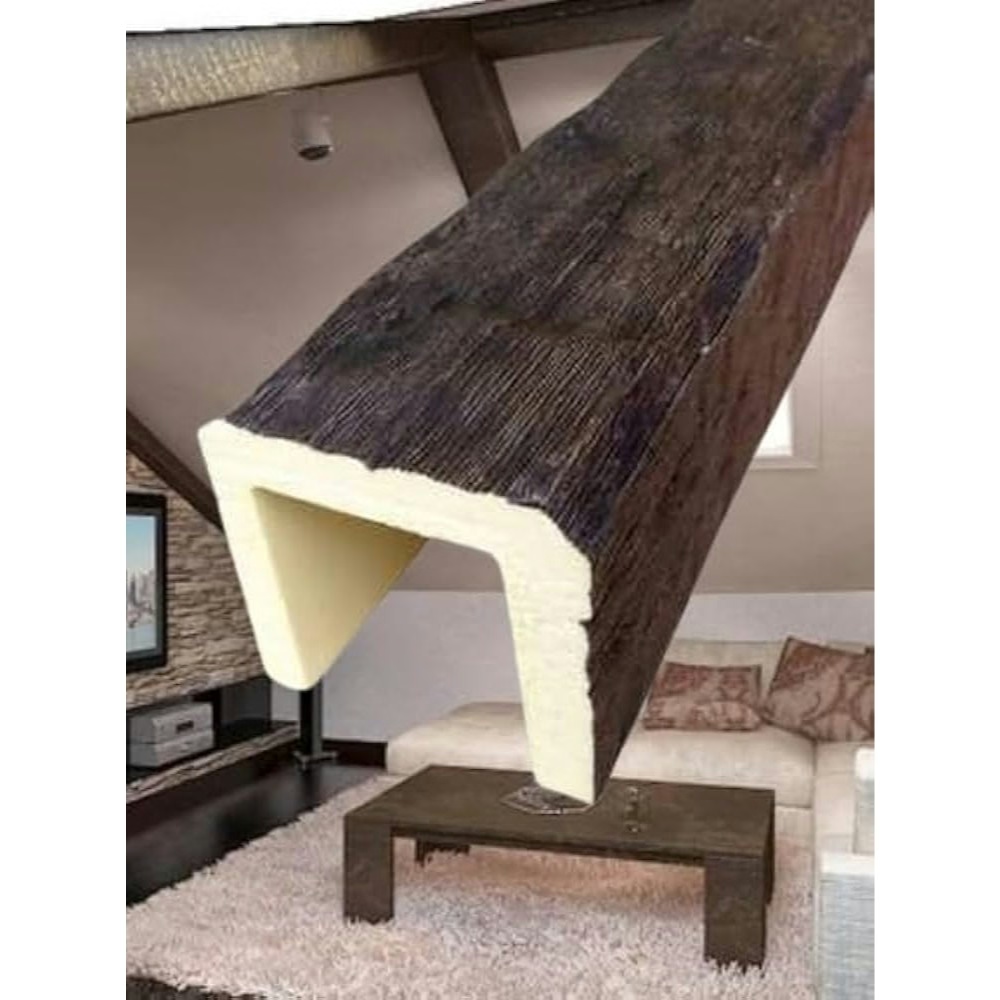
Long-Term Performance Expectations
Composite beam performance expectations under various conditions help inform specification decisions.
Interior Stable Environments
Composite beams in interior stable environments routinely achieve thirty to forty year service lives. The combination of stable conditions and durable materials produces installations that outlast most other building elements. Appearance remains consistent throughout this service period.
Challenging Interior Environments
Composite beams in demanding interior environments, such as commercial kitchens, pool enclosures, and high-traffic public spaces, typically achieve twenty to thirty year service lives. The increased environmental stress reduces ultimate longevity, but composite construction still outperforms standard products significantly.
Exterior Protected Applications
Composite beams in protected exterior applications, including covered porches, screened enclosures, and architectural details with weather protection, achieve fifteen to twenty-five year service lives. The reduced UV and moisture exposure compared to fully exposed installations extends practical service periods.
Exterior Exposed Applications
Composite beams in fully exposed exterior applications typically achieve ten to twenty year service lives depending on specific exposure conditions. Even composite construction faces challenges in direct weather exposure. Manufacturers offering exterior warranties specify appropriate applications and expected service periods for their products.
Maintenance Requirements for Composite Beams
Composite beams require less maintenance than standard products but still benefit from appropriate care.
Routine Cleaning Protocols
Establish regular cleaning schedules appropriate to the installation environment. Dust accumulation removal, periodic washing with appropriate cleaners, and prompt attention to any spills or marks maintain beam appearance. The harder surface finishes on composite beams resist staining and marking better than standard surfaces.
Use cleaning products compatible with the specific finish system on the composite beams. Manufacturers typically provide cleaning recommendations that preserve finish integrity while effectively removing contaminants.
Inspection and Touch-Up
Annual inspection identifies any developing issues before they become serious problems. Check mounting hardware, surface condition, and any areas showing wear. Touch-up materials supplied by manufacturers address minor finish issues before they require extensive refinishing.
The improved durability of composite beams means touch-up requirements are less frequent than for standard products. However, prompt attention to any issues preserves overall appearance and prevents minor problems from developing into major concerns.
Refinishing Considerations
Composite beams may eventually require refinishing in demanding applications. The enhanced finish systems on composite products typically last longer than standard finishes, but eventual refinishing may be necessary after fifteen to twenty-five years depending on conditions.
Refinishing composite beams follows similar procedures to refinishing standard products. Surface preparation, primer application, and finish coating restore appearance. The composite substrate underneath remains stable throughout multiple refinishing cycles, unlike wood products that degrade with each refinishing.
Technical References
ASTM standards cited in every specification
Test Data
Lab results from internal testing program
Updated 2026
Reviewed against current product specs


